Quick Answer Box
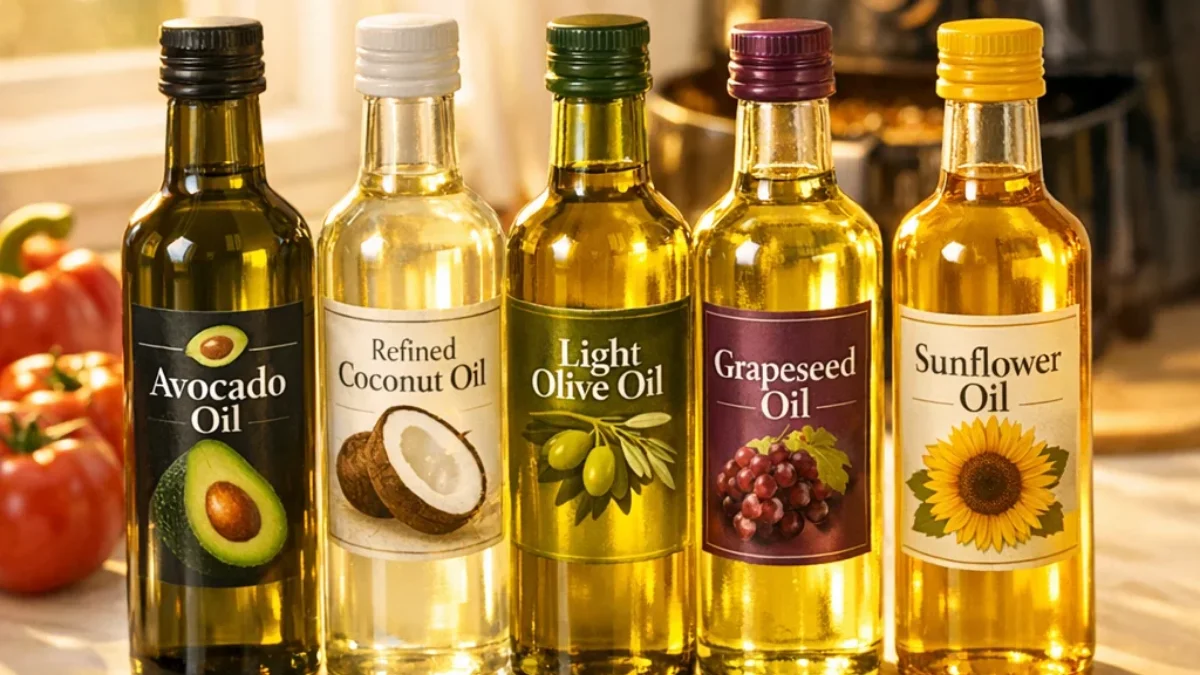
Use avocado oil (500°F), refined coconut oil (450°F), or light olive oil (410°F) in air fryers.
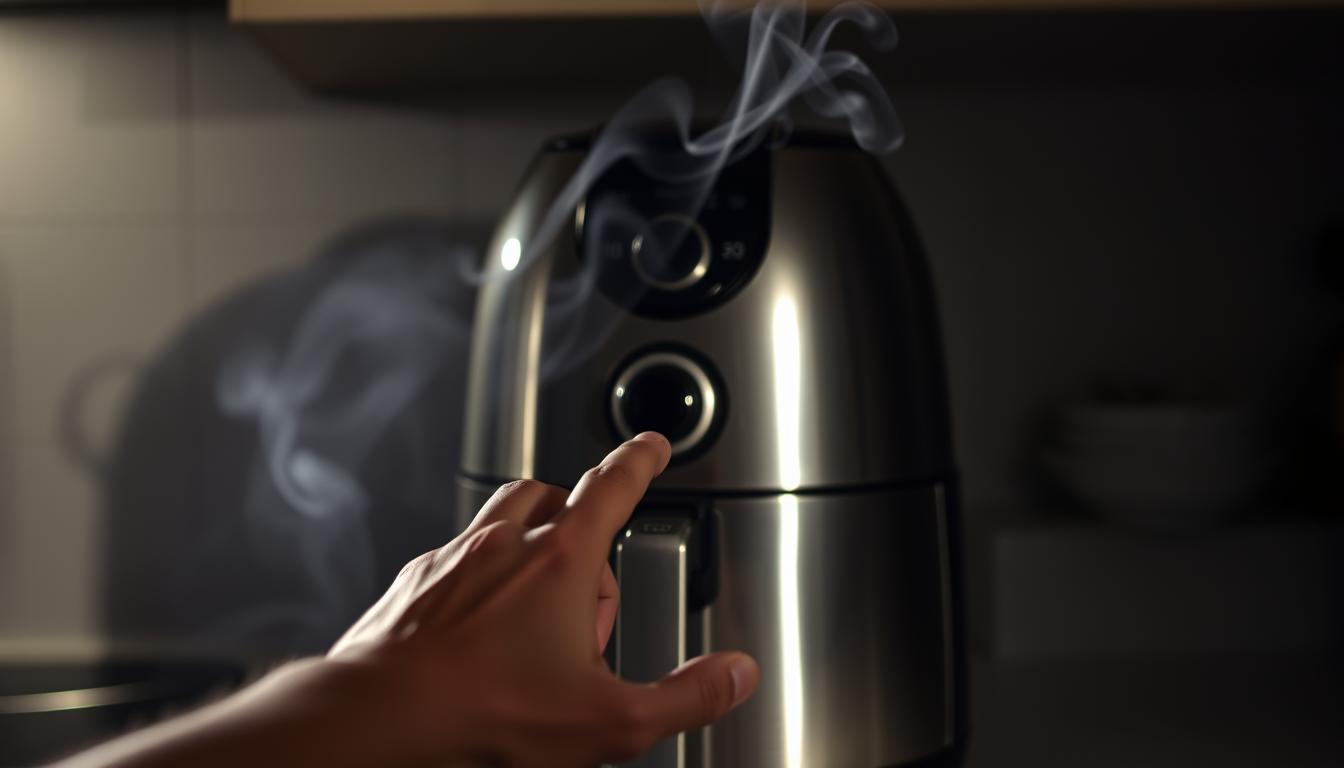
Skip butter, extra-virgin olive oil, and unrefined coconut oil. Air fryers operate at 350–400°F, and oils with lower smoke points (below 400°F) create bitter smoke and carcinogenic compounds.
Key Takeaways
✓ Smoke point matters — it’s the temperature where oil breaks down and burns
✓ Avocado oil is best — highest smoke point (500°F), neutral flavor, no smoke
✓ Refined oils > unrefined — same oil, different processing; refined tolerates heat
✓ Spray bottles work — light coating (1–2 seconds) is all you need
✓ Never use butter — smoke point 350°F; it will burn in an air fryer
What Actually Happens When Oil Smokes
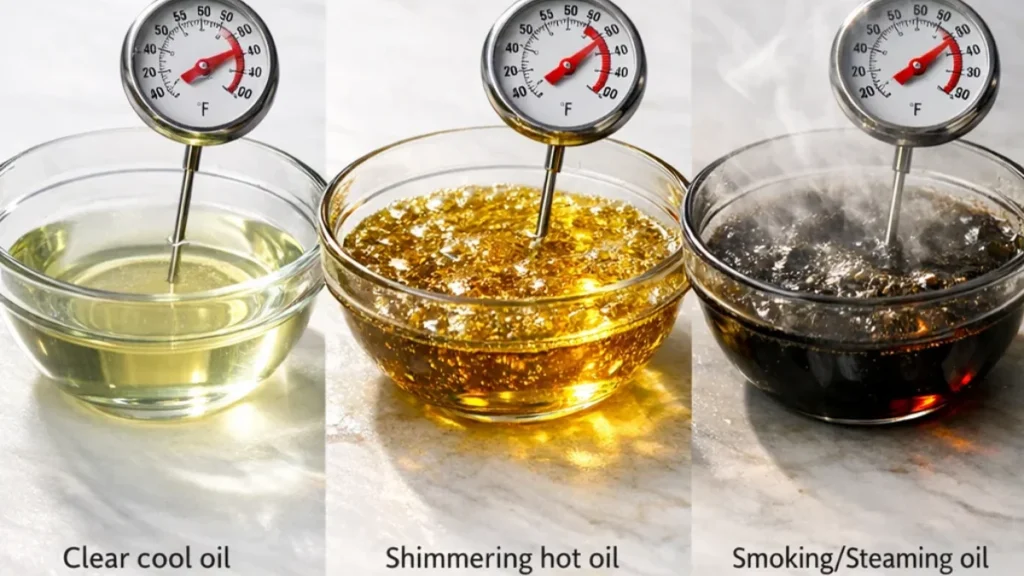
When oil reaches its smoke point, the fatty acid chains break apart. This creates:
- Visible smoke (tiny oil particles in air)
- Bitter taste (breakdown compounds; unpalatable)
- Oxidized compounds (potentially harmful if ingested regularly)
In an air fryer, heat is concentrated and circulates fast. An oil with a 380°F smoke point in a 380°F air fryer will smoke immediately.
Smoke Point Hierarchy: Which Oils Work?
Oils to Use (Smoke Point 400°F+)
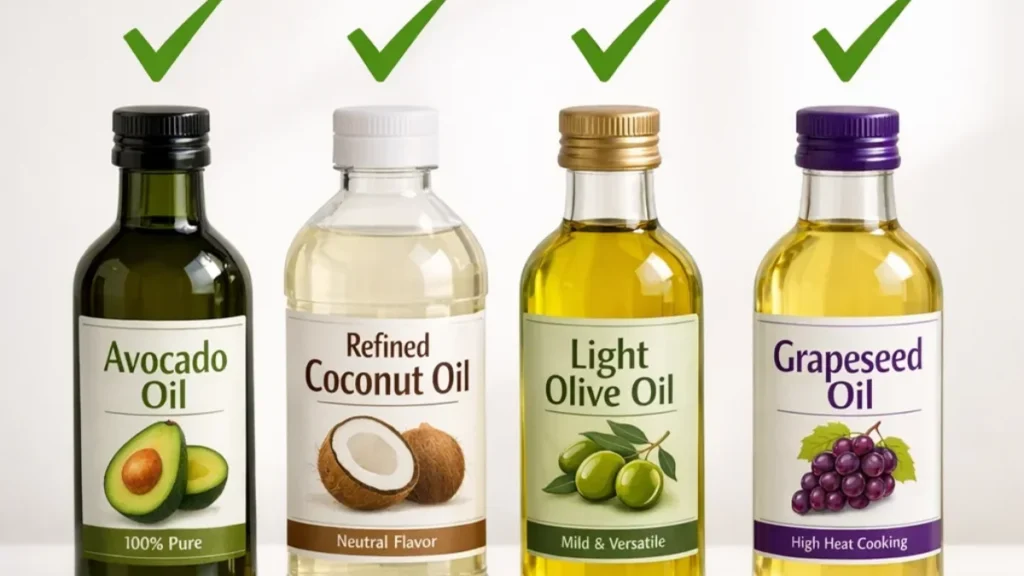
Avocado Oil — 500°F ✓ BEST
- Neutral flavor (doesn’t interfere with food)
- High smoke point (safest margin)
- Expensive ($12–$18/bottle)
- Best for: All air fryer cooking
Refined Coconut Oil — 450°F ✓ EXCELLENT
- Mild coconut aroma (not overwhelming)
- High smoke point
- Affordable ($5–$8/bottle)
- Best for: Asian dishes, baking, neutral cooking
Light Olive Oil (refined, not extra-virgin) — 410°F ✓ GOOD
- Better than extra-virgin (which smokes at 375°F)
- Slight olive flavor
- Moderate price
- Best for: Mediterranean dishes, vegetables
Grapeseed Oil — 420°F ✓ GOOD
- Neutral flavor
- Clean finish (no residue)
- Harder to find
- Best for: General-purpose cooking
Sunflower Oil (high-oleic) — 440°F ✓ GOOD
- Affordable
- Neutral flavor
- Widely available
- Best for: Budget-conscious cooking
Oils to AVOID (Smoke Point Below 400°F)
Extra-Virgin Olive Oil — 375°F ✗ DON’T USE
- Burns immediately in air fryer heat
- Wastes money (expensive oil, burned taste)
- Use in salads instead
Butter — 350°F ✗ DON’T USE
- Lowest smoke point
- Separates and browns quickly
- Creates burnt residue inside air fryer
- Use ghee instead if you want richness
Unrefined Coconut Oil — 350°F ✗ DON’T USE
- Lower smoke point than refined version
- Strong coconut flavor (can overwhelm dishes)
Sesame Oil — 350°F ✗ DON’T USE
- Extremely low smoke point
- Intense flavor doesn’t pair with most dishes
- Use as a finisher (post-cooking drizzle), not cooking oil
How to Apply Oil in an Air Fryer
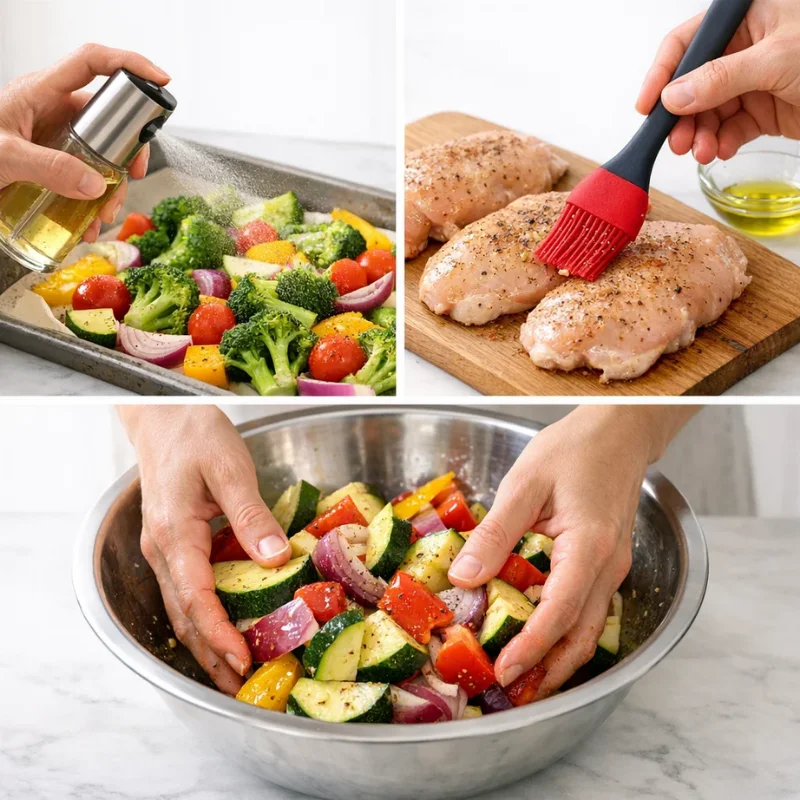
Method 1: Oil Spray Bottle (Best)
What to do: Fill a spray bottle with your chosen oil. Spray food lightly (1–2 second bursts) before air frying.
Why it works:
- You control the amount (avoid over-oiling)
- Light coating creates crispiness without excess oil
- Faster than brush application
- Less oil waste
Avoid: Aerosol cooking sprays with additives (they leave residue on your air fryer basket).
Method 2: Brush (For Thick Oils)
What to do: Use a silicone pastry brush to coat avocado or coconut oil on food.
Why it works:
- Good for thick cuts (salmon, chicken breast)
- Better coverage than spray
- Allows you to see exactly how much oil you’re using
Avoid: Cheap brushes shed bristles into food.
Method 3: Drizzle (For Lightweight Oils)
What to do: Toss food with oil in a bowl before air frying.
Why it works:
- Ensures even coating
- Good for vegetables, fries, wings
Avoid: Over-oiling (use 1 tbsp per 2 cups food max).
How Much Oil Do You Actually Need?
This surprises people: very little.
- Vegetables: 1 tablespoon oil per 2 cups chopped vegetables
- Chicken/protein: Light spray (1–2 seconds) on both sides
- Frozen foods: Usually pre-oiled; add minimal additional oil
- Fries/potatoes: Toss 3 cups cut potatoes with 1 tablespoon oil
Air fryers circulate heat aggressively. A light coat is enough to crisp food. Over-oiling creates soggy texture and increases smoke.
Real-World Comparisons: Oil Behavior in Air Fryer
| Oil | Temp | Result at 375°F | Taste Impact |
|---|---|---|---|
| Avocado | 500°F | Perfect; no smoke | Neutral |
| Refined Coconut | 450°F | Perfect; mild aroma | Slight coconut |
| Light Olive | 410°F | Good; minor smoke | Slight olive |
| Extra-Virgin Olive | 375°F | Smokes immediately | Bitter, ruined |
| Butter | 350°F | Heavy smoke, burns | Burnt, unpalatable |
Pro Tips
Tip 1: Buy a Refillable Spray Bottle. Avoid aerosol cooking sprays. Get a stainless steel refillable bottle (~$15) and fill it with your chosen oil. Reusable and no chemical additives.
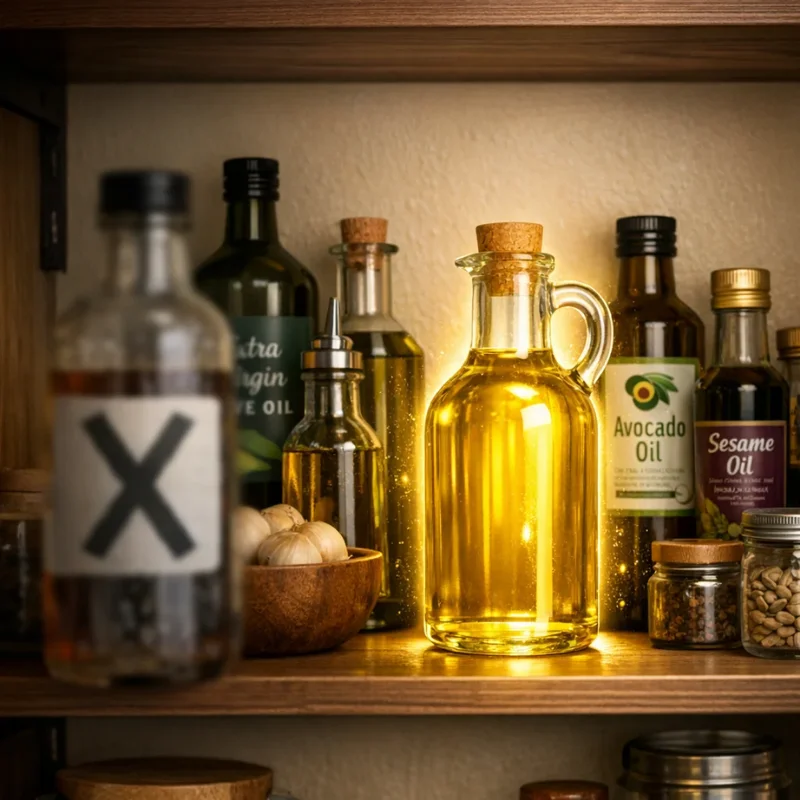
Tip 2: Store Oil in a Cool, Dark Place. Heat degrades oil quality (even off-heat). A pantry is fine; above the stove is not.
Tip 3: Don’t Reuse Oil. Once oil has been heated in an air fryer, it’s broken down. Toss it. Don’t filter and reuse (common misconception).
Tip 4: Clean Your Air Fryer Basket After Each Use. Oil residue builds up and smokes in subsequent batches. Wipe or wash the basket after every cook cycle
Bottom Line
Avocado oil is the premium choice (neutral, with a high smoke point). Refined coconut oil is the budget-friendly best bet (it’s affordable and has a high smoke point).
Light olive oil works if you already have it. Don’t overthink it—just avoid extra-virgin olive oil, butter, and unrefined coconut oil, and you’re golden.
Best Oils for Air Fryer Cooking: FAQ
Can I use olive oil spray from the grocery store?
It works, but it contains additives (lecithin, propellant). They leave residue on your air fryer basket. A refillable bottle is cleaner.
Does the type of oil affect nutrition?
Minimally. Air frying uses 1 tbsp of oil per 2 cups of food—there’s not much difference between avocado and coconut oil at that volume.
What if I run out of oil and don’t have any on hand?
Some foods (frozen fries, chicken wings) are pre-oiled and cook fine without additional oil. Fresh vegetables will stick; skip cooking until you restock.
Can I use applesauce or Greek yogurt as an oil substitute?
Not in an air fryer. These add moisture, creating steam rather than crisping. Use oil.
How do I know if oil is going rancid?
Rancid oil smells stale or “off” (nutty, musty smell). Trust your nose. Toss it.
Should I refrigerate oil after opening?
Refrigerate avocado oil (it oxidizes faster). Coconut oil is stable at room temp. Olive oil is fine in a cool pantry.
Recommended Reading
- Why Is My Air Fryer Smoking? Common Causes and How to Stop It Fast
- Best Air Fryer for Large Families (2026): 5+ Quart Capacity Tested
- The Ultimate Guide to Air Fryer Recipes: Crunchy, Healthy, and Delicious!
- How to Make Nut Butter in a Blender (Without Overheating)
- Air Fryer Cooking Times by Food Type: Chicken, Vegetables, Fish, and Frozen Foods –
Last Updated: July 2026 | Research: Smoke points sourced from USDA Food Data Central and manufacturer specs.