Published: May 30, 2026 | Last Updated: May 2026 | Reviewed against USDA food safety guidelines
Quick Answer
The most common air fryer cooking times by food type are:
| Food Type | Temperature | Time | Internal Temp |
|---|---|---|---|
| Chicken breast (boneless) | 375°F / 190°C | 18–22 min | 165°F / 74°C |
| Chicken thighs (bone-in) | 380°F / 193°C | 22–28 min | 175°F / 79°C |
| Chicken wings | 400°F / 200°C | 22–26 min | 165°F / 74°C |
| Broccoli florets | 375°F / 190°C | 8–10 min | — |
| Brussels sprouts | 380°F / 193°C | 12–15 min | — |
| Zucchini / courgette | 400°F / 200°C | 8–10 min | — |
| Salmon fillet | 400°F / 200°C | 8–10 min | 145°F / 63°C |
| White fish fillet | 375°F / 190°C | 10–12 min | 145°F / 63°C |
| Frozen french fries | 400°F / 200°C | 15–18 min | — |
| Frozen chicken nuggets | 400°F / 200°C | 10–14 min | 165°F / 74°C |
| Frozen fish fillets | 380°F / 193°C | 12–14 min | 145°F / 63°C |
Baseline: basket-style 4–6 qt air fryer, preheated 3 minutes. Flip or shake halfway through all cooking times.
Introduction
Getting air fryer cooking times right is the difference between a perfectly crispy chicken breast and a dry, overcooked disappointment — or a pale, soggy pile of vegetables that should have been glorious.
The air fryer is one of the most useful appliances in the modern kitchen. It uses rapid hot-air circulation to cook food faster than a conventional oven and uses significantly less oil. But because it runs hotter and more efficiently than most people expect, cooking times vary considerably depending on the food type, size, and thickness, as well as the specific model you own.
This guide covers everything you need — exact times, tested temperatures, USDA-safe internal temperature targets, and practical tips — organized by food category so you can find what you need in seconds.
One important note before you start: According to Consumer Reports (2025), some air fryer models register up to 67°F below their set temperature, with significant variation across more than 40 tested brands. Always treat the times in this guide as starting points, and use a meat thermometer for all proteins. Your air fryer may run slightly hotter or cooler than another model set to the same dial.
Air Fryer Cooking Times for Chicken
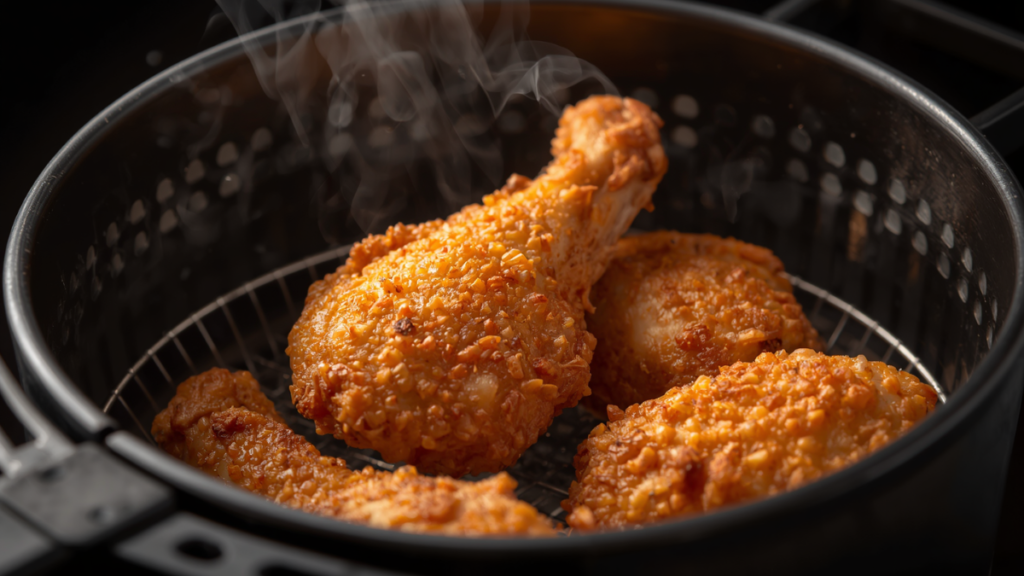
Chicken is the most searched air fryer food category — and for good reason. The air fryer produces exceptionally juicy interiors with genuinely crispy skin, but chicken is also the protein most likely to cause food safety issues if undercooked. The USDA Food Safety and Inspection Service (FSIS) requires all poultry to reach an internal temperature of 165°F (74°C). Dark meat cuts — thighs and drumsticks — taste best at 175–185°F due to their higher fat and connective tissue content.
Chicken Cooking Times Chart
| Cut | Temperature | Time | Internal Temp Target |
|---|---|---|---|
| Boneless skinless breast (6–8 oz) | 375°F / 190°C | 18–22 min | 165°F / 74°C |
| Bone-in breast | 375°F / 190°C | 25–30 min | 165°F / 74°C |
| Boneless thighs | 380°F / 193°C | 16–20 min | 175°F / 79°C |
| Bone-in thighs | 380°F / 193°C | 22–28 min | 175°F / 79°C |
| Drumsticks | 380°F / 193°C | 20–25 min | 175°F / 79°C |
| Wings | 400°F / 200°C | 22–26 min | 165°F / 74°C |
| Tenders / strips | 375°F / 190°C | 10–14 min | 165°F / 74°C |
| Whole chicken (3–4 lb) | 360°F / 182°C | 55–75 min | 165°F / 74°C |
| Frozen chicken breast (uncooked) | 360°F / 182°C | 25–30 min | 165°F / 74°C |
Pro Tips for Air Fryer Chicken
Preheat the basket. Preheating for 3 minutes before adding chicken makes a measurable difference in crispiness and cooking consistency.
Pat dry before cooking. Moisture is the enemy of a crispy exterior. Pat all chicken pieces dry with a paper towel before seasoning and placing in the basket.
Don’t overcrowd. Air needs to circulate freely around every piece. A crowded basket steams rather than crisps. Cook in batches if needed.
Flip halfway. Turn all pieces at the halfway point for even browning on both sides.
Always verify with a thermometer. Visual cues are not reliable for chicken. A digital instant-read thermometer inserted into the thickest part is the only reliable safety check.
Add frozen chicken time. If cooking frozen (unthawed) chicken breast, add 5–7 minutes to the fresh cooking time listed above.
Air Fryer Cooking Times for Vegetables
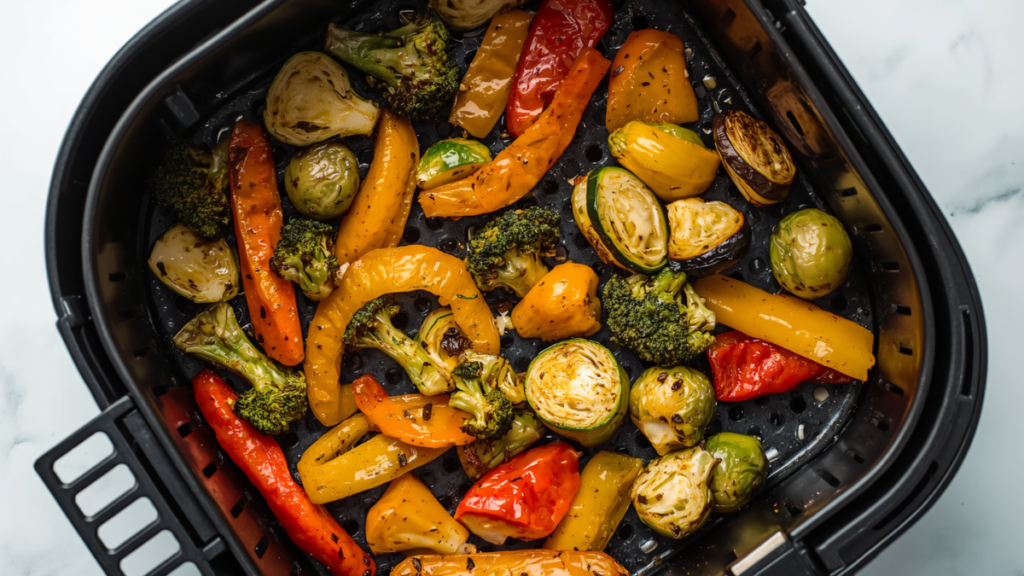
The air fryer produces roasted vegetables with better caramelization and crispier edges than most conventional ovens — in roughly half the time. The key variables are moisture content and density: watery vegetables like zucchini cook fast and can turn mushy if overdone, while dense vegetables like carrots and potatoes need more time.
[SECTION IMAGE 2: Place here — colorful mixed vegetables in air fryer basket]
Vegetable Cooking Times Chart
| Vegetable | Temperature | Time | Notes |
|---|---|---|---|
| Broccoli florets | 375°F / 190°C | 8–10 min | Toss in olive oil; shake once |
| Brussels sprouts (halved) | 380°F / 193°C | 12–15 min | Cut side down for first half |
| Asparagus | 400°F / 200°C | 6–8 min | Thin spears need less time |
| Zucchini / courgette (sliced) | 400°F / 200°C | 8–10 min | Cut ½ inch thick |
| Bell peppers (strips) | 375°F / 190°C | 8–10 min | Great for fajita strips |
| Cauliflower florets | 375°F / 190°C | 12–15 min | Toss with oil and spices |
| Mushrooms (halved) | 380°F / 193°C | 8–10 min | Shake halfway |
| Baby potatoes (halved) | 400°F / 200°C | 18–22 min | Parboil first for fluffy interior |
| Sweet potato (cubed) | 380°F / 193°C | 15–18 min | ¾ inch cubes cook evenly |
| Carrots (sliced) | 380°F / 193°C | 12–15 min | ¼ inch slices |
| Green beans | 375°F / 190°C | 8–10 min | Light oil spray only |
| Corn on the cob | 400°F / 200°C | 12–15 min | Brush with butter before cooking |
Pro Tips for Air Fryer Vegetables
Light oil is essential. A thin coating of olive oil or avocado oil helps vegetables brown and crisp rather than dry out. A light spray or toss in a bowl is all that’s needed — avoid excess oil pooling at the bottom of the basket.
Cut uniformly. Uneven pieces cook unevenly. Try to cut all pieces to a similar size and thickness before cooking.
Don’t skip the shake. Shaking the basket halfway through redistributes pieces and ensures even crisping on all surfaces.
Season before cooking. Toss vegetables in seasoning before placing in the basket, not after. This allows flavors to penetrate during cooking.
Prefer crunchier vegetables? Reduce the time by 1–2 minutes from the chart above. The times listed produce a tender-crisp result.
Air Fryer Cooking Times for Fish and Seafood
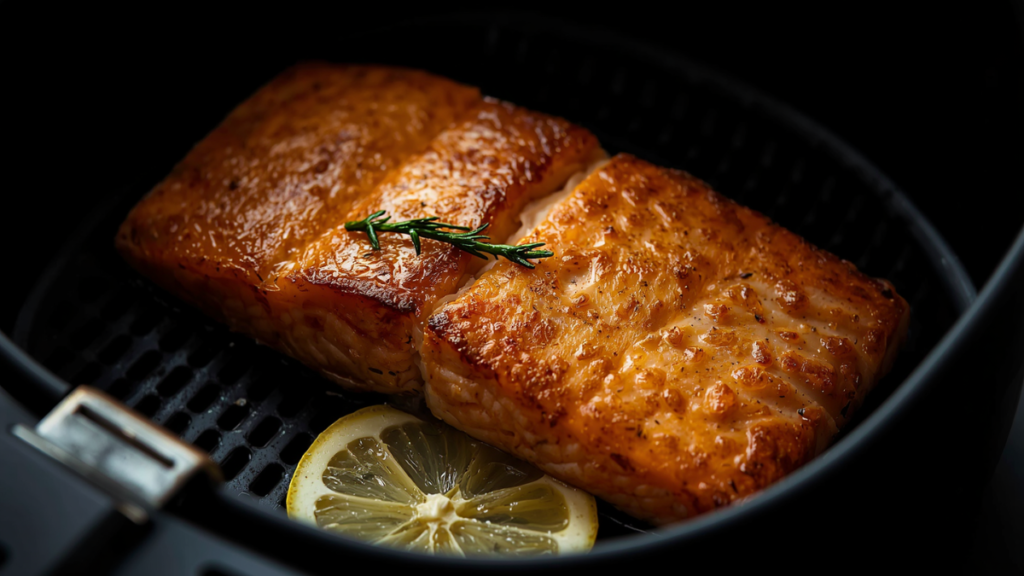
Fish and seafood cook faster in the air fryer than any other protein category — most fillets are done in 6–12 minutes and can dry out quickly if overcooked by even a minute or two. The USDA recommends an internal temperature of 145°F (63°C) for all fish. A reliable general guideline is approximately 10 minutes per inch of thickness at 375–400°F.
[SECTION IMAGE 3: Place here — golden salmon or white fish fillet in air fryer basket]
Fish and Seafood Cooking Times Chart
| Fish / Seafood | Temperature | Time | Internal Temp Target |
|---|---|---|---|
| Salmon fillet (1 inch thick) | 400°F / 200°C | 8–10 min | 145°F / 63°C |
| Cod / white fish fillet | 375°F / 190°C | 10–12 min | 145°F / 63°C |
| Tilapia | 400°F / 200°C | 8–10 min | 145°F / 63°C |
| Tuna steak (1 inch) | 380°F / 193°C | 6–8 min | 145°F / 63°C (or 125°F for medium) |
| Shrimp / prawns (large, raw) | 380°F / 193°C | 6–8 min | Pink, opaque throughout |
| Breaded shrimp (fresh) | 400°F / 200°C | 8–10 min | 145°F / 63°C |
| Scallops (large) | 400°F / 200°C | 6–8 min | Opaque throughout |
| Fish tacos (fresh fillet strips) | 375°F / 190°C | 8–10 min | 145°F / 63°C |
Pro Tips for Air Fryer Fish
Watch the clock closely. Fish moves from perfectly cooked to dry within a very short window. Check at the earliest time listed and check again every minute if needed.
No need to flip delicate fillets. Thin white fish fillets can break apart when flipped. Only flip thicker, sturdier fillets like salmon. Use a spatula and be gentle.
Light oil prevents sticking. Brush or spray the basket lightly with oil before adding fish — this prevents delicate pieces from tearing when removed.
Thicker fillets need more time. Follow the 10-minutes-per-inch-of-thickness rule when cooking any fillet that falls outside the chart above.
Shrimp is done when it curls. Shrimp is cooked through when it turns pink and curls into a C shape. An O shape means it is overcooked.
Air Fryer Cooking Times for Frozen Foods
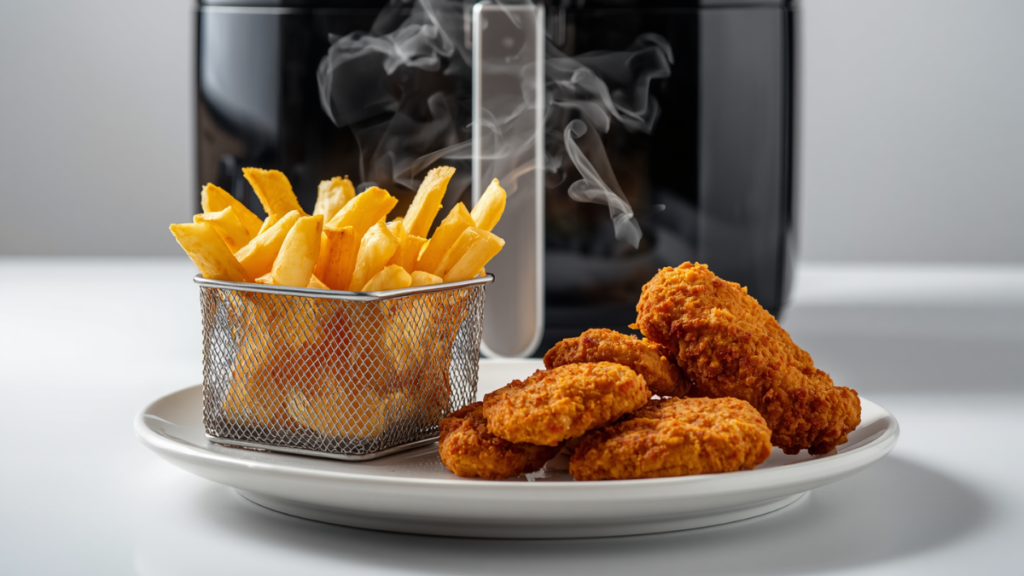
One of the air fryer’s greatest strengths is cooking frozen food. Air fryers cook frozen foods faster, crispier, and tastier than conventional ovens or microwaves — with no thawing required and far less oil than deep frying. The rapid hot-air circulation quickly removes surface moisture while crisping the exterior — producing results a microwave cannot replicate.
[SECTION IMAGE 4: Place here — crispy frozen fries or nuggets in air fryer basket]
A general rule of thumb for converting conventional oven cooking to air frying is to reduce the suggested oven temperature by 25°F (5°C) and the cooking time by 20%.
Frozen Foods Cooking Times Chart
| Frozen Food | Temperature | Time | Notes |
|---|---|---|---|
| French fries (thin) | 400°F / 200°C | 14–16 min | Shake every 5 minutes |
| French fries (thick-cut) | 400°F / 200°C | 18–22 min | Shake every 5 minutes |
| Onion rings | 400°F / 200°C | 8–10 min | Single layer only |
| Chicken nuggets | 400°F / 200°C | 10–14 min | 165°F internal temp |
| Chicken wings (frozen) | 400°F / 200°C | 22–26 min | Flip halfway |
| Fish fillets (breaded) | 380°F / 193°C | 12–14 min | 145°F internal temp |
| Fish sticks | 400°F / 200°C | 8–10 min | Flip halfway |
| Mozzarella sticks | 375°F / 190°C | 6–8 min | Watch carefully — cheese expands fast |
| Pizza rolls | 380°F / 193°C | 6–8 min | Single layer; cool before eating |
| Egg rolls / spring rolls | 380°F / 193°C | 8–10 min | Spray lightly with oil |
| Taquitos | 380°F / 193°C | 8–10 min | No oil needed |
| Frozen vegetables | 400°F / 200°C | 10–14 min | Shake halfway; no thawing |
| Frozen cauliflower | 400°F / 200°C | 10–12 min | Shake halfway |
| Burgers (frozen patties) | 380°F / 193°C | 14–18 min | 160°F internal temp |
| Waffles | 360°F / 182°C | 4–6 min | No oil needed |
Pro Tips for Frozen Foods in the Air Fryer
Never thaw first. Frozen foods go straight from freezer to basket — no thawing required. Thawing can make breaded items soggy before they even start cooking.
Single layer is non-negotiable. Cook in a single layer inside the air fryer basket for even cooking, better texture, and maximum crispiness. Overlapping frozen foods trap steam and prevent crisping.
Shake frequently. Most frozen foods benefit from a basket shake every 4–5 minutes rather than just once at the halfway point.
Oil spray on breaded items. A light spritz of oil on breaded items that look too dry midway through cooking helps achieve a better crispy finish.
Most frozen foods cook at 400°F. Most air-fried frozen foods cook well at 400°F — just keep an eye on them and cook until browned to your liking.
Common Air Fryer Mistakes and How to Fix Them
Overcrowding the basket. The single most common error. Packing the basket blocks airflow and produces steamed rather than crisped food. Cook in batches — the total time is still faster than a conventional oven.
Skipping the preheat. A cold basket produces uneven cooking and a pale, soft exterior. Three minutes of preheating makes a measurable difference for every food category.
Not shaking or flipping. Foods that sit in one position develop uneven browning. Shake or flip at the halfway point — or more frequently for smaller frozen items.
Guessing doneness for proteins. A digital meat thermometer is not optional for chicken, pork, or fish. Color and texture are not reliable safety indicators.
Using too much oil. Excess oil pools at the bottom of the basket, smokes at high temperatures, and makes food greasy rather than crispy. A light spray or a teaspoon tossed in a bowl is all that is needed.
Frequently Asked Questions
Do I need to preheat my air fryer? Yes, for the best results. Preheating for 3 minutes before adding food improves crispiness and cooking consistency across every food category. Some air fryer models have a dedicated preheat function; for others, simply run the basket empty at the target temperature for 3 minutes.
Why does my air fryer cook faster or slower than the chart says? According to Consumer Reports (2025), some air fryer models register up to 67°F below their set temperature — with significant variation across brands. Your model’s actual output may differ from another set to the same dial. Always treat charts as starting points and adjust based on your machine’s performance.
Should I use oil in the air fryer? Yes — but sparingly. A light coating of oil helps food crisp and brown. Too much oil causes smoking and greasy results. Use an oil spray bottle for even coverage, or toss foods in a small amount of oil in a bowl before cooking.
Can I cook multiple types of food at the same time? You can cook multiple foods simultaneously if they share the same temperature and similar cooking times — for example, chicken strips and vegetables. Foods with very different requirements should be cooked separately. Avoid mixing raw meat with other foods.
Is it safe to cook chicken from frozen in an air fryer? Yes — add 5–7 minutes to the fresh cooking time and always verify the internal temperature reaches 165°F (74°C) with a meat thermometer before serving.
Why is my food not crispy? The most common reasons are: an overcrowded basket, insufficient oil, food not patted dry (for proteins), or a basket not preheated. Correct all four, and crispiness improves dramatically.
Do I need to flip food in the air fryer? For most foods — yes. Flipping or shaking halfway through ensures even browning on all sides. The exception is very delicate fish fillets, which can break apart when flipped.
Can I use aluminum foil or parchment paper in my air fryer? Yes — with caution. Never cover the entire basket floor, as this blocks airflow. Use small pieces of perforated parchment paper or foil only beneath food. Never preheat with empty foil in the basket, as it can blow into the heating element.
Related Reading:
- → How to Clean Your Air Fryer — Step-by-Step Guide
- → Air Fryer vs Oven: Which Cooks Better and Uses Less Energy?
- → Best Air Fryers Reviewed (Buyer’s Guide)
Editorial Note: Cooking times are based on basket-style 4–6 qt air fryers preheated for 3 minutes. Times are starting points — actual cooking time may vary depending on food thickness, air fryer model, and personal preference. Always use a meat thermometer to verify safe internal temperatures for all proteins. Internal temperature guidelines sourced from the USDA Food Safety and Inspection Service (FSIS).
Researched and reviewed using tested cooking time data, USDA food safety guidelines, and Consumer Reports air fryer performance data.