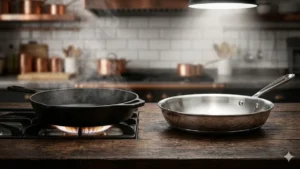
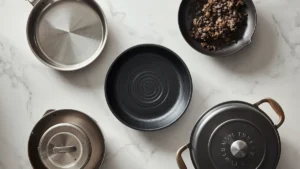
Cookware is the layer of your kitchen you touch every single day, which makes choosing it more consequential than most appliance upgrades. Material decides how food browns, how evenly heat spreads, and how forgiving the pan is when dinner runs late — stainless, nonstick, cast iron, and carbon steel each reward a different style of cooking. This hub organizes KitchenApex’s cookware guides so you can match the material and the set to the way you actually cook.
Start Here: Our Best Cookware Picks
Pick a guide based on the material you want to live with — each review covers performance, maintenance, and long-term value.
- Best Cookware for Home Kitchens — our pillar rundown of the sets worth buying
- Cuisinart 17-Piece Cookware Set Review — a full stainless set, tested piece by piece
- 17-Piece Nonstick Pots & Pans Set Review — what a large nonstick set does well, and where it wears
Compare Before You Buy
Material matchups and set-versus-open-stock decisions — the two places where cookware money is won or lost.
- Cookware Buying Guide — materials, construction, and how to choose between sets and open stock
- Kitchen Tools Checklist — the cookware and tools a working kitchen actually needs
Cooking With Your Cookware
Good pans reward good habits. These guides cover the techniques and everyday cooking that make a set earn its place — and they double as honest long-term performance checks.
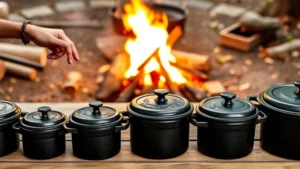
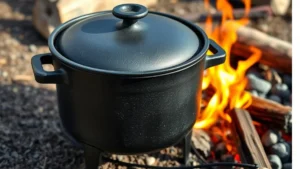
- Cooking with a Dutch Oven over a Campfire — heavy cast iron at its most demanding
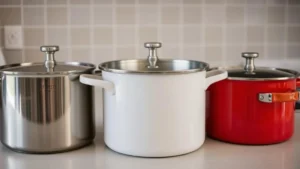
- Large-Batch Stockpot Meals — putting the biggest pot in the set to work
Explore the Other KitchenApex Silos
Cookware FAQs
Which cookware material is best for beginners?
Start with one good stainless skillet and one inexpensive nonstick. Stainless handles high-heat searing, sauces, and oven work and will last decades; the nonstick covers eggs and delicate fish while you learn heat control. That two-pan setup beats most boxed sets.
Is an expensive cookware set worth it?
Rarely as a set. Sets bundle pieces you will never use to inflate the perceived value. Buying three or four quality open-stock pieces — skillet, saucepan, stockpot, sauté pan — usually costs the same or less and cooks better. The buying guide above shows how to compare sets on the pieces you will actually use.
Can I use metal utensils on nonstick?
Avoid them. Metal scratches shorten coating life dramatically; wood, silicone, or nylon utensils cost little and extend the pan’s usable life from a couple of years to several.
How do I stop food from sticking to stainless steel?
Preheat the empty pan properly, then add oil and let it shimmer before food goes in. Protein that is ready to turn releases on its own — forcing it early is what tears and sticks.