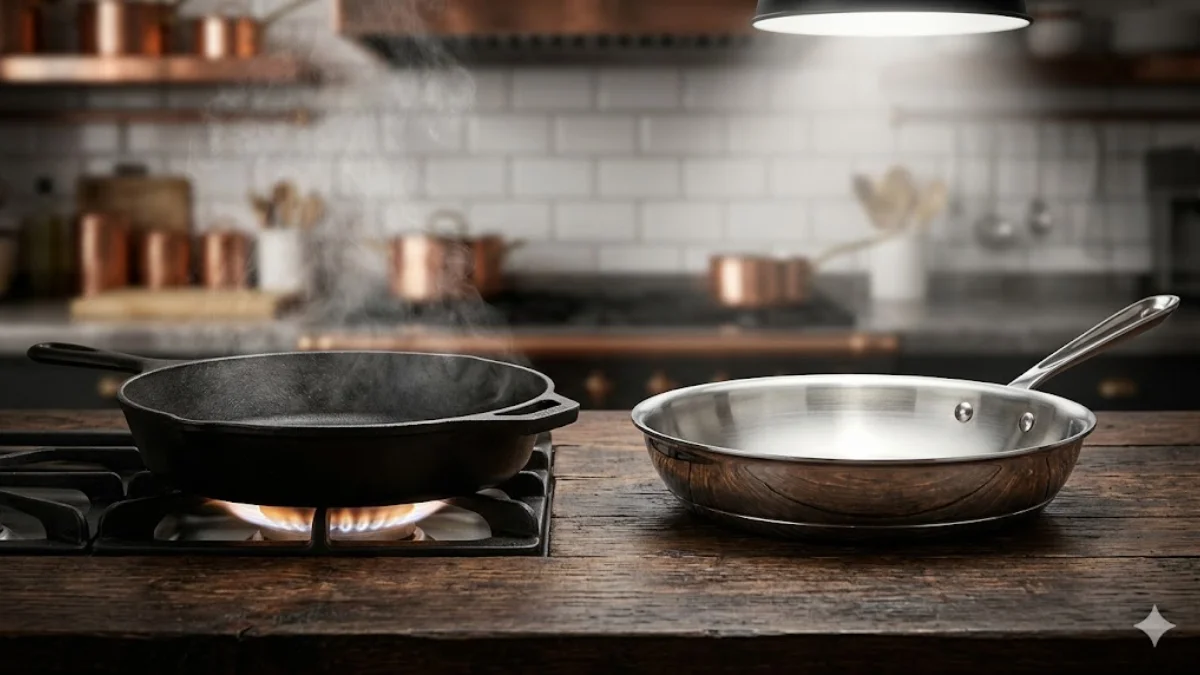
Choosing between cast iron and stainless steel isn’t about finding the “best” pan; it’s about matching a tool to your cooking style. In 2026, as home cooking trends lean toward longevity and non-toxic materials, these two titans remain the gold standard.
This guide breaks down everything from heat conductivity to maintenance rituals, helping you decide which workhorse belongs on your stovetop.
Quick Answer: Cast Iron vs. Stainless Steel
Choose Cast Iron if you prioritize high-heat searing (steaks), baking (cornbread), and a natural non-stick surface that improves with age. It is heavy and requires “seasoning” but lasts for generations.
Choose Stainless Steel if you want a lightweight, versatile, and “set-and-forget” pan. It is ideal for acidic sauces, delicate deglazing, and everyday boiling or sautéing. It is dishwasher-safe and requires zero special maintenance.
The Pro Tip: Most professional kitchens don’t choose. They use stainless steel for 80% of tasks and cast iron for the 20% that require extreme heat.
Comparison at a Glance
| Feature | Cast Iron | Stainless Steel |
|---|---|---|
| Heat Retention | Exceptional (stays hot) | Moderate (cools faster) |
| Heating Speed | Slow & uneven | Fast & responsive |
| Maintenance | High (Requires seasoning) | Low (Dishwasher friendly) |
| Weight | Heavy (10–12 lbs for a 12″) | Light to Medium (3–5 lbs) |
| Non-Stick Potential | High (when seasoned) | Low (requires oil/technique) |
| Reactivity | Reactive (leaches iron) | Non-reactive (inert) |
| Oven-Safe Temperature | Up to 500°F+ (no limit on bare iron) | Up to 500°F (handle-dependent) |
| Price Range | $30–$300 | $50–$400+ |
| Lifespan | Generations | Decades |
| Best For | Searing, baking, frying | Sauces, sautéing, boiling |
Heat Performance: Power vs. Precision
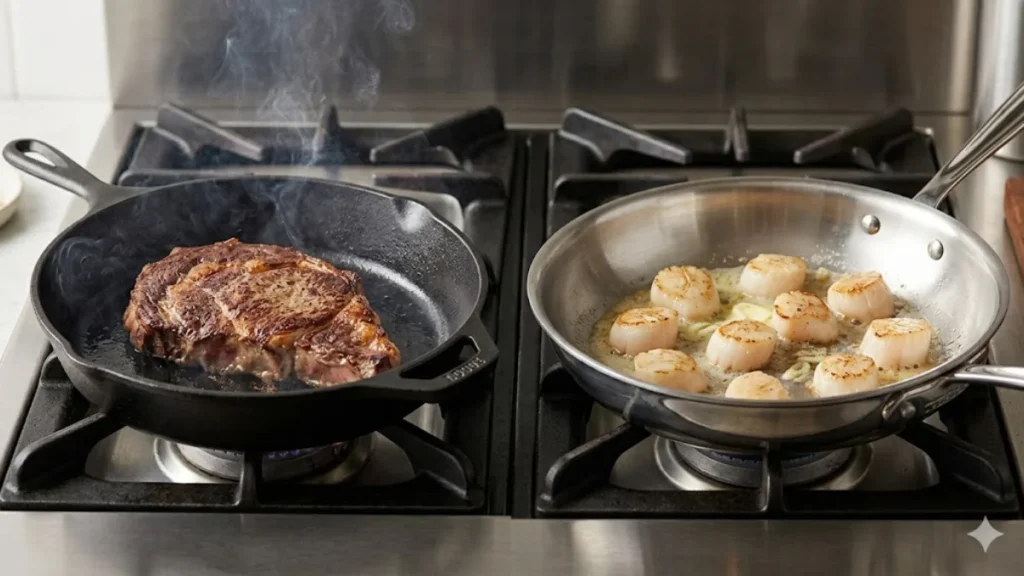
The fundamental difference lies in how these metals handle energy.
Cast Iron: The Heat Battery
Cast iron is thick and dense. It takes a long time to heat up, but once it’s hot, it stays hot. This is known as thermal mass. When you drop a cold ribeye onto a cast-iron skillet, the surface temperature doesn’t plummet. This results in the “Maillard reaction”—that crusty, brown sear that locks in flavor.
Cast iron also excels at even heat distribution over time. While it heats unevenly at first (you’ll notice hot spots directly over the flame), it eventually equalizes across the cooking surface—making it ideal for tasks like baking a skillet cornbread that needs uniform bottom heat.
Stainless Steel: The Precision Instrument
Stainless steel (especially high-quality 3-ply or 5-ply) is designed for responsiveness. If you turn the flame down, the pan reacts almost instantly. This makes it superior for delicate tasks like making a béchamel sauce or sautéing garlic, where a few seconds of excess heat can lead to burning.
The key to quality stainless steel is the clad construction: a core of aluminum or copper sandwiched between steel layers. This gives you the best of both worlds—steel’s durability and the thermal conductivity of the inner core.
Compare the latest ovens and air fryers in our Best Heating Appliances for Home Kitchens (2026 Guide).
Advantages and Disadvantages
Cast Iron: Pros and Cons
Advantages:
- Unmatched heat retention for superior searing and crust development
- Becomes more non-stick over time with proper seasoning
- Naturally chemical-free alternative to PTFE/Teflon coatings
- Oven-to-table versatility; doubles as a serving vessel
- Nearly indestructible; can be fully restored even from heavy rust
- Can impart beneficial dietary iron into food
- Works on all heat sources, including open fire and outdoor grills
- A true “buy it for life” investment
Disadvantages:
- Very heavy; a 12-inch skillet can weigh 8–12 lbs, making it difficult for those with wrist or arm issues
- Slow and uneven initial heating requires a longer preheat time
- Reacts with acidic foods (tomatoes, citrus, wine), potentially affecting flavor and stripping seasoning
- Requires a specific care routine to prevent rust
- Not dishwasher-safe
- Poor conductors at low heat; not ideal for delicate tasks
- Can crack or warp under sudden extreme temperature changes (thermal shock)
Stainless Steel: Pros and Cons
Advantages:
- Highly responsive to heat changes for precise cooking control
- Non-reactive with all food types, including acidic ingredients
- Extremely low maintenance; dishwasher-safe
- Lightweight and easy to maneuver
- Allows fond (browned bits) to develop for rich pan sauces
- Hygienic and easy to inspect for cleanliness
- Durable and resistant to corrosion, warping, and chipping
- Compatible with metal utensils
Disadvantages:
- Food sticks easily without proper preheating and fat usage
- Lower heat retention than cast iron, making it less ideal for searing thick cuts
- Hot spots can develop in lower-quality single-ply pans
- High-quality multi-clad options can be expensive
- Discolors (rainbow staining) and shows water spots over time
- Does not develop a non-stick surface; a technique is always required
The Maintenance Myth: Is Cast Iron Really Hard?
Many beginners avoid cast iron because they fear the “seasoning” process.
Cast Iron Care: You cannot put it in the dishwasher. You must dry it immediately to prevent rust and occasionally rub it with a light layer of oil. However, modern “pre-seasoned” pans have made this easier than ever.
Stainless Steel Care: It is practically indestructible. You can scrub it with steel wool, soak it overnight, or toss it in the dishwasher. It won’t rust, chip, or react with acidic foods like tomatoes or wine.
Cleaning and Maintenance for Longevity
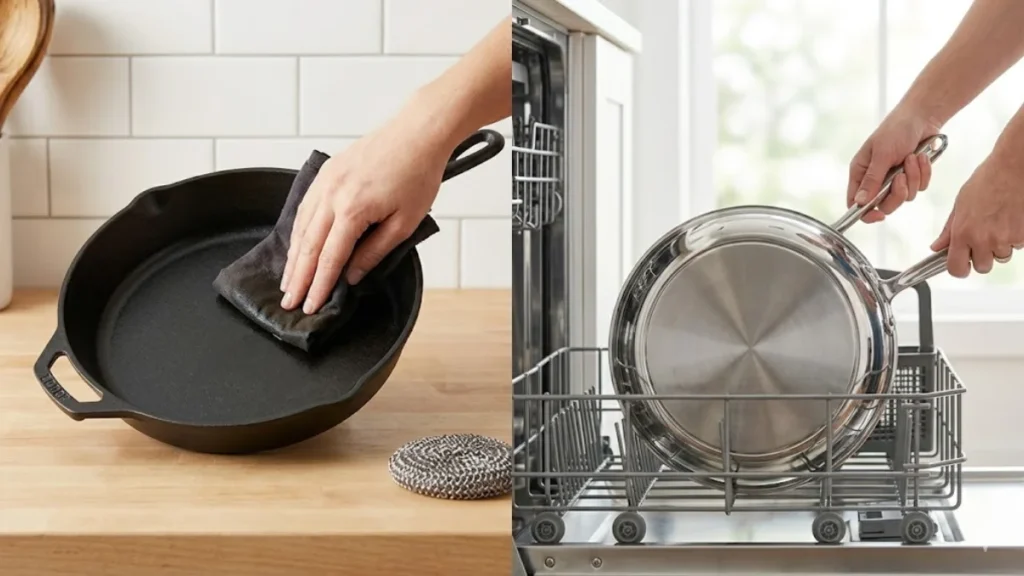
Proper care is what separates a pan that lasts a lifetime from one that ends up in a garage sale. Follow these protocols to maximize the lifespan of both materials.
Cast Iron: Step-by-Step Cleaning Guide
After every use:
- While the pan is still warm (not scalding hot), rinse it under hot water.
- Use a stiff brush, a chain mail scrubber, or a small amount of mild dish soap to remove food debris. Contrary to old wisdom, modern dish soap is lye-free and safe for occasional use.
- Rinse thoroughly and dry immediately with a kitchen towel—never air dry, as moisture causes rust.
- Place the pan on the stovetop over low heat for 1–2 minutes to ensure it is completely dry.
- Apply a very thin layer of a high smoke-point oil (flaxseed, vegetable, or Crisco) to the entire surface, including the exterior and handle, using a paper towel.
- Wipe off any excess oil until the surface looks almost dry, not greasy. Too much oil creates a sticky, gummy surface.
Monthly or as needed:
- Re-season the pan in the oven if the surface becomes dull, patchy, or if food starts to stick more than usual.
- To re-season: preheat your oven to 450–500°F. Coat the pan thinly in oil, place it upside down on the top rack (with foil below to catch drips), and bake for one hour. Let it cool in the oven.
Rust Removal: If rust spots appear, scrub with steel wool and coarse salt until the rust is gone, rinse, dry completely, and immediately re-season. No cast-iron pan is beyond saving.
What to Avoid:
- Soaking in water or leaving wet overnight
- Cooking highly acidic foods repeatedly in a new, under-seasoned pan
- Drastic temperature changes (e.g., placing a scorching pan under cold water)
Stainless Steel: Step-by-Step Cleaning Guide
After every use:
- Allow the pan to cool to room temperature before washing. Sudden temperature changes can warp even quality pans over time.
- For everyday cleaning, wash with warm soapy water and a soft sponge. A dishwasher is acceptable, but it will dull the finish over time.
- For stuck-on food: deglaze while the pan is still warm by adding water and scraping with a wooden spoon—this lifts most residue effortlessly.
- For stubborn burns or discoloration: simmer a mixture of water and white vinegar (or Bar Keepers Friend paste) for a few minutes, then scrub.
Tackling Common Stainless Steel Problems:
- Rainbow staining (heat tint): This is caused by overheating and is purely cosmetic. Remove it with Bar Keepers Friend or a paste of baking soda and water.
- White mineral deposits (hard water): Simmer water with a splash of white vinegar in the pan, then rinse clean.
- Pitting (small craters): Usually caused by salting water before it boils. Always add salt after the water has already boiled to prevent the surface from forming.
- Scratches: Unavoidable over time but largely cosmetic. Polish with Bar Keepers Friend in the direction of the grain to blend scratches.
What to Avoid:
- Letting salty water sit on the surface before boiling
- Using bleach-based cleaners, which can pit the steel
- Stacking pans without pan protectors, which causes deep scratches
Versatility: From Searing to Simmering
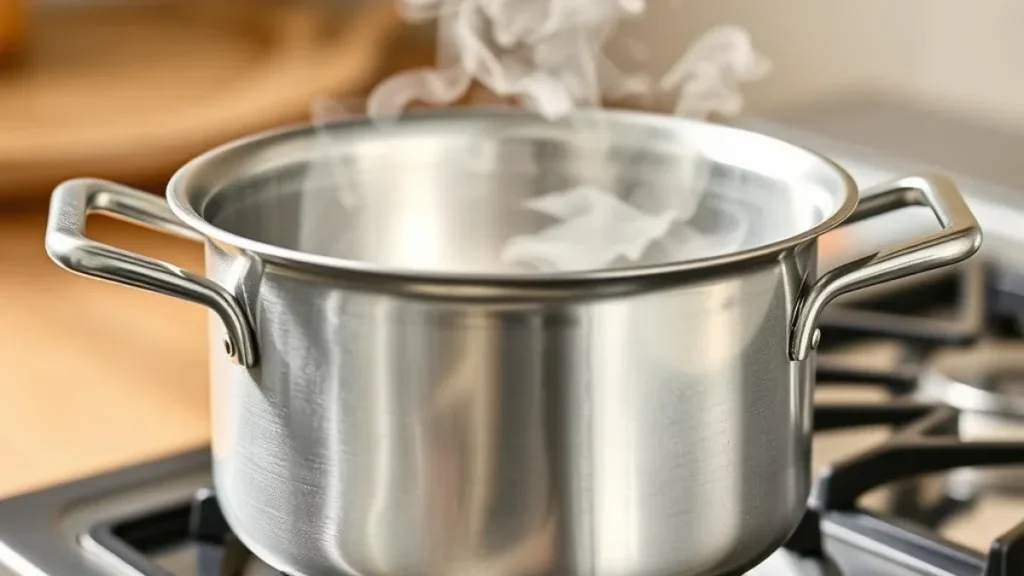
Stainless steel is the king of versatility. Because it is non-reactive, you can cook a slow-simmered tomato sauce for hours without the metal leaching a “metallic” taste into your food.
Cast iron is the king of the “oven-to-table” transition. It excels at deep-frying, shallow-frying, and baking. A cast-iron skillet is essentially a handheld pizza stone, making it the best choice for crispy-bottomed focaccia or skillet cookies.
Durability and Value
In a world of “disposable” non-stick pans that last two years, both of these materials are sustainable choices.
Cast Iron is effectively a “buy it for life” item. Many people use pans passed down from their great-grandparents. Even a rusted pan can be restored.
Stainless Steel High-quality multi-clad steel will also last decades, though the rivets or handles may eventually show wear after 30+ years of heavy use.
How to Buy: A Buyer’s Guide
Not all cast iron and stainless steel cookware is created equal. Here is what to look for before you spend your money.
Buying Cast Iron: What to Look For
Budget ($20–$50): Brands like Lodge (USA-made) are the gold standard for entry-level cast iron. Their pre-seasoned skillets are ready to use out of the box and perform comparably to far more expensive options.
Premium ($100–$300): Brands like Smithey, Stargazer, and Field Company produce refined, lighter-weight cast iron with smoother cooking surfaces—closer to the smooth texture of antique pans. These are worth it if weight is a concern.
Key Specs to Check:
- Weight: A 10-inch skillet should weigh around 5–8 lbs. Heavier isn’t always better.
- Surface texture: Rough, pebbly textures (common in budget pans) require more seasoning to become non-stick. Smoother surfaces perform better out of the box.
- Handle length: Longer handles stay cooler on the stovetop.
- Pour spouts: Dual pour spouts on both sides are a small but useful convenience.
- Compatibility: Verify induction compatibility if needed (most cast iron is compatible).
What to Avoid:
- Enamel-coated cast iron (e.g., Le Creuset) operates differently and cannot be seasoned; great for braises but not a substitute for raw cast iron.
- Very cheap, unknown-brand pans with uneven walls or rough welds.
Buying Stainless Steel: What to Look For
Budget ($30–$80): Tramontina and Cuisinart make capable 3-ply stainless pans at accessible price points, widely available at warehouse stores.
Mid-Range ($80–$200): All-Clad D3 and Demeyere’s Atlantis line are consistently rated as the best all-around performers. The D3 is lighter; Demeyere runs heavier but with superior heat distribution.
Premium ($200–$400+): Hestan, Made In, and Misen offer excellent quality with modern designs. These are ideal for enthusiasts who cook daily.
Key Specs to Check:
- Ply count: 3-ply (steel/aluminum/steel) is the minimum for even heating. 5-ply adds extra layers for better heat distribution, but also more weight and cost. Beyond 5-ply, gains are marginal.
- Core material: Aluminum cores are standard and excellent. Copper cores (found in some premium lines) offer better conductivity but at a high price premium.
- Handle construction: Look for hollow, riveted stainless steel handles, which stay cooler longer than solid handles.
- Oven-safe temperature: Most high-quality stainless steel pans are oven-safe up to 500°F. Check handle material—silicone-wrapped handles may have lower limits.
- Lid compatibility: Some pan lines sell lids separately. Glass lids are convenient for monitoring; stainless lids are more durable.
What to Avoid:
- Single-ply (disc-bottom) stainless pans, which heat unevenly and have hot spots.
- Pans with plastic or composite handles if you plan to use them in the oven frequently.
Avoid buyer’s remorse by following our Kitchen Buying Guides: How to Choose the Right Appliances & Tools.
Cooking Techniques: Getting the Most Out of Each Pan
Mastering Cast Iron
Preheating is non-negotiable. Always preheat your cast iron pan for at least 5–10 minutes over medium heat before adding oil or food. Skipping this step is the number one cause of sticking.
Preheat the oven for baking. For skillet cornbread or pizza, place the empty pan in the oven while it preheats. A hot pan creates an instant, crispy crust the moment batter hits the surface.
Deglaze carefully. You can deglaze cast iron with liquid, but acidic liquids (wine, tomatoes, citrus) used repeatedly can erode the seasoning and impart a metallic taste. For extended acidic cooking, use stainless steel.
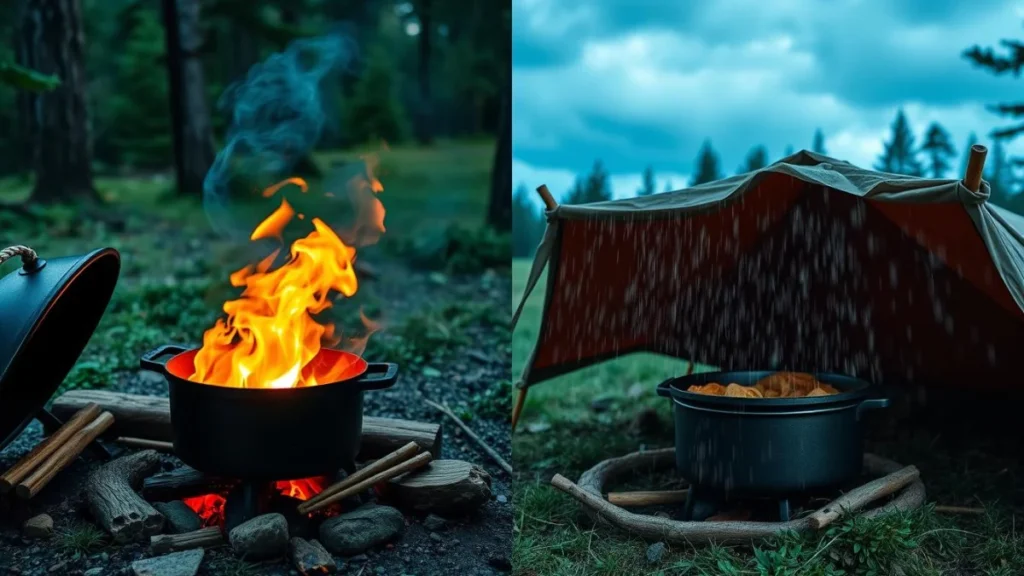
The camping advantage. Cast iron is the superior choice for camping and open-fire cooking. It handles flame, coals, and campfire grates without warping or sustaining damage.
Mastering Stainless Steel
The water drop test (Leidenfrost effect). Before adding oil, flick a few drops of water into the pan. If the water sizzles and evaporates immediately, it’s not hot enough. If the drops bead up and dance across the surface in a single ball, the pan is at the perfect temperature. Add your oil now, and food will not stick.
Building fond for pan sauces. Stainless steel’s tendency to allow food to stick initially is actually an asset. That browned layer (fond) on the bottom of the pan dissolves when you add liquid, creating the flavor base for a classic pan sauce (au jus, wine reduction, cream sauce).
The protein release rule. When searing proteins like chicken breast or fish, do not try to move them. They will release naturally from the pan when the sear is complete—usually 3–4 minutes. Forcing them tears the crust and causes it to stick.
To get the most out of your pans and techniques, read Cookware & Cooking Methods: Practical Guides for Everyday Cooking
Environmental and Safety Considerations
In 2026, cookware safety is a top-of-mind concern for many households, largely driven by awareness around PFAS (per- and polyfluoroalkyl substances) chemicals found in traditional non-stick coatings.
Cast Iron: Completely free of synthetic coatings. The only thing between you and the metal is polymerized oil (seasoning). It is one of the most environmentally and biologically safe cooking surfaces available.
Stainless Steel: Also completely free of PFAS and synthetic coatings. Grade 18/10 stainless steel (containing 18% chromium and 10% nickel) is the standard for cookware and is considered biologically inert by food safety regulators worldwide. The small amounts of nickel leaching reported in some studies are generally considered negligible for most individuals, though those with nickel allergies should exercise caution.
Both materials represent a significant environmental upgrade over disposable non-stick pans, which must be replaced every 2–5 years and contribute to landfill waste. A quality cast-iron or stainless steel pan is a multi-decade investment that substantially reduces consumption.
Ensure your workspace is secure by reading Kitchen Safety & Appliance Myths: What Actually Matters.
Who Should Buy What?
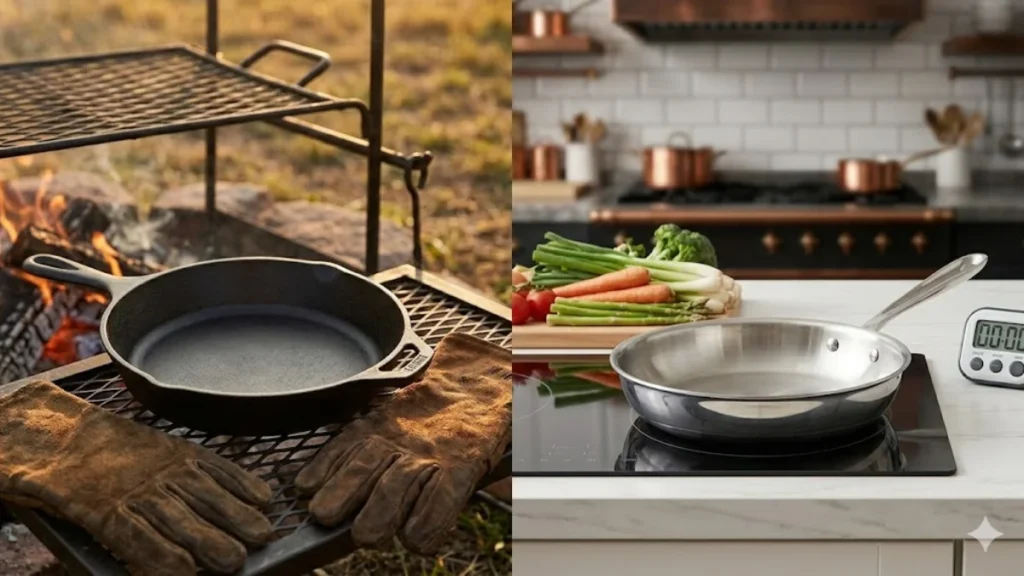
Choose Cast Iron if you:
- Are you a fan of outdoor cooking or camping?
- Want a chemical-free, natural, non-stick surface.
- Specializes in steaks, burgers, and fried chicken.
- Enjoy the ritual of caring for your tools.
- Bake regularly (cornbread, skillet cookies, focaccia, Dutch baby pancakes).
- Have an electric or gas stovetop where weight is not an issue.
- Want a single pan that transitions from stovetop to oven to table.
Choose Stainless Steel if you:
- Want a lightweight pan that is easy on the wrists.
- Cook a lot of pan sauces (pan-searing, then deglazing).
- Prefer the convenience of dishwasher cleaning.
- Cook many acidic dishes (lemon, vinegar, tomatoes).
- Cook delicate proteins like fish or eggs, which require precise heat control.
- Value a “wash and forget” maintenance experience.
FAQ: Common Questions for 2026
Can I use soap on cast iron?
Yes. Modern dish soap is gentle and does not contain lye (the ingredient that used to strip seasoning). A quick wash with soap won’t hurt a well-seasoned pan; just ensure you dry it thoroughly.
Does stainless steel make food stick?
Food sticks to stainless steel if the pan isn’t hot enough or if you don’t use enough fat. Use the Leidenfrost effect (the water drop test) to ensure your pan is at the right temperature before adding oil and food.
Is cast iron better for your health?
Cast iron can leach small amounts of dietary iron into your food, which can be a benefit for those with iron deficiencies. Stainless steel is considered “inert,” meaning it doesn’t add anything to your food, making it the safest choice for those sensitive to metal leaching.
Can I use these on induction cooktops?
Yes. Both cast iron and most modern multi-clad stainless steel are induction-compatible. If a magnet sticks to the bottom of the pan, it will work on induction.
How do I know if my stainless steel pan is truly multi-clad?
Look at the cross-section of the rim. A true multi-clad pan will show distinct layers of metal all the way up the sides. An “encapsulated bottom” or disc-bottom pan has layering only at the base, leading to hot spots on the sides.
Can cast-iron pans warp?
True warping is rare in cast iron due to its thickness, but it can crack under extreme thermal shock (e.g., taking a pan from a very high flame and immediately running cold water over it). Always let your pan cool before washing.
What size should I buy first?
For cast iron, a 10-inch or 12-inch skillet covers 90% of use cases. For stainless steel, a 10-inch skillet and a 3-quart saucepan form the most versatile starter set.
Is a carbon steel pan similar to a cast-iron pan?
Carbon steel (the material used in most professional restaurant woks and French crêpe pans) is a hybrid between the two: lighter than cast iron, requires seasoning like cast iron, but heats more responsively. It is worth considering as a third option if you want cast iron performance in a lighter body.
Final Verdict
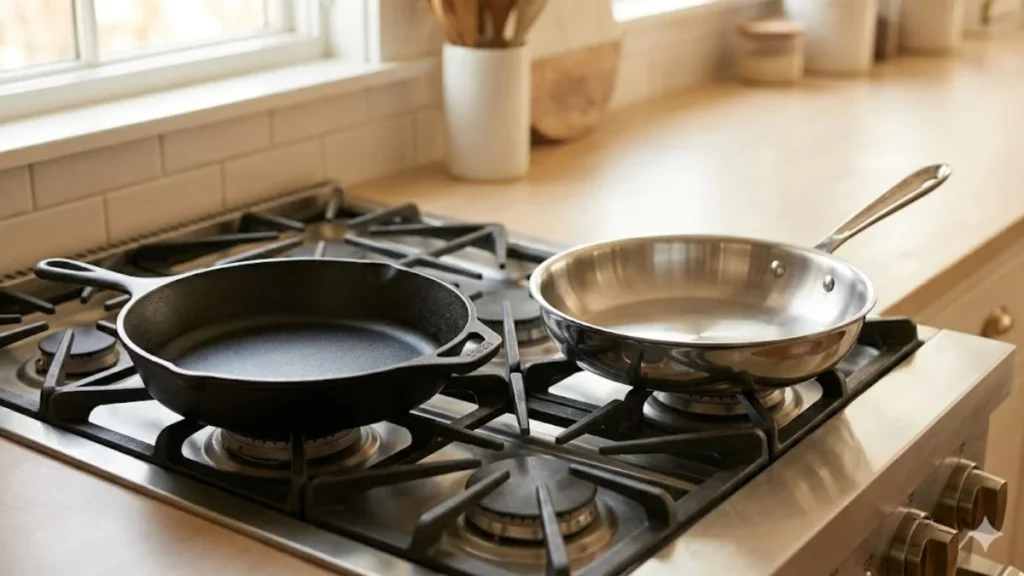
In 2026, the consensus among culinary experts remains the same: the perfect kitchen needs both.
If you are just starting out, buy a 12-inch Stainless Steel Skillet for your daily eggs, pastas, and vegetables. Then, supplement it with a 10-inch Cast Iron Skillet specifically for your high-heat meats and weekend baking.
Together, these two pans will handle 99% of any recipe you encounter—and if you take care of them, they will outlast every other piece of equipment in your kitchen.
Start building your collection with the Essential Kitchen Appliances for Home Use (2026 Guide).