Pressure cookers turn tough cuts and dried beans into weeknight dinners, but the choice between electric multicookers and stovetop models confuses almost everyone. They cook differently, fail differently, and suit different kitchens. This hub collects every KitchenApex pressure cooker guide — our top picks, the safety and comparison knowledge that matters, and the mistakes to avoid once yours is on the counter.
Start Here: Our Best Pressure Cooker Picks
Each review looks at how the cooker behaves on real recipes — beans, roasts, rice, and everything in between.
- Best Pressure Cooker Overall — the T-fal Clipso stainless stovetop, reviewed
- Best Electric Pressure Cooker — the Instant Pot Duo, reviewed in full
- Best Budget Pressure Cookers — the seven best under $50, expert-reviewed
- Are Instant Pots Healthy? — what the cooking method really does to food
Compare Before You Buy
Electric versus stovetop, multicooker versus dedicated cooker — the differences show up in speed, control, and how the machine fits your cooking style.
- Breville Fast Slow Pro vs. Instant Pot Duo — the premium multicooker against the value champion
- How to Choose a Pressure Cooker — the complete buying guide
Using Your Pressure Cooker: Times, Hacks & Techniques
Once the machine is on the counter, these guides are the ones you come back to — timing, shortcuts, and the recipes that show what pressure cooking does best.
- Pressure Cooking Times Chart — the reference chart for everyday ingredients
- 10 Instant Pot Hacks — shortcuts that make the multicooker earn its counter space
- How to Cook Frozen Chicken in a Pressure Cooker — the weeknight rescue technique, done safely
- Kitchen Safety: Appliance Myths vs. What Actually Matters — pressure cooking safety in context
Explore the Other KitchenApex Silos
Pressure Cooker FAQs
Electric or stovetop — which should I buy?
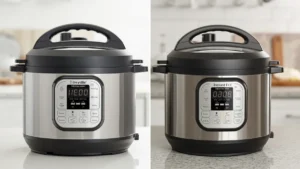
Electric models are set-and-forget: program, walk away, and the machine handles pressure and keeps food warm. Stovetop models reach higher pressure, so they cook faster and give you more control for searing and quick releases. Busy hands-off cooks suit electric; cooks who like control suit stovetop — the Breville vs. Instant Pot comparison above shows both philosophies head to head.
Are pressure cookers actually safe?
Yes. Modern machines have multiple redundant locking and pressure-release mechanisms — the stovetop explosions people remember belong to decades-old designs. The real risks today are mundane: overfilling, blocked vents, and forcing a lid open before pressure fully drops.
Instant Pot versus a regular pressure cooker — what’s the difference?
“Instant Pot” is a brand that became shorthand for electric multicookers, which also do slow cooking, sautéing, rice, and yogurt. A traditional stovetop pressure cooker does one job — pressure — and usually does it faster and at higher pressure. The buying guide above breaks down which extras you will actually use.
Does pressure cooking destroy nutrients?
No — shorter cooking times and little added water generally preserve nutrients as well as or better than long boiling. Our “Are Instant Pots Healthy?” review looks at the evidence in plain language.