Pressure release is part of the cooking process, not just the last step before opening the lid. Choosing the wrong release method can leave food undercooked, overcooked, or foamy, and doing it carelessly can cause a real steam burn.
This guide explains both release methods, when to use each, and the safety rules that matter every time.
Quick answer:
Natural release allows pressure to fall gradually on its own and is well-suited to foods that foam, expand, or require gentle finishing. A quick release lets steam out immediately through the valve and suits foods that can overcook if left under pressure for too long.
How Pressure Release Works
What happens inside an electric pressure cooker. Once the cooking time ends, the pressure inside the pot remains high. The lid stays locked until enough pressure has been released, one way or another, for it to open safely.
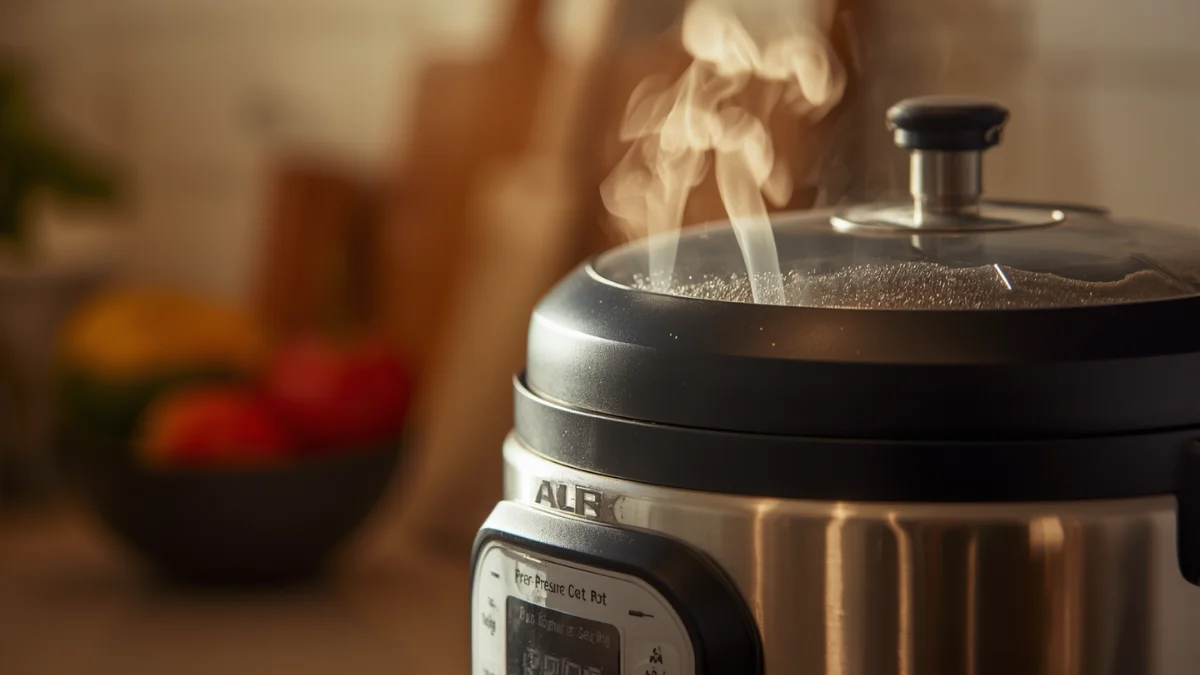
Why steam and pressure require care. The steam venting during release is significantly hotter than boiling water vapor from an open pot, and it escapes with real force. Both release methods are safe when done correctly, but both require attention.
What Is Natural Release?
Definition. Natural release means turning off or unplugging the cooker and letting the pressure drop on its own, with no valve opened manually, until the pin drops and the lid unlocks.
Typical timing. This can take anywhere from 10 to 30 minutes, depending on the volume and type of food inside.
Advantages and disadvantages. Natural release gives food extra gentle cooking time as pressure slowly falls, which suits foods that benefit from resting. The tradeoff is added total cooking time, which matters if you are short on time.
What Is Quick Release?
Definition. Quick release means manually opening the pressure valve immediately after cooking ends, allowing steam to escape rapidly until the pressure drops enough for the lid to open.
Typical timing. This usually takes only one to three minutes.
Advantages and disadvantages. Quick release saves significant time and immediately stops the cooking process, preventing overcooking of delicate foods. The tradeoff is that foamy or starchy foods can spray liquid out through the valve if released this way.
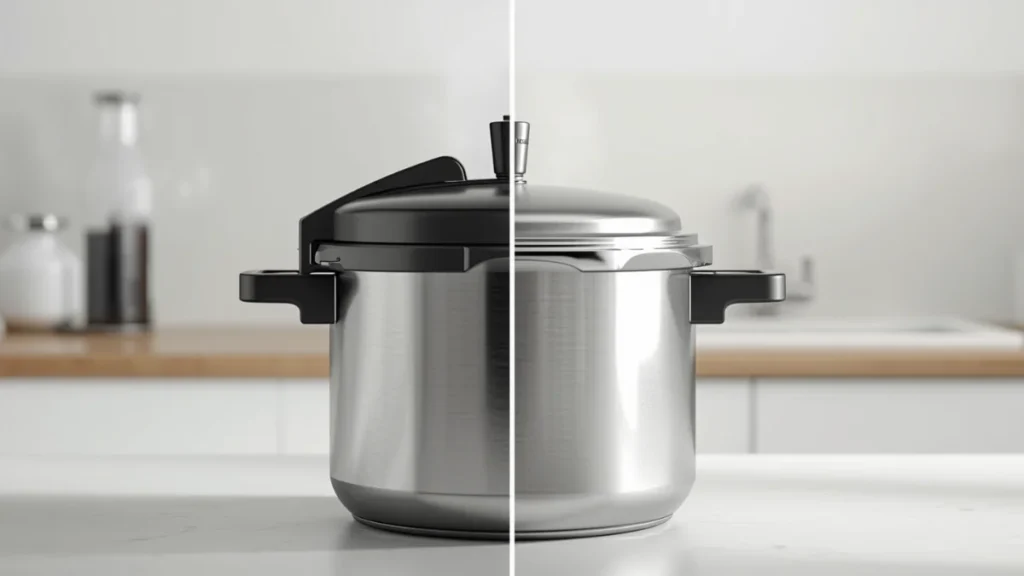
Natural Release vs Quick Release Comparison
| Factor | Natural Release | Quick Release |
|---|---|---|
| Cooking effect | Gentle extra cooking as pressure falls | Cooking stops immediately |
| Safety considerations | Lower risk of spatter, but longer wait before opening | Higher risk of spatter or burns if not done carefully |
| Time | 10–30+ minutes | 1–3 minutes |
| Best food types | Beans, soups, large cuts of meat | Vegetables, seafood, tender cuts |
When to Use Natural Release
- Beans — natural release prevents the skins from bursting and clogging the valve.
- In soups and broths, the gradual pressure drop keeps liquid from spraying out through the valve.
- Oatmeal and rice — starchy foods foam under pressure, and a quick release can force that foam out through the valve.
- Large cuts of meat — natural release gives the meat time to finish gently and often improves tenderness.
- Foods that foam or expand — this is the single biggest reason to choose natural release over quick release.
When to Use Quick Release
- Vegetables — they overcook quickly when kept under continuous heat, so stopping the process immediately preserves texture.
- Seafood — delicate proteins like shrimp and fish — go from perfectly cooked to rubbery within minutes if overcooked.
- Tender cuts — quick-cooking cuts don’t need or benefit from extra time under falling pressure.
- Foods prone to overcooking — anything with a narrow window between “done” and “overdone” benefits from stopping the cooking process on schedule.
What Is a 10-Minute Natural Release?
Some recipes call for a hybrid approach: let the cooker sit undisturbed for a set time, often 10 minutes, then manually quick-release whatever pressure remains. This gives food a short gentle finish while still saving time compared to a full natural release, and it is common with rice, meat, and some soups.
Safety Rules for Quick Release
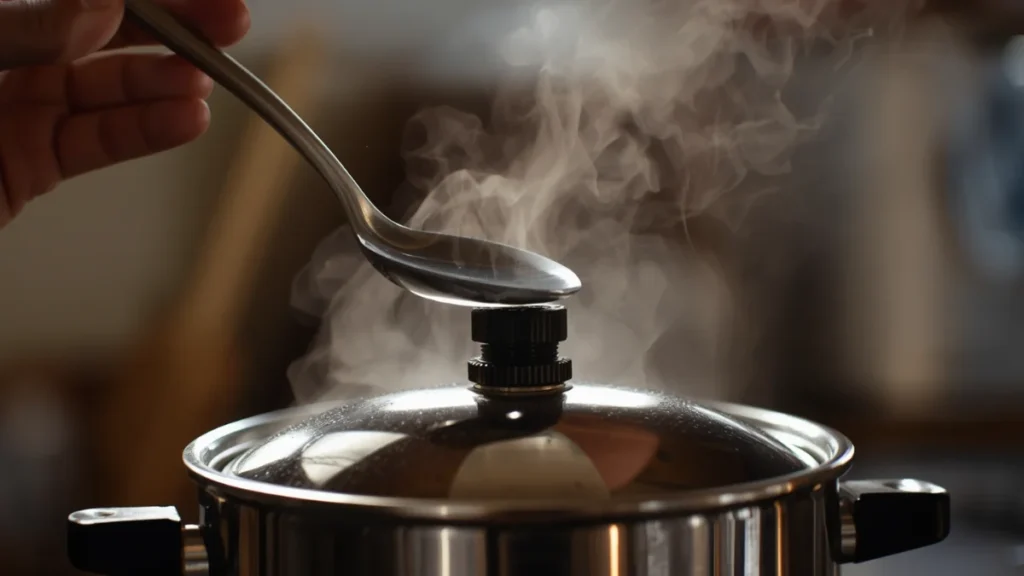
- Keep hands and face away from steam. Stand back and to the side when opening the valve, since steam vents upward and can travel further than expected.
- Use a long utensil if the model requires it. Some pressure cookers recommend using a spoon handle or dedicated tool to flip the valve rather than reaching directly over it.
- Keep cabinet surfaces clear. Steam venting directly under a cabinet can damage the cabinet finish over time; make sure there is clearance above the valve.
- Never force the lid open. If the lid resists opening, pressure has not fully released yet. Wait, and never use force or tools to pry it open.
Common Mistakes
Quick-releasing foamy foodsThis is the most common cause of the sputtering, spitting valve experience many new pressure cooker owners describe.
Opening too earlyAttempting to open the lid before the pressure pin has fully dropped, on either release method, is a safety risk, and most modern cookers include a lock that prevents this.
Ignoring the recipe's release methodRecipes usually specify a release method for a reason tied to the specific food’s texture and safety, not as an arbitrary preference.
Overfilling the cookerPressure cookers have a maximum fill line, often lower for foods that foam or expand; overfilling increases the risk of food or liquid escaping through the valve during release.
FAQ
Is natural release safer than quick release?
Both are safe when done correctly. Natural release carries a lower risk of spatter because there is no manual valve venting, but quick release is not inherently dangerous if you follow standard safety steps.
Can I use quick release for beans?
It is not recommended. Beans foam and their skins can burst under quick release, which risks clogging the valve or spraying liquid out of it.
Why is steam coming from my pressure cooker?
Some steam release during cooking, especially near the valve, is normal for most models. Continuous heavy steam release throughout cooking, rather than just at the release stage, can indicate a sealing issue and is worth checking against the manufacturer’s troubleshooting guide.
What happens if I open a pressure cooker too soon?
Most modern electric pressure cookers have a lid lock that physically prevents opening until internal pressure has dropped to a safe level, which is an important built-in safeguard.
Related Reading:
- Pressure Cooker Buying Guide (2026)
- Instant Pot Duo in 2026 Review
- 10 Instant Pot Hacks You’ll Wish You Knew Sooner
- How to Cook Frozen Chicken in a Pressure Cooker