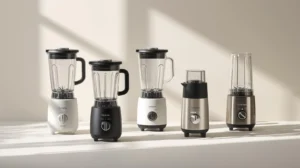
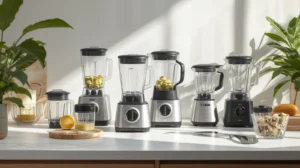
Blenders look alike on a store shelf and behave very differently on a kitchen counter. Motor power, jar geometry, blade speed, and noise all trade off against each other, and a machine that purees soup beautifully can still fail at frozen fruit. This hub organizes every KitchenApex blender guide so you can move from “what should I buy?” to “how do I get the most out of it?” in a few clicks.
Start Here: Our Best Blender Picks
Pick the guide that matches how you actually cook. Each one explains who the machine is for, what it does well, and where it frustrates people.
- Best Blender Overall — the flagship review, updated for 2026
- Best Blender for Smoothies — tested with frozen berries, ice, and fibrous greens
- Best Budget Blender — the Hamilton Beach Power Elite, reviewed for everyday blending
- Best Compact Personal Blender — the Ninja Fit for single servings and ice
Compare Before You Buy
These guides break down the features that actually change results — wattage versus blade design, jar shape, pitcher vs. personal cups — instead of spec-sheet marketing.
- Best Blenders for Smoothies & Juices — smoothie and juice machines compared side by side
- Blender vs. Food Processor — when one combo appliance can do both jobs
Blender Care, Cleaning & Everyday Tips
A good blender lasts for years if you treat it right — and most “my blender stopped working” stories trace back to a handful of avoidable mistakes.
- How to Clean a Blender — the fast routine that keeps blades sharp and the jar from fogging
- 7 Blender Mistakes That Ruin Smoothies — order of ingredients, liquid ratios, and more
- Smoothie Tips & Ingredients Guide — build better smoothies, whatever machine you own
Explore the Other KitchenApex Silos
Blender FAQs
How many watts does a good blender need?
For smoothies and pancake batter, 500–700 W is usually enough. Crushing ice, grinding nuts, or making nut butter regularly calls for 1,000 W or more — and, just as important, a sturdy jar and blade assembly that won’t rattle under load.
Is a personal blender enough, or do I need a full-size one?
If you mostly make one smoothie at a time, a compact personal blender is lighter, quieter, and easier to clean. Step up to a full-size jar when you cook for several people, blend hot soups, or want one machine that can handle doughs and batters too.
Can a blender replace a food processor?
Sometimes. Blenders excel with liquid and can chop in pulses, but they slice, shred, and knead poorly. Our Blender vs. Food Processor guide walks through which tasks each machine wins so you can decide whether a combo unit makes sense.
How do I stop my smoothies from being watery?
Start with less liquid than the recipe suggests, add frozen fruit instead of ice, and blend in stages — greens and liquid first, then thickeners. The ingredient guide above covers ratios in detail.