Your Air Fryer Is Smoking — Before You Panic, Read This
You’re halfway through cooking dinner. Then you see it — a thin ribbon of smoke curling out of your air fryer. Your stomach drops.
Is it broken? Is it dangerous? Should you unplug it?
In most cases, air fryer smoking is not an emergency. It’s not a sign your appliance is faulty. And it’s almost always something you can fix in under two minutes.
This guide tells you exactly why it’s happening and what to do right now.
Quick Answer
Air fryer smoking is almost always caused by one of four things:
- excess grease dripping onto the heating element
- leftover food residue from a previous cook
- too much oil in the basket, or
- cooking at too high a temperature.
The fix is usually to clean the basket, drain excess grease, or lower the heat. Smoke from a brand-new air fryer on first use is also completely normal.
Why This Matters More Than You Think
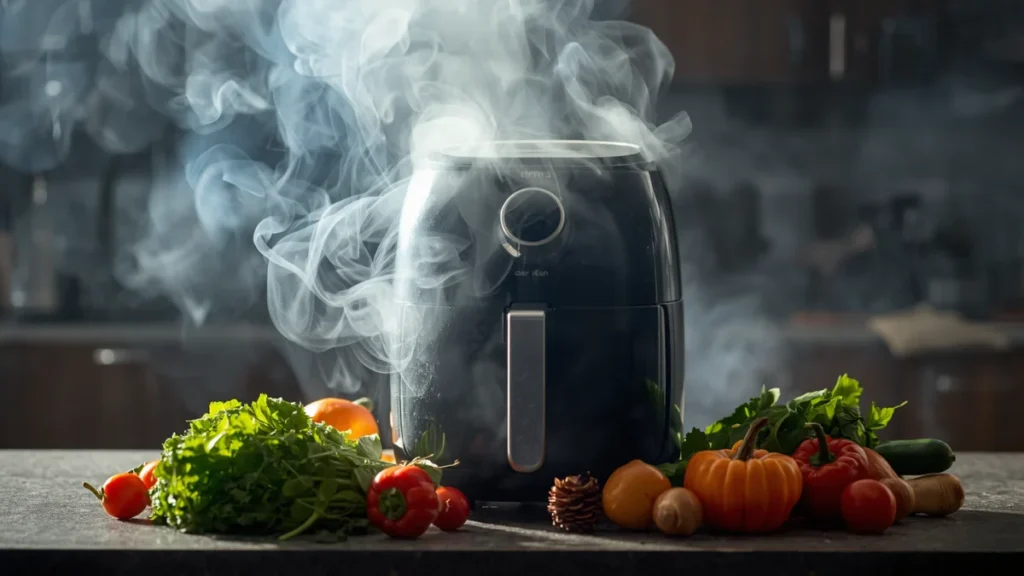
A smoking air fryer isn’t just annoying — it affects your food, your kitchen, and your appliance.
Grease smoke leaves odors that linger for hours. Burnt residue affects the taste of your next meal. And repeatedly ignoring the problem accelerates wear on the heating element.
The good news is that most causes are preventable. Once you know what’s triggering the smoke, it rarely happens again.
Jump to Your Air Fryer Smoke Problems
- How Does It Occur
- Grease Dripping onto the Heating Element
- Leftover Food Residue from a Previous Cook
- Too Much Oil in the Basket
- Cooking at Too High a Temperature
- Overcrowding the Basket
- Brand-New Air Fryer Smoke (This Is Normal)
How an Air Fryer Produces Smoke (The Quick Explanation)
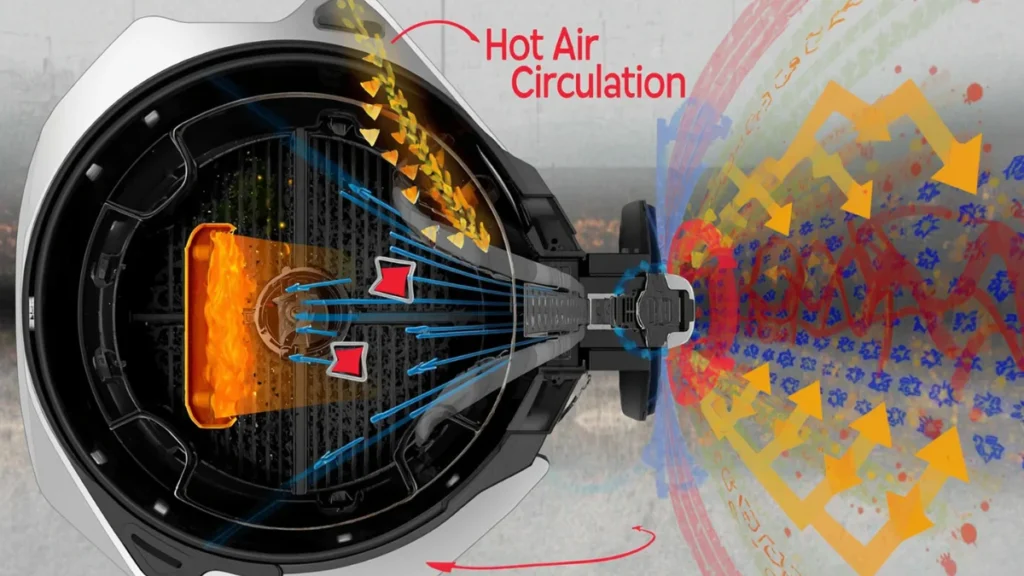
An air fryer circulates extremely hot air — often between 300°F and 400°F — around your food at high speed. A heating element sits directly above the basket.
Any grease, oil, or food particles that reach that element don’t just heat up. It burns. And burning grease produces smoke.
That’s the root cause behind almost every air fryer smoking situation.
The 6 Most Common Reasons Your Air Fryer Is Smoking

1. Grease Dripping onto the Heating Element
This is the number one cause of air fryer smoking — by a wide margin.
Fatty foods release grease as they cook. That grease drips down through the basket, pools in the drawer below, and eventually gets hot enough to burn. When it does, you get white smoke.
The foods most likely to trigger this:
- Bacon and sausages
- Chicken wings and thighs
- Burgers and fatty mince
- Pork belly and ribs
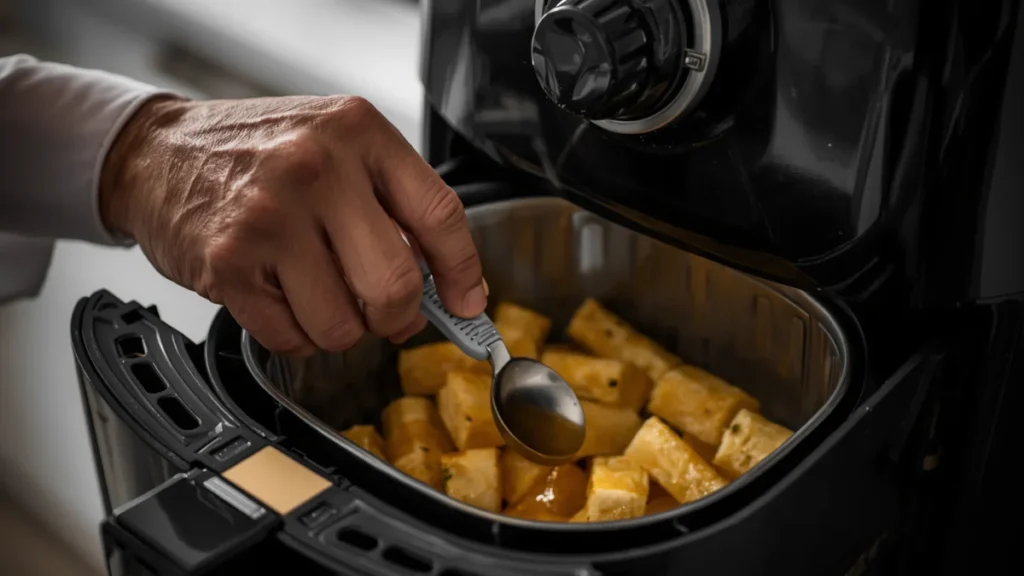
The fix: Add two to three tablespoons of water to the bottom drawer beneath the basket. It keeps dripped grease cool enough to prevent smoking. Drain the drawer mid-cook if you’re making something particularly fatty.
2. Leftover Food Residue from a Previous Cook
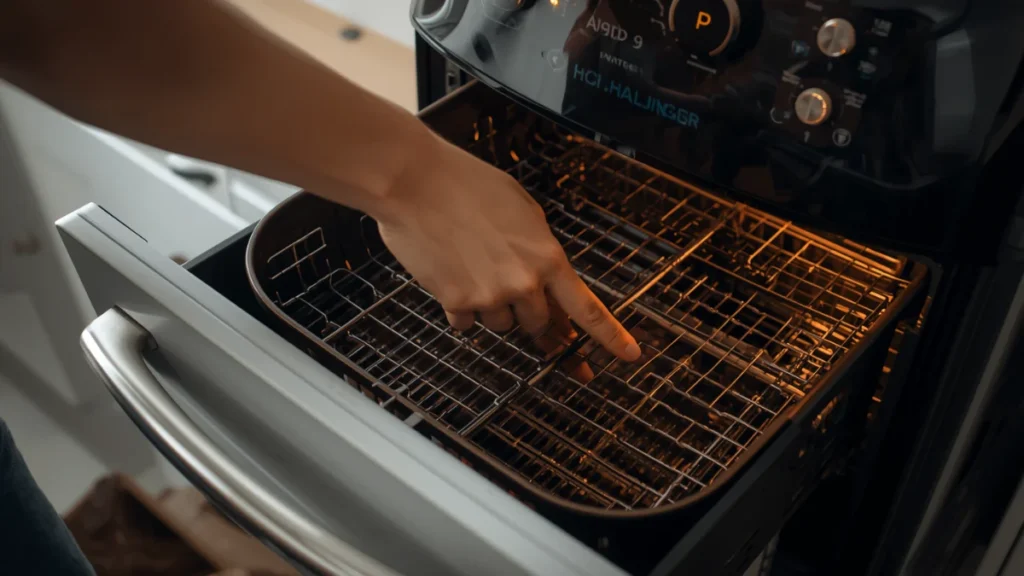
Your air fryer looked clean. But tiny crumbs and grease spots invisible to the naked eye are still there — stuck under the basket, on the sides of the drawer, near the heating element.
At high temperatures, those remnants burn. And burning residue produces smoke before your new food has even started cooking.
How to tell this is your problem: The smoke starts almost immediately after switching the appliance on, before the food has had time to release any fat.
The fix: Clean the basket, drawer, and heating area after every single use. A quick five-minute wash prevents almost all residue-related smoking.
3. Too Much Oil in the Basket
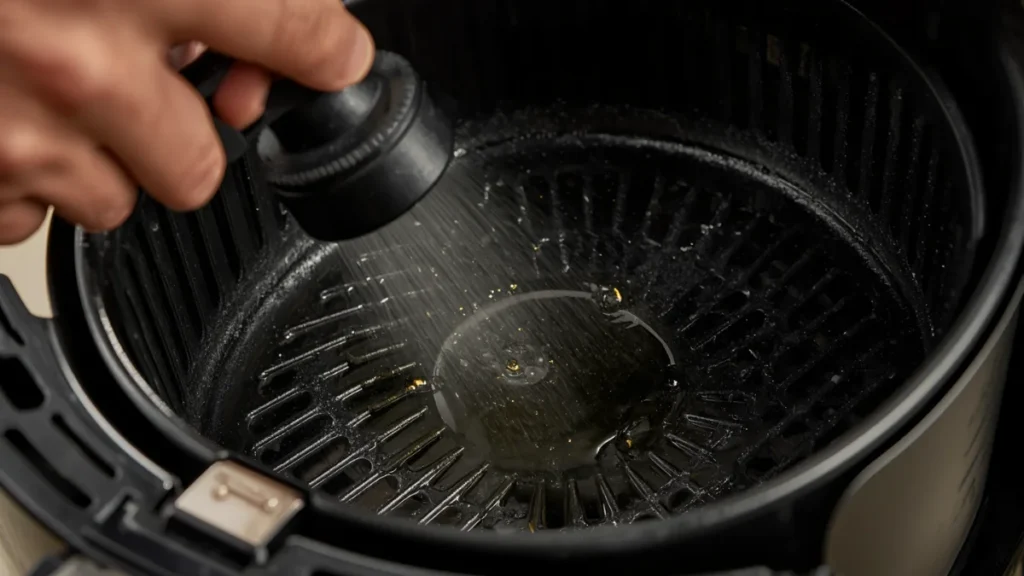
Air fryers are designed to work with very little oil. A light spray or brush is usually all that’s needed.
When you add too much, the excess oil pools, heats past its smoke point, and starts producing smoke before it ever touches your food.
Aerosol cooking sprays are a common culprit. They contain propellants and additives that burn at lower temperatures than pure oil, and they can damage non-stick coatings over time.
The fix: Use a pastry brush or a refillable oil mister to apply a thin, even coat. Switch to a high-smoke-point oil — avocado oil, canola oil, or light olive oil — all handle air fryer temperatures comfortably.
Oils to avoid in an air fryer:
- Extra virgin olive oil (smokes at lower temperatures)
- Butter sprays
- Aerosol cooking sprays with additives
4. Cooking at Too High a Temperature
Not every food needs maximum heat. Cooking delicate items — fish, vegetables, coated foods — at 400°F when 350°F would do the job produces unnecessary heat that burns coatings and splatters grease faster than it can drain away.
The fix: Follow the recommended temperature for whatever you’re cooking. If you’re adapting a recipe from a conventional oven, reduce the temperature by 25°F and check earlier than you think you need to.
5. Overcrowding the Basket
When you pack the basket too full, two things happen.
First, airflow gets blocked. Food doesn’t cook evenly. Second, excess steam and moisture build up inside the chamber, which can combine with grease to produce visible smoke.
Overcrowding also means grease has nowhere to drain efficiently, so it pools around the food and burns.
The fix: Cook in smaller batches. It feels slower in the moment, but the food cooks faster and better when air can circulate freely. One even layer in the basket, with space between pieces, is the target.
6. Brand-New Air Fryer Smoke (This Is Normal)
A new air fryer often produces a faint chemical smell or light smoke during the first one or two uses. This is a protective manufacturing coating burning off — not a defect.
What to do:
- Run the air fryer empty for 10–15 minutes at 350°F before cooking in it for the first time
- Wash all removable parts with warm, soapy water before use
- Ensure the kitchen is well ventilated during this burn-in period
If the smell or smoke continues beyond the first two or three uses, contact the manufacturer.
How to Stop Air Fryer Smoking Right Now
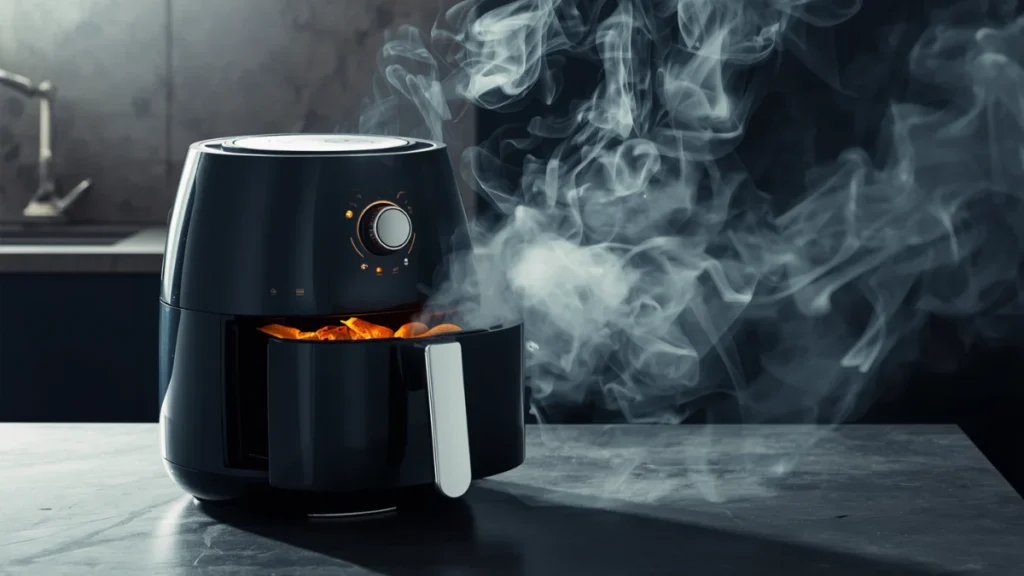
If your air fryer is smoking as you read this, here’s what to do immediately.
Step 1: Switch the air fryer off. Don’t just pause — turn it off completely.
Step 2: Carefully slide out the basket and drawer. Use oven mitts — both will be hot.
Step 3: Look for pooled grease in the drawer. Pour it off carefully into a heat-safe container.
Step 4: Check the basket for visible burnt residue or food debris. Remove anything you can see.
Step 5: Add a small amount of water to the drawer (two to three tablespoons) before sliding it back in.
Step 6: Lower the cooking temperature by 10–15°F. Resume cooking.
In most cases, the smoking stops immediately after Step 3 or Step 4.
Concerned about safety? Learn whether air fryers are toxic or safe to use daily
White Smoke vs. Black Smoke: What Each One Means
Not all air fryer smoke is the same — and the color tells you a lot.
| Smoke Type | What It Means | Dark smoke with a burning smell |
|---|---|---|
| White or grey smoke | Grease or oil burning — very common | Not urgent; fixable immediately |
| Light blue smoke | Oil has exceeded its smoke point | Not urgent; switch to higher smoke-point oil |
| Black smoke | Food or residue severely burnt | Stop cooking; clean thoroughly before restarting |
| Dark smoke with burning smell | Possible electrical issue | Stop immediately; unplug and inspect |
White smoke is the most common by far — and the least worrying. Black smoke or a sharp, electrical burning smell is the signal to stop, unplug, and assess more carefully.
When Air Fryer Smoking Is Actually Dangerous
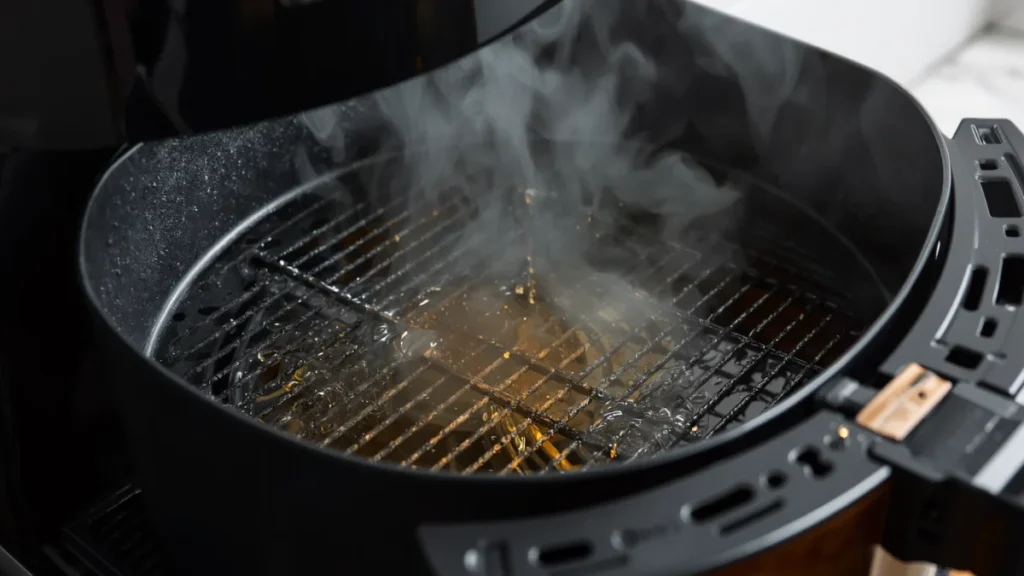
Most smoking is harmless. But certain warning signs require immediate action.
Unplug the air fryer immediately if you notice:
- Thick, dark black smoke that doesn’t stop
- A sharp burning plastic or electrical smell
- Sparks or popping sounds from inside the unit
- Smoke coming from the back or sides of the appliance rather than the basket area
- Any visible melting of components
These symptoms suggest an electrical fault or internal damage. Don’t attempt to continue cooking. Don’t attempt to repair it yourself. Check whether your appliance is still under warranty and contact the manufacturer.
How to Prevent Air Fryer Smoking Going Forward
Most air fryer smoking is entirely preventable with a few consistent habits.
Clean after every use.
A five-minute basket rinse prevents the residue buildup that causes most smoking.
Trim excess fat before cooking.
Removing visible fat from chicken thighs and pork chops before they go in the basket dramatically reduces grease smoke.
Add water to the drawer for fatty foods
Two tablespoons are enough to keep dripped grease from reaching smoking temperature.
Use the right oil, lightly applied
A thin brush of avocado or canola oil is all you need. More oil means more smoke, not crispier food
Cook in batches
One even layer in the basket, with space between pieces, cooks better and smokes less.
Keep your appliance in top shape with these simple air fryer maintenance tips.
Common Mistakes That Make Air Fryer Smoking Worse
Ignoring it and carrying on. Repeatedly running the appliance while it’s smoking accelerates grease buildup on the heating element and shortens its lifespan.
Spraying aerosol oil directly into the basket. Aerosol propellants damage non-stick coatings and burn at lower temperatures than pure oil. Use a refillable mister instead.
Never clean the heating element area. The basket gets washed; the element above it often doesn’t. Grease spatters upward and builds up until it produces smoke on its own.
Cooking frozen food at maximum heat. Frozen food releases more moisture and needs longer to cook through — that combination produces more smoke than cooking at a moderate, appropriate temperature.
Avoid these typical air fryer errors to get perfectly cooked food every time.
Frequently Asked Questions
Why does my air fryer smoke when cooking bacon?
Bacon releases a large amount of grease that drips into the drawer, where it quickly heats and burns. Add two tablespoons of water to the drawer before cooking bacon — it absorbs the dripped grease and prevents it from reaching smoking temperature.
Is white smoke from an air fryer dangerous?
No — white smoke is almost always grease or oil burning, which is unpleasant but not harmful. Stop the cook, drain the grease, clean the basket, and resume. A sharp electrical or plastic smell, along with smoke, is a different situation requiring immediate action.
Why does my brand-new air fryer smell like burning plastic?
New air fryers off-gas protective manufacturing coatings during first use. Run it empty at 350°F for 10–15 minutes before cooking. The smell should disappear after one or two uses — if it persists, contact the manufacturer.
Can I put water in the bottom of my air fryer?
Yes — two to three tablespoons in the drawer beneath the basket effectively reduces grease smoke. Always check your model’s manual first, and never pour water directly onto the heating element.
The Short Version

Air fryer smoking almost always comes down to grease, residue, or too much oil — not a faulty appliance.
Clean after every use. Trim fat before cooking. Add water to the drawer for fatty foods. Keep the oil light on.
Do those four things consistently, and you’ll rarely see smoke from your air fryer again.
Use our complete buying guide to choose the right air fryer for your kitchen