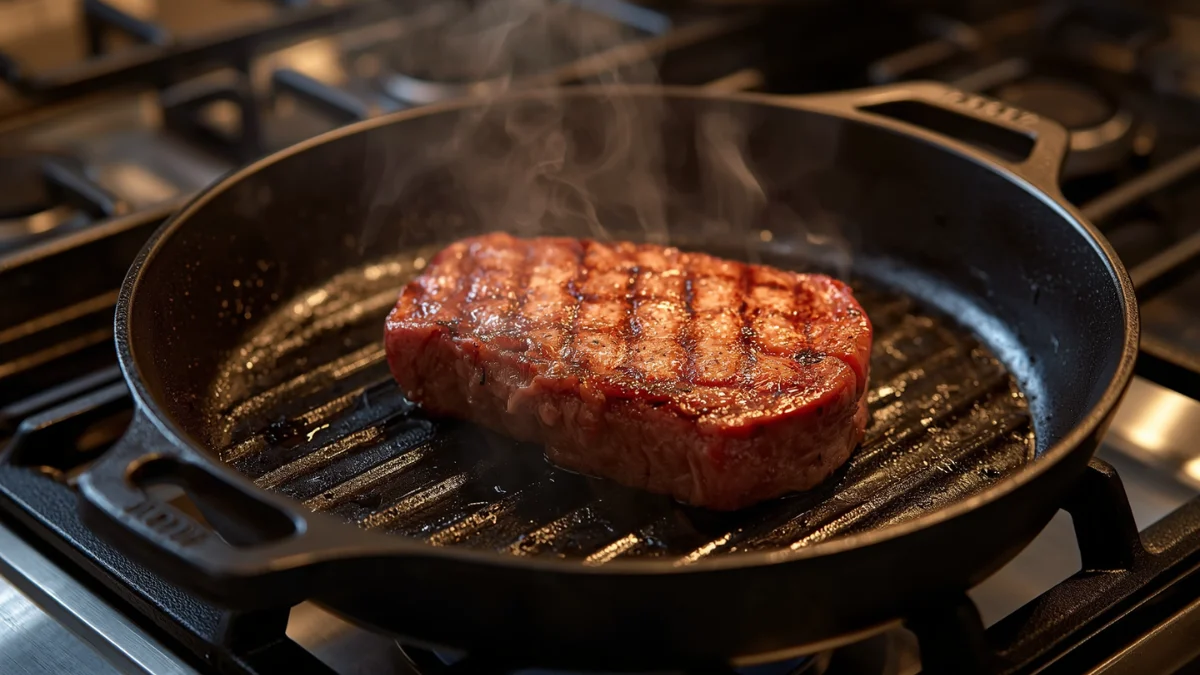
A grill pan cannot recreate the smoky flavor of an outdoor charcoal grill. What it can do very well is give you real sear marks and surface browning, right on your stovetop, in any weather, any season.
This guide covers what a grill pan actually is, how to choose one, and the technique that makes the difference between food that sticks and steams versus food with clean, confident grill marks.
Quick answer
Use a heavy pan, preheat it properly, dry your food well before it hits the pan, lightly oil the food rather than flooding the pan, and avoid moving it too early.
What Is a Grill Pan?
Raised ridges
A grill pan has raised ridges across its surface. Food sits on top of the ridges, which creates the visual grill marks and lets fat drain into the channels between them.
Differences from a griddle and skillet
A griddle is flat, so it browns the entire surface of food evenly but does not create grill marks. A regular skillet behaves similarly. A grill pan’s ridges are what create the classic sear-line pattern and reduce direct contact with rendered fat.
Grill Pan Materials Compared
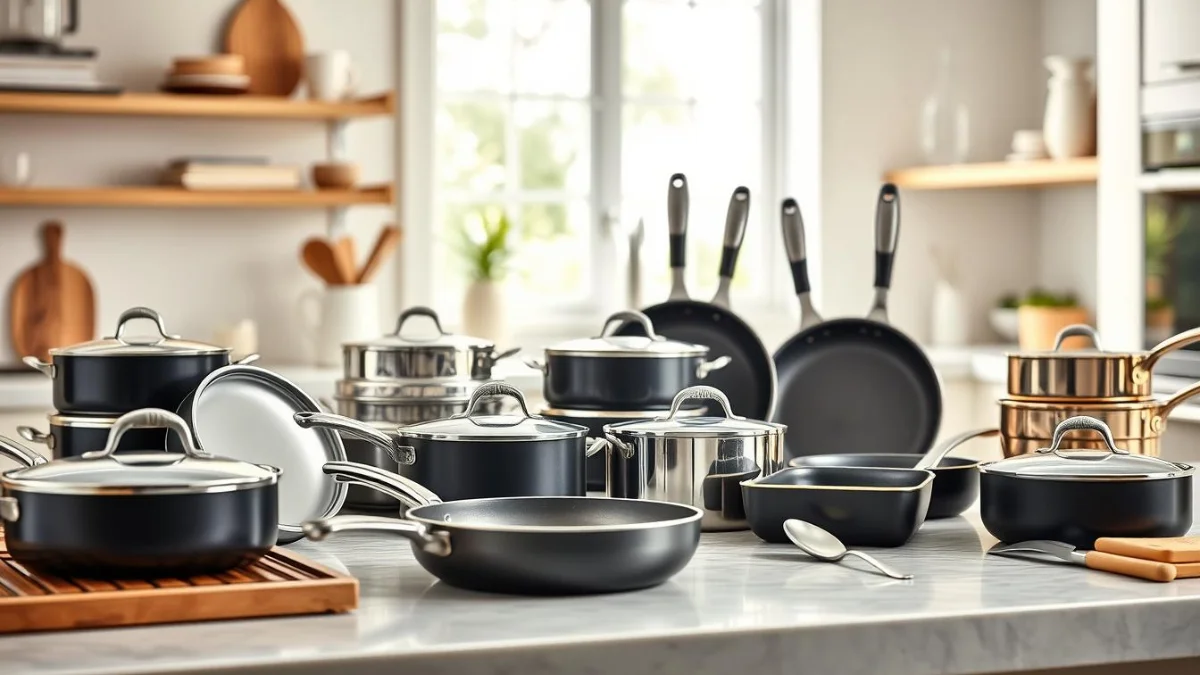
Cast iron. Excellent heat retention and browning, needs seasoning and care, very durable.
Enameled cast iron. Similar heat retention to cast iron, easier to clean, but the enamel coating can chip if mistreated.
Carbon steel. Lighter than cast iron with similar heat properties, needs seasoning, common in professional kitchens.
Nonstick. Easiest cleanup and least sticking, but cannot handle the very high heat that produces the deepest sear, and ridges tend to be shallower.
Stainless steel. Durable and dishwasher-safe in many cases, but food is more prone to sticking without careful technique and enough oil.
How to Choose the Best Indoor Grill Pan
Size. Match the pan to your burner size and typical batch size; an oversized pan on a small burner heats unevenly.
Weight. Heavier pans, especially cast iron, hold heat more consistently once preheated, which matters more for good sear marks than almost any other factor.
Handle design. Look for a handle that stays cool enough to grip, or one with a secondary helper handle if the pan is large and heavy.
Stove compatibility. Confirm compatibility with your cooktop, especially for induction, which requires a magnetic base.
Oven-safe temperature. Useful if you like to sear on the stovetop and finish thicker cuts in the oven.
Cleaning requirements. Cast iron and carbon steel need hand-washing and occasional reseasoning; enameled and nonstick versions are generally easier for daily use.
How to Preheat a Grill Pan Correctly
Why a properly heated pan matters
A cold or lukewarm pan is the number one reason food sticks and grill marks come out faint or patchy. Preheat for several minutes over medium-high heat before adding food.
Avoid overheating nonstick cookware
Nonstick coatings can degrade at very high temperatures. Follow the manufacturer’s maximum heat guidance rather than pushing nonstick pans as hot as cast iron.
Step-by-Step Method for Perfect Grill Marks
- Pat food dry. Excess surface moisture is the biggest obstacle to a good sear; pat meat, fish, or vegetables dry with paper towels first.
- Season the food with salt and any dry spices before it goes into the pan.
- Lightly oil the food, not the pan. A thin coating on the food’s surface sears better and creates less smoke than a heavily oiled pan.
- Place diagonally across the ridges for the classic crosshatch-ready angle.
- Leave untouched for the first few minutes; resist the urge to move or check it early.
- Rotate once by about 45 degrees partway through cooking on that side to create crosshatch marks, if desired.
- Finish cooking as needed, flipping once and, for thick cuts, finishing in the oven if the pan is oven-safe.
Best Foods for Grill Pans
- Chicken breasts — pound to even thickness first for consistent cooking.
- Steaks — works especially well for thinner cuts that cook through before the crust burns.
- Burgers — good sear, though a flat griddle can give more even browning on very thick patties.
- Fish — best with firmer fillets like salmon; delicate white fish can stick more easily.
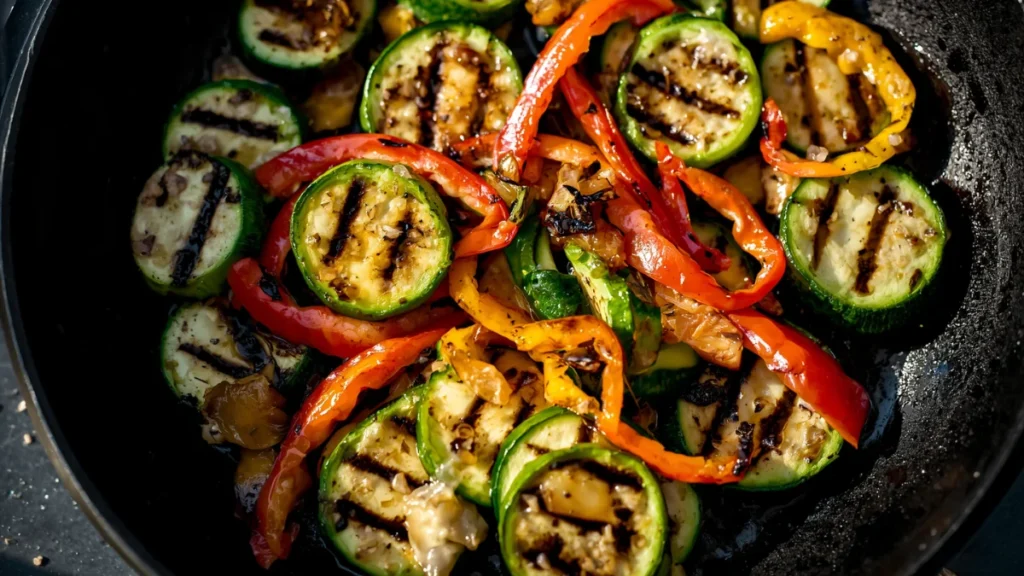
- Vegetables — zucchini, peppers, and asparagus take grill marks well and cook quickly.
- Halloumi — its firm texture holds up perfectly to direct ridge contact.
- Sandwiches — a grill pan can double as a panini press with a bit of downward pressure.
Common Grill-Pan Mistakes
Crowding the pan
Food packed too closely steams instead of searing, since trapped moisture cannot escape.
Too much marinade
Wet, marinated food should be patted dry before cooking; excess liquid drips into the ridges and creates steam and smoke instead of a sear.
Moving food too early.
Food naturally releases from a hot, well-seasoned or well-oiled surface once a crust forms; moving it before that point tears the surface and prevents clean grill marks.
Excess oil
Oil pooling in the ridge channels can smoke heavily and create uneven cooking.
Cleaning cast iron incorrectly
Harsh soap and soaking can strip seasoning; a stiff brush with hot water is usually enough, followed by drying and a light oil coat.
How to Clean and Maintain a Grill Pan
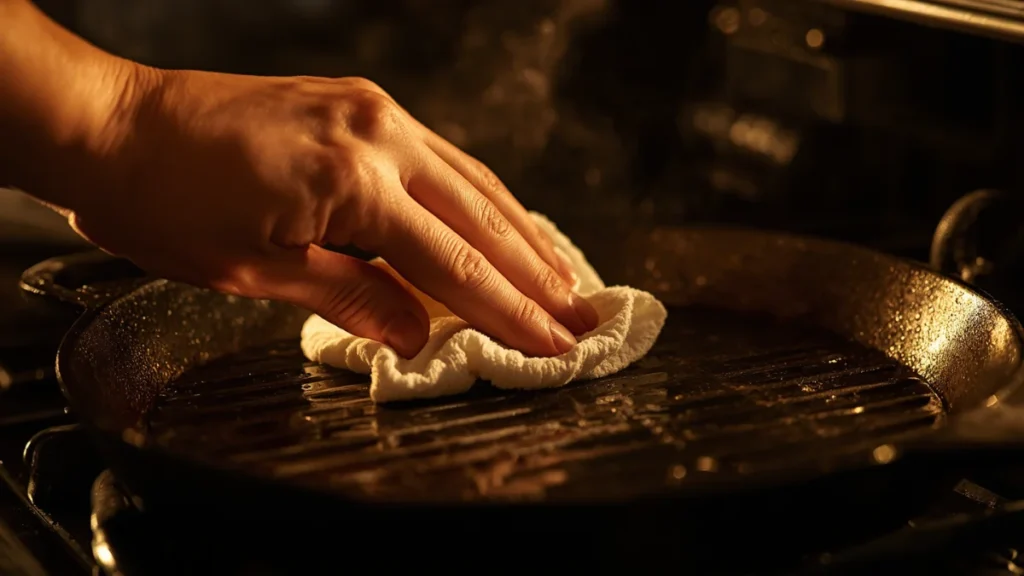
Cast iron. Clean with hot water and a stiff brush, dry fully, and apply a thin layer of oil before storing.
Nonstick. Hand-wash with mild soap and a soft sponge; avoid metal utensils and abrasive scrubbers.
Enameled cast iron. Generally dishwasher-safe, though hand-washing extends the coating’s life; avoid metal utensils that can chip the enamel.
When a Grill Pan Is Not the Best Choice
Large batches. A single grill pan cooks a limited amount at a time; cooking for a crowd is faster on a flat griddle or outdoor grill.
Very fatty foods. High-fat cuts can create excess smoke on a grill pan indoors, since rendered fat sits closer to the heat source in the ridge channels.
Foods needing even contact. Thin, delicate items that need full-surface contact, like a crepe or delicate fish fillet, do better on a flat surface.
FAQ
Are grill pans worth buying?
Yes, for households that want stovetop sear marks and better browning than a standard skillet gives, especially in seasons or living situations where outdoor grilling is not practical.
Do grill pans really make food taste grilled?
Not exactly. They create real sear marks and good browning, but they cannot replicate the smoky flavour that comes from charcoal or wood.
Can a grill pan be used on an induction cooktop?
Only if the pan has a magnetic base; check the product listing or the base of the pan for induction compatibility before buying.
Why is my food sticking to the grill pan?
Usually the pan was not hot enough before food was added, the food was not dried well, or it was moved before a crust had time to form.