Ever noticed a chalky white film inside your kettle? Or coffee that tastes flat no matter how good the beans are? Maybe your dishwasher glasses come out cloudy even after a full cycle.
Here’s the good news: your appliance probably isn’t broken. It just needs a descale. Descaling is one of the easiest maintenance jobs in the kitchen—it takes 15 to 30 minutes, uses things you already have at home, and can add years to your machines’ life. This guide walks you through it in plain words, one appliance at a time.
Quick Answer
Descaling removes limescale — the hard, white mineral crust (mostly calcium) that builds up wherever water is heated. Mix equal parts white vinegar and water, run it through or soak the affected part, then rinse well with fresh water.
Do this every 1 to 3 months depending on how hard your water is. It costs almost nothing and keeps your appliances heating fast, flowing freely, and tasting clean.
What Is Descaling, and Why Does It Matter?
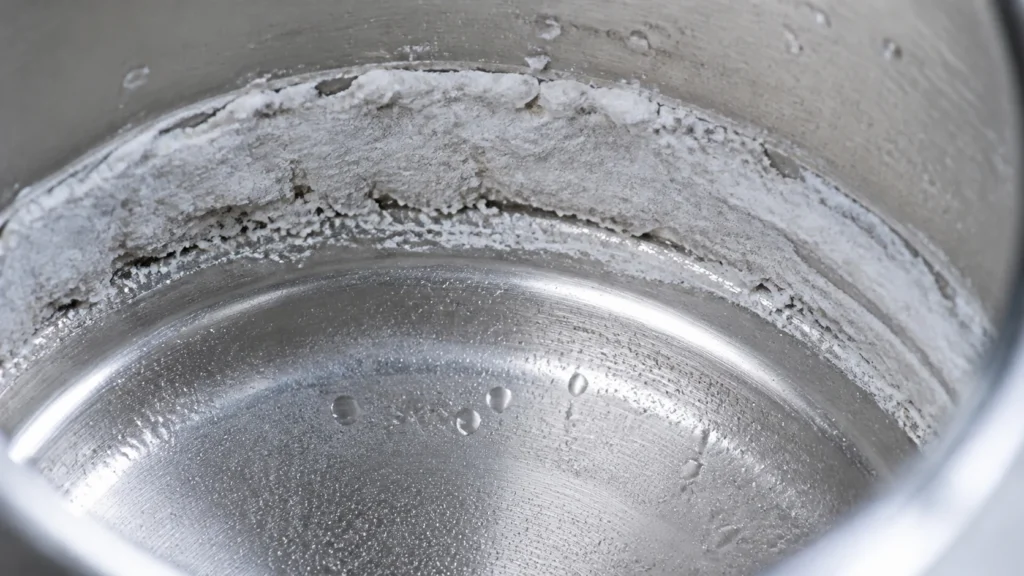
Tap water contains small amounts of dissolved minerals—mostly calcium and magnesium. The U.S. Geological Survey (USGS) calls water with high levels of these minerals “hard water.”
When you heat hard water, those minerals come out of the water and stick to whatever is hot: the heating plate in your kettle, the tube inside your coffee maker, the element at the bottom of your dishwasher.
Over weeks and months, they build up into a hard, chalky layer called limescale (calcium carbonate). USGS notes that this mineral buildup happens in home coffee makers too — which is exactly why people run vinegar, a mild acid, through their machines.
Descaling means using a safe acid to dissolve that crust so you can rinse it away.
Why you should care — what limescale actually does:
- Slows down heating. The crust acts like a blanket between the heating element and the water, so your kettle and coffee maker take longer to get hot.
- Weakens water flow. Scale flakes and deposits clog narrow tubes, spray-arm holes, and valves. Coffee drips slower; dishwashers spray weaker.
- Ruins taste. Water passing over old scale picks up a stale, flat flavor. Your tea and coffee never quite taste right.
- Wastes energy. The Water Quality Association (WQA) lists scale build-up in pipes and appliances as a direct cause of high energy costs. A WQA-commissioned study found hard water can cut water-heater efficiency by up to 24 percent.
- Shortens appliance life. Scale stresses heating elements, sensors, and seals, causing them to fail years early.
6 Signs an Appliance Needs Descaling
You don’t need to guess. Watch for these everyday clues:
- White or chalky crust inside the kettle, on the coffee maker’s heating plate, or around the Instant Pot lid rim.
- Slower boiling or brewing than when the appliance was new.
- Coffee or tea tastes flat, bitter, or “off.”
- Weak water flow from the coffee maker, ice maker, or water dispenser.
- Cloudy or spotty glassware straight out of the dishwasher.
- A descale light or “CLEAN” light has turned on — most modern pod machines and some kettles tell you directly.
If you notice even two of these, it’s time.
First, Check How Hard Your Water Is
How often you descale depends mostly on your water. The USGS classification makes it simple:
| Water hardness | Calcium carbonate (mg/L) | What it means for you |
| Soft | 0–60 | Descale about every 3 months |
| Moderately hard | 61–120 | Descale every 2 months |
| Hard | 121–180 | Descale every 4–6 weeks |
| Very hard | Over 180 | Descale every 3–4 weeks |
Not sure where you stand? Try these simple home checks:
- The soap test. Hard water makes soap hard to lather and leaves a slippery film on your hands—a classic sign the USGS describes.
- The glass test. Spots and film on glasses after the dishwasher mean hard water residue.
- Your water bill or utility report. Water suppliers publish a yearly quality report, and many list hardness in mg/L or grains per gallon (1 grain per gallon ≈ 17.1 mg/L). Remember, hardness varies by region — the national USGS maps show broad patterns, so your local report is the more accurate source.
If you’re still unsure, just descale monthly. It’s gentle, cheap, and prevents buildup before it starts.
Your Descaling Toolkit: The Usual Ingredients
Everything below is a regular grocery or hardware-store item. You probably already own most of it.
| Ingredient / tool | What it’s for |
| White distilled vinegar | The main descaler — mild, food-safe acid |
| Water | Dilutes vinegar to a safe 50/50 mix; rinse cycles |
| Citric acid powder | Gentler, odor-free alternative (1–2 tablespoons per liter of warm water) |
| Lemon juice | Citric acid in natural form — good for light scale |
| Baking soda | Deodorizing rinse AFTER the vinegar cycle — never mix them in the same cycle |
| Commercial descaler (Keurig, Durgol, CLR, affresh) | Fast, odorless option; some brands require it for warranty |
| Soft brush or old toothbrush | Scrubbing sealing rings, spray arms, small parts |
| Dishwasher-safe measuring cup | Holds vinegar inside the dishwasher |
| Microfiber cloth | Wiping heating plates and exteriors |
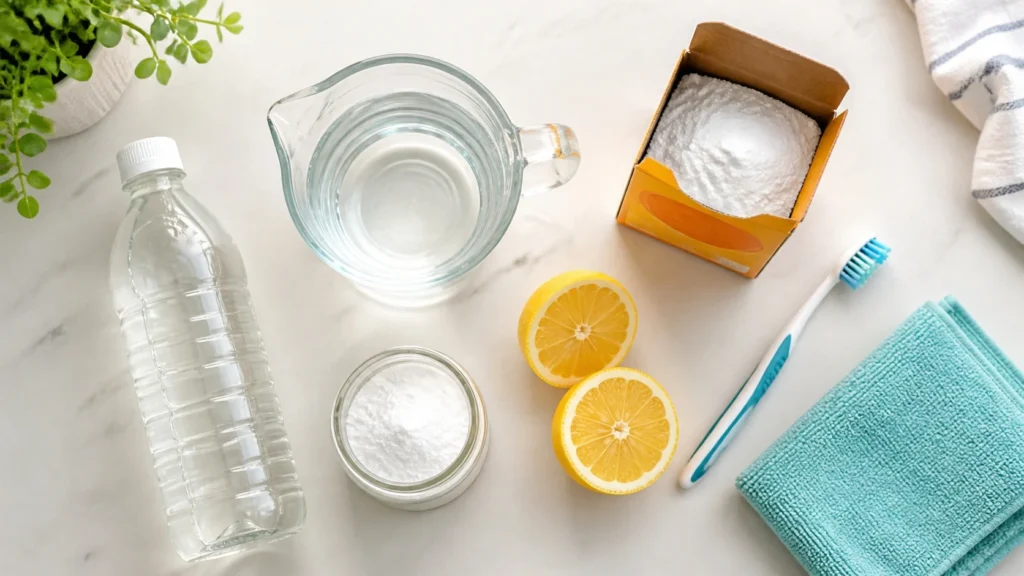
Two safety notes before you start: never mix vinegar and baking soda in the same cleaning cycle — Whirlpool’s official dishwasher-care guide runs them as separate cycles, one after the other — and never mix vinegar with bleach, which produces toxic gas (more on safety below).
How Often Should You Descale? A Simple Schedule
| Appliance | Soft water | Hard water |
| Electric kettle | Every 3 months | Every 4–6 weeks |
| Drip coffee maker | Every 2–3 months | Every 4–6 weeks |
| Pod coffee maker (Keurig) | Every 3–6 months, or when the descale light comes on (Keurig official guidance) | Every 2–3 months |
| Dishwasher | Every 3 months | Every 6–8 weeks |
| Instant Pot / pressure cooker | Every 3 months | Every 8 weeks |
| Ice maker / water dispenser | Every 3 months | Every 6–8 weeks |
When in doubt, a monthly quick descale of whatever you use most is the easiest habit to keep.
How to Descale a Drip Coffee Maker (Step by Step)
What you need: 1 cup white vinegar, 1 cup water, an empty carafe, a paper filter (optional).
- Empty the machine. Remove old grounds and the paper filter. Empty the carafe.
- Mix the solution. Fill the reservoir with equal parts white vinegar and water (50/50).
- Start a brew cycle with the empty carafe in place.
- Stop halfway. After about half the solution has dripped through, switch the machine off.
- Wait 15–30 minutes. This soak time lets the vinegar dissolve the deposits on the heating coil and tube. USGS explains the science simply: the acid charges the mineral particles so the water washes them away.
- Finish the cycle. Turn the machine back on and let it run through the rest of the cycle. The liquid in the carafe may look slightly cloudy or carry white flakes — that’s the scale coming out, which is exactly what you want.
- Rinse well. Run two to three full cycles of fresh water (no vinegar) to remove any taste or smell. Use a fresh paper filter for the first rinse if you like.
That’s it. Brewing will be faster, and your coffee will taste noticeably brighter. If you’re shopping for a new brewer or comparing features, our coffee makers hub is a good place to start.
How to Descale an Electric Kettle
What you need: 1 cup white vinegar, 1 cup water, a soft cloth or sponge.
- Fill the kettle halfway with the 50/50 vinegar-water mix. Don’t fill to the top — the solution can bubble as it heats.
- Boil the solution, then turn off the kettle.
- Let it sit for 20 minutes with the lid closed (or open, in a ventilated spot).
- Pour out the solution and wipe the inside with a soft sponge. Stubborn patches will now rub off easily. Never scrub with steel wool — it scratches the heating plate.
- Rinse and re-boil. Fill with fresh water, boil, and discard. Do this twice to remove any vinegar taste.
For heavy crust, repeat once, or use citric acid: dissolve 1–2 tablespoons in warm water, boil, then let sit for 30 minutes. Looking to replace an old, heavily scaled kettle? Our best electric kettles guide compares the top electric kettles.
How to Descale a Pod Coffee Maker (Keurig-Style)
Pod machines need descaling more than people think, because their narrow internal lines clog easily. Keurig recommends descaling every 3 to 6 months, or when the descale light comes on, and it recommends using its own descaling solution—see Keurig’s official descaling page.
- Empty the reservoir and remove any used pod.
- Add descaler. Pour in the descaling solution (Keurig’s, or a 50/50 vinegar-water mix if your manual allows it — check first).
- Run the brew cycle into a large mug, dumping each mugful until the reservoir is empty. Don’t drink it, obviously.
- Let the machine rest for 30 minutes with the power on, so the solution soaks inside the lines.
- Rinse thoroughly. Fill with fresh water and run 3–4 brew cycles (no pod) until the water runs clear with no smell.
Many newer models have a dedicated Descale Mode — on some Keurigs you press and hold the 8 oz and 12 oz buttons together to enter it, but the button combo varies by model, so follow the instructions for your exact brewer on Keurig’s support page.
How to Descale an Espresso Machine
Espresso machines are the most scale-sensitive appliances in the kitchen — their tiny valves and boilers clog first. One golden rule: follow your manufacturer’s instructions first. Many brands (Breville, De’Longhi, Gaggia) specify their own descaling liquid or citric-acid solution, and some ask you to use it to keep the warranty valid.
The general routine:
- Empty the water tank and dissolve the manufacturer’s recommended descaler (or citric acid per package directions).
- Run the machine’s built-in descale mode (most models have one), letting the solution flow through the steam wand and group head.
- Let it sit for the time the manual states — usually 15–30 minutes.
- Flush with two full tanks of fresh water.
If your machine has no descale mode, run half-cups of solution through the group head and steam wand until the tank is empty, rest, then rinse the same way.
How to Descale a Dishwasher (the Official Method)
Dishwashers hide scale on the heating element, spray arms, and door seals. Whirlpool’s official appliance-care instructions give a method that works for nearly any brand:
- Empty the dishwasher completely — no dishes, no detergent.
- Clean the filter first. Twist out the filter at the bottom, rinse it under hot water, and scrub gently with a soft brush. This is where most smells and sludge live.
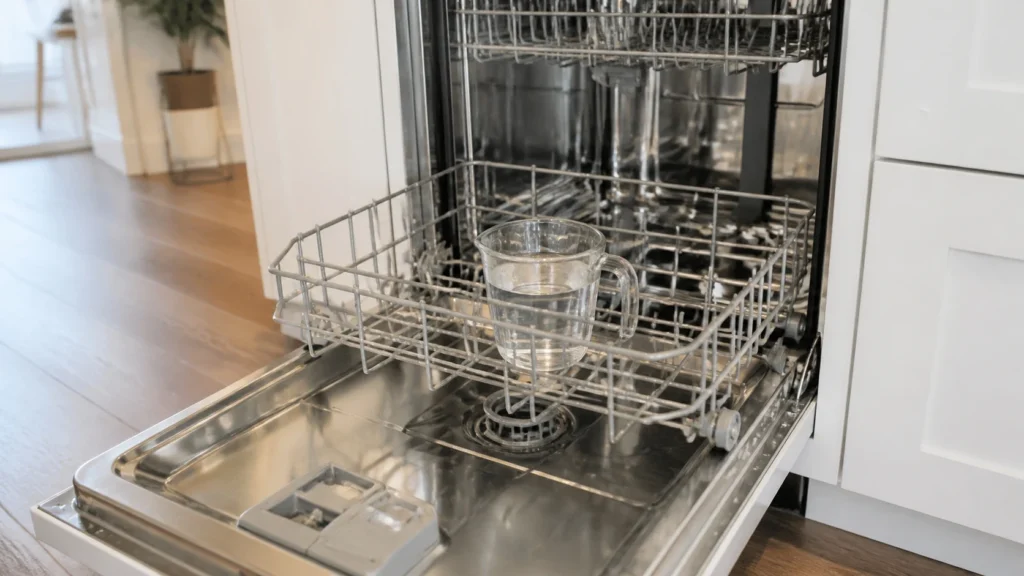
- Add the vinegar. Place 2 cups (500 ml) of white vinegar in a glass or dishwasher-safe measuring cup, set it upright on the bottom rack (Whirlpool’s official instructions recommend exactly this).
- Run a normal or hot cycle. No heated dry needed.
- Optional deodorizing pass. Sprinkle 1 cup of baking soda across the bottom and run a short hot rinse — but always as a separate cycle, because Whirlpool’s care guide is clear that vinegar and baking soda should never run together (source).
Prefer tablets? Affresh or Finish dishwasher cleaner works the same way: put in a tablet, run an empty cycle. In hard-water areas, every 6–8 weeks is plenty.
How to Descale an Instant Pot or Electric Pressure Cooker
Scale gathers on the inner pot’s hot bottom and around the lid rim and sealing ring. Here’s a gentle routine:
- Mix 1 cup white vinegar with 6 cups of water in the inner pot.
- Heat, don’t pressurize. Close the lid (no sealing needed) and run Sauté mode for about 5 minutes, or use Steam. Never descale a stovetop pressure cooker this way while it’s pressurized — it should be open and unpressurized at all times.
- Turn off and rest for 10 minutes, then pour the solution out.
- Scrub gently. Use a soft brush on the sealing ring and the underside of the lid, where deposits and odors collect. Rinse everything well.
- Final rinse: run fresh water in Sauté mode for 2 minutes, then wash as usual.
Helpful extras: Instant Pot’s official care and cleaning guide confirms the inner pot, sealing ring, lid, and steam rack are all dishwasher-safe for deep cleaning. For cooking know-how, our Instant Pot pressure cooking times chart and Instant Pot hacks guide pair well with this routine — and if you’re choosing between models, see our Breville Fast Slow Pro vs. Instant Pot Duo comparison.
How to Descale an Ice Maker or Fridge Water Line
Ice makers are magnets for scale: water sits in small chambers, freezes, and leaves minerals behind—which is why homemade ice turns cloudy or tastes stale. GE’s official ice-maker care tips start with the most important rule: unplug the appliance before cleaning the ice mechanism — never put hands near the ejector arms while it’s powered (GE Appliances pressroom).
For the dispenser tray and small parts:
- Unplug the unit.
- Soak the scale-covered area with undiluted white vinegar for up to 30 minutes, until deposits loosen enough to wipe away — GE’s official guidance for its dispenser trays.
- Wipe clean, rinse with a damp cloth, and dry completely before restarting.
For countertop nugget ice makers (like the GE Opal):
- Mix a 50/50 solution of white vinegar and water in the reservoir — GE’s official Opal support page recommends exactly this mix (2 quarts water + 2 quarts vinegar).
- Run the machine’s Cleaning/Clean mode for one full cycle.
- Drain, rinse, then run one more cycle with fresh water to flush.
- Replace the water filter every 6 months — GE notes a clogged or old filter restricts flow and ruins ice taste.
Shopping for a dedicated unit? Our countertop ice maker with water dispenser guide covers what to look for.
Vinegar vs. Commercial Descaler: Which Should You Use?
| Factor | White vinegar (50/50) | Commercial descaler |
| Cost | Very low (about $2–3 a bottle) | $8–12 per bottle |
| Speed | 20–30 min soak time | Works in 10–15 min |
| Smell | Strong vinegar odor while running | Mild or odorless |
| Effectiveness | Very good for regular upkeep | Excellent on heavy buildup |
| Rinsing | 2–3 fresh-water cycles | Usually 1–2 cycles |
| Best for | Kettles, coffee makers, dishwashers | Pod machines, espresso machines, stubborn scale |
Our advice: keep a bottle of white vinegar under the sink for routine monthly work, and use a commercial descaler when buildup is heavy, or your manufacturer requires it. Citric acid sits in the middle — cheap, odorless, and strong enough for most kettles and coffee makers.
6 Everyday Limescale Fixes (Small Jobs, Big Difference)
1. Clogged dishwasher spray arms. Remove the arms (usually by twisting or clipping), poke each spray hole with a toothpick or skewer, rinse under hot water, and reinstall. In two minutes, it restores full spray pressure.
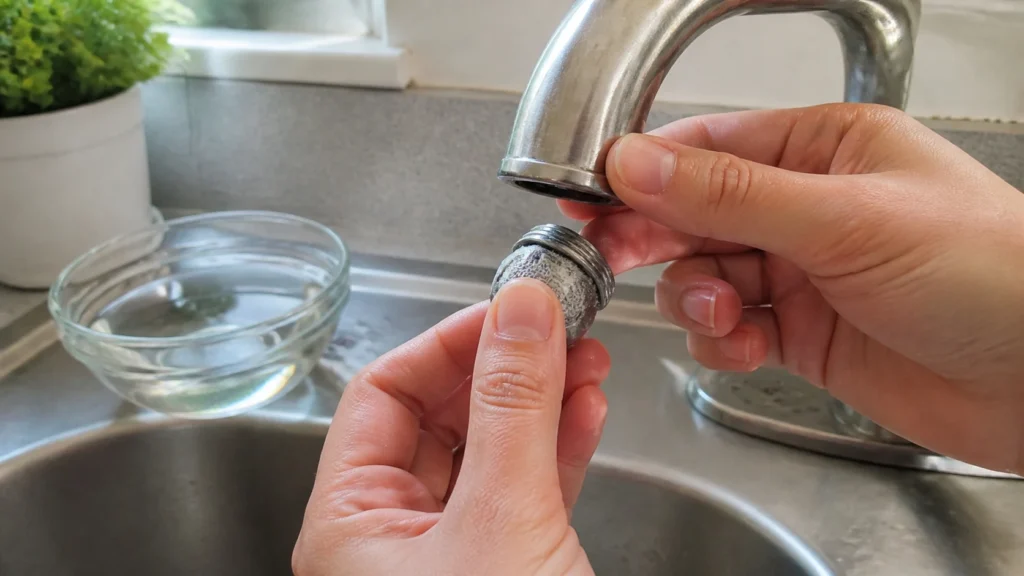
2. Limescale on the faucet aerator. Unscrew the small screen at the tip of your kitchen faucet, soak it in a cup of warm vinegar for 30–60 minutes, brush gently, and screw it back on. The water stream instantly feels fuller.
3. Scale on stainless steel sinks and fixtures. Spray full-strength vinegar, wait 5 minutes, and wipe with a soft cloth. For crusty spots, make a baking soda paste, apply it, spray vinegar over it, let the fizz settle, then rinse. (Keep vinegar off natural stone counters — marble and granite etch permanently.)
4. Cloudy glassware. Usually hard-water film, not etching. Run a vinegar cycle as described above, then start using a rinse aid — it stops droplets drying into spots.
5. A smelly garbage disposal. Toss in a handful of ice cubes and a few citrus peels, run cold water, and switch it on for 30 seconds. The ice scours the walls; the peel freshens the drain.
6. Burnt-on scale rings in the coffee carafe or kettle exterior. Fill the carafe with warm water and a denture-cleaning tablet, or scrub the cool heating plate with a baking soda paste on a damp cloth. Wipe dry.
These pair nicely with our other care guides — see how to clean your blender and the appliance usage guides hub.
5 Descaling Mistakes to Avoid
- Using undiluted vinegar in coffee makers. Straight vinegar is too acidic for rubber seals and tubing. Always dilute 50/50 unless the manual says otherwise.
- Mixing vinegar and baking soda in the same cycle. They cancel each other out — you get fizz but no cleaning. Whirlpool’s official method runs them as two separate cycles.
- Skipping the rinse cycles. Leaving vinegar inside keeps working on seals and can make your next coffee taste like a salad. Rinse until there’s zero smell.
- Using apple cider or balsamic vinegar. Their sugars and color leave sticky residue. Only white distilled vinegar.
- Descaling while hot or plugged in. Pouring cold solution onto a scorching heating plate can warp it. Always let appliances cool and unplug before hands-on cleaning.
How to Prevent Limescale (So You Descale Less Often)
- Wipe and empty. Tip out leftover water from the kettle at night and wipe the inside dry — scale can’t form without water sitting on hot metal.
- Use filtered water in kettles and coffee makers. A pitcher filter reduces the minerals that form scale. It doesn’t remove them completely, so you still need to descale— just less often.
- Run the dishwasher’s rinse aid and use its built-in hard-water setting if yours has one.
- Consider a whole-home softener if your water is very hard. WQA defines properly softened water as under 1 grain per gallon (about 17.1 mg/L), and notes softening is typically done for the whole house rather than one tap (WQA).
- Put a recurring reminder in your phone — one descaling session a month is the whole secret.
Safety First: 4 Rules Before You Start
- Unplug before you clean. GE’s official ice-maker guidance says it best: never put hands or tools near moving parts or heating elements while the appliance is powered.
- Never mix vinegar with bleach. The combination releases toxic chlorine gas. If you’ve used a bleach-based cleaner, rinse thoroughly before any vinegar touches the surface.
- Label your vinegar spray bottle. Clear household vinegar looks like water — you don’t want anyone drinking it.
- Work in a ventilated spot. Boiling vinegar releases a strong smell; open a window or run the extractor fan.
Frequently Asked Questions
Do I still need to descale if I use a water filter?
Yes — but less often. Filters reduce minerals; they don’t remove them all. If you descale monthly with unfiltered water, you usually only need to descale every 2–3 months with a filter.
Can I use lemon juice instead of vinegar?
Yes, for light scale. Lemon juice is citric acid — milder and better smelling. Mix it half-and-half with water and follow the same steps. For heavy buildup, vinegar or citric acid powder works better.
I accidentally ran undiluted vinegar through my machine. Is it ruined?
Almost certainly not. Run 3–4 cycles of fresh water to flush it, and check the manual for your specific model. One pass of straight vinegar rarely damages anything, but don’t make it a habit.
Is white vinegar safe to use inside appliances?
Yes. White distilled vinegar is food-safe and safe for stainless steel and most plastics. The two exceptions: avoid it on natural stone (counters, some trivets) and follow any manual that says your specific model shouldn’t be cleaned with acids.
How do I know if my appliance actually needs descaling?
Slower heating, weaker flow, flat-tasting coffee or tea, cloudy glassware, visible white crust, or a lit descale/CLEAN indicator. Any two of these together means it’s overdue.
Can I use baking soda to descale?
Baking soda is a base — it neutralizes acid and deodorizes, but it doesn’t dissolve limescale. Use it after a vinegar cycle (separately!) to remove lingering smells.
What is that white stuff floating in my kettle water?
Scale flakes that broke loose. They’re calcium — harmless to swallow in small amounts, but unappetizing. Descale the kettle, rinse well, and they’ll stop appearing.
How long does descaling take?
A quick kettle descale takes about 15 minutes, mostly waiting. A coffee maker takes 25–30 minutes, including rinses. A dishwasher runs one normal cycle, so about 2 hours of hands-off time.
My machine still heats slowly after descaling. What now?
Descale once more with a commercial descaler. If it’s still slow, the heating element or thermostat may be failing — at that point, repair or replacement is the realistic choice, and our must-have kitchen appliances guide can help you compare what’s new.
Where can I find more kitchen maintenance tips?
Browse the cooking tips hub and the kitchen appliances category for guides on cleaning, using, and maintaining every machine in your kitchen.
The Bottom Line
Descaling is the cheapest appliance insurance you can buy: a bottle of vinegar, 30 minutes, once a month or so depending on your water. If your water is hard, descale the kettle and coffee maker monthly, the dishwasher and Instant Pot every couple of months, and pod machines whenever the descale light appears. Your water will boil faster, your coffee will taste better, and your appliances will happily last years longer.