Published: June 25, 2026 | Reviewed against manufacturer heat-resistance specs and air fryer airflow testing data
The Question Worth Asking
You bought a silicone liner to save cleanup time. Then your fries came out soft on the bottom.
This is not a defective liner. It is a basic airflow problem.
An air fryer crisps food with fast-moving hot air. That air needs to reach the food from below, not just from above. A liner sits between the food and the basket. It can block some of that airflow.
The good news: this is fixable. You do not need to give up the liner. You need to use it the right way.
This guide explains why liners affect crispiness, which liner style works best, and the exact habits that preserve crunch without sacrificing easy cleanup.
Quick Read
Silicone liners can reduce crispiness because they sit between the food and the basket. This blocks some airflow from below.
The effect is small with a well-fitted, ridged liner. The effect is large with a solid, bowl-shaped liner used for dry, crispy foods like fries or breaded items.
Fix it by choosing a grooved or perforated liner, sizing it correctly, preheating before adding food, avoiding overcrowding, and flipping food halfway through cooking. Save solid liners for sauces, marinades, and wet foods where crispiness is not the goal.
Quick Summary
| Liner Type | Crispiness Impact | Best For | Avoid For |
|---|---|---|---|
| Perforated / mesh silicone | Minimal | Most everyday cooking | Very wet or saucy foods (juices drip through) |
| Grooved / ridged silicone basket | Small | Fries, wings, nuggets, vegetables | None — best all-around choice |
| Solid silicone bowl/pot | Significant | Marinated meats, wings in sauce, baked goods, cheesy dishes | Fries, breaded foods, anything that needs maximum crunch |
| No liner (direct basket) | None | Foods where crispiness is the top priority | Sticky, saucy, or messy dishes |
Why Silicone Liners Affect Crispiness
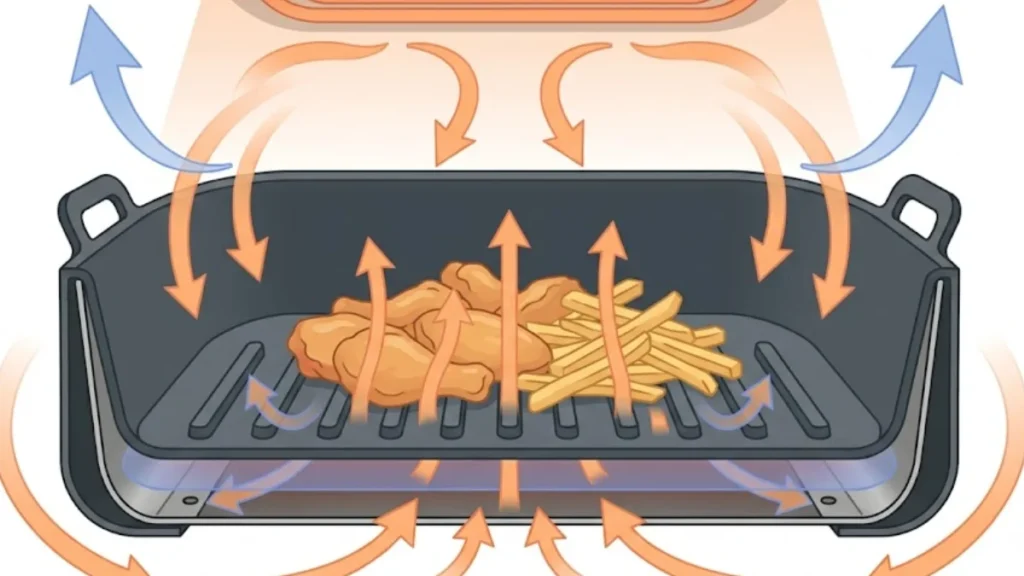
An air fryer is a small convection oven with a strong fan. Hot air circulates around the food in all directions. Most of that air comes up through holes in the basket floor.
This bottom airflow is what dries the underside of your food. Drying is what creates crispiness.
A silicone liner sits directly on the basket floor. Even a liner with raised ridges blocks more air than an empty basket. A flat, solid liner blocks even more.
There is a second factor. Silicone does not absorb moisture the way parchment paper does. When food releases steam or juices, that moisture stays trapped near the liner instead of draining away. The food’s underside then sits over warm, damp air instead of dry, moving air.
This is why the top of your food can look perfectly browned while the bottom stays pale or slightly soft.
Perforated vs. Solid Liners: Why the Difference Matters
Not all silicone liners behave the same way. The shape of the liner determines how much airflow you lose.
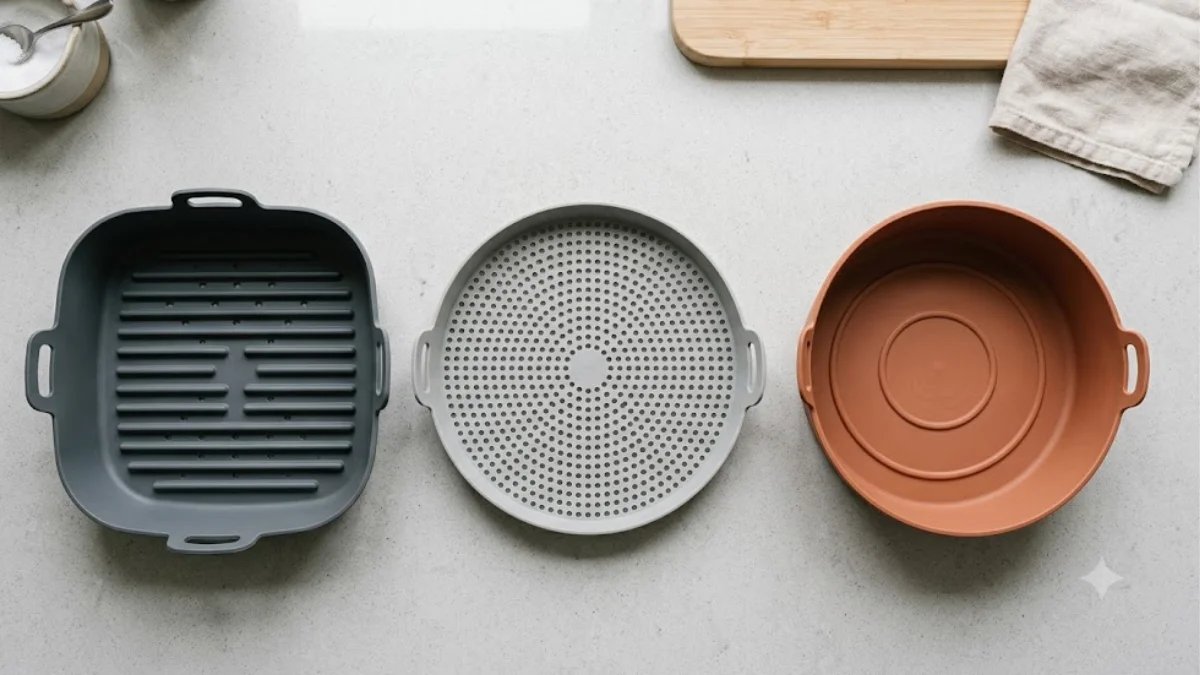
Grooved or ridged liners have small channels molded into the base. These channels allow hot air to move beneath the food and grease to drain away from it. This style comes closest to matching the crispiness of cooking with no liner at all.
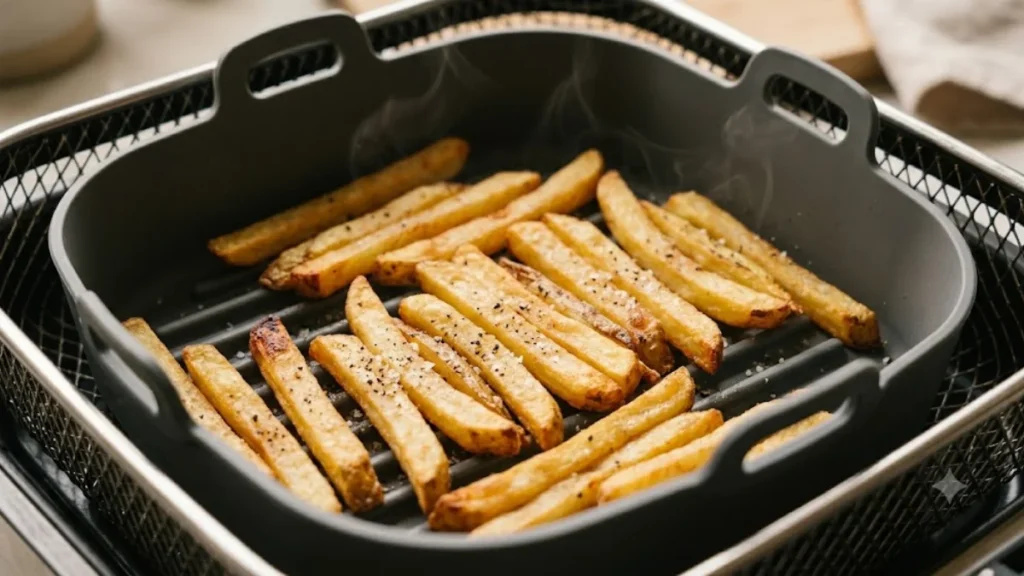
Perforated or mesh-style liners have small holes punched through the silicone. Air passes through more freely. The trade-off is that oil and juice can drip through as well, which reduces the no-mess benefit you bought the liner for in the first place.
Solid, bowl-shaped liners have no holes and no grooves. They catch every drop of grease and sauce, which makes them excellent for messy foods. They also block the most airflow, which makes them the worst choice when crispiness is the goal.
If you only buy one liner, choose a grooved or ridged style. It gives you the best balance of easy cleanup and crisp results.
Step-by-Step: Using a Silicone Liner Without Losing Crispiness
Step 1: Measure your basket before buying
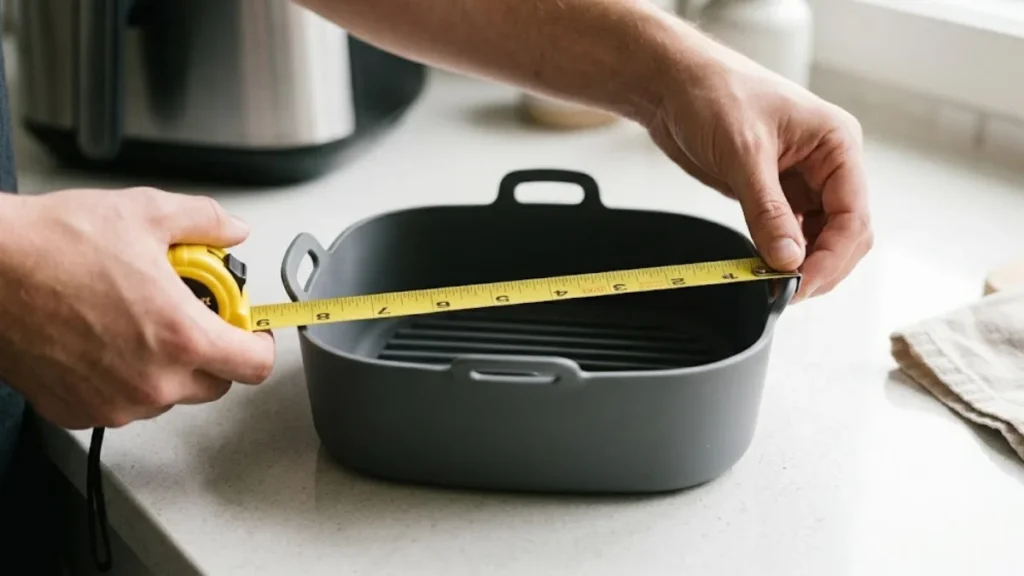
Measure the inside diameter or length and width of your air fryer basket. Choose a liner slightly smaller than that measurement. A liner that touches the sides can ride up the walls and block more airflow than it should.
Step 2: Preheat the air fryer with the liner already in place — but never empty
Add your food to the liner before you start preheating. An empty liner is light enough to shift or lift toward the heating element during the initial blast of air.
Step 3: Leave space between pieces of food
Crowding blocks airflow on top of the liner’s natural airflow loss. Arrange food in a single layer with small gaps between pieces. Cook in batches if needed rather than stacking food.
Step 4: Flip or shake the basket halfway through cooking
This is the single most effective fix for liner-related sogginess. Flipping exposes the side that was sitting in trapped moisture to direct airflow for the second half of the cooking process.
Step 5: Check for trapped moisture before you finish cooking
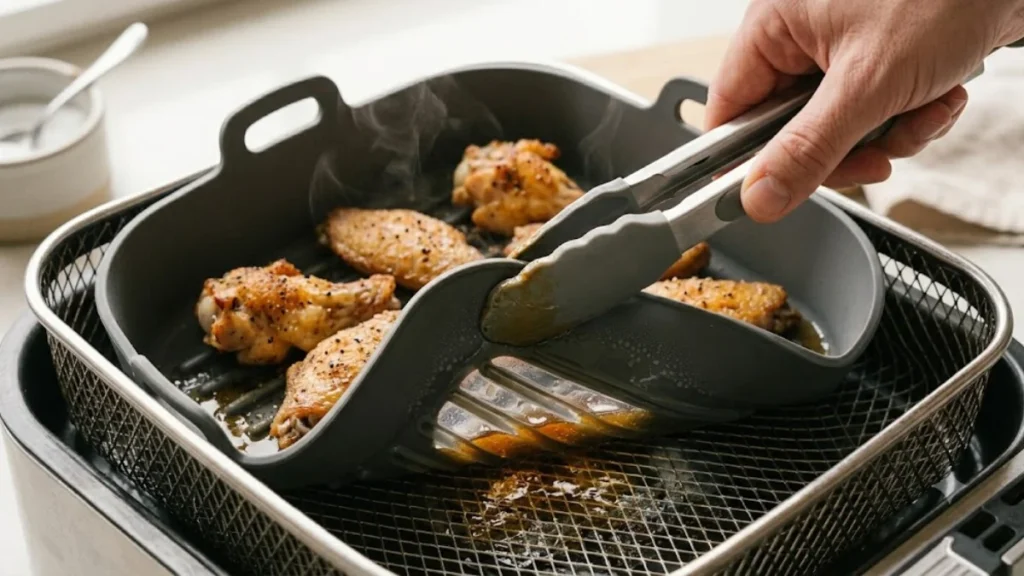
Two or three minutes before your target time, lift the food and look at the liner. Pooled grease or condensation indicates the bottom is steaming rather than crisping. Tip the liquid out if your liner has a pourable design, then continue cooking uncovered.
Step 6: Add two to three extra minutes for solid liners
Solid, bowl-style liners block enough airflow that most foods need slightly longer to reach the same level of crispiness as in an unlined basket. Check for doneness rather than relying on the original recipe time.
When to Skip the Liner Entirely
Some foods rely on airflow more than others. For these, cook directly in the basket and accept a slightly longer cleanup:
- French fries and potato wedges
- Breaded items like chicken nuggets, schnitzel, or mozzarella sticks
- Frozen foods with a high water content, like frozen vegetables
- Anything described in a recipe as needing “maximum crunch”
For these foods, a light spray of oil directly onto the basket gives you most of the non-stick benefit without sacrificing airflow.
When a Liner Is the Right Choice
Liners earn their place with foods where crispiness is not the main goal, or where mess is the bigger problem:
- Wings or ribs coated in sticky sauce or glaze
- Marinated meats that release liquid during cooking
- Cheese-topped dishes that melt and drip
- Baked goods like small cakes or muffins cooked in the air fryer
For these dishes, the slight loss of airflow is a fair trade for a basket that stays clean.
Safety and Care Basics
Check the temperature rating before buying. Food-grade silicone liners are typically rated up to 450°F (230°C). Most home air fryers cook below 400°F (200°C), so a properly rated liner has a comfortable safety margin. Avoid unbranded liners without a stated temperature rating or with a strong chemical smell out of the box.
Do not cut a liner to resize it:
Cutting silicone can leave rough edges that warp faster under repeated heat cycles. Buy the correct size instead.
Wash after every use:
Most silicone liners are dishwasher safe on the top rack. Hand-washing with warm water and dish soap works just as well and helps the liner keep its shape longer.
Replace liners that show cracking or discoloration. A liner with surface damage can affect both food safety and cooking performance.
FAQs
Do silicone air fryer liners really make food less crispy?
Yes, to some degree. A silicone liner sits between the food and the basket floor, which reduces the airflow that normally dries and crisps the underside. The effect is small with a well-fitted, grooved liner and larger with a solid, bowl-shaped liner.
Which silicone liner style keeps food the crispiest?
A grooved or ridged liner performs best. The channels in the base let hot air circulate beneath the food and allow grease to drain away, which keeps the bottom drier than a flat, solid liner would.
Why does my air fryer food look done on top but soft on the bottom?
This usually means moisture is trapped between the food and the liner. The top gets full airflow and browns normally, while the bottom sits over warm, damp air instead of dry, circulating air. Flipping the food halfway through cooking usually fixes this.
Can I just poke holes in a solid silicone liner to improve airflow?
This is not recommended. Cutting or puncturing silicone can weaken the material and create rough edges that wear out faster under high heat. Buy a perforated or grooved liner instead of modifying a solid one.
Should I cook everything without a liner to maximize crispiness?
Not necessarily. Foods like fries, wings, and breaded items benefit most from direct contact with the basket. Foods with heavy sauce, marinade, or melted cheese benefit more from a liner’s easy cleanup, and the small crispiness tradeoff is worth it for those dishes.
Do silicone liners change how long food takes to cook?
Yes, slightly. A grooved liner adds little to no extra time. A solid liner can add 2 to 3 minutes to foods that need a crisp finish, since the bottom dries more slowly.
Is it safe to preheat my air fryer with an empty silicone liner inside?
This is not recommended. An empty liner is lightweight and can shift or lift toward the heating element during the strong airflow of preheating. Always add food to the liner first, then start cooking.
Recomended Reading
- Air Fryers: How They Work and When They’re Actually Worth The Counter Space
- Why Is My Air Fryer Smoking? Common Causes and How to Stop It Fast
- Basket vs Oven-Style Air Fryer: Which One Should You Buy?
- Best Small Air Fryers (2026): Compact Picks for Apartments & Small Kitchens
- The Ultimate Guide to Portable Glass Air Fryers in 2026
- Aluminum Cookware Myths: What Every Homemaker Should Know