A clogged kitchen sink can quickly bring cooking and cleanup to a halt. Water backs up, unpleasant odors appear, and suddenly, a simple task like washing dishes becomes frustrating.
The good news is that most kitchen sink clogs can be fixed at home without calling a plumber. Common causes such as grease buildup, food scraps, and soap residue can often be cleared using simple household tools.
Maintaining your kitchen appliances properly is just as important as choosing the right tools. Our guide to must-have kitchen appliances for modern homes explains which appliances make everyday cooking easier.
In this guide, you’ll learn how to unclog your kitchen sink step by step, using safe DIY methods—from boiling water and baking soda to plungers and drain snakes.
What Is the Fastest Way to Unclog a Kitchen Sink?
The fastest way to unclog a kitchen sink is to pour boiling water down the drain to dissolve grease buildup, followed by a baking soda-and-vinegar flush. If the clog persists, using a sink plunger or drain snake can dislodge deeper blockages.
How to Unclog a Kitchen Sink (Quick Steps)
If your kitchen sink is clogged, try these methods in order:
- Pour boiling water down the drain to dissolve grease.
- Use baking soda and vinegar to break down residue.
- Try a sink plunger to dislodge the blockage.
- Remove and clean the P-trap under the sink.
- Use a drain snake or auger for deeper clogs.
Most minor sink clogs can be cleared in 5–10 minutes using these methods.
Quick Answer (For Skimmers)
Quick Fix: How to Unclog a Kitchen Sink
Most kitchen sink clogs can be cleared using these methods:
- Pour boiling water down the drain to dissolve grease buildup
- Use baking soda and vinegar to break down residue
- Try a sink plunger to dislodge blockages
- Clean the P-trap under the sink if debris is trapped
- Use a drain snake or auger for deeper clogs
If these methods fail, the blockage may require professional plumbing.
What Causes Kitchen Sink Clogs?
Understanding the cause helps prevent future problems.
Grease and Oil
Cooking oils harden inside pipes and trap food particles.
Food Waste
Rice, pasta, and vegetable scraps can accumulate in the drain.
Soap and Mineral Buildup
Hard water minerals combine with soap to create residue inside pipes.
Foreign Objects
Small items such as sponges or utensils can accidentally fall into the drain.
Grease buildup is a common cause of kitchen mess. Learn how to clean your air fryer properly to keep appliances working efficiently.
Tools You May Need to Unclog a Kitchen Sink
Before starting, gather a few basic tools:
- Sink plunger
- Drain snake (plumber’s auger)
- Adjustable wrench
- Bucket
- Baking soda and vinegar
Most clogs can be cleared with simple household tools.
DIY Methods to Unclog Your Kitchen Sink

1. Use Boiling Water to Dissolve Grease
Boiling water is often the fastest way to remove grease-related clogs.
Steps
- Boil a kettle of water
- Slowly pour it down the drain
- Wait several minutes
- Repeat if necessary
This method works best for minor grease buildup.
2. Baking Soda and Vinegar Method
This natural cleaning method helps break down residue inside pipes.
Steps
- Pour ½ cup of baking soda into the drain
- Add ½ cup vinegar
- Cover the drain with a stopper
- Wait 20–30 minutes
- Flush with boiling water
The fizzing reaction helps loosen debris.
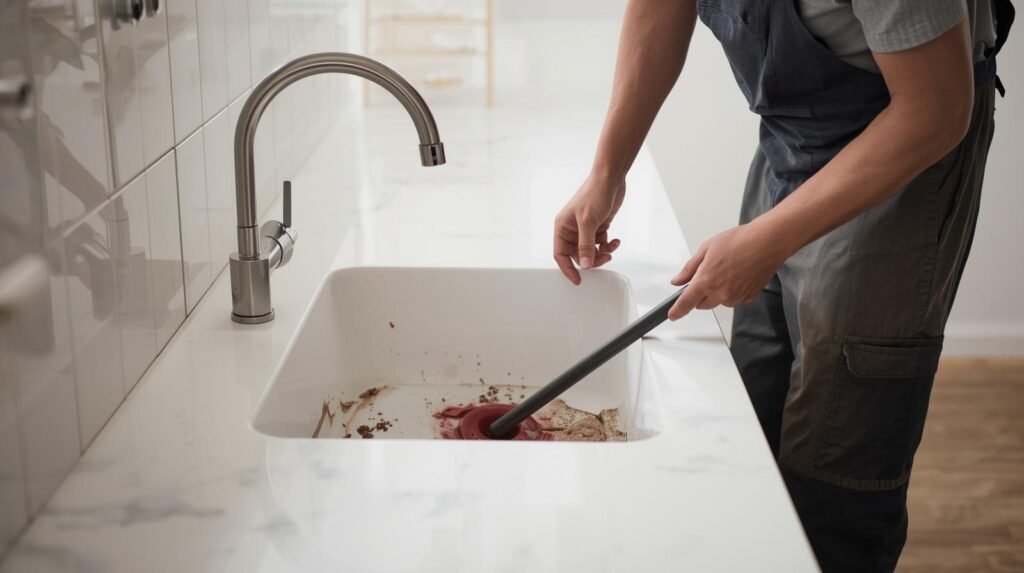
3. Use a Sink Plunger
A plunger creates pressure that can push blockages loose.
Steps
- Fill the sink with enough water to cover the plunger
- Place the plunger over the drain
- Push and pull several times
- Test drainage
Tip: Cover the overflow opening with a damp cloth.
4. Clean the P-Trap Under the Sink
The P-trap is the curved pipe below the sink where debris often collects.
Steps
- Place a bucket under the pipe
- Unscrew the slip nuts
- Remove and clean the trap
- Reattach the pipe
This method removes physical blockages.
5. Use a Drain Snake
A drain snake reaches deeper into pipes.
Steps
- Insert the snake into the drain
- Rotate the handle to break up the clog
- Pull out debris
- Flush with hot water
This method works well for stubborn clogs.
6. Use a Wet/Dry Vacuum
A shop vacuum can sometimes suck out blockages.
Steps:
- Set the vacuum to liquid mode
- Seal the hose over the drain
- Turn on suction
This method works for soft debris clogs.
If you're preparing quick meals at home, pressure cookers can save time. Learn how to cook frozen chicken in a pressure cooker safely.
Why Is My Kitchen Sink Draining Slowly?
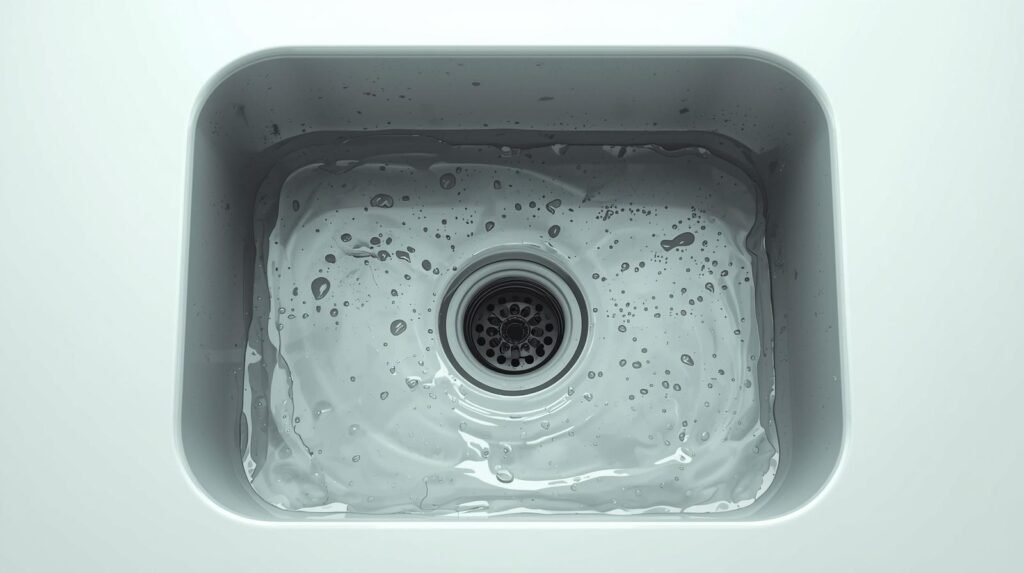
A slow-draining kitchen sink usually means a partial blockage inside the pipe.
Common causes include:
- grease buildup
- soap residue
- small food particles
- clogged garbage disposal
If your sink drains slowly but isn’t fully blocked, start with boiling water and baking soda before moving to plunging or using a drain snake.
Natural Ways to Unclog a Kitchen Sink Without Chemicals
Many homeowners prefer natural solutions instead of harsh chemical drain cleaners. These methods are safe for pipes and environmentally friendly.
Baking Soda and Hot Water
Pour baking soda into the drain and follow it with boiling water. This combination can help dissolve grease and loosen debris.
Salt and Hot Water
Salt acts as a mild abrasive that helps break down residue inside pipes.
Steps:
- Pour half a cup of salt into the drain
- Follow with boiling water
- Wait 10–15 minutes before rinsing
Dish Soap and Hot Water
Dish soap can help dissolve greasy buildup inside kitchen drains.
Why Your Sink May Still Be Clogged
If your sink still drains slowly, possible causes include:
- deeper pipe blockage
- grease buildup in long pipe sections
- clogged garbage disposal
- main drain line blockage
In these cases, a drain snake or professional plumber may be required.
When to Call a Plumber

DIY methods work for most clogs, but call a professional if:
- Multiple drains are backing up
- Water leaks appear under the sink
- Foul sewer smells persist
- DIY methods fail repeatedly
These may indicate serious plumbing problems.
How to Prevent Kitchen Sink Clogs
Preventive habits can keep your sink draining smoothly.
Use a Drain Strainer
This prevents food scraps from entering the pipes.
Avoid Pouring Grease Down the Drain
Instead, collect grease in a container and dispose of it in the trash.
Flush with Hot Water Regularly
Hot water helps dissolve grease before it builds up.
Monthly Drain Cleaning
Pour baking soda and vinegar down the drain once per month.
How to Unclog a Kitchen Sink with a Garbage Disposal
If your sink has a garbage disposal, the clog may be inside the unit.
Steps to try:
- Turn off the disposal and unplug it for safety.
- Use a flashlight to inspect for visible debris.
- Use tongs or pliers to remove trapped food.
- Run cold water and restart the disposal.
Avoid inserting your hands into the disposal unit.
Kitchen Maintenance Tips to Prevent Drain Problems
A few simple habits can prevent most sink clogs.
- Scrape food into the trash before washing dishes
- Run hot water after washing greasy pans
- Clean your drain monthly with baking soda and vinegar
- Install a sink strainer to catch debris
These small steps help maintain a clean and efficient kitchen sink.
If you enjoy quick home cooking, our guide on how to cook frozen chicken in a pressure cooker shows how to prepare meals safely and quickly.
Final Thoughts
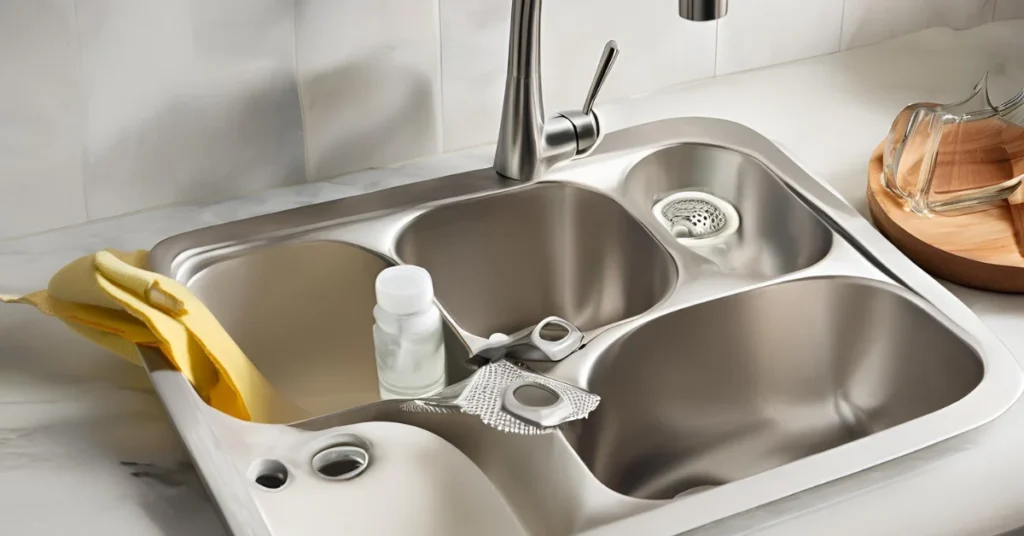
A clogged kitchen sink is frustrating, but most blockages can be cleared using simple household methods.
Techniques such as boiling water, baking soda and vinegar, plunging, or cleaning the P-trap often restore proper drainage in minutes.
By following these steps and maintaining your sink regularly, you can prevent most clogs and keep your kitchen plumbing working efficiently.
Keeping your sink and appliances clean is part of maintaining a functional kitchen. Our guide to must-have kitchen appliances for busy families explains which tools simplify everyday cooking.
FAQ
What is the fastest way to unclog a kitchen sink?
Pouring boiling water down the drain is often the quickest way to clear grease-related clogs.
Can baking soda and vinegar unclog a sink?
Yes. The reaction between baking soda and vinegar can help loosen debris and dissolve buildup.
Why is my kitchen sink clogged, but the garbage disposal works?
The clog may be located deeper in the drainpipe rather than inside the disposal unit.
Is it safe to use chemical drain cleaners?
Chemical cleaners can damage pipes over time. Mechanical methods like plunging or using a drain snake are safer.
————————————————————————————————