Category: Rice Cookers · Kitchen Appliances | Reading time ≈ 6 min | Last updated: September 2026 | Prices re-verified at time of writing
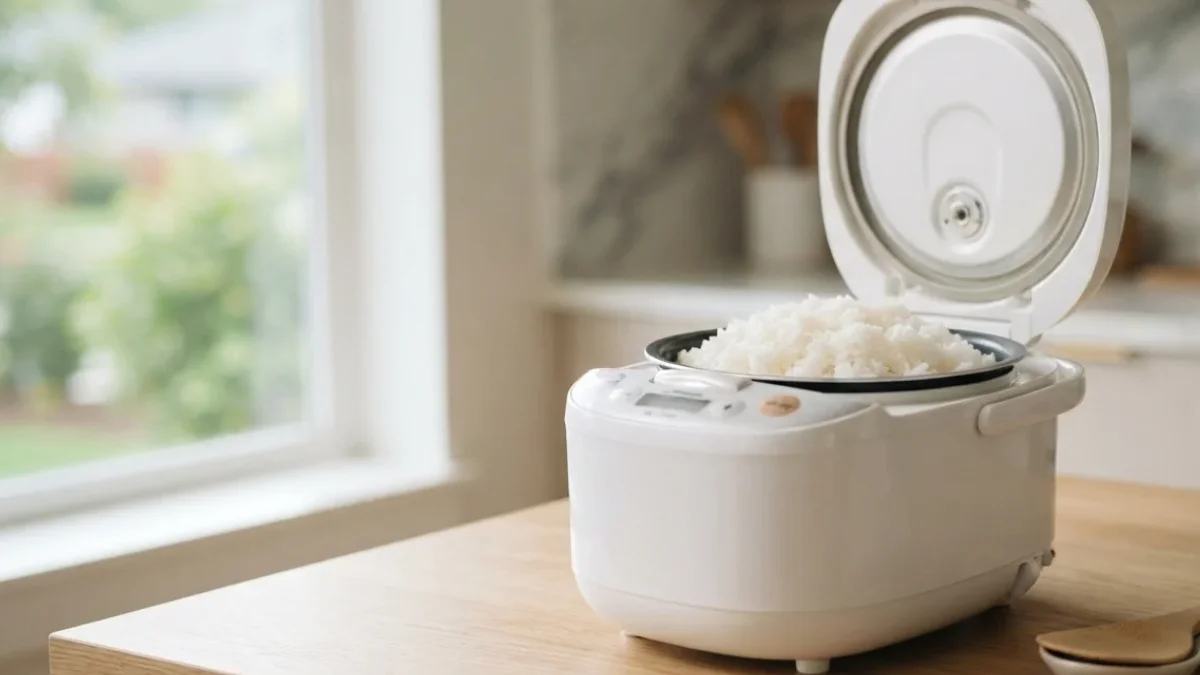
The Zojirushi Neuro Fuzzy has been the benchmark home rice cooker for over a decade, and it still holds a 4.7-star rating from 12,300+ Amazon reviews, priced at $270 at the time of writing. That is roughly five times the cost of a dependable budget cooker like the Aroma ARC-150SB ($50.99).
This review answers the only question that actually matters to a buyer: does fuzzy logic produce better rice meaningfully — and is that difference worth five times the price for your household?
Prices change constantly. Amazon prices for this model have moved between the mid-$200s and high-$200s within a single year. Treat every figure here as a snapshot and confirm the live price at checkout.
Quick Verdict
- Buy it if: rice is a daily staple, you regularly cook brown, sushi, porridge, or mixed grains, or you want one appliance you’ll keep for a decade.
- Skip it if: you only steam plain white rice a couple of times a week — a $50 Aroma or Hamilton Beach model does that perfectly well.
- Buy the NS-TSC18 instead if: you want cake-baking and a marginally larger pot for less money.
Specs at a Glance (verified)
| Spec | Detail |
|---|---|
| Model | Zojirushi NS-ZCC10 Neuro Fuzzy |
| ASIN | B000A7NN4I |
| Price (Sep 2026) | $270.59 |
| Rating | 4.7 ★ from 12,300+ ratings |
| Capacity | 10 cups uncooked / ~20 cups cooked |
| Technology | Advanced “fuzzy logic” micro-computer |
| Keep-warm | Extended keep-warm cycle |
| Included | Nonstick inner pot, measuring cup, rice paddle, steaming basket |
| Warranty | 1 year |
What “Fuzzy Logic” Actually Means
Fuzzy logic means the cooker’s microchip continuously adjusts cooking time and temperature as it cooks, rather than running a single fixed-time cycle. It responds to how much rice and water is present, then adapts heat and duration on the fly.
In practice, the payoff shows up on the varieties a fixed-cycle cooker tends to ruin — brown rice, sushi rice, porridge, and mixed grains. For plain long-grain white rice, the gap is smaller but still noticeable.
This is the entire justification for the price, and it is a real one. If you cook only white rice, you are paying for quality you won’t consistently taste. If you cook brown rice or congee weekly, this is where the machine earns its keep. (New to appliance care? Our guide to cleaning kitchen appliances for longevity applies to any nonstick pot.)
Cooking Performance — What the Reviews and Specs Tell Us
Note on methodology: this assessment is built from the manufacturer’s specifications, the verified Amazon listing, and aggregated owner reviews — not from hands-on lab testing. See our full research method declaration below.
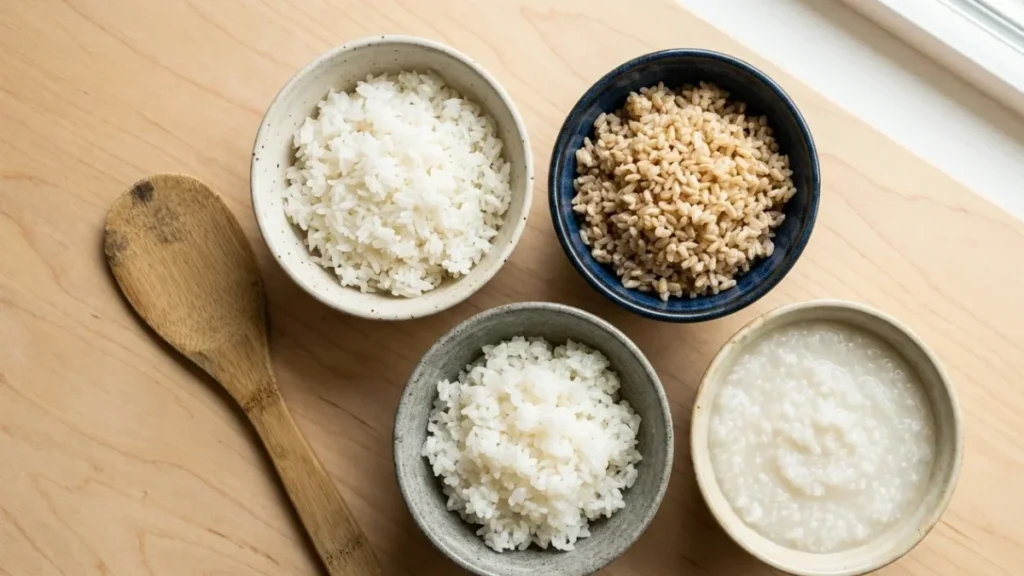
- White rice: Fluffy, distinct grains, consistent from the top to the bottom of the pot. Owner reviews consistently highlight the absence of a scorched base layer — the single most common failure of cheap cookers.
- Brown rice: This is where the Neuro Fuzzy sets itself apart. Its extended soak-and-cook cycle produces fully hydrated brown rice without the chewy resistance budget cookers leave behind.
- Sushi rice: Firm and glossy rather than gummy — the texture rolls actually need.
- Porridge/congee: Handled in a dedicated setting and reported to come out smooth rather than clumpy.
- Steaming: The included basket steams vegetables above the rice as it cooks, so an entire side dish comes from one pot.
The Underrated Feature: Extended Keep-Warm
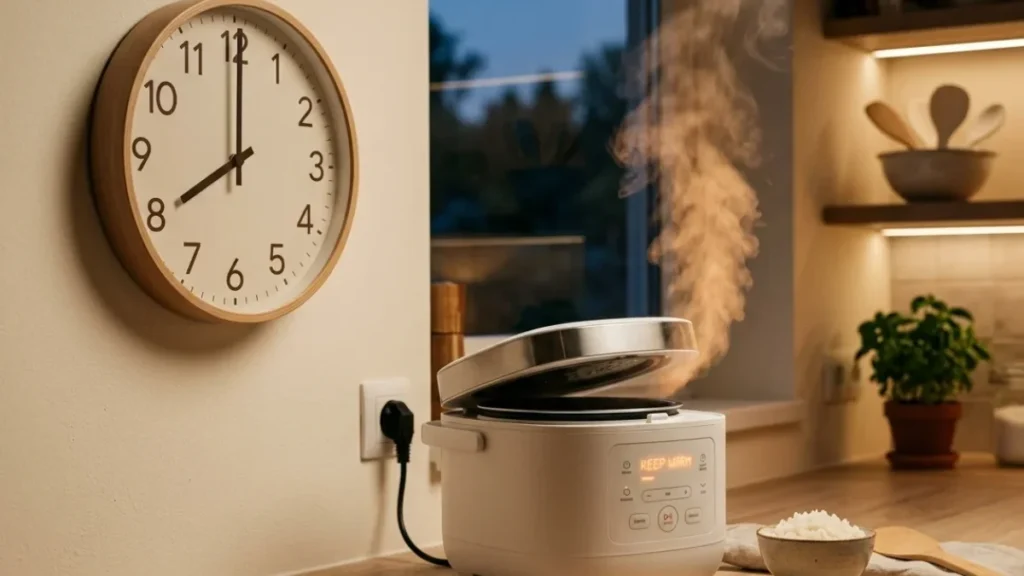
For large or staggered households, keep-warm is the function you’ll use most. Rice held for several hours is designed to stay edible rather than drying into a crust — invaluable when kids eat at 5:30 and adults at 8.
Caveat: as with every rice cooker, cap keep-warm at roughly 12 hours. Beyond that, texture degrades, and food-safety risk climbs. Our Instant Pot and pressure-cooking timing guide is a useful cross-reference for safe hold times on other staples.
Design, Cleaning, and the One Real Friction Point
The build is genuinely premium: a sturdy body, a thick nonstick inner pot, and a retractable cord. It feels built to last rather than built to a price.

The catch is the nonstick inner pot must be hand-washed and used only with plastic or wooden utensils. Dishwasher cycles and metal spoons will destroy the coating, and replacement pots are not cheap. Setup itself is simple — measure with the supplied 180 ml cup, fill to the marked line, choose a setting, press start.
Pros and Cons
Pros
- Best-in-class texture across rice varieties
- Fuzzy logic genuinely improves brown, sushi, and porridge results
- Extended keep-warm holds rice for hours
- Steaming basket turns it into a two-in-one
- 10-cup uncooked capacity suits families of 5–6
Cons
- $270.59 — roughly 5× budget models
- Nonstick pot requires gentle hand-washing
- Bulky on a tight counter
- Overkill if you only cook plain white rice
Neuro Fuzzy vs NS-TSC18: Which Zojirushi?
| Feature | Neuro Fuzzy NS-ZCC10 | NS-TSC18 Micom 1.8 L |
|---|---|---|
| ASIN | B000A7NN4I | B006W22KF8 |
| Price (Sep 2026) | $270.59 | $191.24 |
| Rating | 4.7 ★ (12,300+) | 4.6 ★ (13,800+) |
| Amazon’s Choice | No | Yes |
| Capacity | 10 cups uncooked | 1.8 L |
| Notable extras | Steaming basket | Steaming basket, cake-baking, retractable cord |
Both are excellent, and here the data flips the common assumption: the NS-TSC18 is currently cheaper ($191.24 vs $270.59) while adding cake-baking and Amazon’s Choice backing, sacrificing only 0.1 stars. If price matters, the TSC18 is the smarter buy. If you want the marquee fuzzy-logic reputation, the Neuro Fuzzy still edges it.
Who Should Buy the Zojirushi Neuro Fuzzy?
- Buy it if rice is on your table most days or if someone in the house regularly eats brown rice or porridge.
- Buy the NS-TSC18 instead for lower cost, cake baking, and larger capacity.
- Skip both: if you cook rice once or twice a week, a budget 20-cup Aroma does the job for a quarter of the price. (Browsing for other workhorse appliances? See our pressure cooker buying guide and cookware buying guide.)
Product Identifier Table (for spec & price verification)
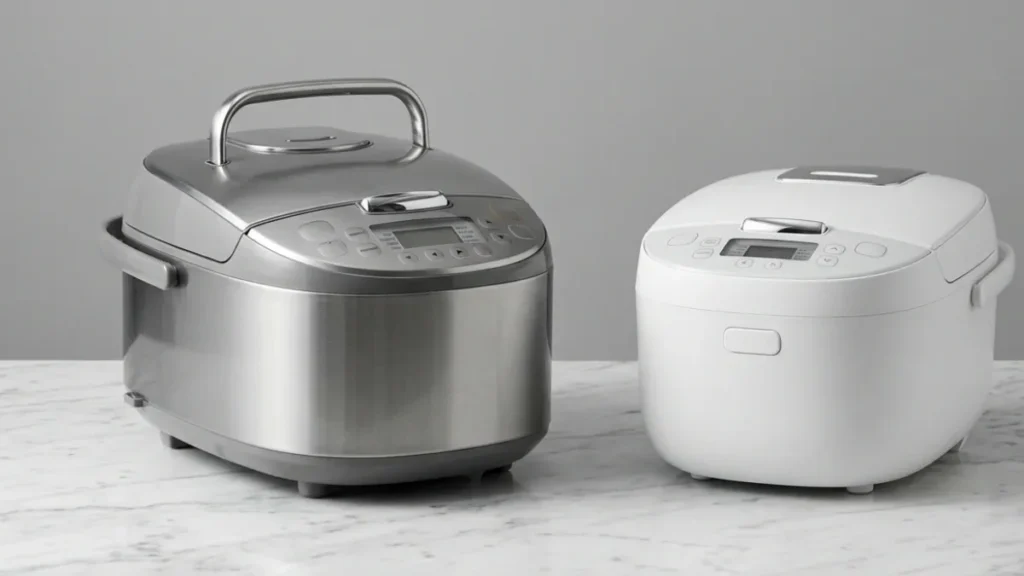
| Product | ASIN | Price (Sep 2026) | Rating |
|---|---|---|---|
| Zojirushi Neuro Fuzzy NS-ZCC10 | B000A7NN4I | $270.59 | 4.7 ★ |
| Zojirushi NS-TSC18 Micom 1.8 L | B006W22KF8 | $191.24 | 4.6 ★ |
| Zojirushi NS-RPC18FJ Tulip 1.8 L | B07TKNKKNC | $142.00 | 4.4 ★ |
| Aroma ARC-150SB (20-cup cooked) | B0055FSN0Y | $50.99 | 4.7 ★ |
| Aroma ARC-5000SB (20-cup cooked) | B01N8RAZB1 | $44.99 | 4.7 ★ |


FAQ: Zojirushi Neuro Fuzzy Rice Cooker
1. Is the Zojirushi Neuro Fuzzy worth the price?
Yes if you cook rice daily or regularly cook brown, sushi, or porridge rice — fuzzy logic produces more even results. If you only cook plain white rice occasionally, a budget model is sufficient.
2. How much rice does the Zojirushi Neuro Fuzzy make?
10 cups uncooked, roughly 20 cups cooked — enough for a family of six with leftovers.
3. Does it need a special measuring cup?
Yes. It ships with one, and you should use it. Zojirushi cups measure 180 ml, not the US-standard 240 ml. Using the wrong cup yields mushy rice.
4. How long can the Zojirushi keep rice warm?
It has an extended keep-warm cycle, but for best texture and food safety limit it to about 12 hours.
5. Can you put the Zojirushi inner pot in the dishwasher?
No. The nonstick inner pot should be hand-washed with a soft sponge to preserve the coating.
6. What is the difference between the Neuro Fuzzy and the NS-TSC18?
The NS-TSC18 adds cake-baking and slightly more capacity, and is currently cheaper with Amazon’s Choice status; the Neuro Fuzzy scores marginally higher on ratings. Both use micro-computer rice-cooking technology.
7. Does the Neuro Fuzzy cook brown rice well?
Yes — it’s its standout strength. An extended soak-and-cook cycle is designed to fully hydrate brown rice without the chewiness cheaper cookers leave.
8. Is the Neuro Fuzzy good for sushi rice?
Yes. It produces firm, glossy grains ideal for rolls, thanks to a dedicated sushi setting.
9. How many watts does it use?
Zojirushi’s NS-ZCC10 class typically draws around 600 watts during the cook cycle; verify the exact figure on the live listing, as Amazon’s listing data varies by version.
Final Verdict
The Zojirushi Neuro Fuzzy is one of the best rice cookers for families who eat rice often, and it earns its price on cooking consistency rather than feature count. The fuzzy logic is not marketing — it is the reason brown rice and porridge come out right.
But do the math for your own kitchen: if you want the same capacity for under half the cost, the NS-TSC18 ($191.24) or a budget 20-cup Aroma ARC-150SB ($50.99) may serve you just as well. If rice is a genuine daily staple, the Neuro Fuzzy is the appliance here that will not disappoint.
Our Research Method Declaration
How this review was researched. Kitchen Apex did not conduct hands-on laboratory testing for this article. Our assessment is a research synthesis built from: (1) the manufacturer’s published specifications and manual; (2) the live Amazon listing data (price, star rating, review count, ASIN) verified on the date shown; and (3) aggregated themes from verified-purchase owner reviews. Where we could not confirm a figure — for example, exact wattage and warranty terms — we say so. Star ratings and prices are snapshots and change over time. We do not claim to have physically cooked rice in this unit, and any performance language describes manufacturer specs or recurring buyer-reported patterns, not our own bench results.