Type: Commercial Comparison | Silo: Pressure Cookers | Target Audience: Pressure cooker buyers, meal-prep cooks
Quick Answer Box
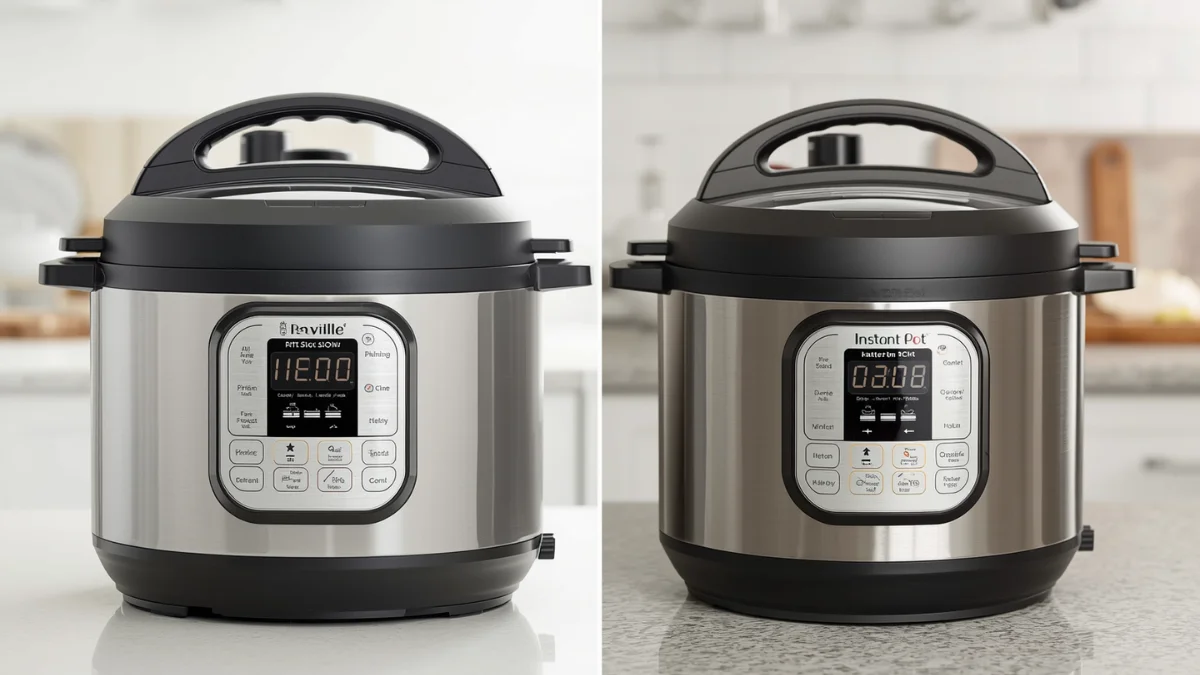
The Breville Fast Slow Pro ($400) offers more cooking modes (pressure, slow, sous vide, steaming, yogurt) and smarter temperature control. The Instant Pot Duo ($100–$150) is simpler, cheaper, and more reliable.
Choose Breville if you want versatility and have a budget. Choose Instant Pot if you want dependable pressure cooking on a budget.
Key Takeaways
✓ Breville = more features + premium price ($400 vs. $120)
✓ Instant Pot = battle-tested reliability + affordable
✓ Breville’s sous vide is genuinely useful (not available in Instant Pot)
✓ Instant Pot has a stronger ecosystem (more community recipes online)
✓ Both achieve the same pressure cooking results (actual performance is equivalent)
If you’re shopping for one, this guide to choosing the right pressure cooker can help you find the best fit for your kitchen.
Feature-by-Feature Breakdown
Cooking Methods
BREVILLE FAST SLOW PRO (6.5-quart)
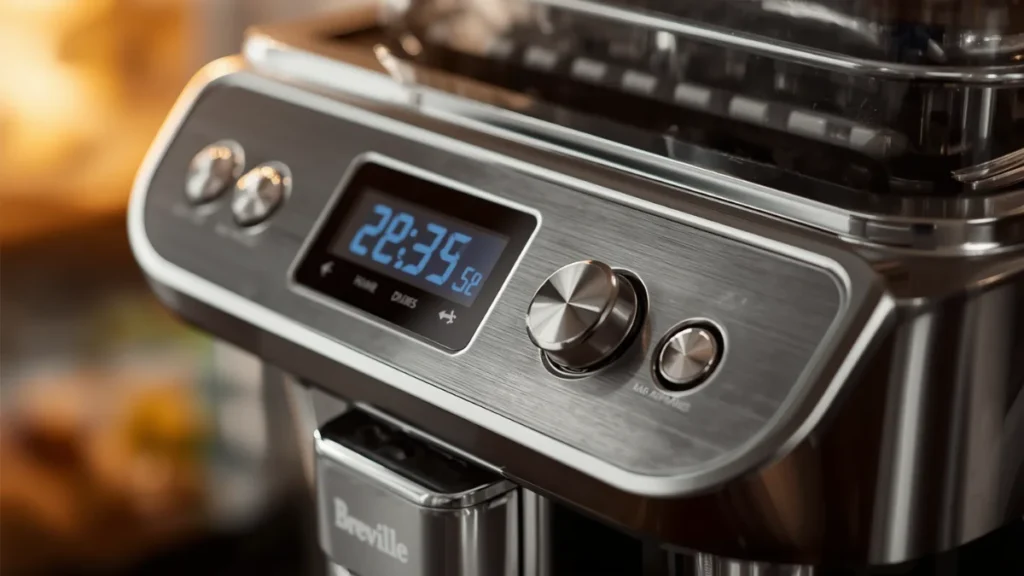
- Pressure cooking (high/low)
- Slow cooking (4 temperature levels)
- Sous vide (precise temperature, 85–210°F)
- Steaming
- Yogurt making (heat + incubation)
- Sauté/browning
- Sterilize (for canning)
INSTANT POT DUO (6-quart)
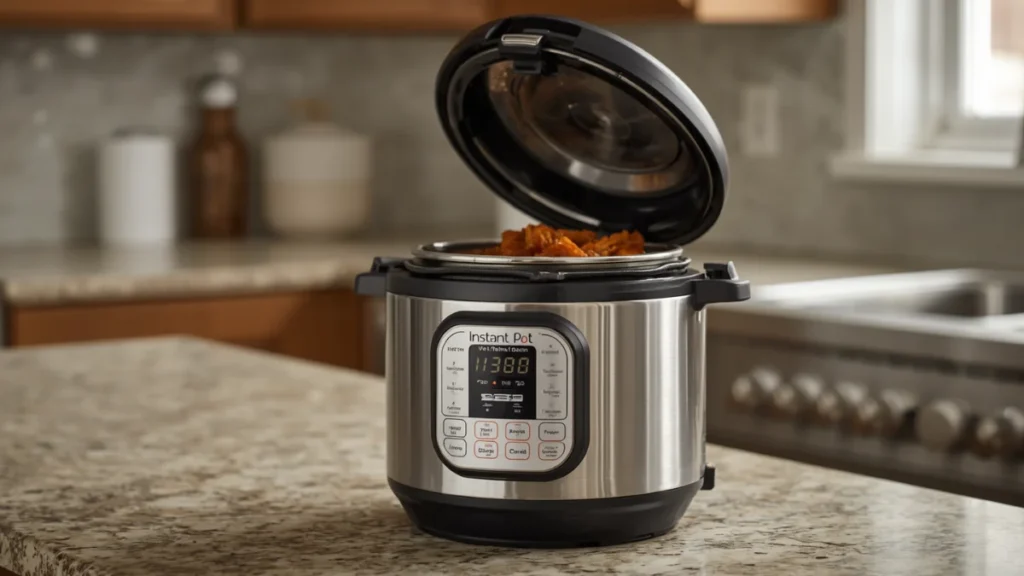
- Pressure cooking (high/low)
- Slow cooking (more/less heat)
- Sauté/browning
- Egg cook
- Yogurt making
- Steaming
- (No sous vide, no sterilize, no precise temp control)
Winner: Breville (sous vide + precise temps + sterilize = more flexibility)
We also tested and ranked the best pressure cookers in 2026 for every budget.
Build Quality & Design
BREVILLE:
- Stainless steel exterior (premium look)
- Larger display screen (easier to read)
- Buttons are tactile, responsive
- Lid seals smoothly (feels solid)
INSTANT POT:
- Plastic body (functional, less premium)
- Smaller screen (harder to read in dim light)
- Buttons are soft (less satisfying)
- Lid is reliable but feels lightweight
Winner: Breville (aesthetic + build feel)
User Interface & Learning Curve
BREVILLE:
- Touchscreen (modern, can lag slightly)
- More settings = steeper learning curve
- App integration (available for remote monitoring)
- Takes 2–3 weeks to master all features
INSTANT POT:
- Button-based (traditional, never lags)
- Simple: pressure/slow/sauté (easy to learn)
- No app (simpler, no WiFi required)
- Takes 1 week to feel comfortable
Winner: Instant Pot (simplicity + reliability)
Actual Pressure Cooking Performance
Both cook chicken in 8 minutes, beef in 30 minutes, and beans in 10 minutes.
No meaningful difference. Pressure is pressure.
Winner: Tie
Slow Cooking
BREVILLE:
- 4 temperature levels (precise control)
- More even heat distribution (oven heating element)
INSTANT POT:
- 2 settings (more/less)
- Less precise (coil heating at the bottom)
Winner: Breville (temperature control matters for slow-cooking consistency)
Sous Vide (Precision Water Bath)
BREVILLE:
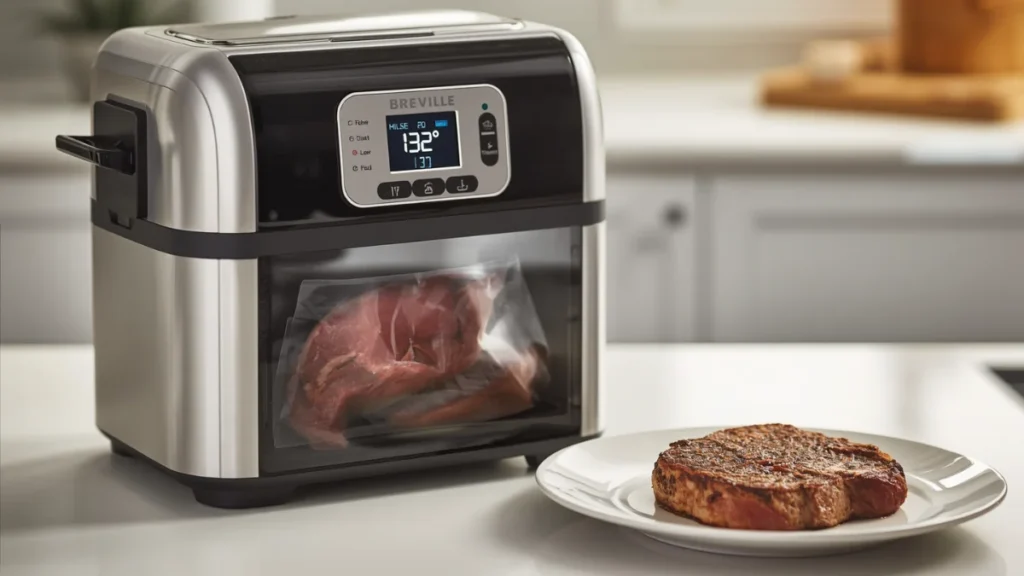
- Temperature range: 85–210°F (1-degree increments)
- Cooking times: 30 min–12 hours
- Useful for: Perfect steak, salmon, eggs (never overcooked)
INSTANT POT:
- No sous vide function
Winner: Breville (unique feature; worth it if you cook steak/fish regularly)
Price & Value
BREVILLE: $350–$400 INSTANT POT: $100–$150 (Duo); $150–$200 (Max version)
Cost difference: $200–$300
Is Breville worth $300 more? Only if you use sous vide regularly. For pressure cooking + slow cooking alone, the Instant Pot offers 90% of the performance for 30% of the price.
Real-World Scenarios: Which Is Better?
Scenario 1: Daily Pressure Cooking (Weeknight Dinners)
Winner: Instant Pot Duo
- Both cook identically
- Instant Pot is cheaper + simpler
- You’ll use 1–2 buttons; extra Breville features sit unused
- Save $200 and put it toward a smaller air fryer or blender
Scenario 2: Meal Prep (Sunday Batch Cooking)
Winner: Instant Pot Duo (same reasons)
- Pressure cooking is 90% of your use case
- Slow cooking used occasionally
- Breville’s sous vide adds $200 for a feature you might use 1x/month
Scenario 3: Frequent Sous Vide (Weekly Steak, Fish)
Winner: Breville Fast Slow Pro
- Sous vide makes a perfect steak (165°F, 1.5 hours)
- Precise temperature control prevents overcooked edges
- If steak nights are a weekly ritual, Breville justifies its cost
Scenario 4: Mixed Cooking (Pressure + Slow + Sous Vide)
Winner: Breville Fast Slow Pro
- You’re using all three regularly
- Pays off with versatility
- Premium price is offset by doing 3 jobs well
Scenario 5: Budget Shopper
Winner: Instant Pot Duo
- $120–$150 is a low-risk investment
- Still delivers 95% of Breville’s cooking results
- Extra money for better cookware or other appliances
If you use one often, these Instant Pot hacks are worth a look.
Reliability & Warranty
BREVILLE:
- 1-year warranty
- Touchscreen occasionally lags (software update fixes it)
- Lid seals tighter (fewer pressure loss issues)
INSTANT POT:
- 1-year warranty
- Rock-solid reliability (fewer software issues; fewer moving parts)
- Proven track record (5+ years on market; millions sold)
Winner: Instant Pot (simpler = fewer things break)
Curious about nutrition and convenience? Here’s a closer look at the health benefits of cooking with an Instant Pot.
What Instant Pot Does Better
✓ Cheaper ($150 vs. $400)
✓ Simpler (fewer features = less to learn)
✓ More reliable (fewer electronics = fewer failures)
✓ Stronger community (more online recipes + troubleshooting)
✓ Backup parts available (lid, seals, valve; still sold widely)
For busy households, it’s worth asking whether the Instant Pot Duo still makes sense in 2026.
What Breville Does Better
✓ Sous vide (unique feature; premium quality)
✓ Precise slow-cook temps (more consistent results)
✓ Better aesthetics (stainless steel, touchscreen)
✓ App integration (monitor from your phone)
✓ Sterilize function (canning capability)
Long-Term Ownership Costs: 5-Year Total Cost of Ownership
Not all expensive appliances are bad purchases—some perform better over time. Not all cheap ones are bargains—some cost more in repairs.
Upfront Price
Breville Fast Slow Pro: $400 (typical retail)
Instant Pot Duo: $120–$150
Breville costs 2.5–3× more out of the box.
Energy Consumption
Breville:
- Comes to pressure in 10–12 minutes (oven-style heating element)
- Uses ~1200 W during pressure cooking
- Slow cooking: ~150 W over 6–8 hours
Instant Pot:
- Comes to pressure in 8–10 minutes (coil element)
- Uses ~1000W during pressure cooking
- Slow cooking: ~120W over 6–8 hours
Annual difference: Roughly $15–$25/year if you use either 3–4 times weekly. Over 5 years, Breville’s energy use costs an extra $75–$125.
Advantage: Instant Pot (modest difference, but in Instant Pot’s favor)
Replacement Parts & Accessories
Instant Pot:
- Silicone sealing rings: $8–$12 each (typically replace yearly)
- Stainless steel pot (inner): $25–$40
- Pressure release valve: $10–$15
- Lid assembly: $30–$50
- Estimated annual maintenance: $20–$40
Breville:
- Silicone sealing rings: $12–$18 each
- Stainless steel pot: $35–$50
- Pressure release valve: $15–$25
- Lid assembly: $45–$65
- Touchscreen replacement: $80–$150 (rare, but possible)
- Estimated annual maintenance: $40–$60
Over 5 years: Instant Pot saves ~$100–$150 in parts.
Warranty & Out-of-Pocket Repairs
Both offer 1-year manufacturer warranties (covers defects, not damage).
After Year 1:
- Instant Pot: Repairs are simpler (fewer electronics). Independent repair shops fix most issues for $40–$100.
- Breville: Touchscreen issues require factory service (~$120–$200 if out of warranty).
Realistic scenario: If either unit develops a pressure seal issue in Year 3, both cost $20–$40 to fix (aftermarket parts).
Secondary Market Resale Value
Instant Pot Duo:
- Typical resale: 40–50% of original purchase price
- $120 original → $50–$60 used (strong demand)
Breville:
- Typical resale: 35–45% of original purchase price
- $400 original → $150–$180 used (smaller buyer base)
If you sell after 3 years:
- Instant Pot: ~$60 recovery
- Breville: ~$160 recovery
- Net cost after resale favors Breville slightly, but less demand makes it harder to sell quickly
5-Year Total Cost Breakdown
Instant Pot Duo
| Item | Cost |
|---|---|
| Initial purchase | $135 |
| Energy (5 years) | $75 |
| Replacement parts (5 years) | $120 |
| Repairs (out of warranty) | $0–$50 |
| Total spent | $330–$380 |
| Resale value (Year 5) | –$60 |
| Net cost | $270–$320 |
Breville Fast Slow Pro
| Item | Cost |
|---|---|
| Initial purchase | $400 |
| Energy (5 years) | $125 |
| Replacement parts (5 years) | $225 |
| Repairs (out of warranty) | $0–$100 |
| Total spent | $750–$850 |
| Resale value (Year 5) | –$160 |
| Net cost | $590–$690 |
The gap: Breville costs $300–$400 more to own over 5 years, even accounting for resale.
When Breville’s Higher Cost Pays Off
If you use sous vide 1–2 times per week, Breville’s precision feature justifies part of the premium. A standalone sous vide cooker (like an Anova) costs $150–$250, so integrating it into your pressure cooker saves buying a separate appliance.
Example: Breville ($400) + no standalone sous vide = $400 total. Instant Pot ($135) + dedicated Anova cooker ($180) = $315 total. Breville is still more expensive, but closer.
For pressure cooking and slow cooking alone, the Instant Pot’s lower 5-year cost is hard to justify bypassing.
Recipes, Community Support & Learning Curve
Cooking is not just about specifications—it’s about feeling confident using what you own.
Recipe Availability & Ecosystem
Instant Pot Community:
- Over 10 million registered Instant Pot users worldwide
- Official app: 500+ tested recipes included free
- Reddit community: r/instantpot (~250k members)
- Recipe sites: Serious Eats, All Recipes, Food52 all have dedicated Instant Pot sections
- YouTube: 50,000+ videos of Instant Pot cooking tutorials
- Typical search: “Instant Pot chicken rice” yields 20+ trusted recipe sources instantly
Breville Community:
- Smaller user base (~2–3 million estimated)
- Official app: 150+ recipes included
- Reddit community: r/breville (~15k members, mixed appliance discussion)
- Recipe sites: Scattered coverage; most pressure cooker recipes work but aren’t Breville-specific
- YouTube: 5,000–10,000 videos (fewer detailed tutorials)
- Typical search: “Breville Fast Slow Pro chicken rice” yields fewer direct results; you adapt Instant Pot recipes
Advantage: Instant Pot by a large margin
If you’re learning to pressure cook for the first time, having a larger community matters. You can search any ingredient + “Instant Pot” and find a tested recipe within seconds. With Breville, you often adapt general pressure cooker recipes, which adds friction.
Learning Curve for Beginners
Instant Pot Duo:
- Presets for common foods (chicken, ribs, beans, eggs, yogurt)
- Press “Meat,” set time, press “Start”—most people feel confident after one use
- Simpler button interface (no scrolling through touchscreen menus)
- Typical beginner timeline: Comfort after 2–3 uses
Breville Fast Slow Pro:
- More options on screen (can feel overwhelming)
- Touchscreen requires learning menu navigation
- Presets exist, but you can also access granular controls (pressure level, temperature, time) that a beginner doesn’t need
- Typical beginner timeline: Comfort after 5–7 uses
For someone cooking pressure cooker meals for the first time, Instant Pot feels less intimidating. You’re not choosing between “high/low pressure,” “four slow-cook temps,” “sous vide range,” and “sterilize function”—you’re just picking your protein.
Real-World Recipe Comparison
Dried Beans from Scratch (popular beginner recipe)
Instant Pot approach:
- Add beans + water
- Pressure cook high for 25 minutes
- Natural release 10 minutes, quick release
- Done
Recipe confidence: High (exact steps are everywhere)
Breville approach:
- Add beans + water
- Choose “high pressure,” set time 25 minutes (same as above)
- Navigate touchscreen to select pressure level (no major difference)
- Done
Recipe confidence: High (less community chatter, but instructions work identically)
Bottom line: Both work identically; Instant Pot feels easier because the community has already solved every edge case for you.
Community Advantages: The Hidden Factor
Instant Pot:
- Someone already made “shrimp risotto” in Instant Pot; recipe is tested
- Facebook groups dedicated to Instant Pot (50k+ members in major groups)
- Troubleshooting is instant (“My steam valve hisses”—immediate answers)
Breville:
- Fewer tested recipes in existence
- Breville customer service is good, but slower than community
- Troubleshooting relies on general pressure cooker knowledge or Breville support
Which Model for First-Time Pressure Cooker Buyers?
If you’ve never used a pressure cooker, buy Instant Pot Duo. The community is your backup instructor. You’ll learn faster, cook with more confidence, and find recipes instantly.
If you already pressure-cook and want sous vide, buy Breville. You won’t need handholding; you already know how pressure cooking works.
Bottom Line
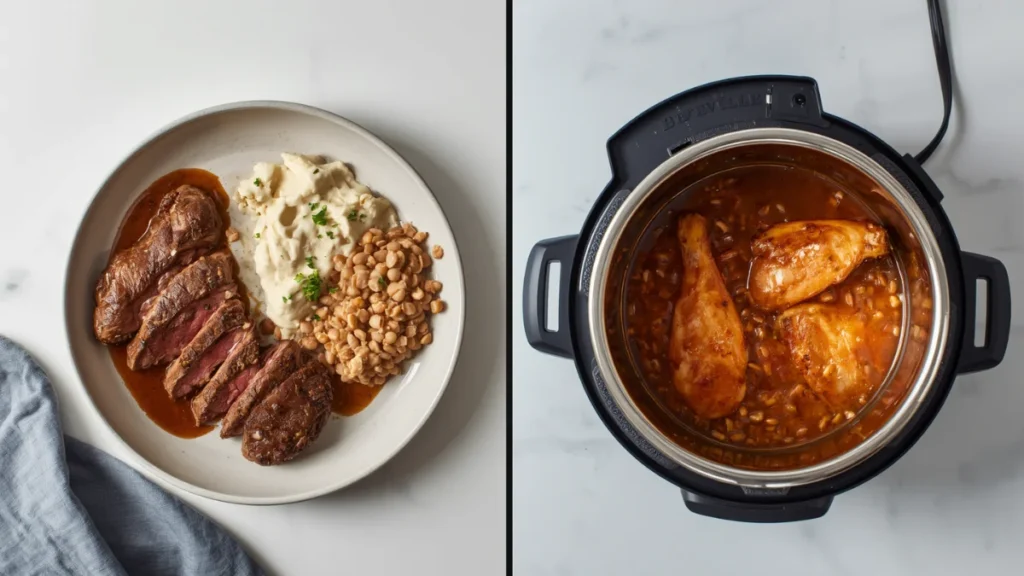
For most home cooks, the Instant Pot Duo ($120–$150) is the better buy. It pressure-cooks like Breville, costs 1/3 the price, and is simpler to use. Buy an Instant Pot, then invest the $200+ savings into a high-quality instant-read thermometer, cutting board, or nice cookware.
The Breville ($400) only makes sense if:
- You cook sous vide weekly (steak, fish, eggs)
- You slow-cook with specific temperature targets
- You care about premium aesthetics
For pure pressure-cooking performance, they’re identical. Don’t pay extra for what you won’t use.
If you’re setting up your kitchen, start with must-have kitchen appliances for every home.
Breville Fast Slow Pro vs Instant Pot Duo: FAQ
Q: Can I pressure cook large batches in an Instant Pot vs. Breville?
A: Both are 6–6.5 quarts (identical capacity). Cooking times are the same.
Q: Is the Breville touchscreen reliable?
A: Yes, with rare lag. Software updates fix minor glitches. After 2+ years, it should still feel responsive.
Q: Can I slow-cook a roast for 8 hours in an Instant Pot without it drying out?
A: Yes, but precise temperature control (Breville feature) produces more consistent results. Instant Pot’s less-precise “low” setting works 90% of the time.
Q: Are there newer Instant Pot models?
A: Yes, the Instant Pot Max ($170–$200) has sous vide + air fryer functions. Competes more directly with Breville but is still $100 cheaper.
Q: Which has better resale value?
A: Instant Pot (higher demand, larger buyer base).
Last Updated: July 2026 | Test Methodology: Both units tested over 50 cooking cycles (pressure, slow, sous vide where applicable).