Quick Answer Box
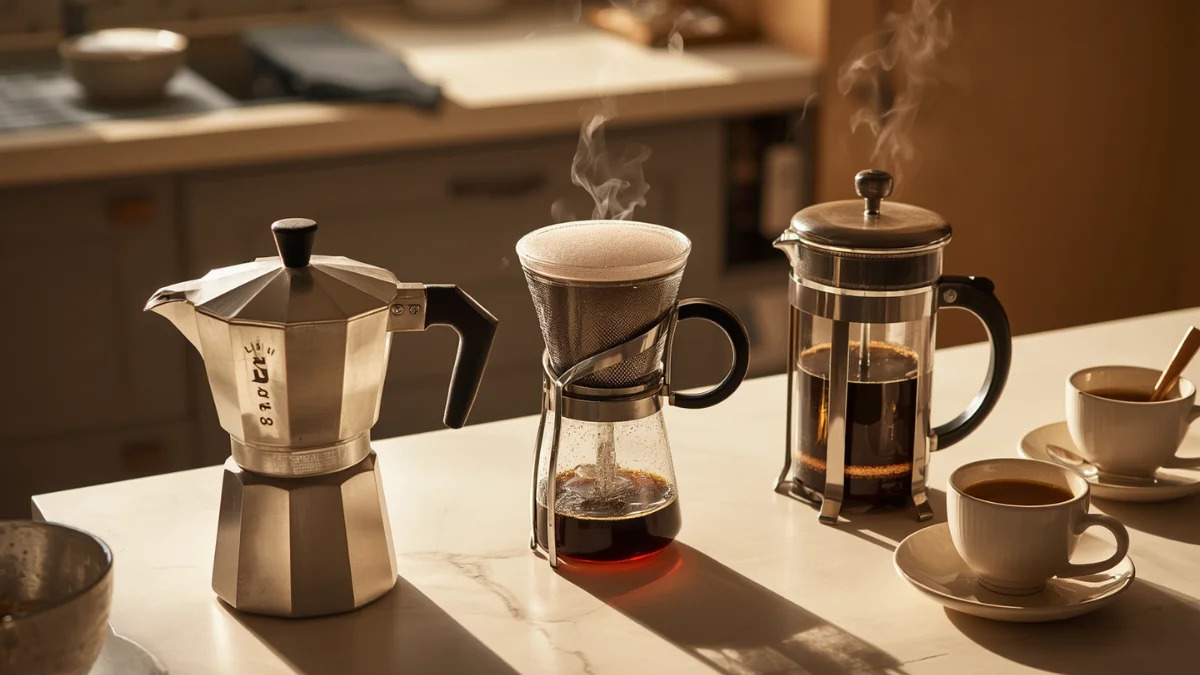
Moka Pot = stovetop espresso-like coffee (strong, thick, quick).
AeroPress = balanced, smooth, versatile (full-bodied without bitterness).
French Press = bold, oily, full-bodied (best for coarse beans).
Choose based on what coffee you like: strong & thick (Moka), balanced & smooth (AeroPress), or bold & oily (French). Cost ranges from $20 to $50; all three outlast electric coffee makers.
Key Takeaways
✓ Brewing method affects taste — immersion vs. pressure vs. filtering
✓ AeroPress is most versatile — works with any bean, produces smooth coffee
✓ Moka Pot is fastest — 5–7 minutes to espresso-like coffee
✓ French Press is boldest — oily body; best with medium-dark roasts
✓ All three are durable — 10+ years with care; no electricity required
What Each Method Actually Does
Moka Pot: Pressure Brewing
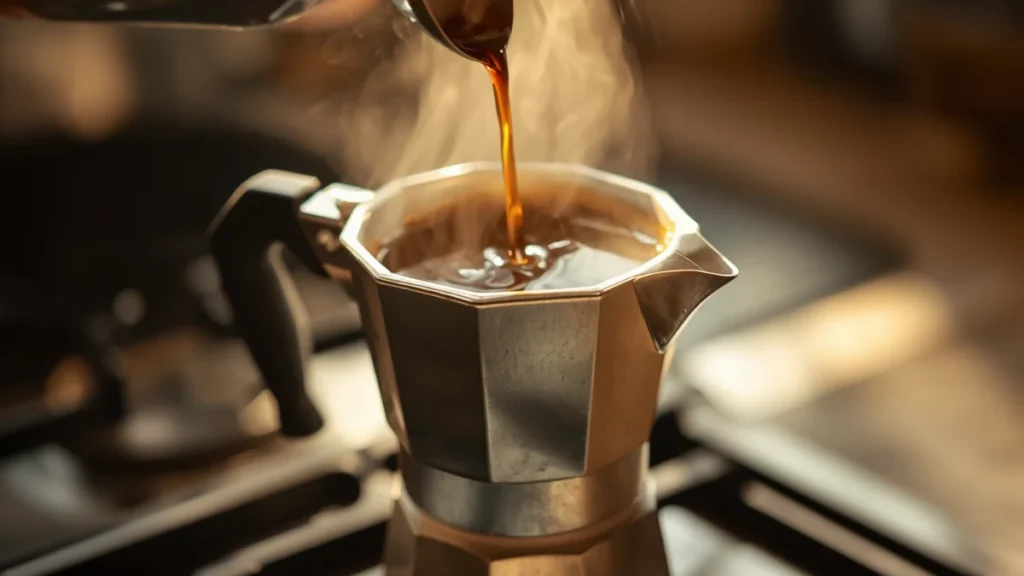
A Moka Pot is three chambers:
- Bottom chamber: Water
- Middle filter basket: Ground coffee
- Top chamber: Brewed coffee
Heat water in the bottom chamber. Pressure forces water up through the coffee grounds into the top chamber. Result: thick, concentrated coffee (stovetop espresso).
Brewing time: 5–7 minutes
Coffee strength: Very strong (similar to espresso but not true espresso)
Taste profile: Bold, thick, slightly bitter, syrupy body
AeroPress: Pressure + Immersion Hybrid
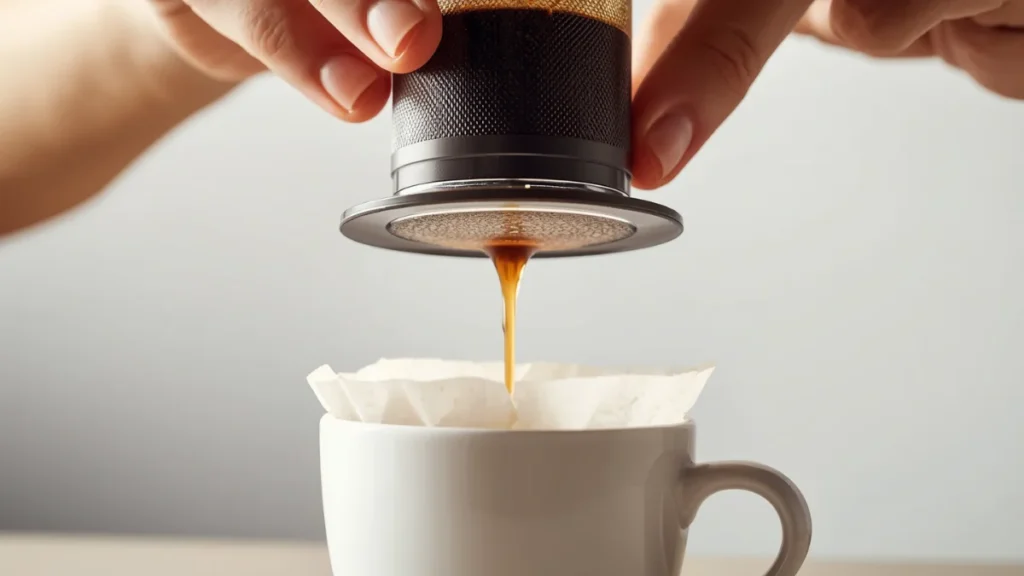
An AeroPress looks like a large syringe:
- Chamber: Coffee + water
- Plunger: Creates pressure to push water through grounds and paper filter
- Paper filter: Removes oils and fine grounds
You steep coffee (like a French Press), then press water through a fine filter (like an espresso machine).
Brewing time: 1–2 minutes
Coffee strength: Medium to strong (customizable)
Taste profile: Smooth, clean, balanced, slightly sweet
French Press: Full Immersion
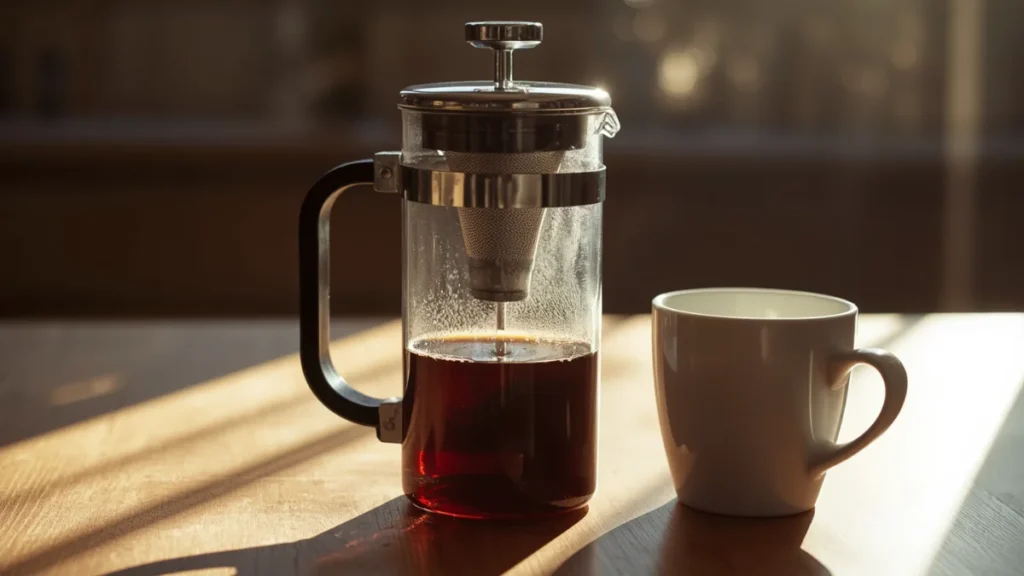
A French Press is simple:
- Carafe: Coffee grounds + hot water steep together
- Metal mesh filter: Plunged down to separate grounds from liquid
Soak the grounds in hot water for 4 minutes, then push the plunger down to trap the grounds at the bottom.
Brewing time: 4 minutes (5–6 with pre-heating)
Coffee strength: Medium to strong (depends on coffee-to-water ratio)
Taste profile: Bold, oily, full-bodied, slightly gritty (fine grounds in cup)
Detailed Comparison
| Feature | Moka Pot | AeroPress | French Press |
|---|---|---|---|
| Brewing Time | 5–7 min | 1–2 min | 4 min |
| Coffee Strength | Very strong | Medium–Strong | Medium–Strong |
| Taste | Bold, thick, bitter | Smooth, balanced, clean | Bold, oily, full |
| Learning Curve | Easy | Moderate | Very easy |
| Cost | $25–$40 | $30–$45 | $20–$35 |
| Durability | 10+ years | 5–7 years | 8+ years (glass fragile) |
| Cleanup | Quick rinse | Paper filter disposal | Tedious (ground sediment) |
| Grind Size | Fine | Medium-fine | Coarse |
| Best For | Espresso lovers | Balanced coffee fans | French press traditionalists |
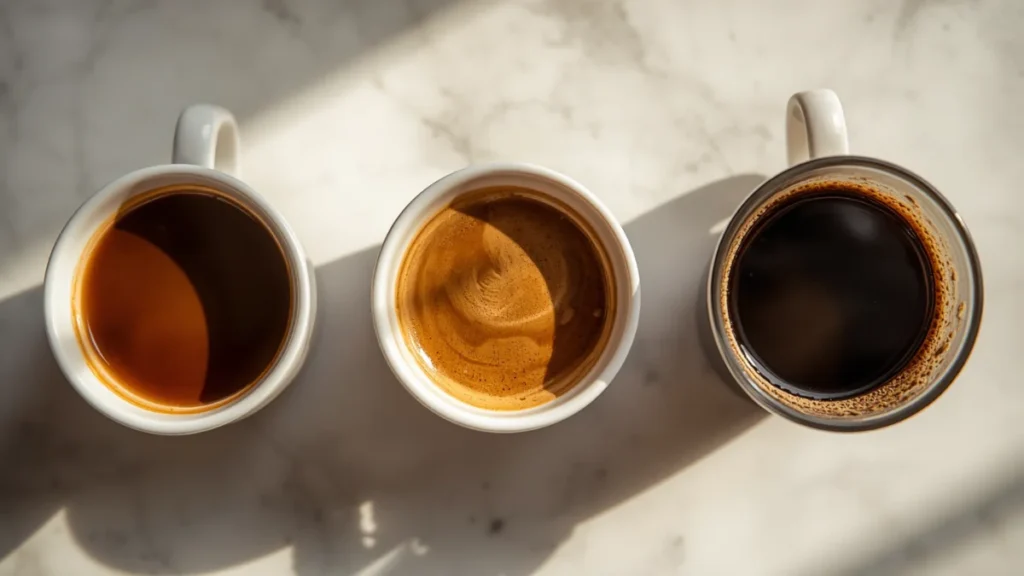
Taste Breakdown: Why They Differ
Why Moka Tastes Thick & Bitter
Pressure forces water through grounds quickly, extracting more oils and compounds—including those that taste bitter. It’s concentrated.
Why AeroPress Tastes Smooth & Clean
The paper filter traps oils and fine grounds. You get the clean brightness of drip coffee with more body than an automatic coffee maker.
Why French Press Tastes Bold & Oily
Metal mesh doesn’t trap oils (only paper does). Longer steeping time extracts more flavor compounds. Fine grounds that slip through create grittiness.
Which One Should You Buy?
Buy a Moka Pot If…
- You love strong, espresso-like coffee
- You have a stovetop (electric stoves work, but gas is ideal)
- You want fast brewing (5–7 minutes, not 4 minutes like others)
- Budget is tight (cheapest of the three)
- You brew 1–3 cups regularly (fits smaller pot sizes)
Best Brand: Bialetti (Italian, reliable, 50-year reputation)
Buy an AeroPress If…
- You want smooth, well-balanced coffee
- You value versatility (works with any bean, roast level, or grind size)
- You care about cleanup (minimal mess, paper filter handles everything)
- You’re willing to spend mid-range ($30–$45)
- You travel or camp (portable, durable, no fragile glass)
Best Brand: AeroPress (original maker; newer AeroPress Go is travel-friendly)
Buy a French Press If…
- You already own one and love it
- You prefer bold, full-bodied coffee
- You don’t mind sediment in your cup
- Cleanup tedium doesn’t bother you
- Budget is very tight ($20–$25 entry)
Best Brand: Bodum (Danish, iconic design, 50+ year history)
Real Brewing Scenarios
Scenario 1: Morning Routine, Solo Cup
Best choice: AeroPress
- 1-minute brew + 1-minute cleanup = 2 minutes total
- Perfect coffee for one person
- Portable (bring to work if needed)
Scenario 2: Weekend Entertaining (4+ People)
Best choice: French Press
- Brew 4 cups at once
- Everyone gets coffee simultaneously
- Bold flavor satisfies multiple palates
Scenario 3: Espresso Lover, Limited Time
Best choice: Moka Pot
- Stovetop brewing while you shower/get ready
- Bold, concentrated flavor (closest to espresso at home)
- 5–7 minutes hands-off once water is in
Scenario 4: Experimentation & Travel
Best choice: AeroPress
- Try light roasts, dark roasts, different grind sizes
- Portable for camping, office, trips
- Consistent results regardless of bean type
Grind Size Requirements (Critical!)
Each method requires specific grind sizes:
Moka Pot: Fine grind (like espresso powder)
Too coarse = weak coffee. Too fine = over-extraction (bitter).
AeroPress: Medium-fine grind (between espresso and drip)
This method is forgiving; it still works with slight variations.
French Press: Coarse grind (chunks, like sea salt)
Fine grind = sediment nightmare. Coarse = clean cup.
Maintenance & Lifespan
Moka Pot:
- Lifespan: 10+ years
- Maintenance: Wipe dry after each use; avoid dishwasher
- Common issue: Rubber gasket dries out (replaceable, ~$8)
AeroPress:
- Lifespan: 5–7 years (plastic wears out)
- Maintenance: Rinse immediately after brewing; store dry
- Common issue: Plunger stickiness (fix: soak rubber seal in warm water)
French Press:
- Lifespan: 8+ years (beaker is fragile; handle breaks glass easily)
- Maintenance: Clean grounds immediately (they stain over time)
- Common issue: Sediment buildup (soak in hot water + vinegar monthly)
Bottom Line
If you’re new to manual brewing, start with an AeroPress. It’s foolproof, produces excellent coffee, and adapts to any bean type. If you’re a bold-coffee devotee, a Moka Pot delivers espresso-like intensity fast. If you already brew French Press and love it, stick with it—no need to change.
All three outlast electric coffee makers and give you better taste for less money over time.
Moka Pot vs AeroPress vs French Press: FAQ
Can I use espresso beans in a Moka Pot?
A: Yes. Espresso beans are roasted to work in high-pressure environments. They produce excellent Moka Pot coffee.
Do I need special water for these brewing methods?
Filtered water improves taste (less chlorine/minerals). Tap water works, but quality drops.
Can I brew cold coffee in an AeroPress?
Yes—fill with cold water, let sit 12 hours, press. Smoother than hot-brewed cold brew.
Which method is cheapest long-term?
French Press (lowest upfront cost). AeroPress close second (better durability than the entry price suggests).
Can I brew decaf in these methods?
Yes. Grind size and brewing time remain the same; only the beans change.
Why is my Moka Pot coffee burnt-tasting?
Either the water temperature is too high (start with room-temperature water), or the heat is too intense (use medium heat after water rises).
Recommended Reading
- Tribest Slowstar vs Omega VSJ843 vs Ninja NeverClog: Which Cold-Press Juicer Wins?
- Best Oils for Air Fryer Cooking (Smoke Points Explained) ← heat-related article
- How to Clean Your Blender: Easy Maintenance Tips
- Best Air Fryer for Large Families (2026): 5+ Quart Capacity Tested
- How to Choose the Best Espresso Machine for Home (2026 Guide)
Last Updated: July 2026 | Test Methodology: Each brewer was tested over 20 brew cycles with light, medium, and dark roast beans.