Quick Answer: Is Aluminum Cookware Safe?
Yes, aluminum cookware is generally considered safe for everyday cooking when used properly. According to health authorities, the small amounts of aluminum that may transfer to food during cooking are typically well below harmful levels for most people.
However, certain conditions can increase aluminum exposure, including:
- Cooking highly acidic foods in uncoated aluminum
- Using old or damaged cookware
- Cooking for long periods at very high temperatures
Modern cookware, such as anodized aluminum or non-stick coated aluminum, significantly reduces these risks.
For a deeper understanding, this guide to selecting the right cookware for your kitchen covers all the essentials.
Introduction
Aluminum cookware is widely used in both home kitchens and professional restaurants. It is lightweight, affordable, and known for its excellent heat conductivity.
Despite its popularity, concerns about aluminum cookware safety often arise in discussions about non-toxic cookware. Some people worry that aluminum may leach into food and cause health issues, while others argue that modern cookware technology has largely eliminated these risks.
This guide examines the science, myths, and best practices related to aluminum cookware so you can make informed decisions for your kitchen.
Why Aluminum Is Popular in Cookware
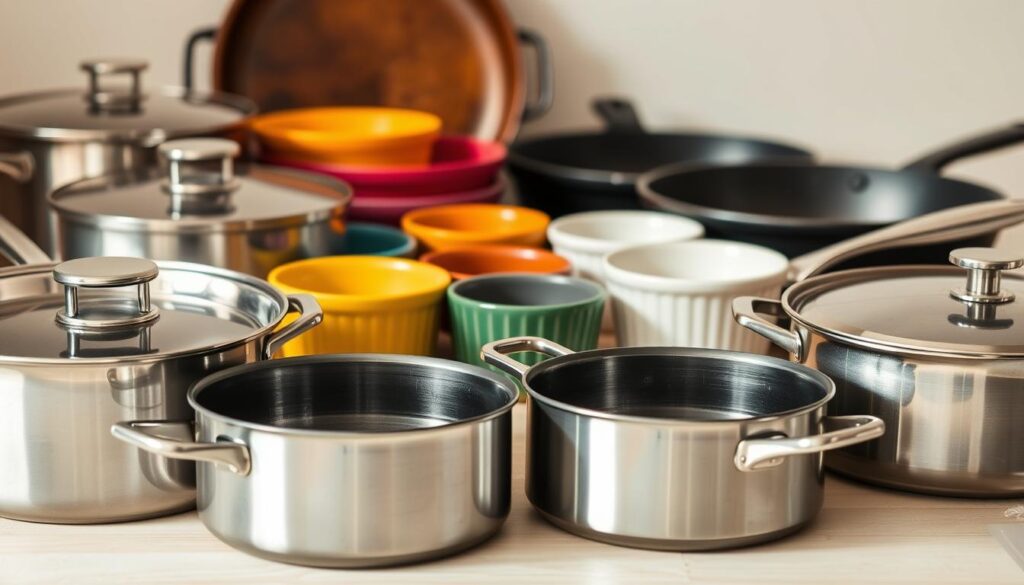
Aluminum has been used in kitchenware for more than a century because of several practical advantages.
Excellent Heat Conductivity
Aluminum distributes heat evenly across the cooking surface, reducing hot spots that can burn food.
Lightweight Construction
Compared with cast iron, aluminum cookware is easier to lift and maneuver.
Affordable Pricing
Aluminum cookware is generally less expensive than stainless steel or copper cookware, making it accessible to many households.
Because of these advantages, aluminum cookware remains a staple in both professional and home kitchens.
Camp cooks may also want to see our cast iron vs aluminum Dutch oven comparison.
Potential Downsides of Aluminum Cookware
While aluminum cookware has many benefits, it also has some limitations.
Reactivity with Acidic Foods
Uncoated aluminum can react with acidic ingredients like:
- tomatoes
- citrus fruits
- vinegar-based sauces
This reaction may cause small amounts of aluminum to transfer into food.
Lower Durability
Aluminum cookware is softer than stainless steel and may scratch or warp if exposed to very high heat.
Cosmetic Changes
Over time, aluminum cookware can develop discoloration or surface scratches. These changes usually affect appearance rather than cooking performance.
Aluminum Cookware Safety: Myths vs Facts
Concerns about aluminum cookware have existed for decades. However, many claims are based on misunderstandings.
Myth: Aluminum cookware causes Alzheimer’s disease
Early studies suggested a possible link between aluminum exposure and Alzheimer’s disease. Modern research has not confirmed a direct cause-and-effect relationship.
Major health organizations, including the World Health Organization, consider typical dietary aluminum exposure safe.
Myth: Aluminum cookware releases dangerous amounts of aluminum
Although small amounts of aluminum can transfer into food during cooking, the amount is usually minimal and within safe limits.
Most people consume more aluminum through food additives and packaging than through cookware.
Understanding cookware materials is just one part of building a safe kitchen. You may also want to learn about common kitchen appliance safety mistakes to avoid.
Factors That Affect Aluminum Cookware Safety

Several factors determine how much aluminum may transfer to food.
Cooking Temperature
Extremely high heat may increase the chance of aluminum reacting with certain foods.
Food Acidity
Acidic foods are more likely to react with aluminum surfaces.
Cookware Condition
Older or heavily scratched cookware may allow greater metal exposure.
Maintaining cookware in good condition significantly reduces these risks.
Coated vs Uncoated Aluminum Cookware
One of the biggest differences in the safety of aluminum cookware lies in how the cookware is treated.
Anodized Aluminum
Anodized aluminum undergoes an electrochemical process that strengthens the natural oxide layer on the surface.
Benefits include:
- greater durability
- reduced reactivity
- improved scratch resistance
Hard-anodized cookware is often considered one of the safest forms of aluminum cookware.
Non-Stick Aluminum Cookware
Many aluminum pans include non-stick coatings that prevent food from sticking and create a barrier between food and the metal.
High-quality non-stick cookware typically avoids chemicals such as PFOA and is considered safe when used according to manufacturer guidelines.
Health Considerations
Aluminum exposure occurs from many sources besides cookware.
Common sources include:
- processed foods
- food packaging
- drinking water
- certain medications
For most healthy individuals, exposure to aluminum from cookware is not considered a major health risk.
However, people with kidney disease may need to limit aluminum exposure and should consult medical professionals.
Best Practices for Using Aluminum Cookware Safely
Following simple guidelines can help reduce any potential risks.
Use anodized or coated cookware when possible
These provide a protective barrier between aluminum and food.
Avoid cooking acidic foods in uncoated aluminum
If you frequently cook tomato-based dishes, coated cookware may be a better option.
Avoid metal utensils
Metal utensils can scratch non-stick coatings, exposing the aluminum beneath.
Replace damaged cookware
If cookware becomes heavily scratched, warped, or worn, it is recommended to replace it.
Alternatives to Aluminum Cookware
Some cooks prefer other cookware materials for durability or personal preference.
Popular alternatives include:
- Stainless steel cookware
- Cast iron pans
- Ceramic cookware
- Copper cookware
Each material has its own advantages in terms of heat retention, durability, and maintenance.
Many modern kitchens combine quality cookware with efficient appliances. Our guide to must-have kitchen appliances for busy families explains how the right tools can streamline meal preparation.
Conclusion
Aluminum cookware remains one of the most widely used materials in kitchens because of its excellent heat conductivity, lightweight design, and affordability.
While concerns about the safety of aluminum cookware occasionally arise, most scientific evidence suggests it is safe for everyday cooking when used correctly.
Choosing anodized or coated aluminum cookware, avoiding highly acidic foods in bare aluminum pans, and properly maintaining cookware can further reduce potential risks.
Understanding the facts allows home cooks to enjoy the performance benefits of aluminum cookware while making informed choices about their kitchen equipment.
Frequently Asked Questions
Is aluminum cookware safe for everyday cooking?
Yes. Aluminum cookware is generally safe for everyday cooking when used properly and maintained in good condition.
Does aluminum cookware cause Alzheimer’s disease?
Current scientific evidence does not support a direct link between aluminum cookware and Alzheimer’s disease.
Is anodized aluminum cookware safer?
Yes. Anodized aluminum cookware has a hardened surface that reduces metal reactivity and improves durability.
Can aluminum cookware leach into food?
Small amounts may transfer when cooking acidic foods in uncoated aluminum cookware, but the levels are usually minimal.
What foods should not be cooked in aluminum cookware?
Highly acidic foods such as tomato sauces, citrus-based dishes, and vinegar-heavy recipes may react with bare aluminum cookware.