Last Updated in February 2026
Buying a blender sounds simple… until you start shopping.
Suddenly, you’re comparing 700W vs 1500W motors, glass vs Tritan jars, 15 preset programs, and prices that range from $30 to $300+.
No wonder most people feel overwhelmed — and many end up buying the wrong blender.
Here’s the truth:
There is no single “best blender.” There is only the best blender for your kitchen.
This complete 2026 blender buying guide will show you:
- Which blender type fits your lifestyle
- How much power do you actually need
- Which features are marketing hype vs essential
- The biggest blender mistakes buyers make
- How to confidently choose the perfect blender in minutes
Let’s make sure your next blender is one you’ll love using every day.
What should you look for when buying a blender?
When choosing a blender, focus on 5 key factors:
- Primary use (smoothies, ice, soups, nut butter)
- Motor power (700–1500W for most homes)
- Jar material (glass vs Tritan plastic)
- Blade design & presets
- Ease of cleaning and durability
The best blender is the one designed for the foods you make most often.
How to Choose a Blender (Quick Answer)
If you only remember one thing, use this simple 4-step checklist:
1️⃣ Pick the right blender type
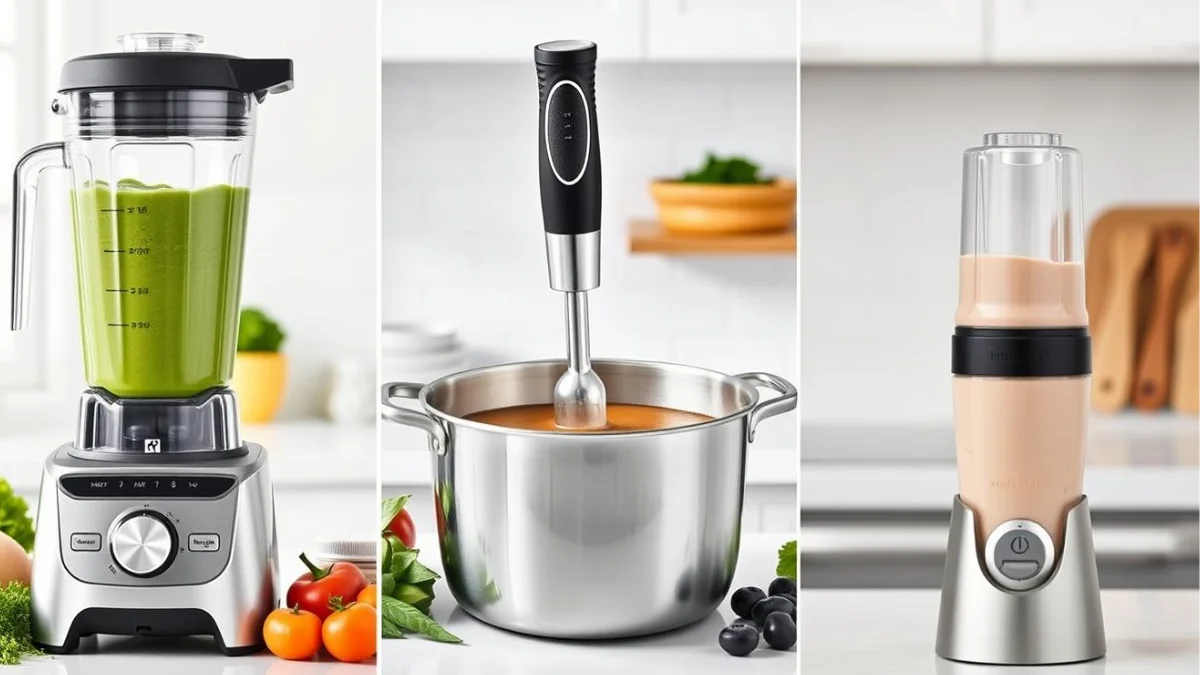
- Personal blender → single smoothies
- Countertop blender → families & versatility
- Immersion blender → soups & sauces
2️⃣ Choose the right power
- 700–900W → basic smoothies
- 900–1200W → most homes ⭐ sweet spot
- 1200W+ → nut butter & heavy use
3️⃣ Choose jar material
- Glass → hot foods & odor resistance
- Tritan plastic → durability & lighter weight
4️⃣ Check ease of cleaning
- Dishwasher-safe parts
- Self-clean function (huge time saver)
👉 For most homes, the best choice is a 900–1200W countertop blender with a Tritan jar.
Best Blender Specs for Most Homes
| Feature | Ideal Choice |
|---|---|
| Power | 900–1200 watts |
| Capacity | 48–64 oz |
| Jar | Tritan plastic |
| Controls | Presets + manual speed |
| Cleaning | Self-clean or dishwasher safe |
Understand the Different Types of Blenders
Most buying mistakes happen because people choose the wrong type.
Countertop Blenders
Best for families and heavy use
Use for smoothies, ice, soups, sauces, and nut butter.
Personal Blenders
Best for single servings and portability
Use for protein shakes and quick smoothies.
Immersion (Hand) Blenders
Best for soups and sauces directly in pots.
High-Performance Blenders
Best for daily use, nut butter, frozen foods, and meal prep.
Blender vs Food Processor — Which Do You Need?
| Task | Blender | Food Processor |
|---|---|---|
| Smoothies | ⭐⭐⭐⭐ | ⭐ |
| Soups | ⭐⭐⭐⭐ | ⭐ |
| Nut butter | ⭐⭐⭐ | ⭐⭐⭐⭐ |
| Chopping vegetables | ⭐⭐ | ⭐⭐⭐⭐ |
| Dough | ❌ | ⭐⭐⭐⭐ |
👉 Quick verdict:
- Choose a blender for liquids and drinks
- Choose a food processor for chopping and dough
👉Read Blender vs Food Processor: Which Kitchen Appliance Should You Buy in 2026?
7 Blender Buying Mistakes to Avoid
- Buying based only on wattage
- Ignoring jar material
- Choosing a capacity that is too small
- Overpaying for unnecessary presets
- Forgetting cleaning convenience
- Buying a personal blender for family use
- Ignoring noise levels
How Loud Are Blenders?
Blenders range from 80–95 dB (similar to a vacuum cleaner).
Quiet blender tips:
- Choose a heavy base + rubber feet
- Use lower speeds first
- Blend frozen ingredients last
Blender Accessories Explained
Helpful extras:
- Tamper → thick blends & nut butter
- Travel cups → smoothies on the go
- Dry grinding jar → coffee & spices
- Extra lids → meal prep
Real Kitchen Experience
After testing and comparing dozens of blenders across different price ranges, one pattern becomes clear:
Most people don’t need the most powerful blender — they need the right balance of power, durability, and convenience.
Daily smoothie drinkers benefit most from mid-range 900–1200W models, while occasional users are usually happier with simpler personal blenders.
Choosing based on real usage — not specs — leads to far better long-term satisfaction.
Ready to Go Deeper?
If you want to confidently choose the perfect blender, the next sections break down the features that truly impact performance..
How to Choose a Blender (Step-by-Step Blender Buying Guide)
Choose a Blender Based on How You’ll Use It
The most important question isn’t “what’s the best blender?” but rather “what’s the best blender for your needs?” Different blending tasks require different features, and understanding your primary use case will significantly narrow your options.
Smoothie Enthusiasts
If your mornings begin with a nutritious blend of fruits, vegetables, and protein powders, look for a blender with:
- At least 700 watts of power to handle frozen fruits
- Durable stainless steel blades
- Variable speed settings for texture control
- A tamper to push ingredients toward the blades
Best Choice: Full-sized blenders like the Ninja Professional or the AMZCHEF High-Speed Blender offer the perfect balance of power and capacity for daily smoothie-making.
Ice & Frozen Drink Specialists
For those who regularly crush ice for margaritas, daiquiris, or frozen cocktails:
- Minimum 1000 watts for efficient ice crushing
- Specialized blade geometry (like Ninja’s Total Crushing blades)
- Pulse function for controlled blending
- Reinforced jar that can withstand cold temperatures and impact
Best Choice: High-powered countertop blenders with ice-crushing presets, such as the Aeitto Professional Countertop Blender, excel at making perfectly smooth frozen drinks.
Soup & Hot Liquid Preparation
For those who love homemade soups and sauces:
- Heat-resistant glass jar or vented lid for hot liquids
- Immersion blender option for direct-in-pot blending
- Variable speed control for texture customization
- Easy-pour spout to transfer hot liquids safely
Best Choice: Immersion blenders or full-sized blenders with heat-resistant glass jars, such as the AMZCHEF Glass Jar Blender, are ideal for soup preparation.
Nut Butter & Tough Ingredients
For creating homemade nut butters, grinding coffee beans, or processing harsh ingredients:
- High-torque motor (1200+ watts)
- Reinforced blades designed for dry ingredients
- Cooling system to prevent overheating during extended use
- Sturdy base that won’t “walk” during operation
Best Choice: High-performance blenders, such as the Aeitto Professional Series, with hardened steel blades, can handle the most demanding blending tasks.
Meal Prep & Versatile Use
For those who need an all-purpose kitchen tool:
- Multiple attachments or interchangeable blades
- Various jar sizes for different quantities
- Pre-programmed settings for different tasks
- Dishwasher-safe components for easy cleanup
Quick Use Case Rule of Thumb:
- Make only single smoothies: Personal Blender
- Families Use & for versatility: Countertop blender
- Make only soup and sauces: Immersion blender
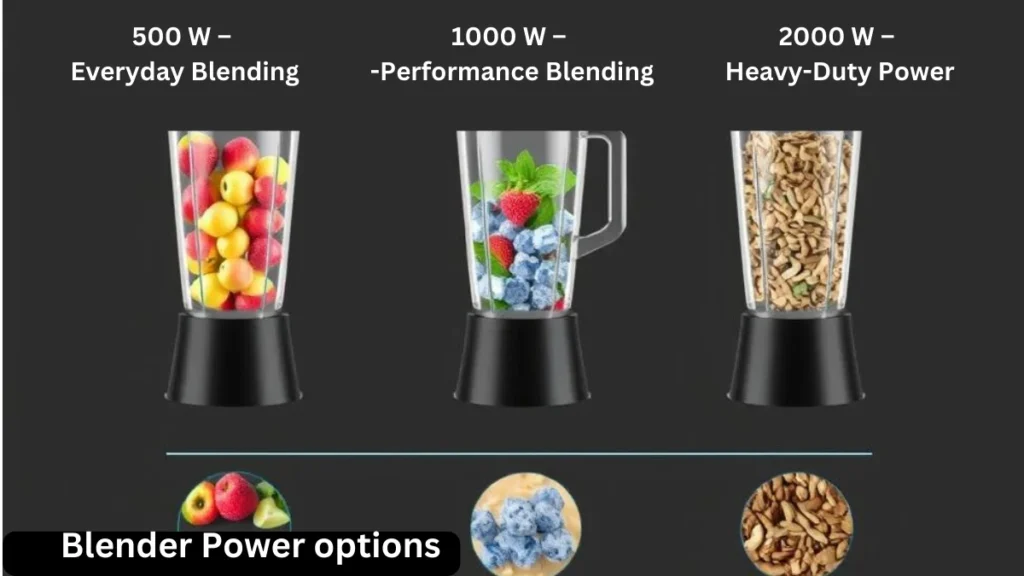
Blender Motor Power & Wattage Explained
While wattage is often the most prominently advertised specification, it doesn’t tell the complete story about blender performance. Let’s decode what these numbers actually mean for your blending experience.
Wattage Ranges and What They Can Handle
| Wattage Range | Best For | Limitations | Example Models |
| 300-600W | Soft fruits, protein shakes, light mixing | Struggles with frozen ingredients and ice | AMZCHEF Personal Blender (300W) |
| 700-1000W | Smoothies, crushed ice, frozen fruits | May struggle with nut butters and tough vegetables | Ninja Professional (900W) |
| 1100-1500W | All-purpose blending, including tough ingredients | May heat up with extended use on maximum power | Aeitto Professional (1200W) |
| 1600W+ | Commercial-grade processing, nut butters, grinding | Higher price point, larger footprint | AMZCHEF Commercial Blender (2000W) |
Canoly C16 Cold Press Juicer Review
The Torque vs. Wattage Myth
Wattage measures electrical consumption, not necessarily blending efficiency. A well-designed 900W blender can outperform a poorly designed 1500W model due to factors like:
Torque Efficiency
Torque (rotational force) determines how effectively a blender handles resistance. Some mid-range models use a direct-drive motor system that maximizes torque transfer, allowing their 900W motor to outperform many competitors with higher wattage when crushing ice.
Blade-to-Motor Alignment
Some mid-range and premium models use a precision-aligned drive system that minimizes power loss between the motor and blades. This engineering approach delivers more actual blending power than some 1500W models with less efficient designs.
Blender Blade Design Explained
The blade assembly is where the actual blending occurs, and its design can significantly affect performance regardless of motor power. Understanding blade technology helps you choose a blender that efficiently processes your specific ingredients.

Blade Design Comparison
Ninja Total Crushing Blades
Features a unique stacked blade design with six blades positioned at different heights. This multi-tier approach creates a vortex that pulls ingredients down for more thorough blending. Excels at crushing ice and frozen fruit but may struggle to develop ultra-smooth purées.
AMZCHEF 8-Blade System
Uses an innovative cross-pattern with eight cutting surfaces that create multiple vortex points. This design excels at drawing ingredients from the sides of the jar toward the blades, reducing the need to tamp or stop to scrape them down. Particularly effective for smoothies and medium-density mixtures.
Aeitto Hardened Steel Blades
Features precision-engineered, aircraft-grade stainless steel blades with a specialized hardening process. The four-pronged design has two forward-facing and two backward-facing edges to create a bi-directional cutting action. Superior for processing tough ingredients like nuts, seeds, and fibrous vegetables
Blade Material and Durability
The material quality of blender blades significantly impacts both performance and longevity:
- Standard Stainless Steel: Found in most entry-level blenders. Adequate for basic blending but may dull over time with heavy use.
- Hardened Stainless Steel: Used in mid-range models. Offers better edge retention and durability.
- Aircraft-Grade Stainless Steel: Maintains sharpness longer and resists corrosion even when processing acidic ingredients.
Did You Know? Contrary to popular belief, blender blades don't need to be razor-sharp to be effective. The cutting action comes primarily from the high-speed impact rather than slicing. This is why well-designed, durable blades often outperform sharper but less robust alternatives.
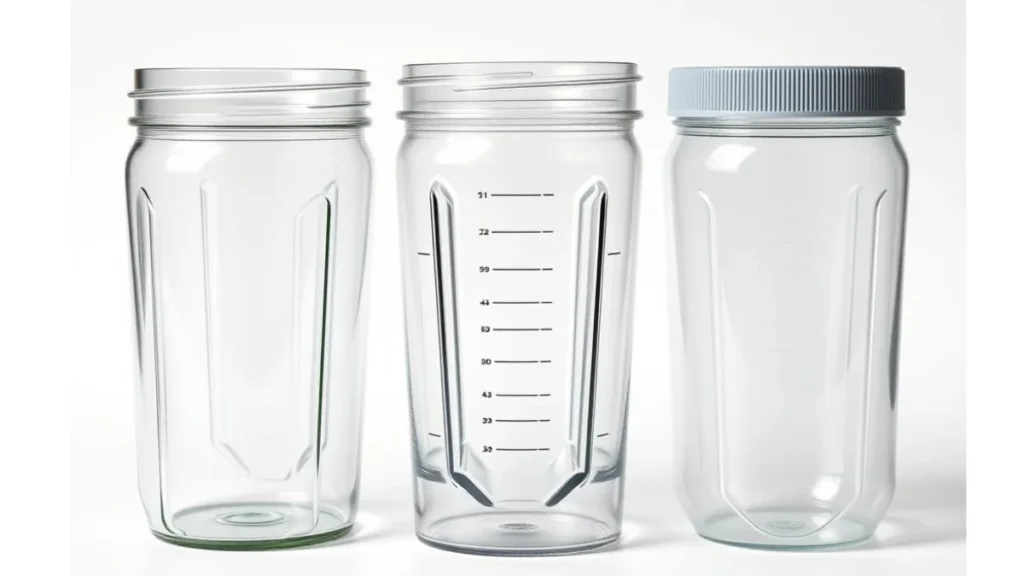
Which Blender Jar Material Is Best?
The material of the blender jar affects everything from durability and weight to safety and aesthetics. Each material has distinct advantages and limitations that should align with your specific needs.
Glass Jars
Advantages:
- Highly resistant to scratches and stains
- Won’t absorb odors or flavors
- Can handle hot ingredients safely
- Dishwasher safe and easy to clean
- Premium look and feel
Glass Jars
Disadvantages:
- Significantly heavier than plastic options
- Can break if dropped or thermal-shocked
- Often limited to lower-powered blenders
- More expensive than plastic alternatives
- Not ideal for portable use
Best For: The AMZCHEF Glass Jar Blender is ideal for those who blend hot soups, sauces, or aromatic ingredients like garlic and spices, as glass won’t retain odors or discolor.
Tritan Plastic Jars
Advantages:
- Lightweight yet extremely durable
- BPA-free and food-safe
- Shatter-resistant even with frozen ingredients
- Can withstand high-speed blending
- Often used in premium blenders
Tritan Plastic Jars
Disadvantages:
- Can develop scratches over time
- May retain some odors with extended use
- Higher cost than standard plastic
- Not ideal for very hot ingredients
- Can develop cloudiness with age
Best For: The Ninja Professional series uses Tritan jars, making them perfect for daily smoothie makers who need durability without excess weight.
Standard Plastic Jars
Advantages:
- Lightweight and easy to handle
- Most affordable option
- Less likely to break if dropped
- Available in various colors
- Suitable for basic blending needs
Standard Plastic Jars
Disadvantages:
- Scratches easily, affecting clarity
- Can absorb strong odors and stains
- Less durable than other options
- May contain BPA in older models
- Not suitable for hot ingredients
Best For: Entry-level Aeitto models with standard plastic jars are suitable for occasional users on a budget who primarily blend cold ingredients.
Quick Blender Jar Material Rule of Thumb
- Handling hot foods & odor resistance: Glass
- For durability & lighter weight: Tritan plastic
- Regardless of the jar material, never blend hot liquids in a sealed blender container
- Always vent the lid to prevent pressure buildup, which can cause the lid to blow off
Blender Controls, Presets & Ease of Use
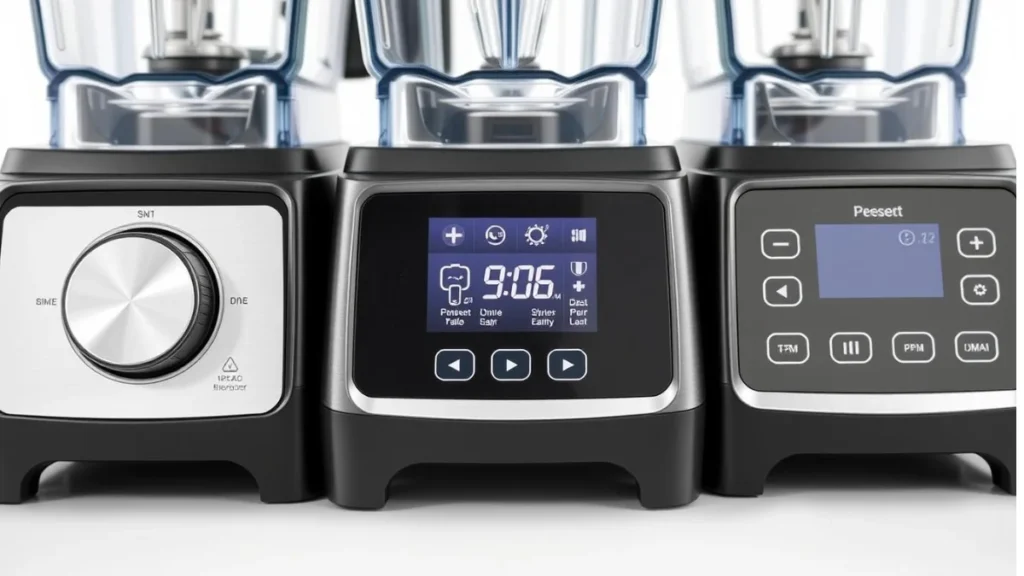
The interface of your blender significantly impacts your daily experience. From simple dial controls to advanced digital presets, finding the right balance between functionality and simplicity is key to long-term satisfaction.
Who Benefits from Preset Programs?
Preset programs automate blending cycles with varying speeds and durations optimized for specific tasks. They’re ideal for:
- Busy individuals who want consistent results without monitoring the blender
- Those new to blending who aren’t sure about optimal speeds and times
- People who multitask in the kitchen and prefer a “set and forget” approach
- Households where multiple people use the blender for different purposes
The Aeitto Professional Blender offers six intelligent presets (Smoothie, Ice Crush, Frozen Dessert, Soup, Sauce, and Self-Clean) that take the guesswork out of blending. Each program automatically adjusts speed and duration for optimal results.
Who Should Choose Manual Controls?
Manual controls provide greater flexibility and precision for users who:
- Have specific texture preferences that may not align with preset programs
- Enjoy experimenting with different blending techniques
- Create unique recipes that require customized blending cycles
- Prefer simplicity and durability over digital features
Ninja’s Professional series features intuitive manual controls with clearly labeled speed settings and a dedicated pulse button, giving users complete control over the blending process.
Finding the Right Balance
Many modern blenders offer a hybrid approach that combines the best of both worlds:
- AMZCHEF’s High-Speed Blender features three preset programs alongside a variable speed dial for maximum flexibility
- Some models include a timer function that automatically stops blending after a set duration
- Advanced interfaces may consist of memory functions that remember your preferred settings
Quick Blender Manual Control & Preset Use Rule of Thumb
- Consider the cleaning process when evaluating controls
- Touch panels are easier to wipe down but may be less responsive when wet.
- Physical buttons & dials offer tactile feedback but can collect food particles in crevices.
Cleaning & Maintenance
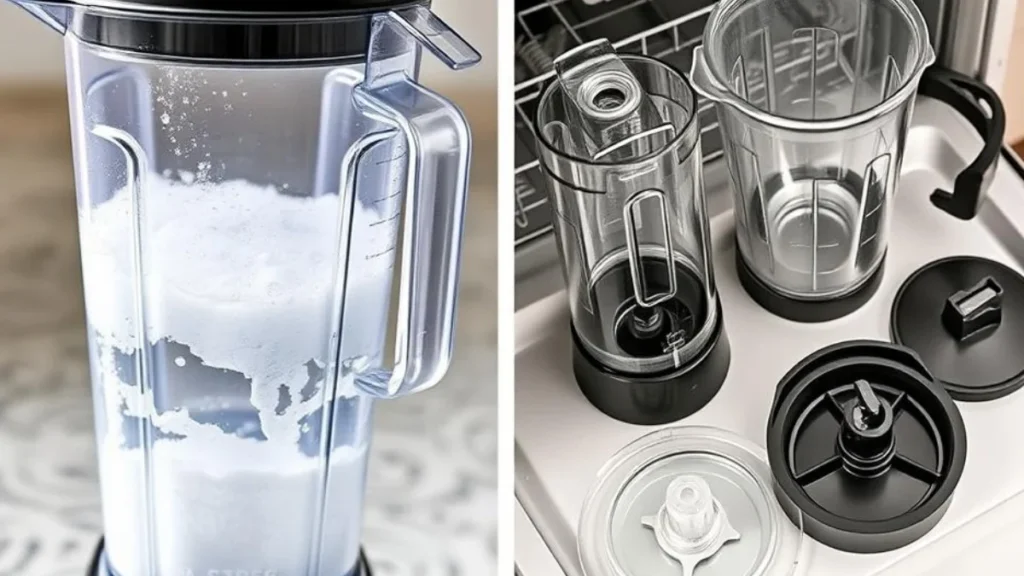
Even the most powerful blender will become a burden in the kitchen if it’s difficult to clean. Innovative design features can make the difference between a blender that’s used daily and one that collects dust in a cabinet.
Self-Cleaning Functions
Many modern blenders feature dedicated self-cleaning cycles that make cleanup remarkably simple:
- Add warm water and a drop of dish soap to the jar
- Select the self-clean preset (or run on medium speed for 30-60 seconds)
- Rinse thoroughly with clean water
- Air dry upside down on a dish rack
The Aeitto Professional Blender includes a one-touch self-cleaning program that thoroughly cleans the jar and blades in just 45 seconds, making it ideal for busy households.
Dishwasher-Safe Components
Check which parts of your blender are dishwasher-safe to simplify cleanup:
| Model | Jar | Lid | Blade Assembly | Hand-wash blade assembly with brush |
| Ninja Professional | Yes (Top rack) | Yes | Yes | Removable blade design for thorough cleaning |
| AMZCHEF High-Speed | Yes (Glass jar) | Yes | No | Hand-wash blade assembly with a brush |
| Aeitto Professional | Yes (Top rack) | Yes | No | Self-cleaning function recommended |
Blade Maintenance
Proper blade care ensures optimal performance and longevity:
- Clean promptly after use to prevent food from drying on blades
- Use a bottle brush to clean around and under blades if they’re not removable
- Periodically check for loose blade assemblies and tighten if necessary
- Some models, like the Ninja Professional, feature removable blades for deeper cleaning
Quick Blender Cleaning Rule of Thumb
- Dishwasher-safe parts
- Self-clean function (huge time saver)
- Unplug your blender before cleaning
- Handle blades with extreme caution
- Never place the motor base in water or other liquids
Budget Planning — What to Expect at Each Price Level
Blenders are available across a broad price spectrum, from budget-friendly options under $50 to professional-grade models exceeding $250. Understanding what features and performance to expect at each price point helps you make a value-based decision.
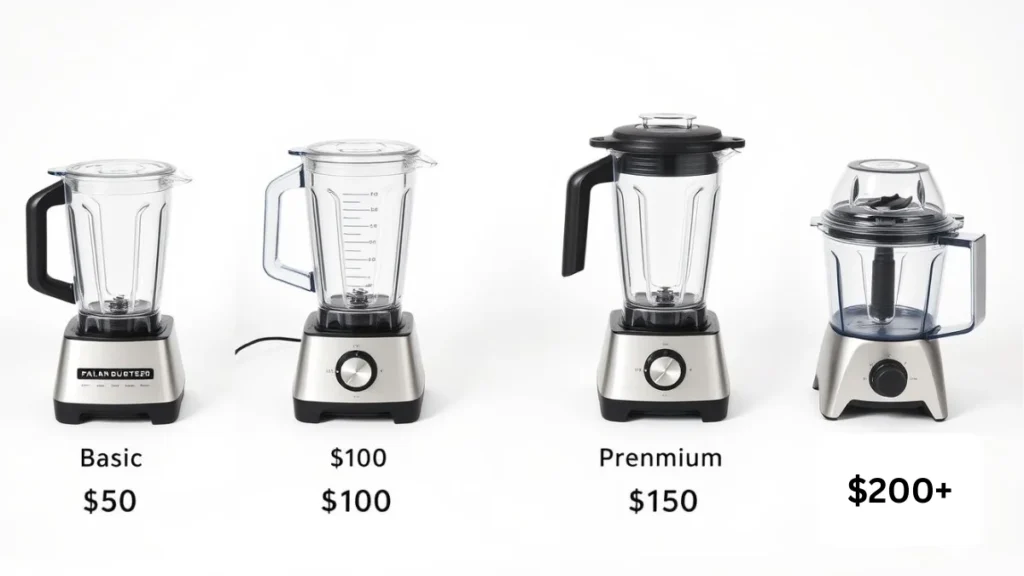
Under $50: Basic Functionality
At this entry-level price point, expect:
- 300-500 watts of power
- Plastic construction throughout
- Basic 2-3 speed settings
- Smaller capacity (typically 40oz or less)
- Limited warranty (usually 1 year)
Best Value Pick: The AMZCHEF Personal Blender offers surprising performance in this category, with a 300W motor that handles basic smoothies and protein shakes effectively.
$50–$100: Improved Performance
The mid-range category offers significant improvements:
- 600-900 watts of power
- More durable materials and construction
- Multiple speed settings and possibly a pulse function
- Larger capacity (48-64oz)
- Better warranties (1-3 years)
Best Value Pick: Ninja’s Professional Blender delivers exceptional ice-crushing performance and durability at this price, making it ideal for frozen drinks and smoothies.
$100–$150: Advanced Features
At this price point, expect significant upgrades:
- 900-1200 watts of power
- Premium materials (Tritan jars, reinforced bases)
- Digital controls and preset programs
- Specialized blade designs for specific tasks
- Extended warranties (3-5 years)
Best Value Pick: The Aeitto Professional Blender offers six intelligent presets, a powerful 1200W motor, and premium construction at a price that delivers exceptional value.
$150–$250: Professional-Grade Performance
The premium category offers commercial-quality features:
- 1200-2000 watts of power
- Professional-grade components and engineering
- Advanced control systems with multiple presets
- Noise-dampening technology
- Comprehensive warranties (5-10 years)
Value Tip: Consider the cost per use rather than just the initial price. A $150 blender used daily for five years costs just $0.08 per use, while a $50 blender that needs replacement after one year costs $0.14 per use.
Quick Blender Budget-Buy Consideration
- Basic Functionality: Under $50
- Advanced Features: $100–$150
- Professional-Grade Performance: $150–$250
What to Look for When Buying a Blender
The best blender depends on your main use, power needs, jar material, and ease of cleaning. When comparing blenders, focus on these features:
Power: 900–1200W is ideal for most homes
Jar size: 48–64 oz for families
Jar material: Glass or Tritan plastic
Blade design: Multi-tier or hardened steel
Controls: Presets vs manual speed dial
Cleaning: Dishwasher-safe or self-clean mode
Warranty: Aim for 2+ yearsThese factors matter far more than brand names or flashy presets.
Quick Blender Decision Guide
Choose a personal blender if:
- You make single-serve smoothies
- You want portability
- You have limited counter space
Choose a 900–1200W countertop blender if:
- You make smoothies or frozen drinks often
- You cook regularly
- You want an all-purpose blender
Choose a 1200W+ blender if:
- You make nut butter or frozen desserts
- You meal prep frequently
- You want long-term durability
Ready to Choose Your Blender?
Now that you know exactly what to look for, the next step is finding the best blender for your budget and needs.
👉 Check our curated picks of the best blenders for every budget and use case.
Blender Buying FAQ
How many watts should a good blender have?
Most homes need 700–1200W. Heavy users benefit from 1200W+.
Is a glass or plastic blender jar better?
Glass for hot foods and odor resistance. Tritan plastic for durability and lighter weight.
How long should a blender last?
Budget: 1–3 years
Mid-range: 3–5 years
Premium: 5–10+ years
Can a blender replace a food processor?
For liquids, yes. For chopping and dough, no.
Final Thoughts: Choosing the Right Blender Doesn’t Have to Be Hard
If you are planning a new kitchen setup, please read the must-have kitchen appliances every home kitchen needs
Choosing the right blender doesn’t have to be overwhelming.
By focusing on your specific needs rather than marketing hype, you can find a model that delivers excellent performance for your use case without unnecessary features that drive up the price.
Remember that the “best” blender isn’t necessarily the most expensive or the most powerful—it’s the one that fits your lifestyle, kitchen space, and blending needs.
Whether you opt for a versatile blender with its intelligent presets or a feature-rich blender with its specialized blade system, your informed choice will lead to years of blending satisfaction.
If you remember just three things:
- Choose the right blender type first
- Aim for 900–1200W for most homes
- Prioritize ease of use and cleaning
Follow this guide, and you’ll buy a blender you’ll actually love using — every day.
Looking for a Food Processor Too?
If you prep ingredients often, a food processor can save even more time in the kitchen.
👉 See the Best food processors.