


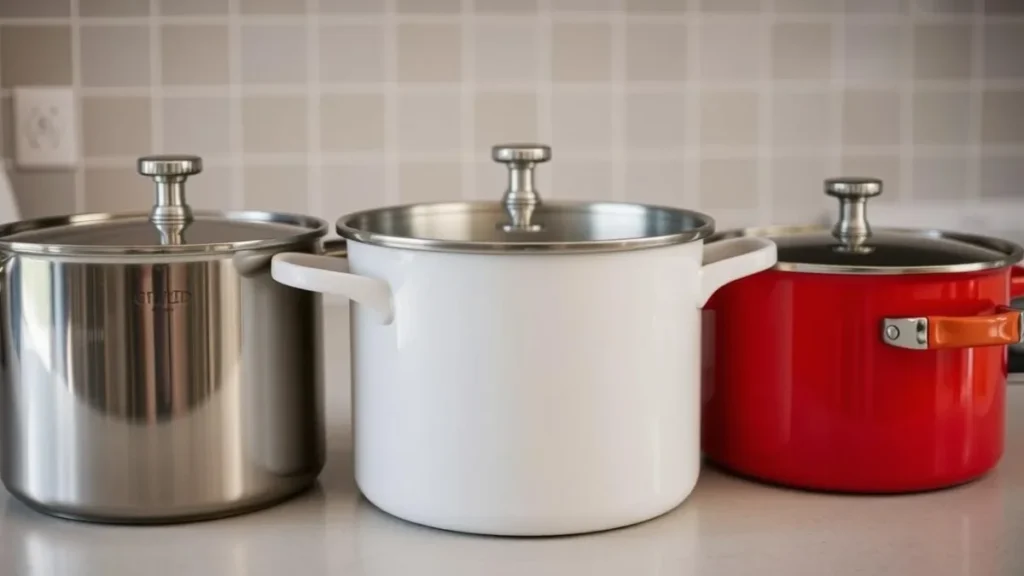
Discover the best stockpot material for large family cooking. We compare stainless steel, ceramic, and enamel stockpots for durability, safety, performance, and ease of use.
When feeding a large family, the material of your stockpot matters more than the brand name on the side. The right stockpot material determines how evenly your family meals cook, how long your investment lasts, and even the safety of the food you serve. For large families, these considerations become even more critical as you’re likely cooking bigger batches more frequently.
In this comprehensive guide, we’ll examine the four primary stockpot materials—stainless steel, enameled, ceramic-coated, and aluminum—to help you determine which best suits your family’s needs. We’ll analyze performance, safety, longevity, and ease of use to ensure you make the right choice for those important family meals.
Why Stockpot Material Matters More Than Brand for Big Family Cooking
When cooking for a large family, your stockpot becomes one of your most-used kitchen tools. The material it’s made from affects four critical aspects:
- Performance and heat distribution
- Safety for daily meals
- Longevity and long-term value
- Ease of use and cleaning
Performance
Different materials conduct and retain heat differently. For large-batch cooking, even heat distribution prevents hot spots that can burn food at the bottom while leaving ingredients at the top undercooked.
Safety
Some materials can react with acidic foods or release compounds when heated. For families, especially those with young children, choosing non-reactive, safe materials is paramount.
Longevity
Large families put cookware through more use than the average household. A durable material that withstands frequent use saves money in the long run by reducing replacement frequency.
Ease of Use
From weight considerations to cleaning requirements, the right material makes meal preparation and cleanup more manageable—a significant factor when cooking for many people regularly.
Let’s examine each of the four primary stockpot materials in depth, analyzing their strengths and weaknesses for large family cooking.

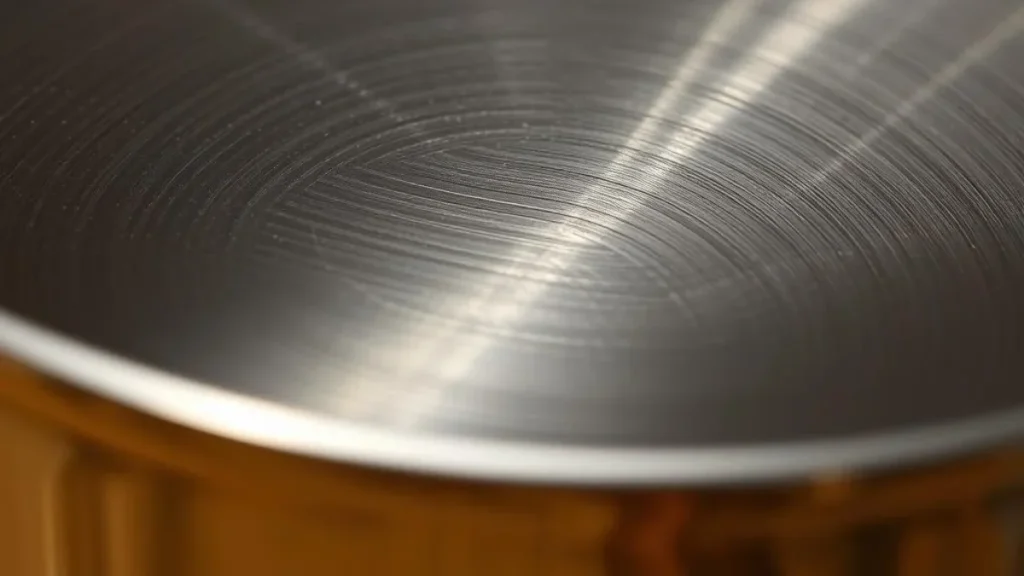
Stainless Steel: The Durable Workhorse
Pros
- Exceptional durability (20+ year lifespan)
- Non-reactive with acidic foods like tomato sauces
- Dishwasher safe for easy cleanup
- Compatible with all cooktops, including induction
- Won’t chip, crack, or peel over time
- Maintains appearance with minimal care
Cons
- Food can stick without proper preheating
- May contain nickel (potential issue for those with sensitivities)
- Typically heavier than aluminum options
- Higher quality options can be expensive
- Doesn’t distribute heat as evenly without an aluminum core

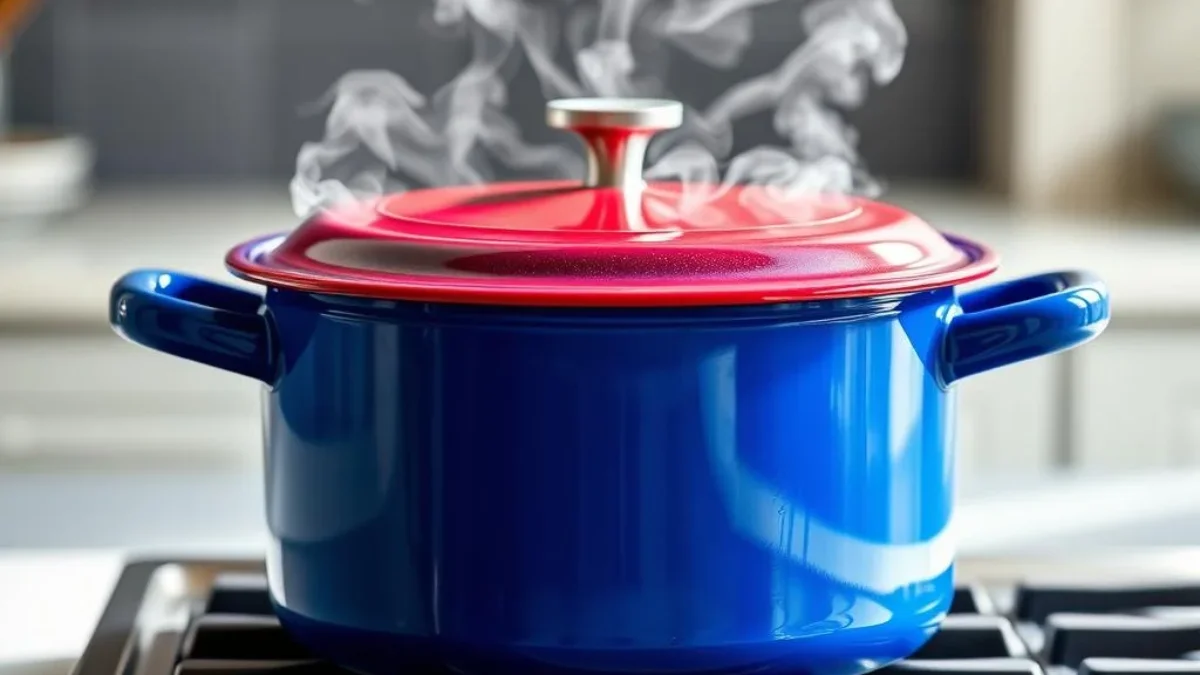
Enameled Stockpots – Best for Slow Cooking and Heat Retention
Pros
- Superior heat retention for long, slow cooking
- Non-reactive interior safe for acidic foods
- Available in vibrant colors for kitchen aesthetics
- Naturally non-stick when properly maintained
- Excellent for low-and-slow cooking methods
Cons
- Enamel can chip or crack with improper handling
- Significantly heavier than other options
- Premium brands can be expensive
- Not always dishwasher safe
- Slower to heat up initially
- May require special cleaning considerations
Enameled stockpots excel at maintaining consistent temperatures, making them ideal for long-simmering family stews and stocks. The weight can be a consideration, especially when full, but the heat retention benefits often outweigh this drawback for dishes that benefit from steady cooking temperatures.
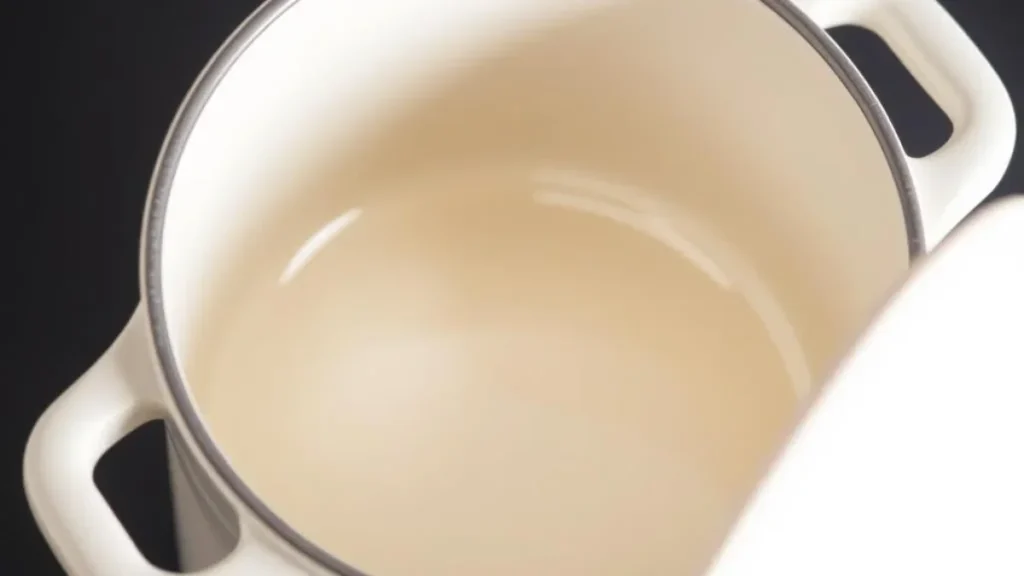
Ceramic-Coated Stockpots – The Easy-Cleanup Non-Stick Option
Pros
- Excellent non-stick properties for easy food release
- Free from PFOA, PFAS, and other concerning chemicals
- Lightweight and easy to handle when full
- Quick and even heating due to the aluminum core
- Often available in attractive colors and designs
- Easier cleanup with minimal scrubbing
Cons
- Ceramic coating wears down over time (3-7 year lifespan)
- Requires careful handling to prevent scratching
- Not metal utensil safe in most cases
- May not be suitable for high-heat cooking
- Some brands may contain lead or cadmium in the coating
- Not always induction compatible
For large families who prioritize easy cleanup and lower-fat cooking, ceramic-coated stockpots offer significant advantages. The non-stick surface requires less oil and makes cleaning easier—essential considerations when cooking for many people frequently. However, the coating’s limited lifespan means replacement costs should be factored into your decision.
Aluminum Stockpots – Lightweight and Budget Friendly
Pros
- Extremely lightweight for easy handling
- Superior heat conductivity for quick boiling
- Typically, the most affordable option
- Heats up rapidly, saving energy and time
- Professional kitchens are often used for stock making
- Suitable for water-based cooking methods
Cons
- Reacts with acidic foods, imparting metallic flavors
- Can discolor and stain easily
- Not dishwasher safe
- Shorter lifespan (3-5 years with regular use)
- Not compatible with induction cooktops
- May warp under high heat
Bare aluminum stockpots are popular in commercial kitchens for their lightweight nature and excellent heat conductivity. For large families on a budget who primarily use their stockpot to boil pasta or make non-acidic stocks, aluminum can be a practical choice. However, its reactivity with acidic foods makes it less versatile than other materials.
Health & Safety Comparison of Stockpot Materials

When evaluating stockpot materials specifically for large families, we need to consider several key factors:
Batch Size Cooking Capability
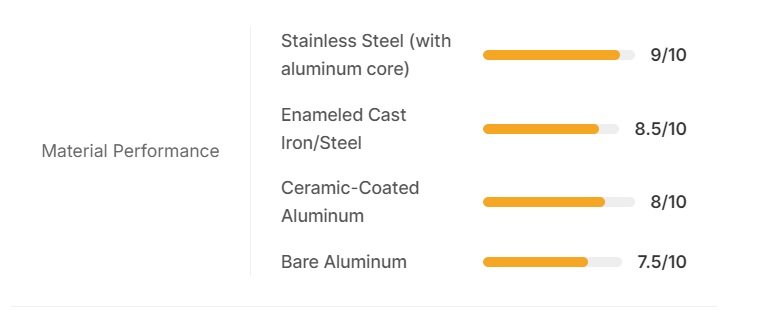
Large families regularly cook bigger portions, making capacity and heat distribution crucial. Stainless steel and enameled options excel here, as they maintain consistent temperatures throughout large volumes of food. Ceramic-coated options work well but may have more hot spots in huge sizes.
Durability for Everyday Use
With more frequent use comes more wear and tear. Stainless steel clearly leads in this category, with a potential lifespan of 20+ years. Enameled options follow, provided they’re handled carefully to prevent chipping. Ceramic-coated and aluminum pots will likely need replacement much sooner with regular family use.
Ease of Cleaning
After cooking for many people, easy cleanup becomes a priority. Ceramic-coated stockpots offer the easiest cleaning experience, followed by stainless steel (especially when dishwasher-safe). Enameled pots clean well but may require hand washing, while bare aluminum requires prompt attention to prevent staining and discoloration.
Safety Considerations for Kids’ Meals
Families with children should prioritize non-reactive, stable materials. Both stainless steel and enameled options excel here, as they don’t leach substances into food. Quality ceramic coatings from reputable manufacturers are also safe, while bare aluminum is best avoided for acidic foods that children commonly enjoy, like tomato-based pasta sauces.
Safety & Health Considerations
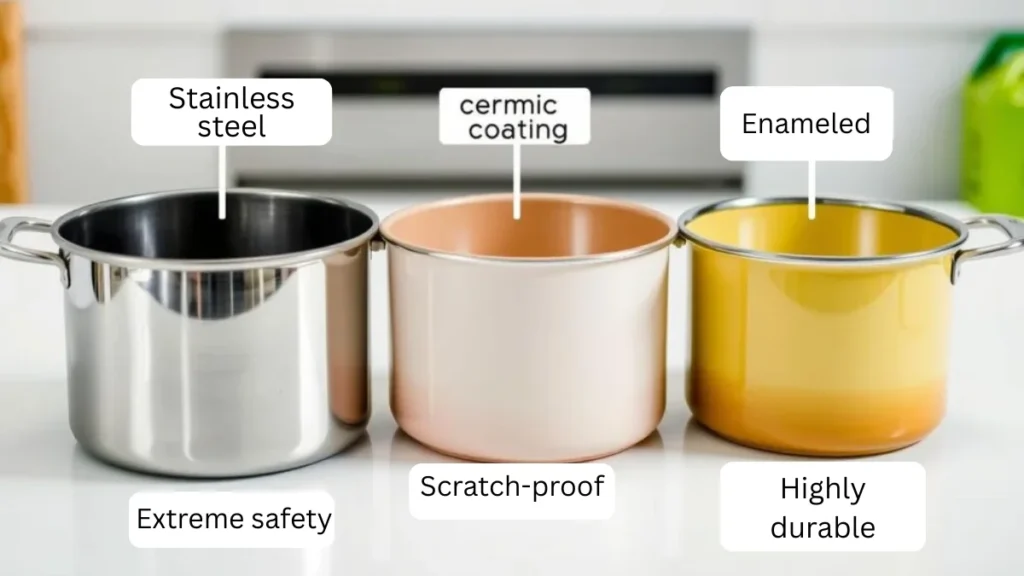
Understanding the health implications of different stockpot materials
PFAS & PTFE Coatings
Traditional non-stick coatings contain PTFE (polytetrafluoroethylene) and may have been manufactured with PFAS (per- and polyfluoroalkyl substances), chemicals that have raised health concerns. Modern ceramic coatings offer non-stick properties without these compounds, making them a safer alternative for families concerned about chemical exposure.
Nickel Sensitivities
Standard 18/10 stainless steel contains 10% nickel, which enhances corrosion resistance but can be problematic for individuals with nickel allergies. For affected families, nickel-free stainless steel options, like HOMICHEF’s nickel-free stockpots, offer the durability of stainless steel without allergen concerns.
Lead & Cadmium Concerns
Some lower-quality ceramic coatings and brightly colored enamel may contain lead or cadmium in the pigments. These heavy metals can leach into food, particularly when acidic ingredients are present. Reputable brands test for these contaminants, but it’s worth verifying that any colored cookware is certified lead and cadmium-free.
Certifications to Look For
When purchasing cookware for your family, look for these safety certifications:
- FDA approval for food contact
- California Prop 65 compliance (stringent heavy metal standards)
- European REACH compliance (chemical safety)
- PTFE/PFOA/PFAS-free certification for non-stick options
- NSF certification (professional food safety standards)
Performance Testing: How Materials Compare
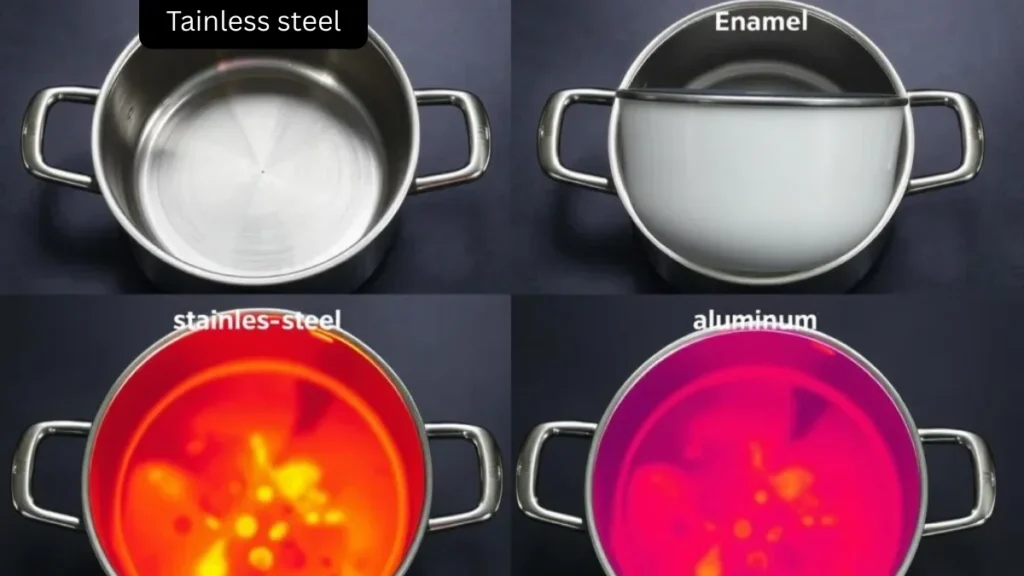
Thermal imaging reveals heat distribution differences between stockpot materials
We tested each material under identical conditions to evaluate performance factors critical for large-family cooking:
Heat Distribution

Boil Time Performance
We tested how quickly each material could bring 8 quarts of water to a rolling boil:
| Material | Time to Boil (minutes) | Energy Efficiency |
| Bare Aluminum | 9.5 | Excellent |
| Ceramic-Coated Aluminum | 10.2 | Very Good |
| Stainless Steel (with aluminum core) | 11.8 | Good |
| Enameled Steel/Cast Iron | 14.5 | Fair |
Hot Spot Formation
Using thermal imaging, we identified how evenly each material distributed heat across the cooking surface:
- Stainless Steel (with aluminum core): Minimal hot spots with tri-ply construction
- Enameled Cast Iron: Very few hot spots once fully heated
- Ceramic-Coated Aluminum: Some hot spot formation at higher temperatures
- Bare Aluminum: Moderate hot spots, especially with thinner construction
Simmer Control
For large families, the ability to maintain a consistent simmer for soups and stews is crucial:
- Enameled Cast Iron: Superior simmer stability due to excellent heat retention
- Stainless Steel: Good simmer control, especially with heavier construction
- Ceramic-Coated Aluminum: Acceptable but requires more frequent adjustment
- Bare Aluminum: Less stable simmer requiring more attention
Longevity & Cost Breakdown: Which Stockpot Saves Money Long-Term?
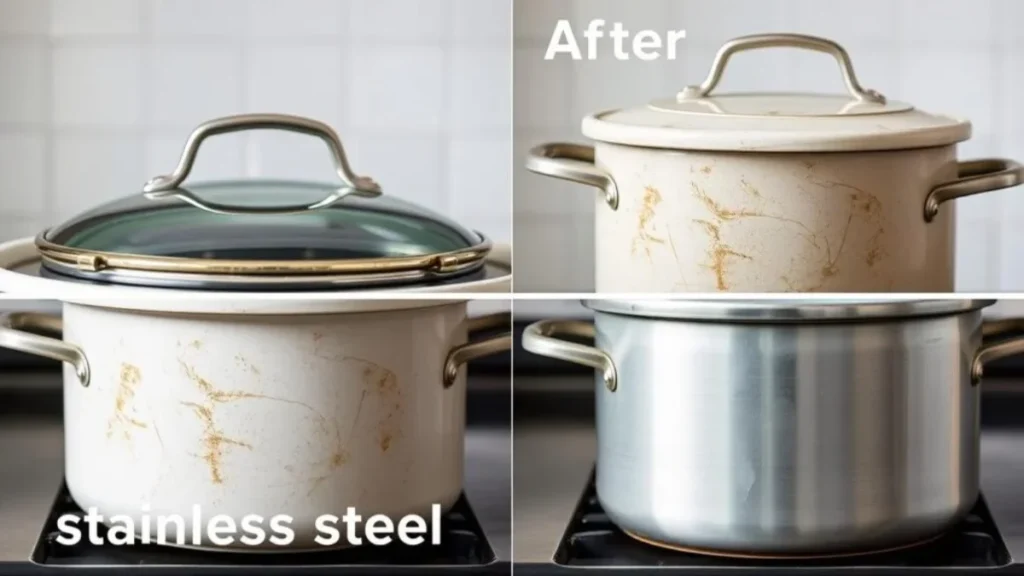
How do different stockpot materials age with regular family use
When investing in a stockpot for your large family, consider both the upfront cost and the long-term value:
| Material | Average Lifespan | Maintenance Level | Replacement Risk | Initial Cost Range | Cost Per Year |
| Stainless Steel | 20+ years | Low | Very Low | $80-350 | $4-17.50 |
| Enameled Steel/Cast Iron | 5-12 years | Medium | Moderate | $60-300 | $12-25 |
| Ceramic-Coated | 3-7 years | Medium | High | $40-200 | $13-28 |
| Bare Aluminum | 3-5 years | Low | High | $30-100 | $10-20 |
This analysis reveals that while stainless steel stockpots typically have the highest upfront cost, their exceptional durability makes them the most economical choice over time. For large families who use their stockpot frequently, this long-term value becomes even more significant.
Best Stockpot Material Picks by Category
Our top stockpot picks across different materials for large families
Based on our testing and analysis, here are our top recommendations for each material category:
✅ Best Stainless → Made In 12qt / Viking
✅ Best Nickel-Free → HOMICHEF 24qt
✅ Best Enamel → Le Creuset 10qt
Quick Buyer Guide: Finding Your Perfect Stockpot

Consider your family’s specific needs when selecting a stockpot material
Use this checklist to determine which stockpot material is right for your family:
Family Size Considerations
- 4-6 people: 8-12 quart stockpot recommended
- 7+ people: 12-16 quart stockpot recommended
- Frequent entertaining: Consider a second, larger stockpot
Cooktop Compatibility
- Induction: Stainless steel and enameled steel work best
- Gas: All materials work well
- Electric: Flat-bottomed options like stainless and ceramic-coated
- Glass top: Avoid bare aluminum (can scratch the surface)
Weight Tolerance
- Limited lifting ability: Aluminum or ceramic-coated aluminum
- Comfortable with heavier pots: Stainless steel or enameled
- Consider: A full 12-quart stockpot can weigh 20+ pounds
Cleaning Preference
- Dishwasher preferred: Stainless steel or dishwasher-safe enamel
- Hand washing only: Any material works, but ceramic-coated is easiest
- Minimal maintenance: Stainless steel is most forgiving
Frequently Asked Questions
What is the best stockpot material for large families?
Stainless steel is the best all-around stockpot material for large families thanks to its durability, non-reactive surface, dishwasher safety, and long lifespan.
Are ceramic-coated stockpots safe for everyday cooking?
Yes, high-quality ceramic-coated stockpots are safe when certified PFAS-, PFOA-, lead- and cadmium-free. They offer chemical-free non-stick cooking but usually last 3–7 years.
Is stainless steel better than aluminum for stockpots?
For most families, stainless steel is better because it doesn’t react with acidic foods and lasts decades. Aluminum heats faster but has a shorter lifespan and fewer cooking uses.
Which stockpot material is easiest to clean?
Ceramic-coated stockpots are the easiest to clean due to their non-stick surface. Stainless steel is also easy to maintain, especially if dishwasher-safe.
What stockpot material is safest for cooking tomato-based dishes?
Stainless steel and enameled stockpots are safest for acidic foods like tomato sauces because they are non-reactive and won’t affect taste or safety.
Final Verdict: Which Stockpot Material Is Best for Large Families?

The right stockpot material enhances your family’s dining experience
After comprehensive testing and analysis, stainless steel emerges as the best all-around material for stockpots for most large families. Its exceptional durability, non-reactive properties, and versatility make it well worth the higher initial investment, especially when considering its decades-long lifespan.
For families with specific needs, other materials offer compelling alternatives:
- Ceramic-coated stockpots provide the easiest food release and cleanup
- Enameled options excel at heat retention for long, slow cooking
- Nickel-free stainless steel addresses the needs of those with metal sensitivities
Ultimately, the best stockpot material for your family depends on your specific cooking habits, maintenance preferences, and budget considerations. By understanding the strengths and limitations of each material, you can make an informed choice that will serve your family’s needs for years to come.
Ready to find your perfect stockpot?
Explore our comprehensive comparison guide for large families to see detailed reviews of our top picks in each material category.
Ready to find your perfect stockpot?
Explore our comprehensive comparison guide for large families to see detailed reviews of our top picks in each material category.
👉 See our full stockpot comparison guide for large families here