


There’s something magical about preparing a meal over a crackling campfire. When you add a Dutch oven to the mix, you unlock a world of culinary possibilities that go far beyond basic camping fare. From crusty bread and savory stews to mouthwatering desserts, cooking with Dutch oven over campfire combines old-world charm with practical outdoor cooking techniques that have stood the test of time.
In this comprehensive guide, we’ll explore everything you need to know about campfire Dutch oven cooking – from selecting the right equipment and setting up your fire to mastering temperature control and trying delicious recipes that will elevate your outdoor cooking game. Whether you’re a seasoned camper or just starting your outdoor culinary adventures, these techniques will help you create memorable meals under the open sky.
What Is a Campfire Dutch Oven?
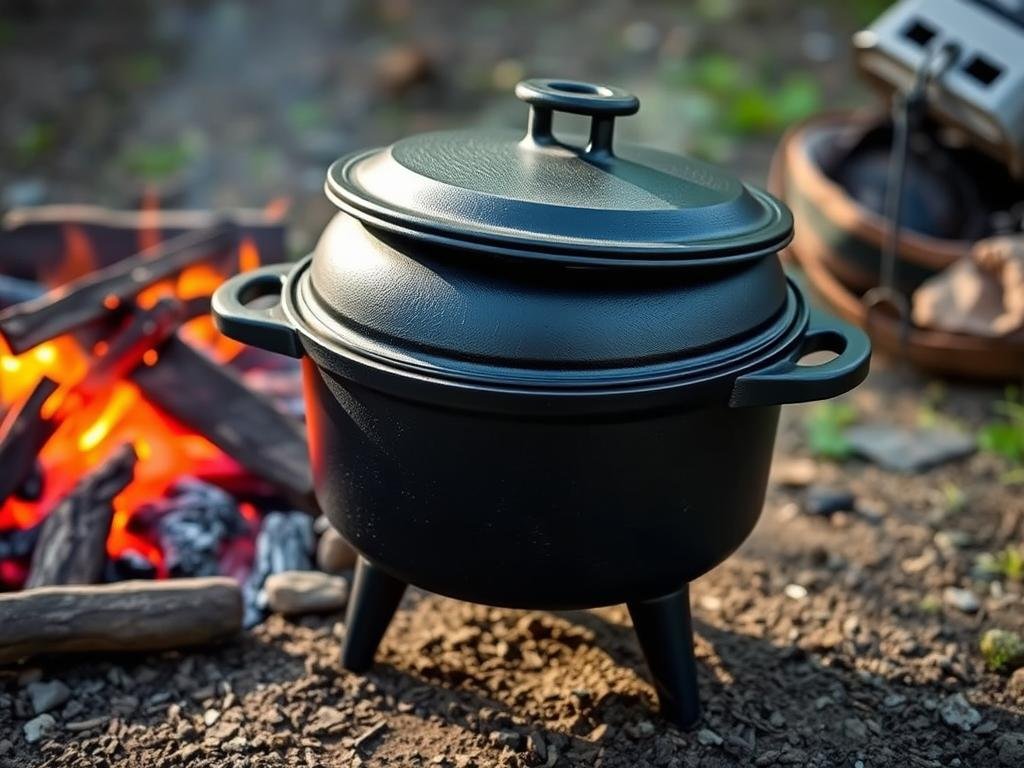
A traditional camp Dutch oven features legs and a flanged lid designed specifically for outdoor cooking
A campfire Dutch oven is significantly different from the enameled versions you might use in your home kitchen. These specialized cast-iron Dutch ovens are designed specifically for outdoor cooking and feature several key elements that make them perfect for use over an open fire.
Key Features of a Camp Dutch Oven
- Sturdy legs: Unlike home Dutch ovens, camp versions have three legs that elevate the pot above hot coals, allowing air circulation and preventing smothering of the heat source.
- Flanged lid: The lid features a raised rim around the edge, designed to hold hot coals on top for even heating from above and below – essential for baking.
- Heavy cast-iron construction: The thick walls retain and distribute heat evenly, preventing hot spots and ensuring consistent cooking temperatures.
- Bail handle: A sturdy wire handle arches over the top, allowing you to hang the oven over a fire or easily lift it when hot.
- Seasoned finish: Most camp Dutch ovens come pre-seasoned with vegetable oil, creating a natural non-stick surface that improves with use.
- Flat bottom: The interior bottom is flat for even cooking and easy cleaning.
Choosing the Right Size
Camp Dutch ovens typically come in various sizes, measured by diameter. The most common sizes for camping are:
| Size | Capacity | Serves | Best For |
| 10-inch | 4 quarts | 2-4 people | Side dishes, desserts, small meals |
| 12-inch | 6 quarts | 4-6 people | Most family meals are a versatile size |
| 14-inch | 8-10 quarts | 8-12 people | Large groups, whole chickens, stews |
For most campers, a 12-inch Dutch oven offers the best balance of capacity and portability. If you’re new to Dutch oven cooking or typically camp with a small group, a 10-inch model is more manageable. Serious outdoor chefs often carry multiple sizes to prepare different courses simultaneously.
Campfire Setup for Dutch Oven Cooking

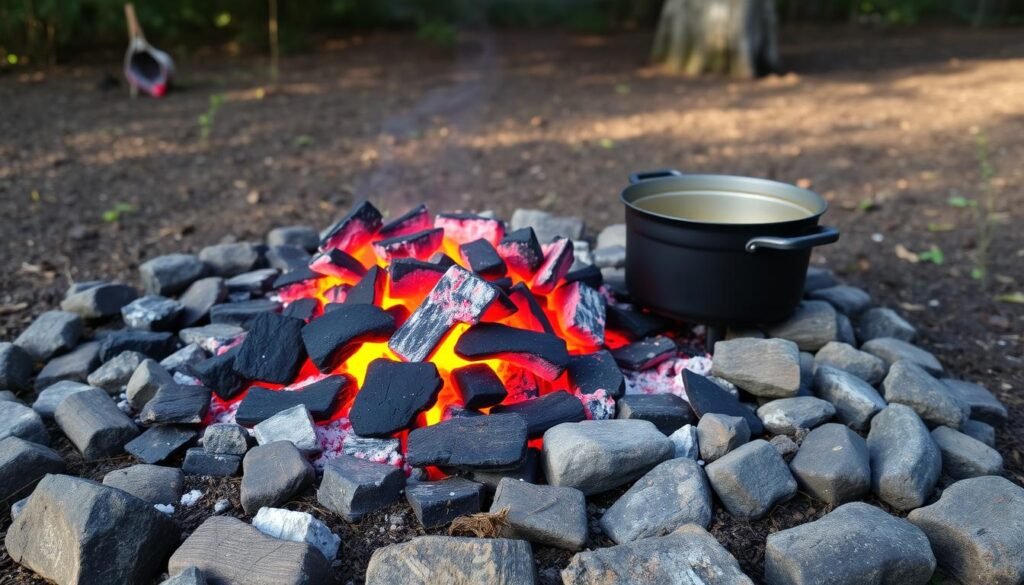
A properly prepared cooking area with separated cooking zones for direct and indirect heat
Successful Dutch oven cooking begins with a proper fire setup. Unlike regular campfire cooking, where you might cook directly over flames, Dutch oven cooking typically uses hot coals or embers for more controlled, even heat.
Essential Equipment
- Dutch oven: Your seasoned camp Dutch oven with legs and flanged lid
- Heat-resistant gloves: Heavy leather or insulated gloves to safely handle the hot Dutch oven
- Lid lifter: A specialized tool for safely lifting the hot lid
- Long metal tongs: For arranging hot coals precisely
- Charcoal chimney: For quickly and evenly lighting charcoal briquettes
- Metal stake or tripod: Optional for hanging the Dutch oven over a fire
- Fire-resistant pad: To protect the ground and create a stable cooking surface
- Shovel or coal rake: For moving coals and managing your fire
Charcoal vs. Wood Embers
Charcoal Briquettes
- Consistent, predictable heat
- Easier to count for temperature control
- Longer burning time (typically 45-60 minutes)
- Less ash production
- More precise cooking temperatures
Wood Embers
- More authentic traditional experience
- No need to carry extra supplies
- Can impart subtle smoky flavors
- More sustainable option
- Free if you’re already building a campfire
While both options work well, charcoal briquettes offer more consistent results, especially for beginners. Wood embers require more experience to judge heat levels accurately, but can add wonderful flavor to your dishes.
Creating Cooking Zones
For maximum control, create two distinct cooking areas:
Direct Heat Zone
This area contains a bed of hot coals where you’ll place your Dutch oven for high-heat cooking methods like searing, frying, or boiling. The direct contact with hot coals provides intense, concentrated heat.
Indirect Heat Zone
A separate area with fewer coals or a raised platform where you can move your Dutch oven for slower cooking, simmering, or keeping food warm without burning. This zone gives you more control over delicate dishes.
Safety First!
Always set up your cooking area on bare earth, away from flammable materials. Keep a bucket of water nearby for emergencies, and never leave a hot Dutch oven unattended, especially with children around. Remember that cast iron retains heat for hours after cooking.
Heat Control Techniques for Dutch Oven Cooking
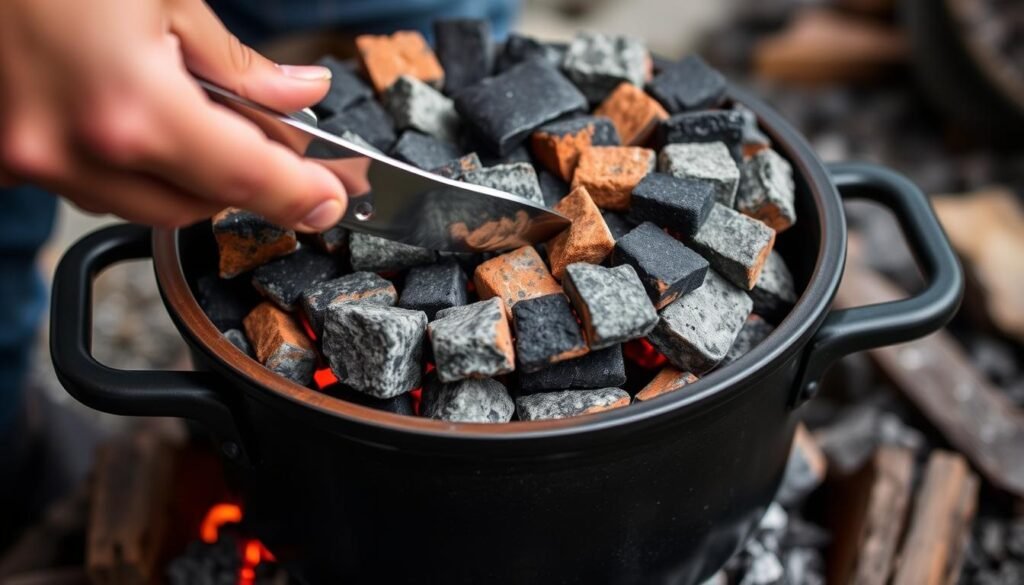
Proper coal placement is crucial for maintaining consistent cooking temperatures
Mastering heat control is perhaps the most crucial skill in Dutch oven cooking. Unlike your kitchen stove with its precise temperature dial, campfire cooking requires understanding how to create and maintain your desired cooking temperature using coals or embers.
The Coal Counting Method
The most reliable way to control temperature is by counting charcoal briquettes. A simple formula helps determine how many coals you need:
For a 350°F cooking temperature: Take the diameter of your Dutch oven in inches and multiply by 2. This gives you the total number of coals needed.
For example, a 12-inch Dutch oven would require approximately 24 coals total to reach 350°F. But placement matters too:
| Cooking Method | Top/Bottom Ratio | Example (12″ oven) |
| Baking | 2/3 top, 1/3 bottom | 16 on top, 8 on bottom |
| Roasting | 1/2 top, 1/2 bottom | 12 on top, 12 on bottom |
| Simmering/Stewing | 1/3 top, 2/3 bottom | 8 on top, 16 on bottom |
| Frying/Boiling | All on the bottom | 0 on top, 24 on bottom |
Temperature Chart by Oven Size
This chart provides approximate coal counts for different Dutch oven sizes and temperatures:
| Oven Size | 325°F (Low) | 350°F (Medium) | 375°F (Medium-High) | 400°F (High) |
| 10-inch | 16 coals total | 20 coals total | 22 coals total | 24 coals total |
| 12-inch | 20 coals total | 24 coals total | 26 coals total | 28 coals total |
| 14-inch | 24 coals total | 28 coals total | 30 coals total | 32 coals total |
Adjusting Heat During Cooking
To Increase Heat:
- Add 2-3 fresh coals at a time
- Move coals closer to the center of the lid
- Arrange coals in a tighter pattern
- Add more coals to the bottom for bottom-heat cooking
To Decrease Heat:
- Remove a few coals with tongs
- Spread the coals out in a wider pattern
- Move coals toward the edge of the lid
- Let some coals burn down without replacing them
Pro Tip: The Rotation Method
To prevent hot spots and ensure even cooking, rotate your Dutch oven every 15 minutes: turn the pot 90 degrees clockwise and the lid 90 degrees counterclockwise. This simple technique helps distribute heat evenly throughout your dish.
Core Cooking Methods with a Campfire Dutch Oven
The versatility of a Dutch oven lets you use multiple cooking techniques, from baking bread to frying chicken to slow-cooking stews. Here’s how to master each method:
Baking Over a Campfire

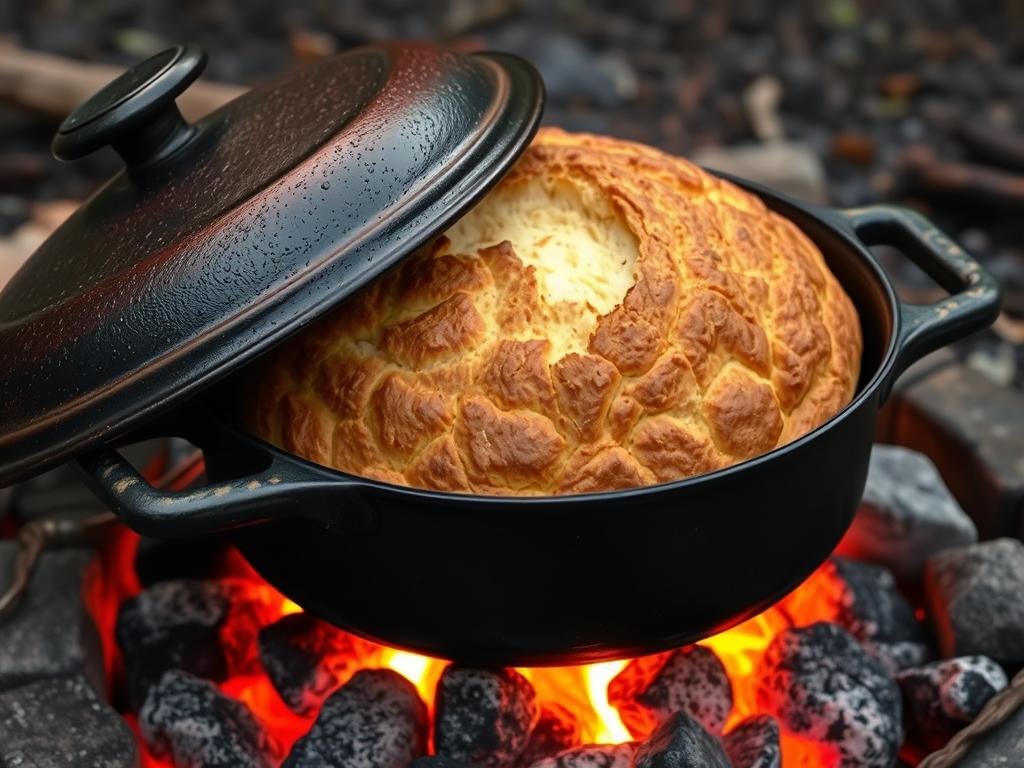
Baking bread in a Dutch oven creates a perfect crust thanks to the even heat distribution
Baking in a Dutch oven produces excellent results that often rival or exceed what you can achieve in a home oven. The secret is the even heat distribution and the moisture-sealing properties of the heavy lid.
Baking Technique:
- Prepare your dough or batter as you would at home
- Line the Dutch oven with parchment paper for easy removal and cleanup
- Place approximately 1/3 of your coals underneath the oven and 2/3 on the lid
- Rotate the oven and lid every 15 minutes for even baking
- Check for doneness 5-10 minutes before the expected finish time
Ready to try baking outdoors?
Our simple campfire bread recipe is perfect for beginners and requires minimal ingredients!
Frying & Sautéing
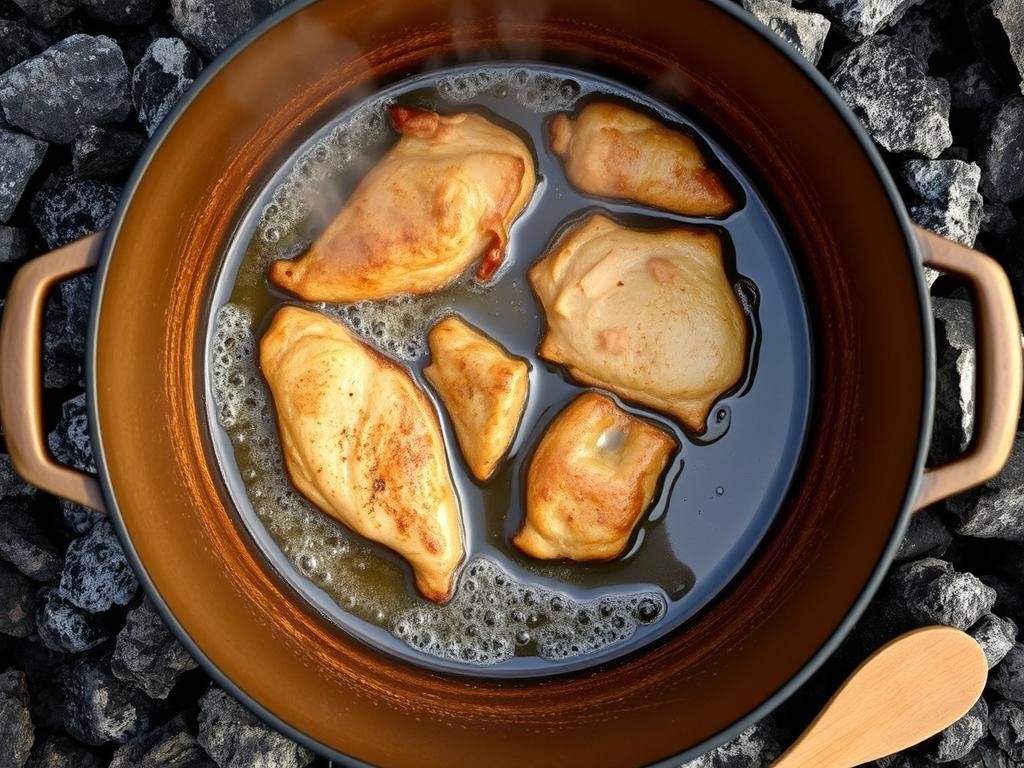
The high sides of a Dutch oven make it ideal for safe frying at a campsite
The thick cast-iron construction makes Dutch ovens excellent for frying and sautéing, as it maintains a steady temperature and distributes heat evenly across the cooking surface.
Frying Technique:
- Place all coals underneath the Dutch oven (none on the lid)
- Preheat the oven before adding oil or butter
- For deep frying, fill no more than 1/3 full with oil to prevent dangerous spillovers
- Test oil temperature by dropping in a small piece of bread – it should sizzle immediately but not burn
- Work in batches to avoid overcrowding, which lowers oil temperature
Frying Safety
Never leave hot oil unattended. Keep a lid nearby to smother flames if oil catches fire. Never use water on an oil fire – it will cause dangerous splatter and spread the fire.
Roasting & Braising
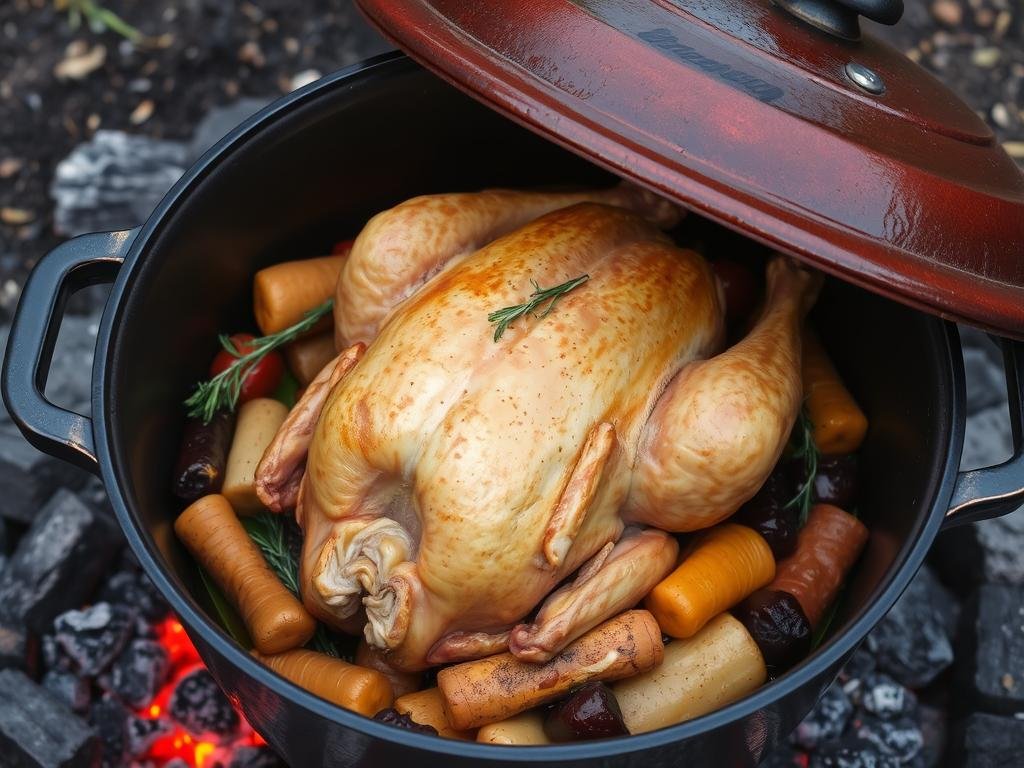
Roasting creates tender meat with rich flavors intensified by the sealed environment
Roasting and braising in a Dutch oven create tender, flavorful dishes with minimal effort. The sealed environment locks in moisture while allowing flavors to develop fully.
Roasting Technique:
- Sear meat first with bottom heat only to develop flavor
- Add vegetables, herbs, and a small amount of liquid
- Place approximately half the coals on top and half underneath
- Cook low and slow, avoiding the temptation to peek too often
- Use a meat thermometer to check doneness without lifting the lid repeatedly
Perfect Campfire Roast Chicken
Impress your fellow campers with this foolproof Dutch oven roast chicken recipe with garlic and herbs!
Simmering & Stewing
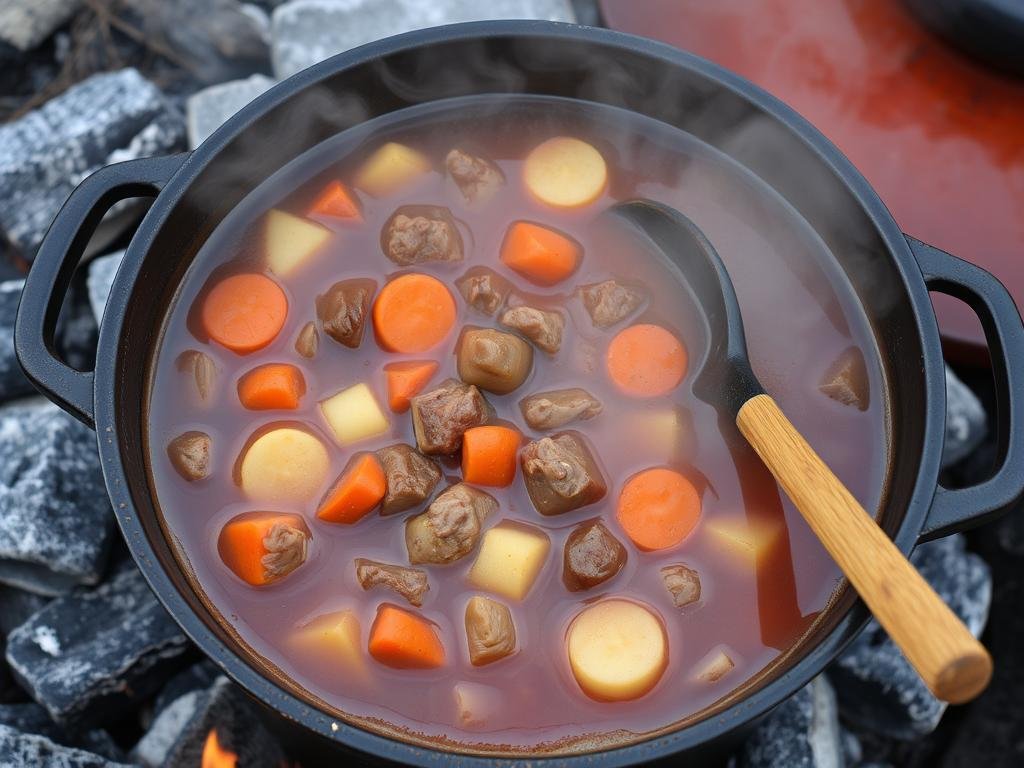
Stews and soups develop an incredible depth of flavor when cooked slowly in a Dutch oven
Dutch ovens excel at slow-cooking methods like simmering and stewing. The even heat and tight-fitting lid create perfect conditions for these techniques.
Stewing Technique:
- Brown meat and sauté aromatics with bottom heat only
- Add liquid and remaining ingredients
- Reduce heat by using fewer coals (about 2/3 underneath, 1/3 on top)
- Maintain a gentle simmer – rapid boiling toughens meat
- Check occasionally, adding liquid if needed
Hearty Campfire Chili
Our Dutch oven chili recipe is perfect for cool evenings around the campfire!
Steaming
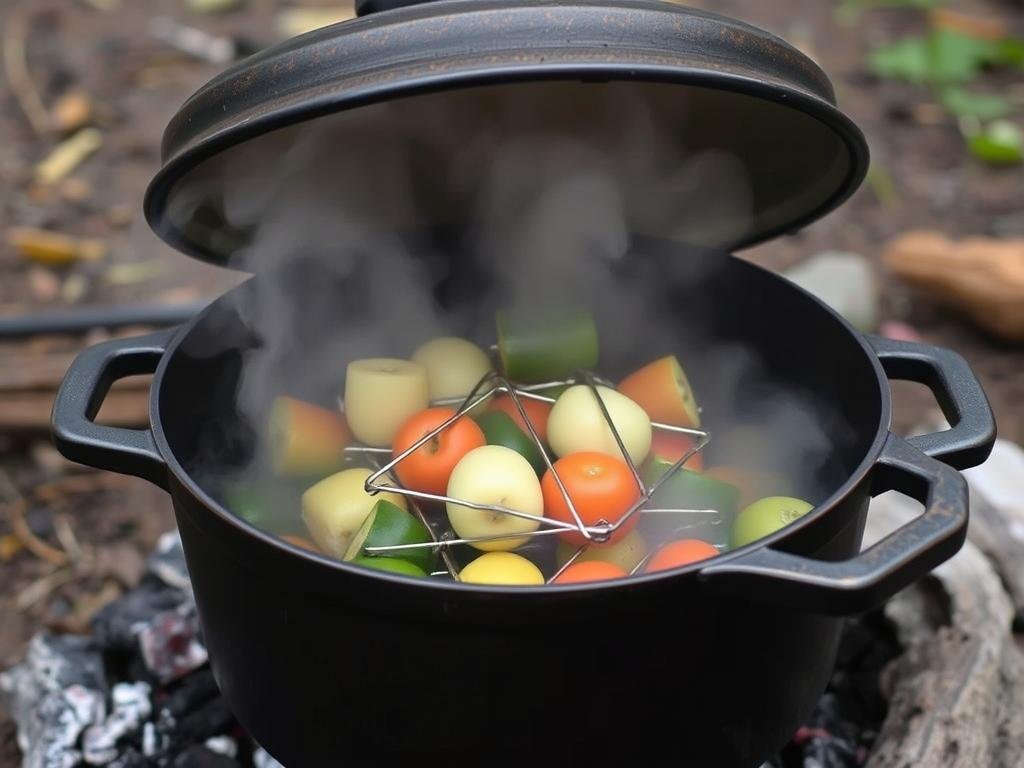
Steaming preserves nutrients and creates tender, flavorful vegetables
Steaming in a Dutch oven is an excellent way to prepare vegetables, seafood, and even some desserts while preserving nutrients and natural flavors.
Steaming Technique:
- Create a raised platform inside your Dutch oven using a metal trivet, clean rocks, or aluminum foil balls
- Add 1-2 inches of water below the platform
- Place food on the platform, ensuring it doesn’t touch the water
- Use more bottom heat than top heat to generate steam
- Check water levels periodically to prevent boiling dry
One-Pot Campfire Meals
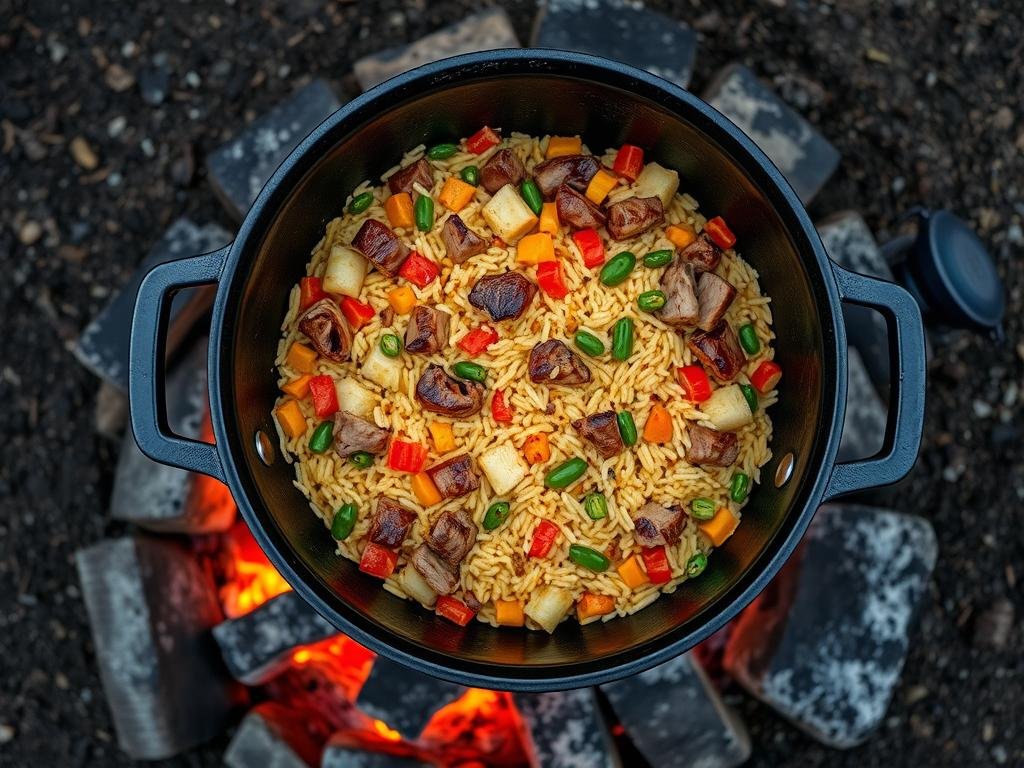
One-pot meals minimize cleanup while maximizing flavor
Perhaps the most significant advantage of Dutch oven cooking is the ability to create complete meals in a single pot, minimizing cleanup while maximizing flavor as ingredients cook together.
One-Pot Meal Technique:
- Layer ingredients based on cooking time (longest-cooking items on bottom)
- Start with higher heat to brown meats, then reduce for slower cooking
- Add quick-cooking items like leafy greens toward the end
- Balance the coal distribution based on whether you’re primarily cooking from bottom or all around
- Let the meal rest 10-15 minutes after cooking to allow flavors to meld
Easy One-Pot Mountain Man Breakfast
Start your day with this hearty breakfast that feeds the whole camp!
Dutch Oven Usage Tips & Best Practices
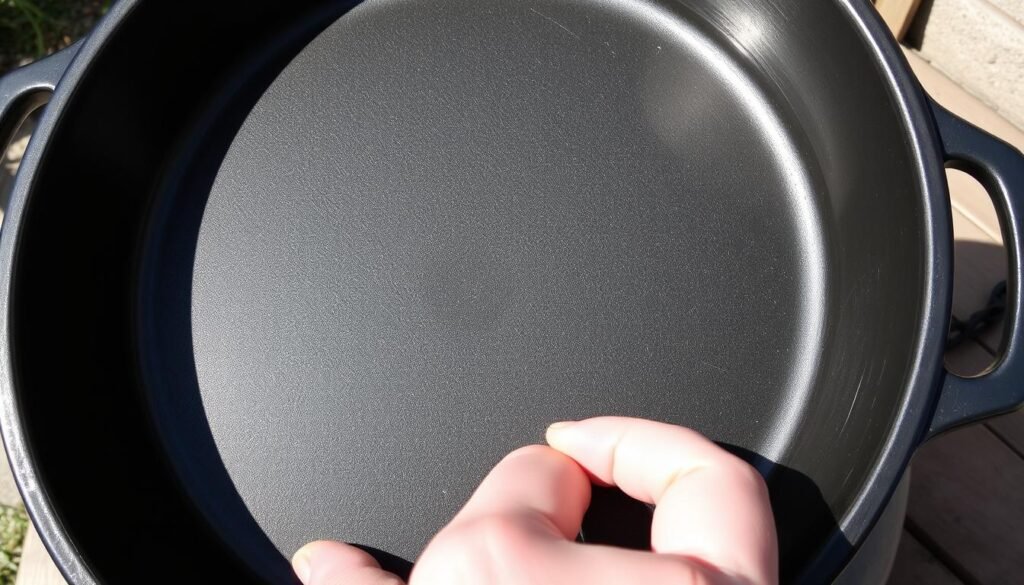
A well-seasoned Dutch oven develops a natural non-stick surface over time
Proper care and usage of your Dutch oven will ensure it lasts for generations while providing excellent cooking results every time. Here are essential tips for getting the most from your outdoor cooking companion:
Seasoning Your Dutch Oven
Seasoning creates a natural non-stick surface and protects against rust. Even pre-seasoned Dutch ovens benefit from additional seasoning before first use:
- Wash the new Dutch oven with hot water only (no soap)
- Dry thoroughly with paper towels
- Apply a thin layer of vegetable oil or flaxseed oil to all surfaces
- Place the Dutch oven upside down in a home oven at 450°F for one hour
- Turn off the oven and let it cool completely before removing
- Repeat the process 2-3 times for optimal seasoning
Preventing Food from Sticking
Do:
- Preheat your Dutch oven before adding food
- Use sufficient oil or fat when cooking
- Line with parchment paper for baking
- Let meat develop a natural crust before turning
Don’t:
- Overcrowd the pot with too much food
- Stir food constantly before it’s had time to brown
- Use metal utensils that can scrape the seasoning
- Cook highly acidic foods for extended periods
Cleaning Without Soap
Traditional cast iron care avoids soap to preserve the seasoning. Here’s how to clean your Dutch oven after use:
- While still warm (not hot), scrape out food residue with a wooden or plastic scraper
- Rinse with hot water and scrub with a non-metal brush if needed
- For stubborn residue, simmer a small amount of water in the pot, then scrape again
- Dry immediately and thoroughly with paper towels or over low heat
- Apply a very thin layer of oil before storing
Modern Cast Iron Care Note
While traditionalists avoid soap entirely, modern mild dish soaps are generally fine for well-seasoned cast iron. If you do use soap, be sure to re-oil the surface after cleaning.
Storage Tips
- Store with the lid slightly ajar or separated to allow air circulation
- Place a paper towel inside to absorb any moisture
- Store in a dry location to prevent rust
- For camping, transport in a dedicated carry bag to protect from dust and damage
- Never store food in your Dutch oven between uses
Common Beginner Mistakes to Avoid
Even experienced outdoor cooks make mistakes with Dutch ovens. Here are the most common pitfalls to avoid:
Temperature Management Errors
- Using too many coals: This is the #1 mistake! It’s easier to add heat than to cool down an overheated oven.
- Lifting the lid too often: Each peek releases heat and extends cooking time.
- Not rotating the oven: Failing to rotate creates hot spots and uneven cooking.
- Placing directly in flames: Always cook over coals, not open flames.
Food Preparation Mistakes
- Overfilling the pot: Leave at least 2 inches of space at the top.
- Using too much liquid: Less evaporation occurs than in home cooking.
- Not preheating: Adding food to a cold Dutch oven causes sticking.
- Improper seasoning: Neglecting proper seasoning leads to rust and sticking.
The Metal Utensil Mistake
Using metal utensils can scrape away your carefully developed seasoning. Stick to wooden, silicone, or plastic tools when cooking in your Dutch oven.
Easy Starter Recipes for Campfire Dutch Oven
Begin your Dutch oven cooking journey with these foolproof recipes that deliver impressive results even for beginners:
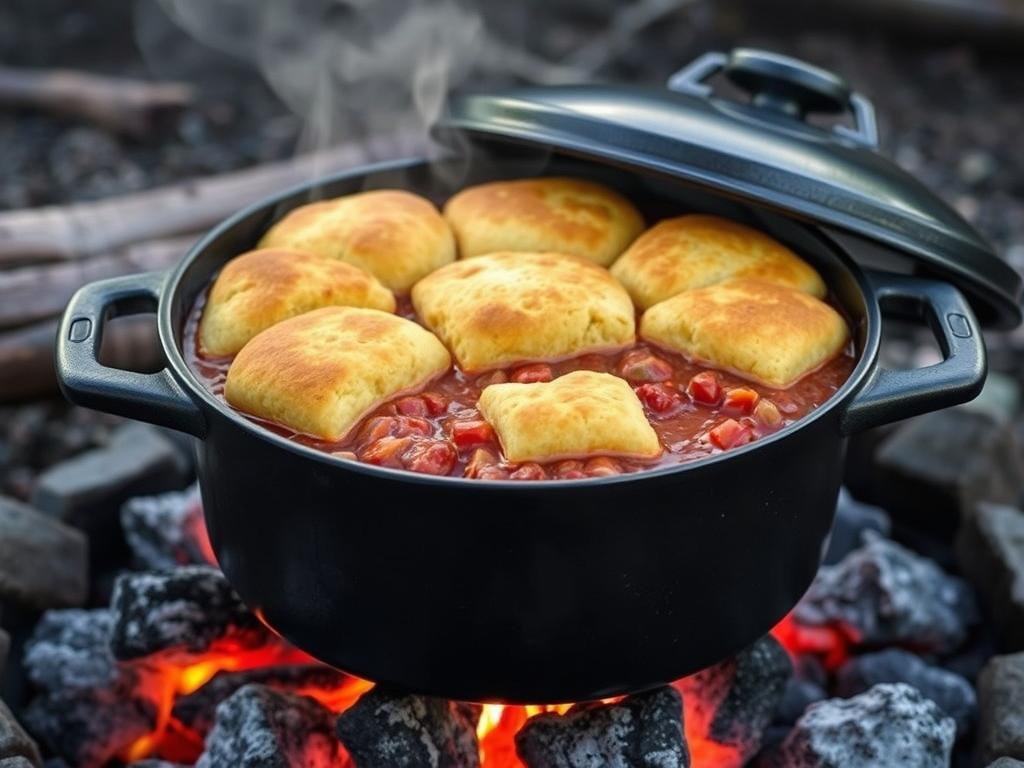
Campfire Chili with Cornbread Topping
This one-pot wonder features savory chili on the bottom with a golden cornbread crust on top. Perfect for cool evenings around the campfire.
Difficulty: Easy
Cooking Time: 45-60 minutes
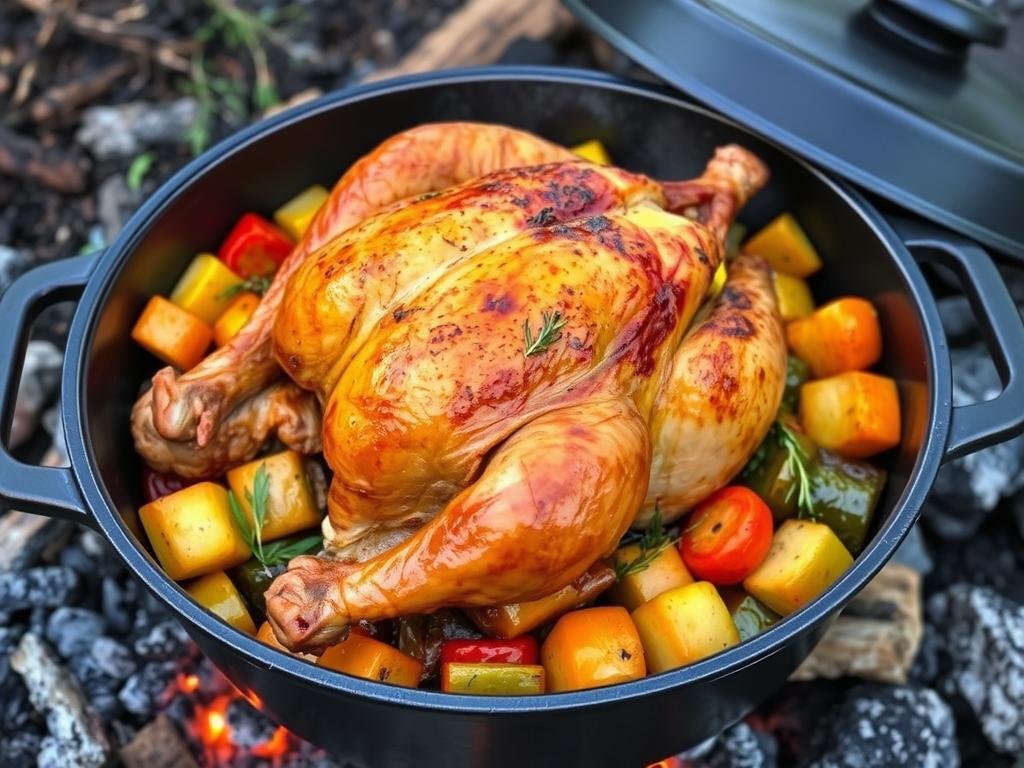
Garlic Herb Chicken with Vegetables
A complete meal in one pot! Juicy chicken flavored with garlic and herbs, surrounded by perfectly roasted potatoes, carrots, and onions.
Difficulty: Moderate
Cooking Time: 60-75 minutes
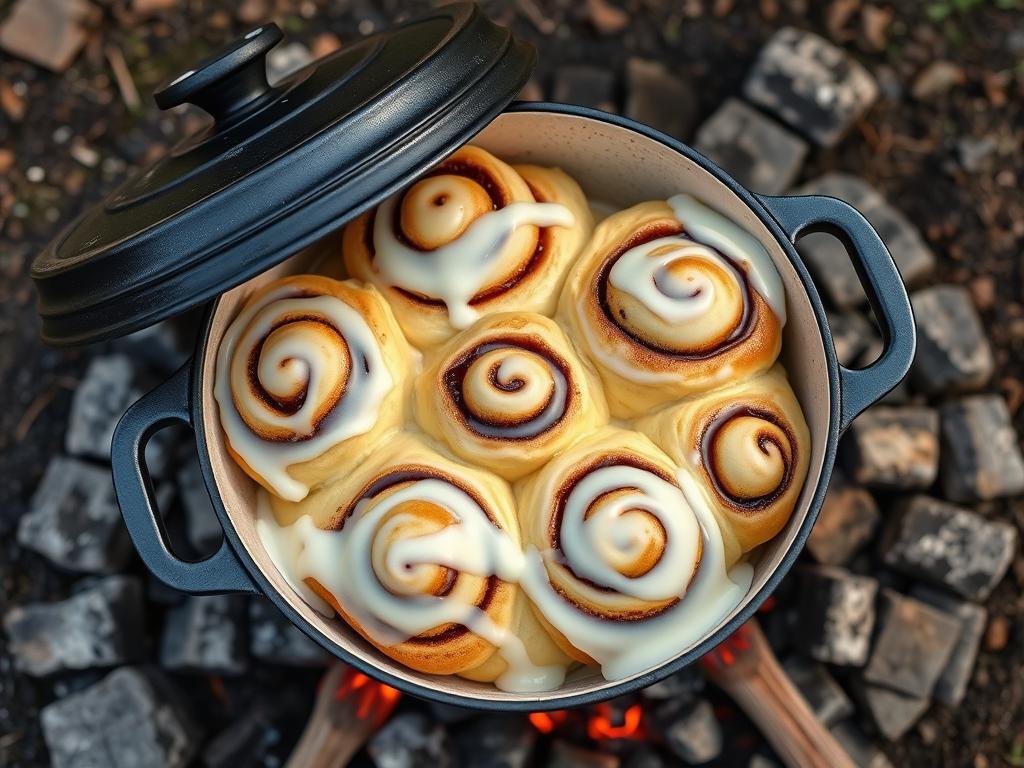
Cinnamon Breakfast Rolls
Wake up to the irresistible aroma of fresh-baked cinnamon rolls! This recipe uses refrigerated dough for simplicity but delivers bakery-quality results.
Difficulty: Easy
Cooking Time: 30-40 minutes
Cleaning & Maintenance After Campfire Cooking
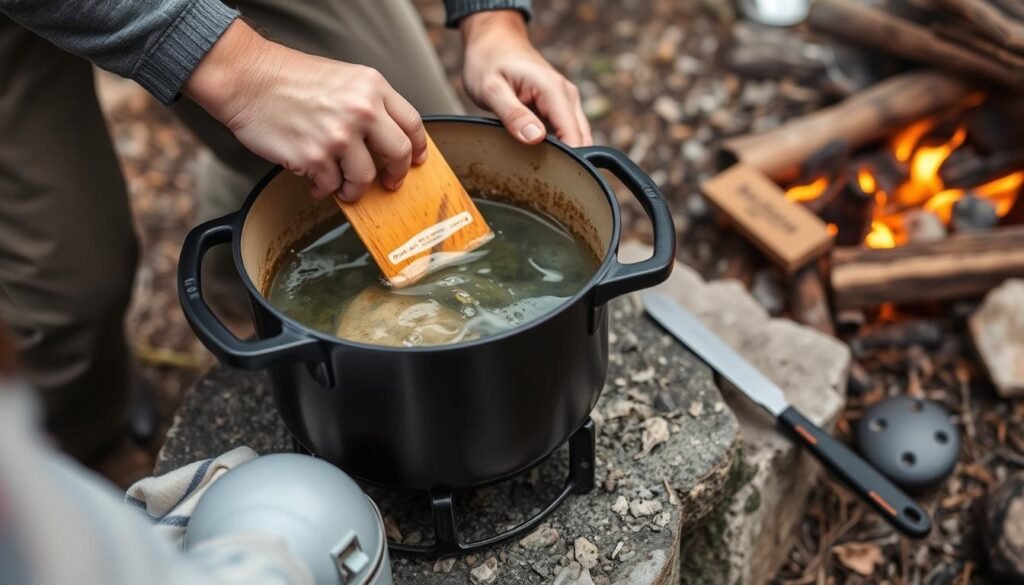
Proper cleaning and maintenance ensure your Dutch oven will last for generations
Proper care after cooking is essential for maintaining your Dutch oven’s performance and longevity. Follow these steps after each use:
Ash Cleanup
- Allow coals to cool completely before disposal
- Remove ash from the lid’s rim using a dry brush
- Dispose of ashes responsibly according to campsite regulations
- Wipe the exterior with a dry cloth to remove soot and ash
Rust Prevention
Cast iron’s greatest enemy is moisture. Prevent rust with these practices:
- Dry thoroughly immediately after washing
- Heat the empty Dutch oven over low heat to evaporate any remaining moisture
- Apply a thin layer of oil to all surfaces while still warm
- Store in a dry place with the lid slightly ajar
- Check periodically for rust spots, especially in humid climates
Re-seasoning When Needed
If your Dutch oven shows signs of rust or food is starting to stick, it’s time to re-season:
- Scrub with steel wool to remove rust or damaged seasoning
- Wash thoroughly and dry completely
- Apply a thin layer of oil to all surfaces
- Place upside down in a home oven at 450°F for one hour
- Let cool in the oven
- Repeat if necessary until a smooth, black finish is restored
Dealing with Stubborn Residue
For baked-on food that won’t come off with scraping, try this camp-friendly method: Add 1-2 inches of water to the Dutch oven, heat until it simmers, then use a wooden spoon to loosen the residue. Never use harsh chemicals or abrasive cleaners.
Gear Checklist for Campfire Dutch Oven Cooking
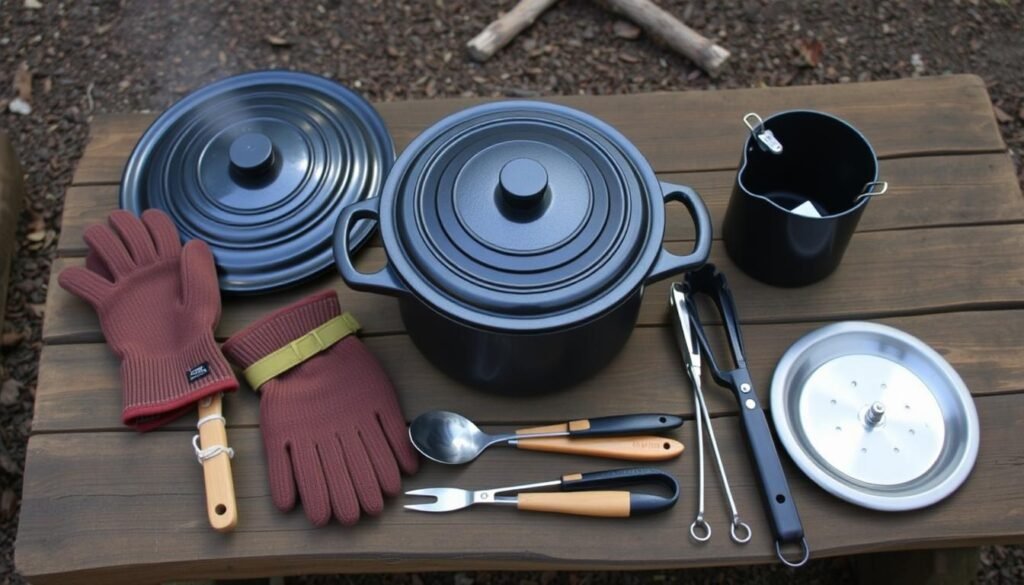
Having the right tools makes Dutch oven cooking safer and more enjoyable
Ensure your campfire cooking goes smoothly by packing these essential items:
Cooking Equipment
- Dutch oven with legs and flanged lid
- Lid lifter for safely handling the hot lid
- Long-handled tongs for arranging coals
- Charcoal chimney starter
- Heat-resistant gloves or heavy leather gloves
- Wooden or silicone utensils (no metal)
- Trivet or stand for setting the hot lid
Additional Items
- Charcoal briquettes (if not using wood coals)
- Matches or lighter in a waterproof container
- Aluminum foil for lining or making foil packets
- Parchment paper for baking
- Cleaning supplies (scraper, brush, towels)
- Small shovel or coal rake
- Fire extinguisher or bucket of water
Ready to upgrade your camp cooking gear?
Our complete Dutch oven starter kit includes everything you need for successful outdoor cooking!
Frequently Asked Questions
Can you use a Dutch oven over an open fire?
Yes, you can use a Dutch oven over an open fire, but it’s not ideal. For best results, cook over hot coals rather than direct flames. Flames create uneven heat and can damage your Dutch oven’s seasoning. If you must use an open fire, allow it to burn down to coals first, or position the Dutch oven above the flames using a tripod or grate.
How many coals do I need for a Dutch oven?
The number of coals depends on your Dutch oven size and desired temperature. A general rule is to use twice the diameter of your oven in inches of coals. For example, a 12-inch Dutch oven would need about 24 coals at 350°F. Distribution matters too – for baking, use more coals on top (about 2/3) than bottom (about 1/3). For simmering or stewing, reverse this ratio with more coals on the bottom.
What size Dutch oven is best for camping?
A 12-inch (6-quart) Dutch oven is the most versatile size for camping, comfortably feeding 4-6 people. If you typically camp with a smaller group or want something lighter to carry, a 10-inch (4-quart) model works well. For larger groups or when preparing multiple dishes, a 14-inch (8-quart) Dutch oven is ideal. Many experienced camp cooks carry multiple sizes to prepare different courses simultaneously.
What can I cook in a Dutch oven while camping?
The possibilities are nearly endless! You can bake bread, biscuits, and desserts; roast whole chickens or cuts of meat; simmer stews, soups, and chili; fry chicken, fish, or potatoes; make one-pot meals like lasagna or enchiladas; and even prepare breakfast dishes like cinnamon rolls or mountain man breakfast casserole. The versatility of a Dutch oven means you can cook almost anything you’d make in your home kitchen.
How do I know when my Dutch oven is hot enough to cook?
For most cooking methods, preheat your Dutch oven for about 10-15 minutes with the appropriate number of coals. To test if it’s ready for frying or sautéing, sprinkle a few drops of water into the pot – they should sizzle and evaporate quickly. For baking, hold your hand about 6 inches above the lid – you should only be able to keep it there for 3-4 seconds before it feels too hot. A laser thermometer can also be used to check the temperature of the cooking surface.
Conclusion
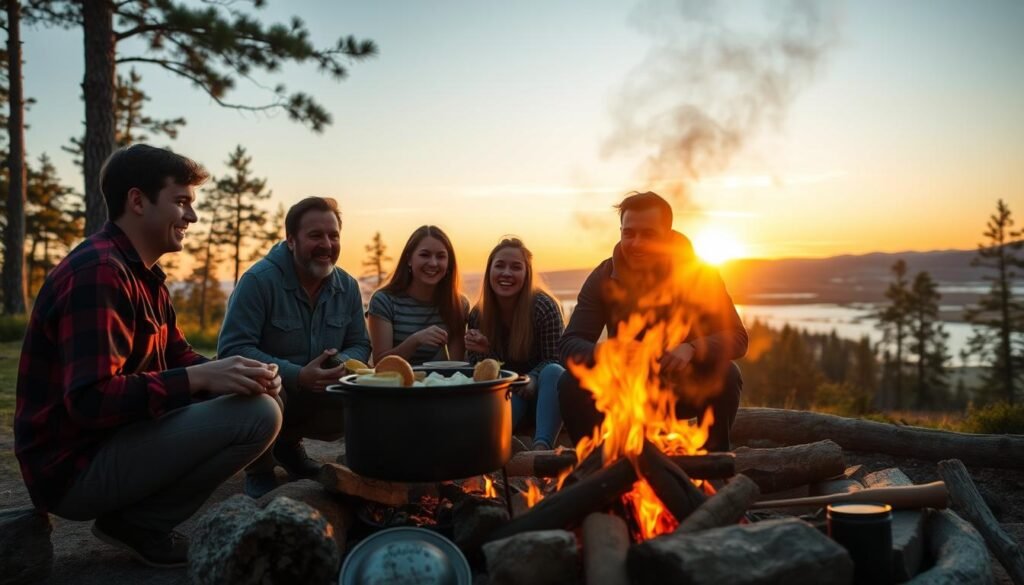
Dutch oven cooking creates delicious meals and lasting memories
Cooking with a Dutch oven over a campfire connects us to culinary traditions that span centuries while creating memorable outdoor dining experiences. The techniques may take some practice, but the rewards are well worth the effort – delicious meals that often surpass what can be prepared in a home kitchen, with the added satisfaction of cooking over an open fire in the great outdoors.
From managing your fire and controlling temperature to mastering various cooking techniques, the skills you develop will serve you well on countless camping trips to come. Start with simple recipes, learn from each experience, and soon you’ll be creating campfire feasts that will impress everyone around the fire.