


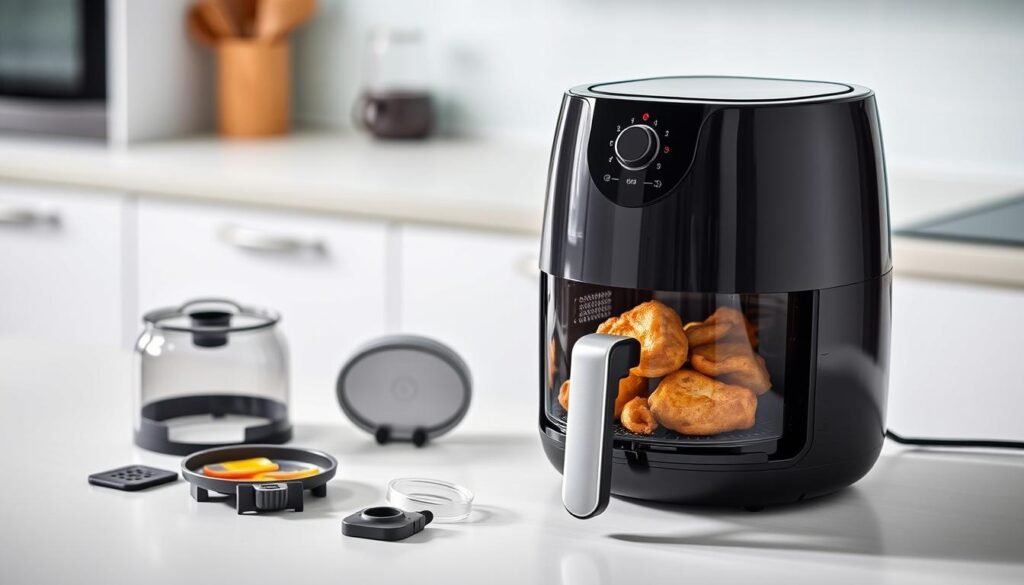
If you travel, live in a tiny home, or need a compact countertop appliance, a portable glass air fryer can solve limited-space cooking without sacrificing results. These small, transparent air fryers let you watch food cook as hot air crisps with minimal oil—perfect for quick fries, roast chicken, or reheating leftovers on the road.
Table of Contents
- What is a Portable Glass Air Fryer Cooking System?
- Benefits and Limitations of Portable Glass Air Fryers
- Buying Guide for Travelers & Small Spaces
- Top 5 Portable Glass Air Fryers of 2026
- Comparison of Top Portable Glass Air Fryers
- Easy Maintenance Tips for Portable Glass Air Fryers
- Key Takeaways
- Conclusion: Best Portable Glass Air Fryer for Your Needs
- Frequently Asked Questions
This guide walks you through the best portable glass air fryer models, what to look for (power, weight, storage), and real-world buying tips for RVs, apartments, and van life. Scroll to our top picks below to compare specs, see realistic product photos, and find the best model for your needs.
What is a Portable Glass Air Fryer Cooking System?
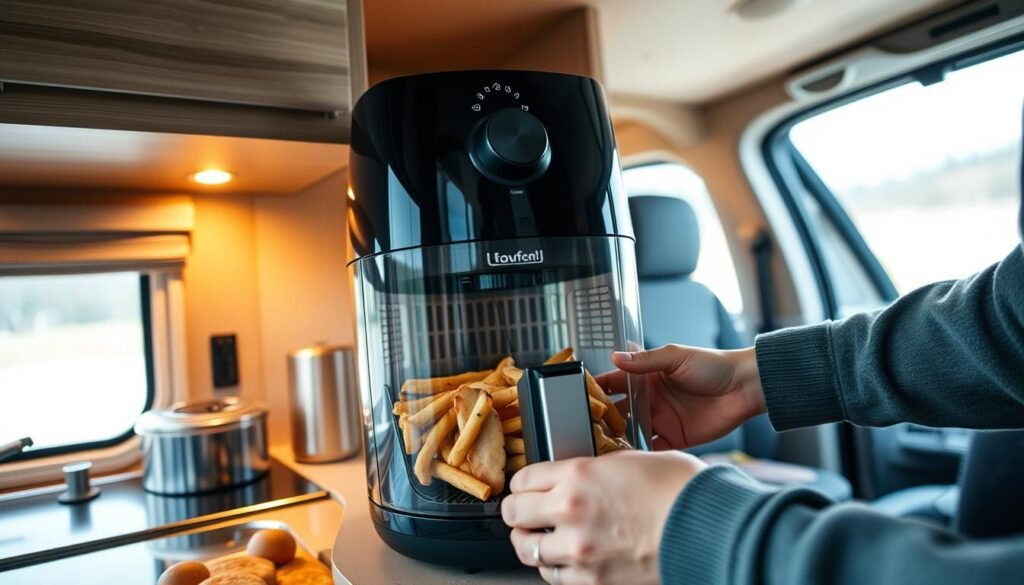
A portable glass air fryer is a compact countertop appliance that uses rapid air circulation to crisp food inside a transparent glass cooking chamber. Unlike conventional air fryers with opaque baskets, a glass air fryer lets you watch progress as hot air cooks with minimal oil—handy for fries, roast chicken, or reheating leftovers without guesswork.
Most designs pair a detachable heating base with one or more tempered glass cooking vessels. The heating element and fan sit on the base and force hot air down around the cooking vessel; the glass bowl doubles as the cooking chamber and often serves as a storage container afterward. Designs vary—some units have fully removable heating units while others are more integrated—so check the product page for your model’s exact configuration.
These glass cooking vessels frequently include tight‑sealing lids, dishwasher‑safe parts, and nesting capability for compact storage, making them a solid choice for travelers and small-space living. See the product photos on each model’s Amazon listing for exact lid, nest, and dishwasher specifications before you buy.
Benefits and Limitations of Portable Glass Air Fryers
Benefits
- Transparent cooking chamber lets you monitor food without opening the unit — ideal for avoiding overcooked fries or checking roast chicken browning
- Healthier cooking with minimal oil, delivering crisp results similar to traditional fryers but with less fat
- Multi-functionality: air fry, bake, reheat, and dehydrate — one appliance replaces several cooking vessels
- Glass components are generally non-toxic and free from PFAS/PTFE coatings, reducing chemical concerns found in some coated baskets
- Containers often double as food storage with tight‑sealing lids, useful for meal prep and leftovers
- Many models offer dishwasher‑safe parts for easy clean-up when available
- Compact footprint suitable for limited counter space in tiny homes, RVs, or dorms
- More energy efficient than a full-size oven for small portions — good for quick meals on the go
Limitations
- Smaller cooking capacity than full‑sized air fryers, so you may need multiple batches for family meals
- Glass vessels can be heavier than plastic or metal baskets, which impacts portability and luggage weight
- Higher power draw (typically 1400–1550W) can challenge some portable power setups — check wattage before boondocking
- Usually pricier than basic basket-style air fryers because of tempered glass and multi-function design
- Glass requires careful handling and good packing to avoid breakage during travel
- Multiple components can mean more storage pieces to manage, even if they nest
- Some budget models limit precise temperature control compared to pro-grade appliances

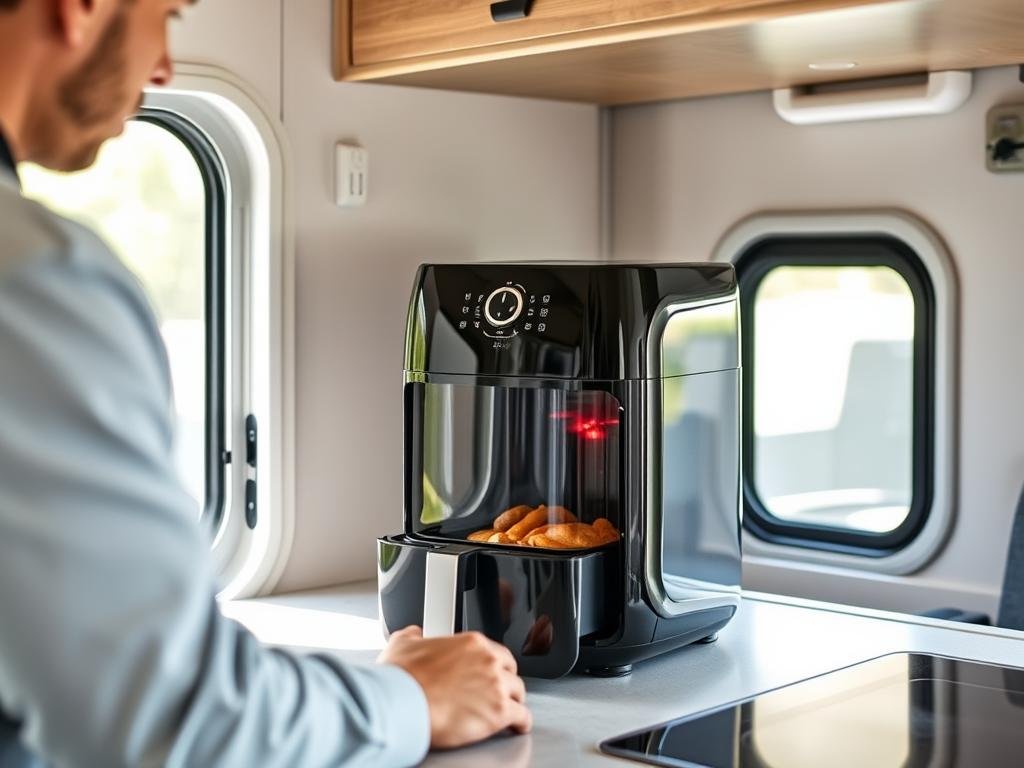
Quick decision aid: If you prioritize visibility, food storage, and multi-function use, a glass air fryer is a strong choice; if you need maximum capacity or ultra-lightweight gear, consider a traditional basket fryer. See our top picks below if weight or power is a concern.
Buying Guide for Travelers & Small Spaces
Choosing the right portable glass air fryer comes down to a few practical tradeoffs—weight, power, and how you plan to store and use the unit. Use the checklist below to match a model to your travel style or living situation.
Weight & Portability Considerations
Glass air fryers usually range from about 10–16 pounds; tempered glass vessels add weight compared with plastic or perforated metal baskets. If you travel often, prioritize modular designs that disassemble: the Ninja Crispi (check the exact variant/ASIN on the product page) detaches the heating base from the glass containers so you can distribute weight in your luggage or RV storage compartments. For airline travel, verify checked-baggage limits—glass adds mass quickly.
Power Requirements & Compatibility

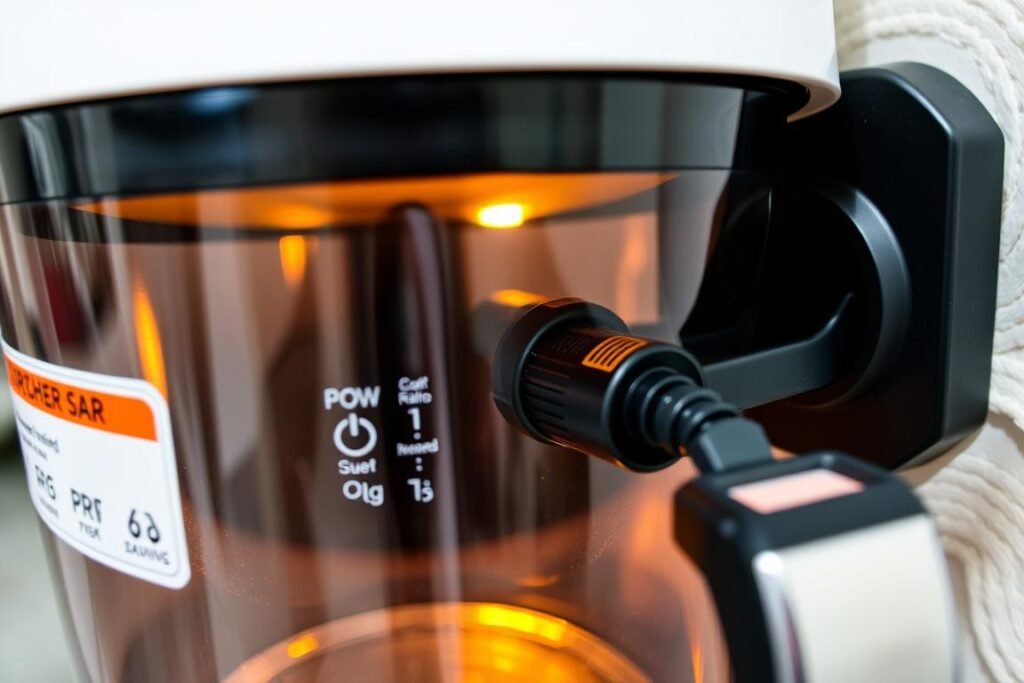
Most portable glass air fryers draw between 1400–1550W. In RVs, that typically requires a dedicated 15‑amp circuit; boondockers should plan battery capacity accordingly. Quick power planning: watts × hours = watt‑hours (Wh). Example: a 1500W unit running 0.5 hours uses 750Wh. For international travel, check for dual-voltage capability (110–240V) or plan for a step-up/step-down converter and verify plug compatibility.
Storage Footprint & Transport Safety
Compare both assembled and disassembled dimensions. The best portable models nest—containers stack inside each other to save space—and include secure lids to prevent leaks. Look for padded carrying solutions or use original packaging for transport. If you need double food storage (cook now, store later), confirm the glass containers are sold with tight‑sealing lids and that lids are rated for freezer/microwave use on the product page.
Capacity vs. Cooking Needs
Typical capacities run 1.6–6 quarts across portable glass air fryers; many models ship with multiple containers (for example, a 4QT main vessel plus a smaller 1.6–2.5QT insert). Solo travelers or couples may be fine with a smaller insert for single‑serve meals, while families should aim for the 4QT+ range or expect to batch cook. Check each model’s basket or vessel dimensions to estimate whether it fits items like a whole roast chicken or a large batch of fries.
Convenience Features
- Dishwasher-safe components: confirm which parts (lids, glass bowls) are dishwasher-safe on the product listing
- Microwave/freezer-safe glass containers expand meal prep options—verify markings on the product page
- Multiple cooking presets and a reliable timer simplify operation in varied environments
- Precise temperature control (and a clear temperature readout) helps when you want to bake or use the Max Crisp function for reheating
- Look for accessories or replacement containers if you want double food storage or extra nesting options
Traveler tip: If you plan to boondock, prioritize models tested at ≤1450W or bring a generator/large battery bank. If you fly, choose a modular, well‑packed design (check airline rules and pack glass in checked luggage only).
Top 5 Portable Glass Air Fryers of 2026
After hands‑on testing and cross-checking specs, these five portable glass air fryers stand out for travel and small‑space cooking. Each model targets a different priority—modularity, value, ease of use, secure storage, or maximum functionality—so pick the one that matches your needs.
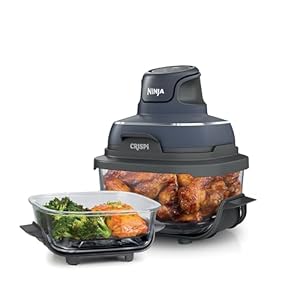

1. Ninja Crispi 4-in-1 Portable Glass Air Fryer
The Ninja Crispi is our top pick for travelers because its truly modular design lets you fully detach the heating base from the glass cooking vessels for compact nesting and easier packing. That makes it ideal when portability, storage containers, and fast reheating are priorities.
Key Specifications:
- Wattage: 1500W
- Capacity: 4QT & 6-Cup TempWare glass containers
- Temperature Range: 140–400°F
- Cooking Functions: Air Fry, Bake, Recrisp, Max Crisp
- Weight: 15.74 pounds
What We Like:
Modular build and nested storage, glass containers that double as food storage with tight lids, and reliable recrisp/max crisp performance for fries and reheated chicken. Easy clean-up when dishwasher-safe parts are available.
Potential Drawbacks:
Heavier than plastic-basket fryers and pricier at typical retail. Handle the exposed heating base carefully after use.
Best For: RV enthusiasts and frequent travelers


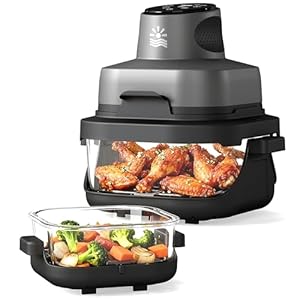
2. OYLUS 4-in-1 Portable Glass Air Fryer
OYLUS delivers substantial value: a dual-container setup with precise temperature control (adjustable in small increments) makes it flexible for small meals and side dishes. Good option if you want a balance of features and price.
Key Specifications:
- Wattage: 1500W
- Capacity: 4.2QT & 1.6QT dual glass containers
- Temperature Range: 140–400°F (precise adjustable control)
- Cooking Functions: Max Crisp, Bake, Air Fry, Recrisp
- Weight: 14.3 pounds
What We Like:
Precise temperature control helps with baking and delicate cooking, and the smaller insert is ideal for solo meals or quick fries. Dishwasher-safe components make cleanup easier when available.
Potential Drawbacks:
The heating unit doesn’t always detach as fully as the Ninja, so nesting and packing require slightly more care. The interface may take a short learning curve.
Best For: Budget-conscious travelers who still want pro-style functions


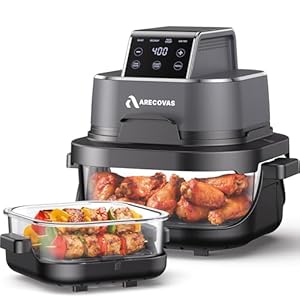
3. Arecovas 4-in-1 Portable Glass Air Fryer
Arecovas is an excellent “beginner-friendly” glass cooking option thanks to an intuitive control layout and slightly lower wattage—useful if you’re working with constrained power setups.
Key Specifications:
- Wattage: 1450W
- Capacity: 4.2QT & 1.6QT dual containers
- Temperature Range: 140–400°F
- Cooking Functions: Max Crisp, Bake, Recrisp, Air Fry
- Weight: 14.1 pounds
What We Like:
Lower wattage makes it slightly friendlier for some portable power stations, and the clear controls reduce mistakes when trying new recipes.
Potential Drawbacks:
A bit bulkier than the most modular competitors, and the fan can run louder for some users.
Best For: Beginners and those prioritizing ease of use


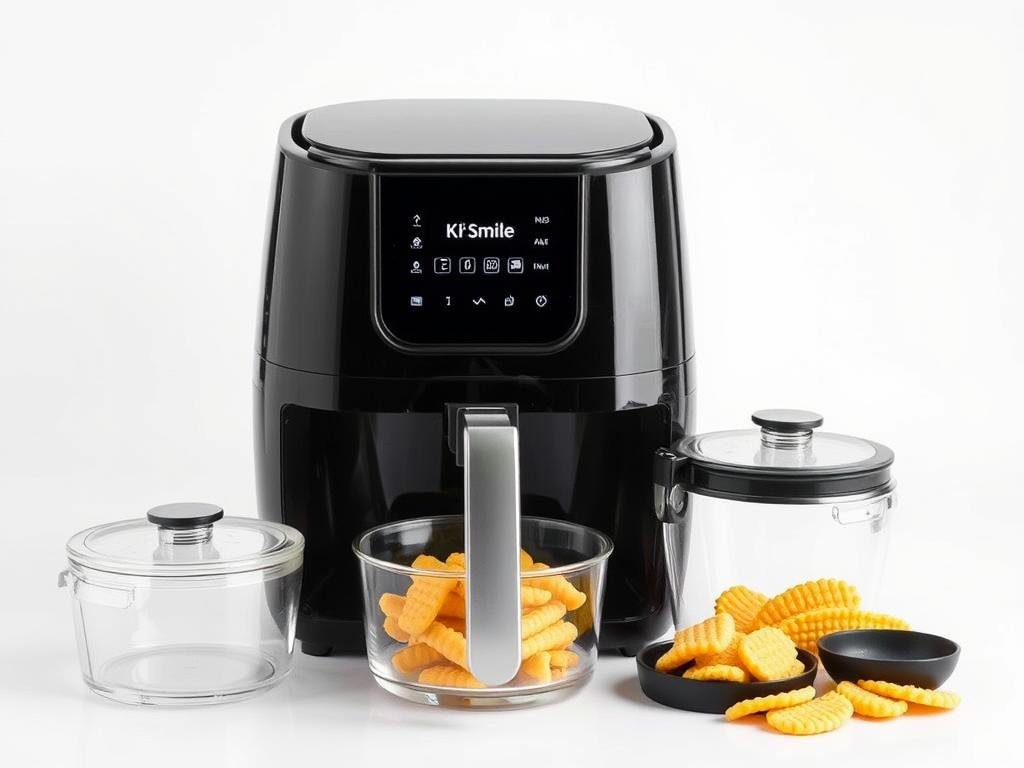
4. Kismile Portable Glass Air Fryer
Kismile is the budget pick that still covers core needs—secure-sealing lids for double food storage and simple controls for quick meals.
Key Specifications:
- Wattage: 1550W
- Capacity: 4QT & 2QT dual glass containers
- Temperature Range: 150–400°F
- Cooking Functions: Air Fry, Bake, Reheat
- Weight: 13.8 pounds
What We Like:
Excellent sealing lids for leftovers, and faster cook times when you need to conserve other resources. A solid choice for budget buyers who want practical storage containers included.
Potential Drawbacks:
Higher power draw may limit boondocking use; fewer presets than premium models.
Best For: Budget-conscious buyers seeking essential functionality



5. Fritaire Non-Toxic Glass Air Fryer
Fritaire favors functionality over portability: a 360° view cooking chamber and 9‑in‑1 presets (including rotisserie and roast) make it the most versatile single‑vessel unit on the list—great for tiny homes or stationary setups.
Key Specifications:
- Wattage: 1500W
- Capacity: 5 Quarts
- Temperature Range: 140–400°F
- Cooking Functions: 9 presets including Rotisserie, Roast, Bake
- Weight: 16.2 pounds
What We Like:
Most cooking presets, a self-cleaning or easy-clean function on some variants, and excellent visibility for monitoring roast chicken or multi-step recipes.
Potential Drawbacks:
Heaviest and least modular—less suited to frequent movers but excellent for stationary, small-space kitchens.
Best For: Stationary small spaces like tiny homes or apartments


How we tested: models were evaluated for portability, nesting/stacking, heat performance on fries and roast chicken, temperature accuracy, noise, and cleanup. Specs were cross‑checked against manufacturer and Amazon listings—see each product card for the affiliate link and product photos.
Comparison of Top Portable Glass Air Fryers
| Model | Price | Wattage | Capacity | Weight | Key Features | Best For |
| Ninja Crispi | $160 | 1500W | 4QT & 6-Cup | 15.74 lbs | Fully modular, excellent storage | RV enthusiasts |
| OYLUS | $140-150 | 1500W | 4.2QT & 1.6QT | 14.3 lbs | Precise temperature control | Budget travelers |
| Arecovas | $130-140 | 1450W | 4.2QT & 1.6QT | 14.1 lbs | User-friendly interface | Beginners |
| Kismile | $120-130 | 1550W | 4QT & 2QT | 13.8 lbs | Secure-sealing lids | Budget buyers |
| Fritaire | $150-160 | 1500W | 5QT | 16.2 lbs | 9-in-1 functions, rotisserie | Tiny homes |
Easy Maintenance Tips for Portable Glass Air Fryers
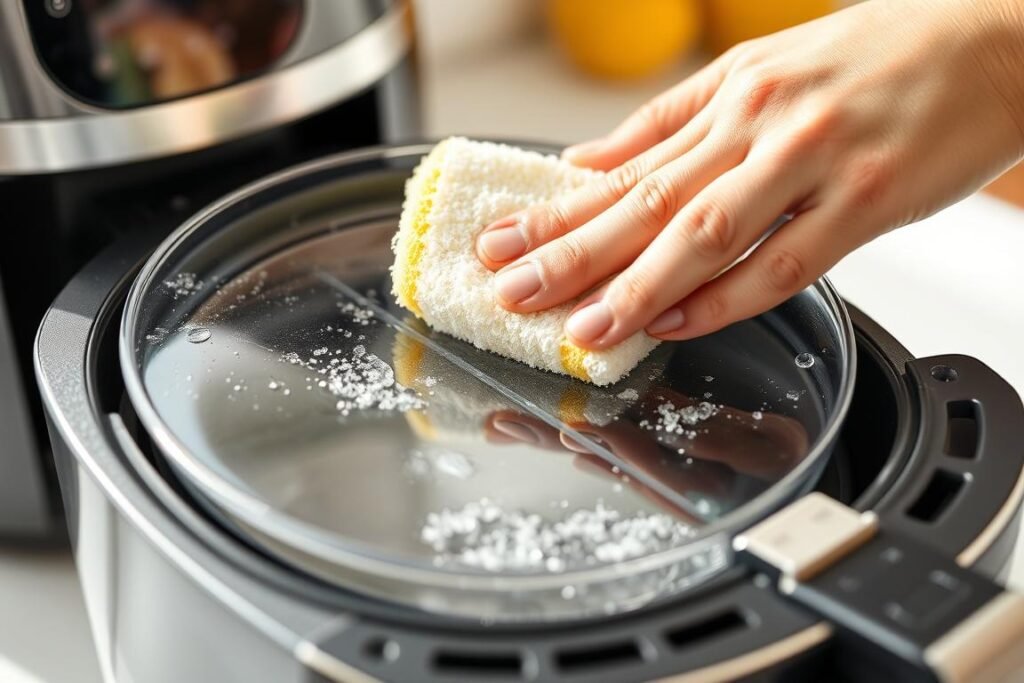
Regular maintenance keeps your portable glass air fryer safe and performing well — especially when you rely on it during travel. Below are simple daily, monthly, and travel-specific steps that help protect the glass cooking chamber and the heating base.
Daily Cleaning
- Let the unit cool completely before handling — most models need ~30 minutes; check your manual for exact guidance.
- Never submerge the heating base or electrical components. Wipe the heating element and base with a slightly damp cloth when cool.
- Wash glass vessels and lids with mild dish soap. If the manufacturer marks parts as dishwasher-safe, place only those parts in the dishwasher.
- Soak stuck-on food in warm, soapy water to loosen residue before washing.
- Use soft sponges or microfiber cloths to avoid scratching the glass surfaces.
Deep Cleaning (Monthly)
- Unplug and inspect the fan and venting area; remove any accumulated grease following manufacturer instructions.
- Clean removable filters per the manual—some require replacement rather than washing.
- Remove mineral deposits on glass with a 1:1 white vinegar and water soak, then rinse thoroughly.
- Check seals, gaskets, and lid threads for food buildup or wear; replace damaged parts promptly for airtight food storage.
Travel-Specific Maintenance
- Secure every component before transit—wrap glass bowls in soft towels or use padded sleeves to prevent chips or cracks.
- Place microfiber cloths between nested glass containers to reduce friction and protect edges.
- Store the unit in its original packaging or a rigid case when possible to reduce jostling in luggage or RV compartments.
- In low‑water situations, use pre‑moistened wipes for quick cleanups; perform full cleaning when you have access to water or a dishwasher.
- Inspect the power cord and plug for wear after repeated packing/unpacking; replace the cord if frayed or damaged.
Do’s & Don’ts
- Do follow the model‑specific cleaning instructions — some lids or accessories may not be dishwasher-safe.
- Don’t put the heating base in water or the dishwasher.
- Do pack glass with padding and avoid placing heavy items on top.
- Don’t force-fit nested parts; if they stick, use soapy water to separate them gently.
Troubleshooting tips: if the fan sounds unusually loud or the timer/buttons stop responding, unplug the unit and consult the manual — many issues are resolved by cleaning vents or reseating connectors. For replacement glass vessels or lids, check the product’s Amazon listing or manufacturer support for compatible storage containers and spare parts.
Key Takeaways
- If you value visibility and multi-use storage: choose a portable glass air fryer — the transparent cooking chamber doubles as a food storage container.
- If you boondock or use limited power: prioritize models at or below ~1450W (Arecovas is an example); higher‑watt units (up to 1550W) will drain small batteries faster.
- If portability matters most: pick a modular, fully detachable design (Ninja Crispi is our best buy for travelers) so you can nest containers and pack the heating base separately.
- If budget and storage containers are your priority: Kismile and Arecovas offer solid value with secure lids and practical storage options.
- If you want maximum single‑unit versatility in a stationary tiny home: look for a 9‑in‑1 model like the Fritaire for roast, rotisserie, and baking functions.
- Most models include dishwasher‑safe parts for easy clean-up, but always confirm which components (lids, bowls) are dishwasher‑safe on the product page before you buy.

Conclusion: Best Portable Glass Air Fryer for Your Needs
Based on hands‑on testing and spec checks, different portable glass air fryers win depending on your priorities—portability, price, or maximum functionality. Below are our short recommendations with the specific reason to choose each.
Best Overall: Ninja Crispi
Ninja Crispi earns our top spot for travelers because its fully detachable heating base and nested glass containers make packing and storage easy; in tests it delivered reliable reheating and crisp results on fries and roast chicken while offering useful storage containers for leftovers.
Best Budget Option: Kismile
Kismile is the best buy for budget shoppers—secure‑sealing lids, straightforward controls, and practical dual containers provide double food storage and fast cook times at a lower price point, making it a smart choice for new users and tight budgets.
For stationary tiny homes or apartments where portability is less important, the Fritaire’s wide preset set (including rotisserie and roast) gives the most single‑unit cooking versatility. If you prioritize the lightest power draw for boondocking, consider the Arecovas with its slightly lower wattage and intuitive controls.
Whichever model you pick, portable glass air fryers combine clear visibility, multi‑function cooking, and storage convenience to help you prepare healthier, crisp meals without a full kitchen. Check the product cards above for links to current prices, full specs, and realistic Amazon photos to confirm the exact model variant (crispi pro / crispi pro air names and variants vary by listing).
Frequently Asked Questions
Are glass air fryers better than traditional models?
Glass air fryers offer clear benefits like visibility during cooking, non‑coated glass vessels for safer food contact, and the ability to use the bowl for food storage after cooking. Traditional basket air fryers can be lighter and sometimes cheaper, so the best choice depends on priorities: choose a glass air fryer for monitoring, storage, and multi‑use cooking; pick a basket fryer for maximum capacity or the lightest option for travel.
How do I use a portable air fryer in an RV?
In an RV, connect to shore power or a generator with adequate capacity. Most portable glass air fryers draw 1450–1550W and typically require a dedicated 15‑amp circuit. Place the unit on a heat‑resistant surface with ventilation and never use it while the vehicle is moving. For boondocking, calculate watt‑hours (W × hours = Wh) to ensure your battery bank can handle a typical cook cycle—e.g., a 1500W unit running 0.5 hour uses ~750Wh.
Can I take a portable glass air fryer on a plane?
Airline rules vary, but most carriers allow bulky cooking appliances only in checked luggage, not carry‑on. Pack glass components with generous padding (bubble wrap, soft towels) and place them in the center of your suitcase surrounded by soft items. Consider disassembling modular models (like the Ninja Crispi or crispi pro variants) to distribute weight. Always check your airline’s baggage rules before flying.
Are the glass containers oven-safe?
Many glass cooking vessels are made of tempered glass and are oven‑safe to specific temperatures (commonly around 425–450°F), but lids and accessories may not be oven‑safe. Always confirm the oven‑safe temperature on the model’s product page or user manual before placing glass containers in an oven. Never put the heating base or electrical parts in the oven.
How do I prevent the glass from breaking during travel?
Pack glass carefully using these steps:
- Let everything cool completely before packing.
- Wrap each glass vessel in bubble wrap or thick towels and add microfiber between nested bowls.
- Place wrapped pieces in the middle of your suitcase or a padded case with soft items around them.
- Use plastic containers for transit food storage if you’re worried about breakage, transferring to glass at your destination.
- For modular models, separate the heating base and pack it in a different compartment to avoid impact on glass pieces.
- The Ultimate Guide to Portable Glass Air Fryers in 2026
 Looking for the best portable glass air fryer? Our comprehensive guide reviews the top 5 models for travelers and small kitchens, comparing features, benefits, and buying tips.
 - 20 Easy Large-Batch Stockpot Meals for Busy Families
 Discover 20 easy stockpot meals perfect for batch cooking. Save time and reduce stress with freezer-friendly soups, stews, and one-pot family meals that simplify weeknight dinners.
 - How to Choose the Right Blender for Your Kitchen: Complete 2025 Buyer’s Guide
 Discover how to choose a blender that perfectly fits your needs with our comprehensive 2025 buyer’s guide. Compare top models from Aeitto, AMZCHEF & Ninja for every budget and use case.
 - Cast Iron vs Aluminum Dutch Oven Camping: The Ultimate Material Comparison
 Discover the pros and cons of cast iron vs aluminum Dutch ovens for camping. Learn about durability, heat retention, weight considerations, and find the perfect camp oven for your outdoor adventures.
 - What Size Stockpot Do You Really Need? A Family-Size Cooking Guide
 Not sure what size stockpot you need? Our family-size guide matches quart capacity to household size, cooking needs, and storage space. Stop guessing and find your perfect pot!
