Best Food Processors in 2024 (Updated for 2026): Expert Reviews & Top Picks
Disclosure: As an Amazon Associate, I earn from qualifying purchases. This post may contain affiliate links, which means I may receive a commission at no extra cost to you.
Share this Article
Last Updated in February 2026
Cooking at home has never been more popular, and the right food processor can completely transform the way you prepare meals. From chopping vegetables and shredding cheese to kneading dough and blending sauces, a powerful food processor saves time, reduces effort, and makes everyday cooking far more enjoyable.
But with hundreds of models available, choosing the best food processor in 2026 can feel overwhelming. Should you buy a compact food chopper, a full-size processor, or a multi-purpose kitchen system? Which models offer the best value for money? And which one actually fits your cooking style?
To make your decision easier, we tested and reviewed the top food processors of 2026 based on performance, versatility, durability, ease of cleaning, and overall value. In this expert guide, you’ll discover the best options for small kitchens, families, meal preppers, and budget buyers — so you can confidently choose the perfect food processor for your needs.
This guide is regularly updated to help you find the best food processors available right now, not just the best food processors in 2024.
What’s New in Our 2026 Update
Re-tested top models
Confirmed availability
Updated comparisons
Removed discontinued products
Added the latest buying advice
Quick Verdict
If you’re in a hurry, here’s a quick rundown of our top picks:
Best Overall: Cuisinart DFP-14BCNY 14-Cup Food Processor
Best for Small Tasks: Hamilton Beach Electric Vegetable Chopper & Mini Food Processor
Best for Small Families: KitchenAid KFC3516ER 3.5 Cup Food Chopper
Best for Blending: Ninja Mega Kitchen System BL770
Best Budget Option: BLACK+DECKER 1.5-Cup Electric Food Chopper
5 Best Food Processors in 2024 — Tested & Updated for 2026
Here’s a list of the 5 best food processors of the year. Let’s dive right in!
1. Hamilton Beach Electric Vegetable Chopper & Mini Food Processor
Best For: Small chopping jobs, single servings, quick meal prep.
The Hamilton Beach Electric Vegetable Chopper & Mini Food Processor is a compact, affordable option for small tasks such as chopping vegetables, nuts, and herbs.
Who Should Buy:
Individuals, college students, or anyone with limited kitchen space who wants an affordable, easy-to-use chopper.
Who Should Skip:
Those who need to process large quantities of food or perform more complex tasks, like kneading dough.
Best For: Chopping vegetables, making sauces, and preparing small batches of food.
The KitchenAid KFC3516ER 3.5 Cup Food Chopper is a versatile and stylish food chopper perfect for everyday use. It’s ideal for chopping, pureeing, and mixing ingredients.
Who Should Buy:
Home cooks who want a reliable and easy-to-use food chopper for everyday tasks.
Who Should Skip:
Those who need a larger capacity food processor for big batches or more complex recipes.
Key Features:
3.5-cup capacity
Two speeds and pulse control
Pour spout and handle
Dishwasher-safe bowl and blade
Compact design
Pros:
Easy to use and clean
Versatile for a variety of tasks
Durable construction
Stylish design
Cons:
Smaller capacity compared to full-size food processors
Best For: Quick chopping of herbs, nuts, and vegetables.
The BLACK+DECKER 1.5-Cup Electric Food Chopper is a budget-friendly option for small chopping tasks. It’s simple to use and easy to clean, making it a great choice for beginners.
Who Should Buy:
Budget-conscious individuals who need a basic food chopper for simple tasks.
Who Should Skip:
Those who need a more powerful or versatile food processor for larger quantities or more complex recipes.
Best For: Blending smoothies, making dough, chopping vegetables, and food processing.
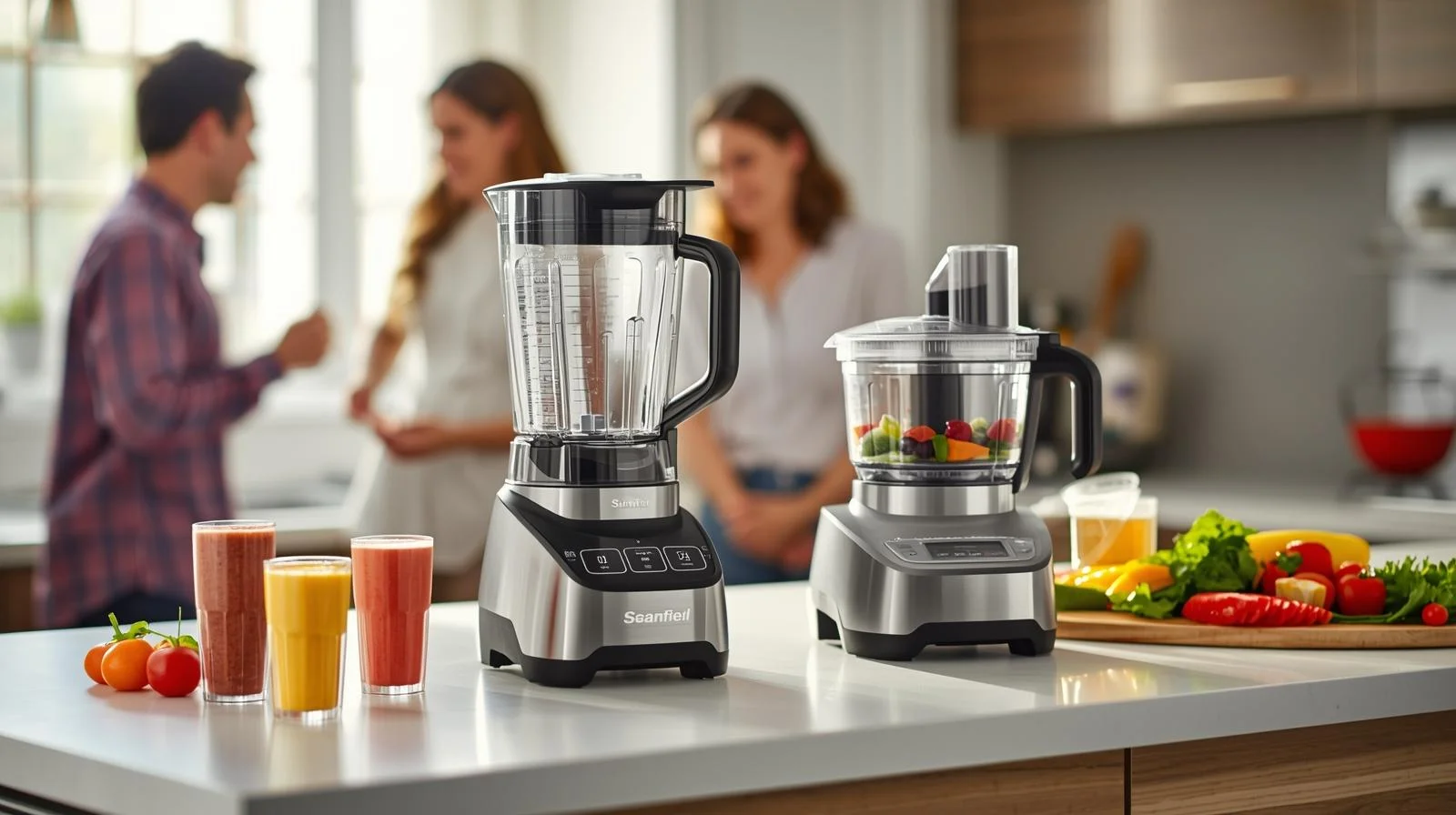
The Ninja Mega Kitchen System BL770 is more than just a food processor; it’s a versatile kitchen appliance that can blend, process food, and make dough. With its powerful motor and multiple attachments, it’s perfect for a variety of tasks.
Who Should Buy:
Home cooks who want a versatile appliance that can handle a variety of tasks, from blending to food processing.
Who Should Skip:
Those who only need a basic food processor and don’t want to invest in a larger, more complex system.
Best For: Large families, batch cooking, and complex recipes.
The Cuisinart DFP-14BCNY 14-Cup Food Processor is a classic, reliable model that’s perfect for handling large quantities of food. With its powerful motor and versatile attachments, it can chop, slice, shred, and knead with ease.
Who Should Buy:
Serious home cooks who need a powerful and reliable food processor for a variety of tasks.
Who Should Skip:
Those who only need a food processor for small tasks or have limited kitchen space.
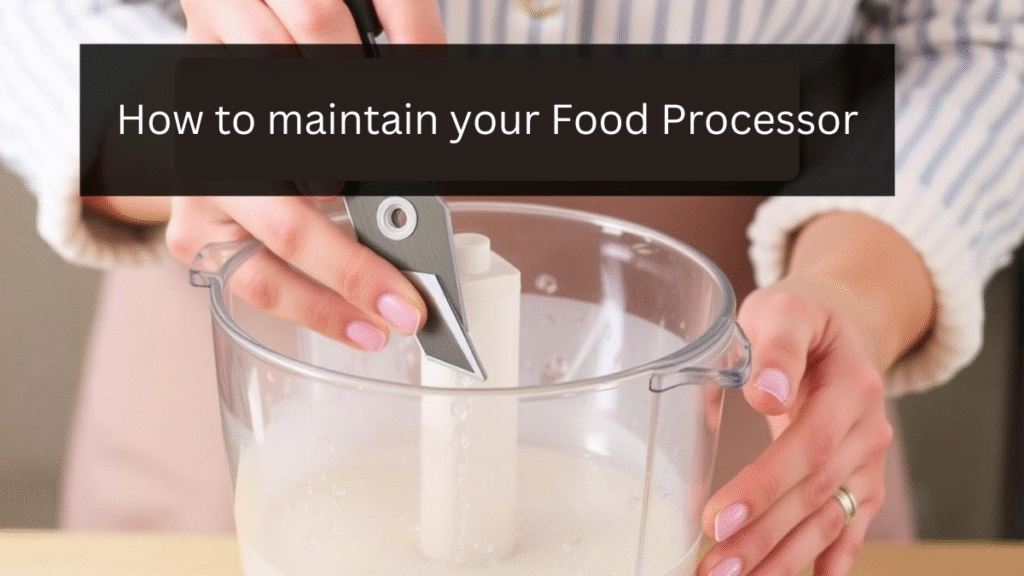
How to Maintain Your Food Processor for Long-Term Use
Proper cleaning and maintenance significantly extend the life of your food processor.
Cleaning Best Practices
Immediate Cleaning: Clean your food processor immediately after use to prevent food from drying and becoming difficult to remove.
Blade Care: Hand-wash blades with warm, soapy water and avoid the dishwasher to maintain sharpness. Always handle blades by their plastic centers to prevent cuts.
Bowl Maintenance: While most bowls are dishwasher-safe, handwashing can help prevent clouding and extend their lifespan. For stubborn stains, soak in a solution of water and baking soda.
Base Cleaning: Wipe the motorized base with a damp cloth. Never immerse the base in water or run it under a faucet.
Gasket Care: If your processor has rubber gaskets or seals, remove and clean them separately to prevent mold or odor buildup.
Operation and Storage Tips
Avoid Overloading: Respect your processor’s maximum capacity and process in batches if necessary.
Pulse Technique: Use the pulse function for better control and to prevent overprocessing or motor strain.
Cool Down Periods: Allow the motor to rest between processing large or dense ingredients to prevent overheating.
Proper Storage: Store blades and discs safely—either in the provided storage case or within the work bowl—to prevent dulling and accidents.
Cord Management: Keep the cord clean and check regularly for any damage. Never pull the processor by its cord.
Troubleshooting Common Issues
Motor Not Starting: Check that the bowl and lid are correctly locked in place; safety features prevent operation if components aren’t correctly assembled.
Uneven Chopping: If you notice uneven results, try processing smaller batches and using the pulse function rather than continuous operation.
Leaking: Check that you haven’t exceeded the maximum liquid fill line and that all gaskets are clean and properly seated.
Blade Dulling: If performance decreases, blades may need sharpening or replacement. Most manufacturers offer replacement parts.
Strange Noises: Unusual sounds may indicate that something is caught under the blade or that parts aren’t correctly assembled. Stop the machine immediately to investigate.
Pro Tip: Keep your instruction manual and warranty information in an accessible place. Many manufacturers offer replacement parts that can extend the life of your processor without requiring a completely new unit.
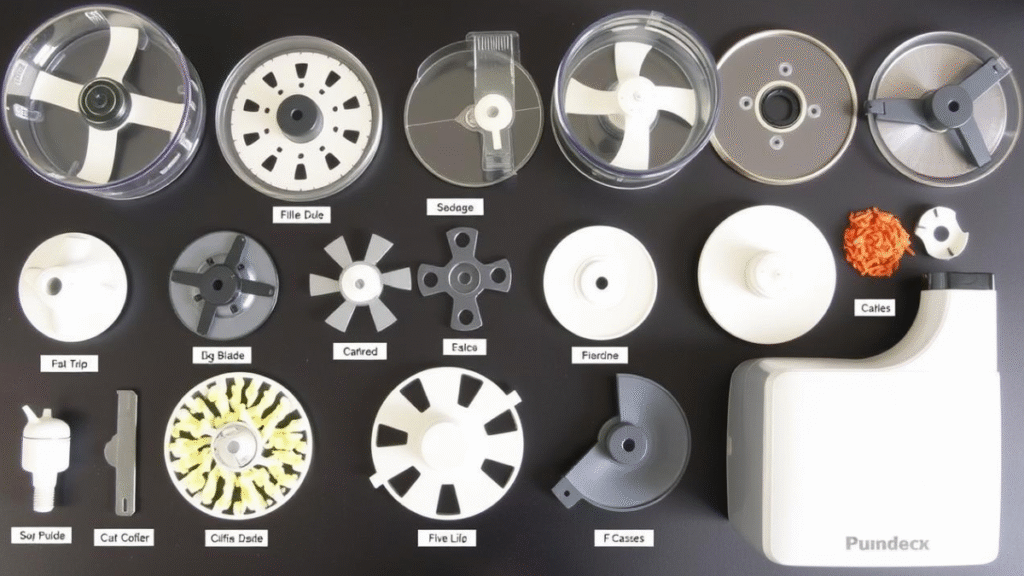
Understanding the various attachments and functions can help you get the most from your food processor.
Food Processor Buying Guide: How to Choose the Right Size & Features
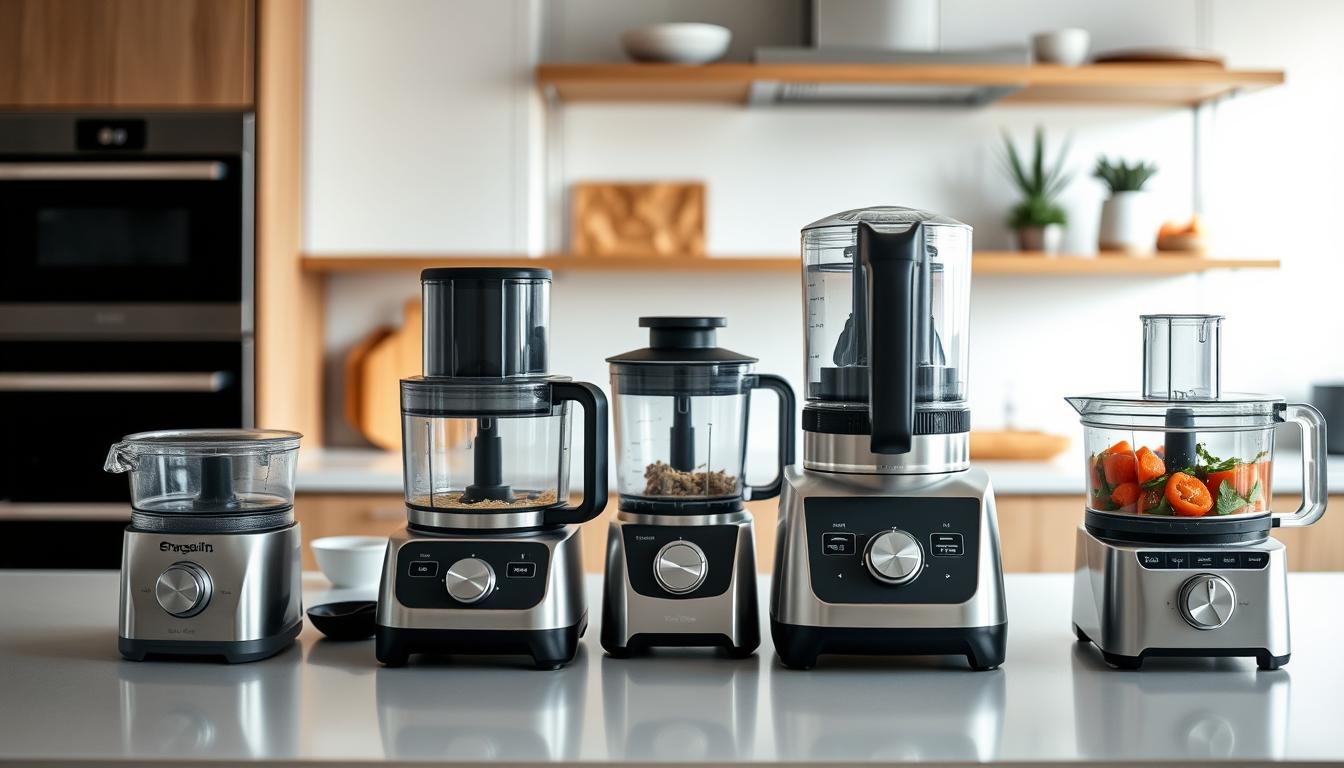
Comparing food processor features is essential to finding the right model for your needs
Size and Capacity Food processors come in various sizes, from mini choppers with 1-4 cup capacity to full-sized models that can hold 14+ cups. Consider how much food you typically prepare and how much storage space you have. Larger families or frequent entertainers will benefit from bigger models, while individuals or couples with limited counter space might prefer compact versions.
Motor Power Motor wattage directly impacts performance, especially when processing dense ingredients or kneading dough. For occasional light use, 400-500 watts may suffice. For regular use with challenging tasks, look for 600+ watts. Professional-grade models often exceed 1000 watts, providing the power needed for any kitchen task.
Blade Quality and Attachments High-quality, sharp stainless steel blades ensure efficient cutting and longer service life. Consider which attachments are included and which you’ll actually use. Standard attachments typically include an S-blade for chopping, a slicing disc, and a shredding disc. Some models offer adjustable slicing thickness, dough blades, or specialty discs for julienne cuts or french fries.
Control Options Look for models with intuitive controls that offer precise operation. Most food processors feature simple pulse and on/off buttons, while higher-end models might include multiple speed settings or preset programs for specific tasks. A responsive pulse function is essential for achieving the right texture when chopping.
Feed Tube Size A wider feed tube reduces the need to pre-cut ingredients before processing. Models with large feed tubes can accommodate whole vegetables or blocks of cheese, saving additional prep time.
Ease of Cleaning Dishwasher-safe parts make cleanup significantly easier. Look for models with fewer nooks and crannies where food can get trapped. Some high-end models feature sealed controls that can be wiped clean, preventing food from getting stuck in button crevices.
Build Quality and Warranty A sturdy base prevents the processor from “walking” across the counter during operation. Quality materials ensure durability and longevity. Look for models with at least a one-year warranty, though premium brands often offer 3-5-year or even limited-lifetime warranties.
Price Considerations Food processors range from under $50 for basic models to $400 or more for professional-grade machines. While budget options can handle simple tasks, investing in a mid-range or premium model typically provides better performance, durability, and versatility. Consider how frequently you’ll use the processor and which features matter most to you when determining your budget.
Food Processor FAQs
What size food processor do I need?
The size of the food processor you need depends on your cooking habits and your family size. A smaller food chopper (1-3 cups) is fine for small tasks and single servings. A medium-sized food processor (7-11 cups) is good for most families, while a large food processor (14+ cups) is best for batch cooking or large families.
What are the essential attachments?
The most common attachments are a chopping blade, a slicing disc, and a shredding disc. Some food processors also include a dough blade for kneading.
How do I clean a food processor?
Most food processor bowls and blades are dishwasher-safe. However, it’s always a good idea to check the manufacturer’s instructions. Be careful when handling the blades, as they are very sharp.
Can I use a food processor to make nut butter?
Yes, you can use a food processor to make nut butter, but it may take some time and patience. You may need to stop and scrape down the sides of the bowl several times.
How often should I replace the blades?
The frequency of blade replacement depends on how often you use your food processor. However, it is generally recommended to do so every one to two years.
Final Verdict: Best Food Processors in 2024 (Still Worth Buying in 2026)
Choosing the right food processor depends on your individual needs and cooking style. Here’s a summary of our top picks based on different scenarios:
For the average home cook, the Cuisinart DFP-14BCNY 14-Cup Food Processor is the best overall choice for those who regularly cook larger quantities or enjoy meal prepping. Its powerful motor, generous capacity, and versatile attachments make it a reliable and efficient workhorse in the kitchen.
For singles or couples: The KitchenAid KFC3516ER 3.5 Cup Food Chopper is a great option for smaller households that need a versatile tool for everyday tasks. It’s easy to use, clean, and store, making it perfect for quick meal prep.
For budget-conscious buyers: The BLACK+DECKER 1.5-Cup Electric Food Chopper offers basic functionality at an affordable price. It’s ideal for small chopping jobs and for those just starting to explore food processing.
Ultimately, the best food processor for you is the one that fits your specific needs and budget. We hope this comprehensive review has helped you narrow down your options and make an informed decision.