Introduction
A blender is one of the most versatile kitchen tools—perfect for smoothies, soups, sauces, and more. But after a few uses, sticky residue, lingering odors, and dull blades can turn this handy appliance into a hygiene hazard. Many people rinse their blender quickly and assume it’s clean, only to find moldy gaskets or cloudy jars later.
The problem? Food particles and oils can hide in crevices, dulling blades and affecting flavor. Over time, this buildup can also strain the motor, reducing performance and lifespan.
This guide breaks down how to clean your blender properly—step by step. It covers quick cleaning methods, deep-cleaning routines, and maintenance tips to keep your blender running like new. By the end, you’ll know exactly how to maintain your blender for better performance, safety, and taste.
If setting up a new kitchen, explore guides on organizing small appliances and choosing the best blender for smoothies.
Quick Answer (For Busy Readers)
How to clean your blender properly:
- Unplug and disassemble all removable parts.
- Rinse the jar immediately after use.
- Fill halfway with warm water and a drop of dish soap.
- Blend for 30 seconds, then rinse thoroughly.
- Wipe the base with a damp cloth—never submerge it.
- Deep clean weekly by removing the blade and gasket.
Key tip: Clean your blender right after each use to prevent residue buildup and odors.
Why Cleaning Your Blender Matters

What is blender cleaning?
Blender cleaning involves removing food residue, oils, and stains from the jar, blades, lid, and base. It ensures that every part stays hygienic and functions efficiently.
Why it matters:
- Taste: Old residue can affect the flavor of new recipes.
- Safety: Bacteria and mold thrive in moist, unclean areas.
- Performance: Clean blades blend faster and more smoothly.
- Longevity: Regular cleaning prevents motor strain and gasket wear.
When it’s needed:
- After every use, for basic cleaning.
- Weekly for deep cleaning.
- Immediately, if blending sticky or oily ingredients like nut butter or smoothies.
Keeping your blender clean isn’t just about looks—it’s about maintaining performance and ensuring every blend tastes fresh.
Cleaning a Blender Regularly: Practical Experience
Regular blender cleaning is a small habit with big payoffs. Experienced home cooks and appliance experts agree that even minor residue can dull blades and cause unpleasant odors.
Over time, this buildup can lead to overheating or leaks. Consistent cleaning ensures smoother blends, better hygiene, and a longer-lasting appliance—especially for high-performance blenders used daily.
Tools / Materials Needed
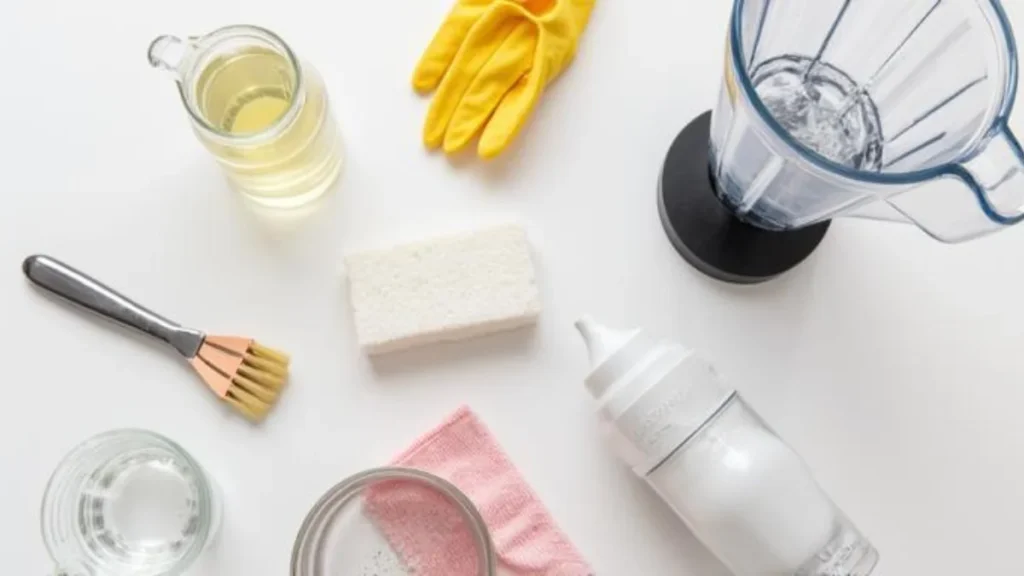
Before starting, gather these essentials:
- Mild dish soap
- Warm water
- Soft sponge or bottle brush
- Baking soda (for deep cleaning)
- White vinegar (for odor removal)
- Microfiber cloth
- Small brush or toothbrush (for gaskets and blades)
- Rubber gloves (optional for safety)
How to Clean Your Blender: Step-by-Step Guide
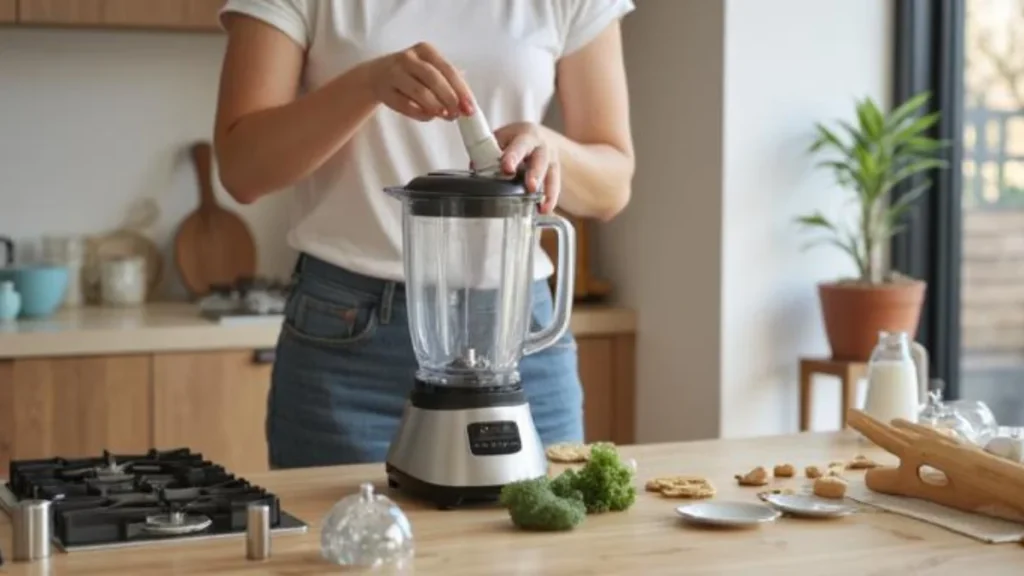
Step 1: Unplug and Disassemble
Always unplug the blender before cleaning. Remove the jar, lid, blade assembly, and gasket.
Why it matters: Prevents electrical hazards and allows thorough cleaning.
Avoid: Submerging the motor base in water—it can damage internal wiring.
Step 2: Rinse Immediately After Use
Rinse the jar and lid under warm water right after blending.
Why it matters: Prevents residue from drying and sticking.
Pro Tip: If you can’t wash it immediately, fill it with warm water to soak.
Step 3: Quick Self-Cleaning Blend
Fill the jar halfway with warm water and add a drop of dish soap. Secure the lid and blend for 30 seconds.
Why it matters: The spinning blades create a cleaning vortex that removes residue.
Avoid: Using boiling water—it can crack plastic jars.
Step 4: Rinse and Inspect
Empty the soapy water and rinse thoroughly with clean water. Check for leftover residue near the blade or gasket.
Pro Tip: Use a bottle brush for hard-to-reach corners.
Step 5: Deep Clean the Blade Assembly
Once a week, remove the blade and gasket. Wash them separately with warm, soapy water using a small brush.
Why it matters: Food particles often hide under the gasket, leading to mold.
Avoid: Using abrasive pads—they can scratch metal or plastic.
Step 6: Deodorize with Baking Soda or Vinegar
If the blender smells, fill it with a mix of 1 cup of water and 1 tablespoon of baking soda or vinegar. Blend for 30 seconds, then rinse.
Why it matters: Neutralizes odors and removes stains naturally.
Pro Tip: Let it air dry with the lid off to prevent moisture buildup.
Step 7: Clean the Exterior
Wipe the motor base with a damp microfiber cloth. For stubborn spots, use a mild cleaner on the surface only.
Avoid: Getting water into the control panel or motor vents.
Step 8: Dry Completely
Air-dry all parts before reassembling. Moisture trapped under the gasket can cause mold.
Pro Tip: Store the blender with the lid off to allow airflow.
Step 9: Reassemble and Store
Once dry, reattach the blade, gasket, and lid. Store the blender in a clean, dry place.
Why it matters: Proper storage prevents dust and odor buildup.
Common Mistakes
1. Leaving the blender dirty overnight
Residue hardens and becomes difficult to remove. Always rinse immediately.
2. Submerging the motor base
This can cause electrical damage. Only wipe the exterior with a damp cloth.
3. Using harsh cleaners or abrasives
They can scratch the jar and dull the blades. Stick to mild soap and soft sponges.
4. Ignoring the gasket
The rubber ring under the blade traps food and moisture. Remove and clean it weekly.
5. Reassembling while wet
Moisture can lead to mold or rust. Always dry parts completely before storing.
Maintenance / Frequency Guide
Daily:
- Rinse and self-clean after each use.
- Wipe the exterior.
Weekly:
- Deep clean the blade, gasket, and lid.
- Deodorize with baking soda or vinegar.
Monthly:
- Inspect for wear or cracks.
- Tighten loose parts and check seals.
Consistent maintenance ensures smooth blending and extends the life of the appliance.
How to Clean Your Blender: User Experience

Glass vs. Plastic Jars:
Glass jars resist stains but can chip if mishandled. Plastic jars are lighter but prone to cloudiness—use baking soda to restore clarity.
Personal Blenders:
Smaller models like smoothie blenders often have detachable cups. Clean immediately after use to prevent residue buildup in narrow spaces.
High-Performance Blenders:
Models like Vitamix or Ninja have stronger motors and sharper blades. Follow manufacturer instructions for safe disassembly and cleaning.
Immersion Blenders:
Detach the blending arm and wash it separately. Never immerse the motor handle.
Commercial Blenders:
Used frequently, they require daily deep cleaning and regular inspection for gasket wear.
For related maintenance, check out how to clean an air fryer or season a Dutch oven to keep all appliances in top shape.
How to Clean Your Blender: FAQs
Can I use water to clean a blender?
Yes, but avoid soaking the motor base. Use warm water and dish soap to clean the jar, then rinse thoroughly.
How do I remove cloudy stains from a plastic blender jar?
Mix baking soda with water to make a paste, scrub gently, then rinse. This removes mineral deposits and restores clarity.
Is it safe to put blender parts in the dishwasher?
Most jars, lids, and blades are top-rack dishwasher safe, but always check the manufacturer’s instructions.
How do I clean under the blender blades safely?
Use a small brush or toothbrush. Avoid reaching in with fingers to prevent cuts.
What should I do if my blender smells bad?
Blend a vinegar-and-water mixture, rinse, and air-dry. Persistent odors may indicate trapped residue under the gasket.
How often should I replace the gasket or blade?
Replace every 6–12 months or sooner if you notice leaks, rust, or dull blades.
TL;DR Summary
How to Clean Your Blender Properly
- Rinse and clean your blender immediately after use.
- Use warm water and dish soap for quick cleaning.
- Deep clean weekly—remove the blade and gasket.
- Never submerge the motor base.
- Dry completely before reassembling.
Conclusion

Learning how to clean your blender properly ensures every smoothie, sauce, or soup tastes fresh and safe. Regular cleaning prevents buildup, extends the appliance’s lifespan, and keeps performance consistent.
A few minutes of care after each use can save hours of scrubbing later. With these easy maintenance tips, any blender—whether personal, high-performance, or commercial—can stay spotless, efficient, and ready for the next recipe.
If you’re planning a new kitchen or upgrading your current one, our guide to must-have kitchen appliances will help you make an informed decision and avoid unnecessary purchases.