


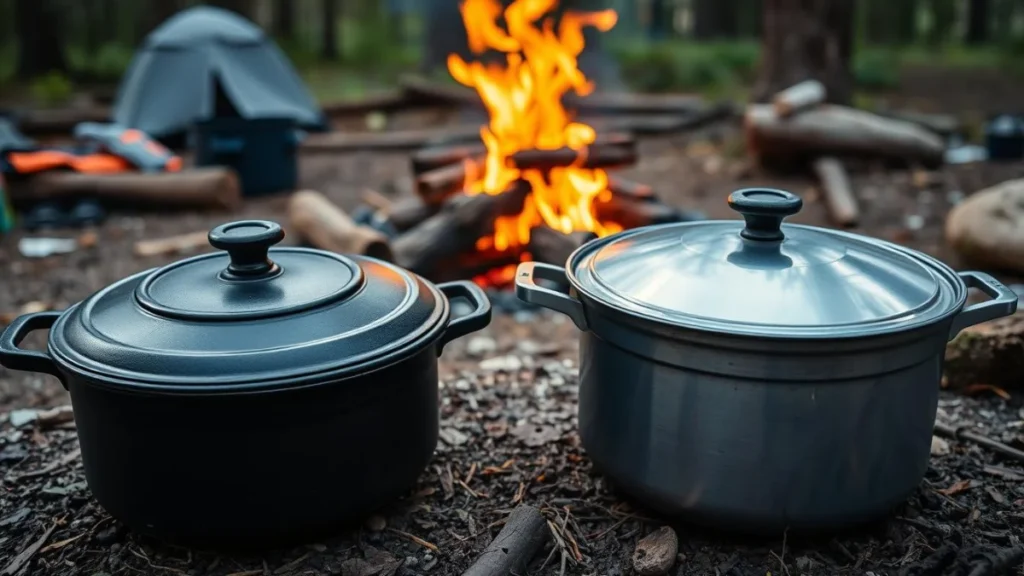
Camp Oven vs Dutch Oven: Understanding the Difference
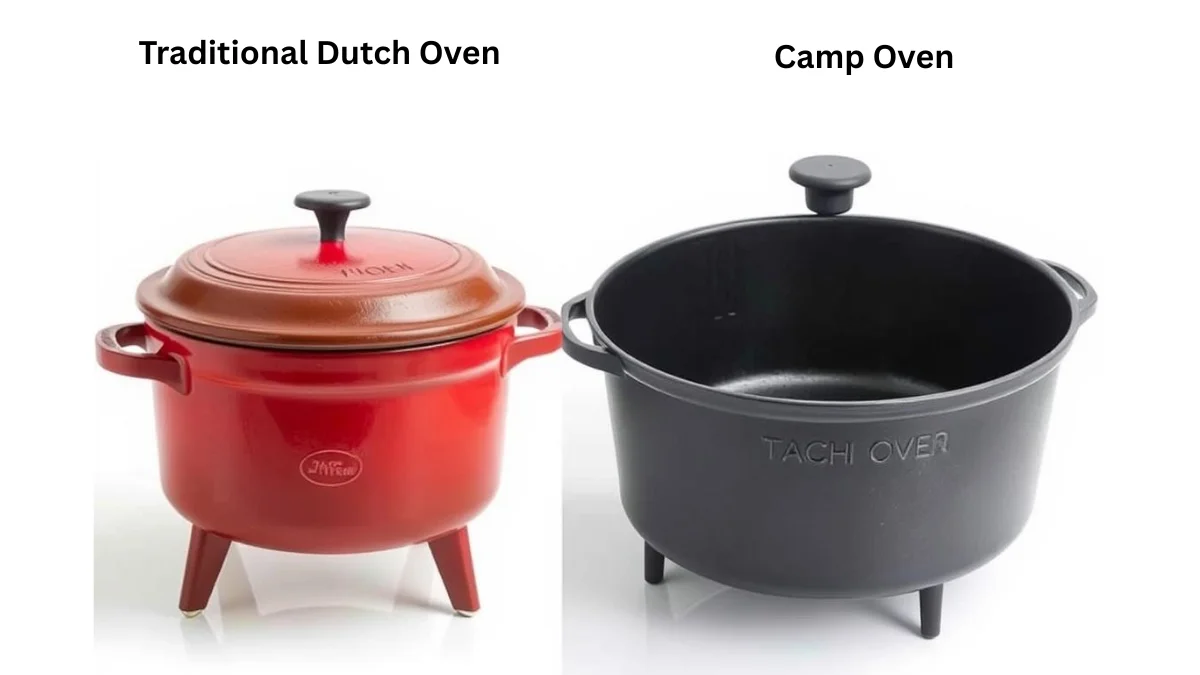
While the terms are often used interchangeably, there are subtle distinctions between camp ovens and Dutch ovens that every outdoor enthusiast should understand.
Dutch Oven Characteristics
- Traditionally made of cast iron with a tight-fitting lid
- Often has a flat bottom and flat lid for home use
- Can be used both indoors and outdoors
- Available in enameled versions for home kitchens
- Versatile for various cooking methods, including baking, roasting, and simmering
Camp Oven Characteristics
- Specifically designed for outdoor cooking
- Features legs to elevate it over coals
- Rimmed lid to hold coals on top for even heating
- Made of materials that can withstand direct fire exposure
- Often includes a bail handle for hanging over a fire
The primary distinction lies in design features that make camp ovens more suitable for outdoor cooking over open flames or coals. However, many campers use traditional Dutch ovens outdoors with great success, especially when cooking on a camp stove rather than directly over a fire.

Cast Iron vs Aluminum Dutch Oven: Material Comparison
The material of your Dutch oven significantly impacts its performance in a camping environment. Let’s examine the key differences between cast iron and aluminum to determine which might be better for your outdoor cooking needs.
Cast Iron Advantages
- Superior heat retention and distribution
- Exceptional durability – can last generations
- Develops a natural non-stick surface when properly seasoned
- Can withstand extremely high temperatures
- Adds dietary iron to food (beneficial for some)
- Performs excellently in windy conditions
Cast Iron Disadvantages
- Significantly heavier (12″ oven weighs about 18 lbs)
- Requires proper seasoning and maintenance
- It can rust if not properly cared for
- Heats slowly and unevenly initially
- Reacts with acidic foods (tomatoes, citrus)
- Requires more careful cleaning
Aluminum Advantages
- Significantly lighter weight (about 1/3 the weight of cast iron)
- Heats up quickly and more evenly
- Does not rust
- Easier to clean and maintain
- More portable for backpacking or longer hikes
- Cools down faster after cooking
Aluminum Disadvantages
- Poor heat retention compared to cast iron
- Lower maximum temperature tolerance
- Can develop hot spots in windy conditions
- More prone to warping and damage
- Raw aluminum can react with acidic foods
- Typically doesn’t last as long as cast iron
The choice between cast iron and aluminum often comes down to your specific camping style. For car camping, where weight isn’t a significant concern, cast iron offers superior cooking performance. For backpacking or situations where portability is crucial, aluminum provides a much lighter alternative with decent cooking capabilities.

Enameled vs Traditional Cast Iron Dutch Ovens
Beyond the basic material choice, cast-iron Dutch ovens come in two main varieties: traditional (raw) cast iron and enameled cast iron. Each offers distinct advantages for different cooking scenarios.
| Feature | Traditional Cast Iron | Enameled Cast Iron |
| Cooking Surface | Seasoned layer of carbonized oil | Glass-based enamel coating |
| Maintenance | Requires regular seasoning | No seasoning needed |
| Acidic Foods | Can react with acidic ingredients | Non-reactive with all foods |
| Cleaning | No soap, minimal water | Soap and water are safe |
| Durability | Extremely durable, can last generations | Enamel can chip or crack |
| Camping Suitability | Excellent for direct fire cooking | Better for RV or controlled heat sources |
| Cost | More affordable | Significantly more expensive |
For camping purposes, traditional cast iron typically performs better in rugged outdoor conditions. The enamel coating on enameled Dutch ovens can chip when exposed to extreme temperature changes or when cooking over an open fire. However, enameled versions excel in RV camping where you have access to a stove and want the convenience of easier cleaning.
The “Three Up, Three Down” Rule for Dutch Oven Cooking
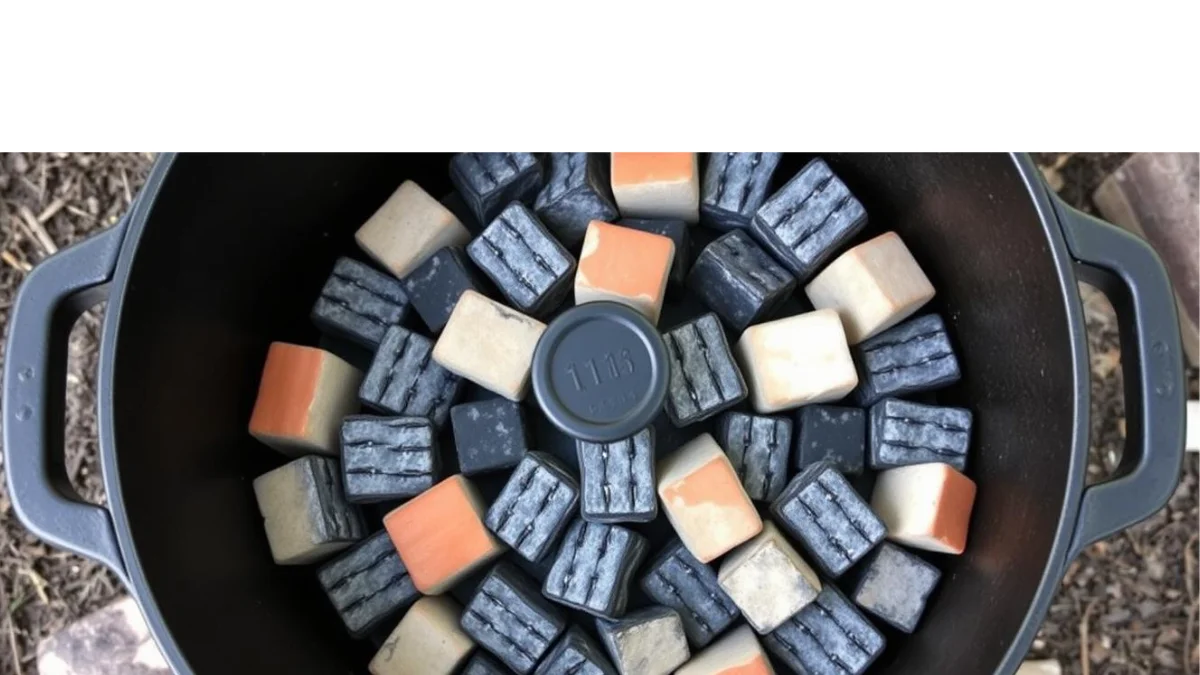
One of the most valuable techniques for achieving consistent temperatures when cooking with Dutch ovens outdoors is the “Three Up, Three Down” rule. This simple guideline helps you determine how many charcoal briquettes to use for optimal cooking results.
The Three Up, Three Down Formula:
For a temperature of approximately 325°F (165°C):
- Bottom heat: Take the diameter of your Dutch oven in inches and subtract 3
- Top heat: Take the diameter of your Dutch oven in inches and add 3
| Dutch Oven Size | Bottom Briquettes | Top Briquettes | Total Briquettes |
| 8-inch | 5 | 11 | 16 |
| 10-inch | 7 | 13 | 20 |
| 12-inch | 9 | 15 | 24 |
| 14-inch | 11 | 17 | 28 |
| 16-inch | 13 | 19 | 32 |
Adjusting for Different Cooking Methods
The distribution of briquettes should be adjusted based on what you’re cooking:
- Baking (breads, cakes): More heat on top (approximately 3/4) than bottom (1/4)
- Roasting (meats): Equal heat distribution top and bottom
- Simmering/Stewing: More heat on the bottom (approximately 3/4) than the top (1/4)
- Frying: All heat on bottom, no coals on lid
Remember that environmental factors like wind, humidity, and outside temperature will affect your cooking temperature. In windy conditions, cast iron’s superior heat retention gives it a significant advantage over aluminum, which cools quickly.
Temperature Considerations: What Damages Dutch Ovens?
Understanding temperature limitations is crucial to preserving your Dutch oven’s lifespan, especially when camping, where heat control can be challenging.
Cast Iron Temperature Limits
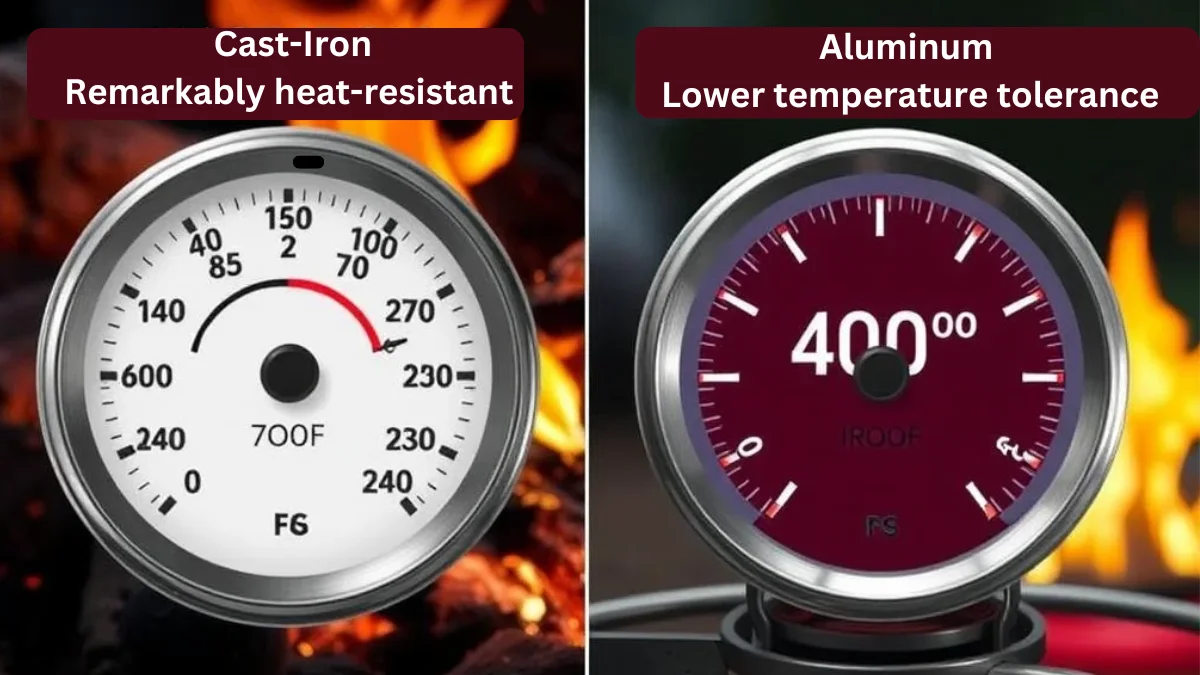
Cast iron is remarkably heat-resistant but isn’t indestructible. Here’s what you need to know:
- Cast iron can withstand temperatures up to approximately 700°F (370°C) before damage may occur
- Rapid temperature changes can cause thermal shock, potentially cracking the iron
- Heating an empty cast-iron Dutch oven to high temperatures can damage the seasoning
- Placing a cold Dutch oven directly on hot coals can cause cracking
Aluminum Temperature Limits
Aluminum has significantly lower temperature tolerance:
- Aluminum begins to soften around 400°F (204°C)
- The melting point is approximately 1,220°F (660°C), but structural integrity is compromised at much lower temperatures
- Aluminum Dutch ovens should generally not be used directly over open flames
- Best used with controlled heat sources like camp stoves or carefully managed coals
Temperature Safety Tips
To prevent damage to either type of Dutch oven:
- Always preheat gradually
- Never place a cold Dutch oven directly on hot coals or in hot ashes
- Avoid empty heating – always have food or liquid in the pot
- Allow the Dutch oven to cool naturally rather than quenching it with cold water
- Use fewer coals with aluminum Dutch ovens
Cast iron’s superior temperature tolerance makes it the preferred choice for campfire cooking, while aluminum is better suited for controlled heat sources like camp stoves or carefully managed coals.
How to Use Cast Iron and Aluminum Dutch Ovens While Camping
Proper usage techniques differ between cast-iron and aluminum Dutch ovens. Following these guidelines will help you get the most out of your camping cookware regardless of which material you choose.
Cast Iron Dutch Oven Usage
- Preparation: Ensure your cast iron is seasoned correctly before your trip
- Preheating: Heat gradually to prevent thermal shock
- Cooking: Use the Three Up, Three Down rule for charcoal placement
- Stirring: Use wooden or silicone utensils to protect the seasoning
- Checking: Lift the lid carefully to avoid ash falling into the food
- Cleaning: Scrape food residue, rinse with hot water (no soap), dry thoroughly
- Storage: Apply a thin coat of oil, store with the lid slightly ajar
Aluminum Dutch Oven Usage
- Preparation: No seasoning required, but can be lightly oiled
- Preheating: Heats quickly, so monitor closely to prevent overheating
- Cooking: Use fewer coals than with cast iron (about 25% less)
- Stirring: Any utensils are fine, but avoid sharp metal that could scratch
- Checking: Monitor more frequently as temperatures fluctuate faster
- Cleaning: Wash with mild soap and water, dry thoroughly
- Storage: No special requirements, but keep dry
Adapting to Weather Conditions
Environmental factors significantly impact Dutch oven cooking, with different materials responding differently:
| Condition | Cast Iron Response | Aluminum Response | Adaptation Needed |
| Windy | Maintains heat well | Cools quickly | Use a windbreak, add more coals for aluminum |
| Cold Weather | Takes longer to heat | Heats faster but loses heat | Add 2-3 extra coals, and insulate the bottom from the cold ground |
| Rainy/Humid | Prone to rusting | Unaffected | Keep the cast iron oiled, use a rain cover |
| High Altitude | Retains heat well | Requires more heat | Longer cooking times, add 1-2 extra coals per 2,000 ft elevation |
Cast-iron Dutch ovens generally perform better in challenging weather conditions due to their superior heat retention. In contrast, aluminum ovens excel when weight is a primary concern and cooking conditions are more controlled.
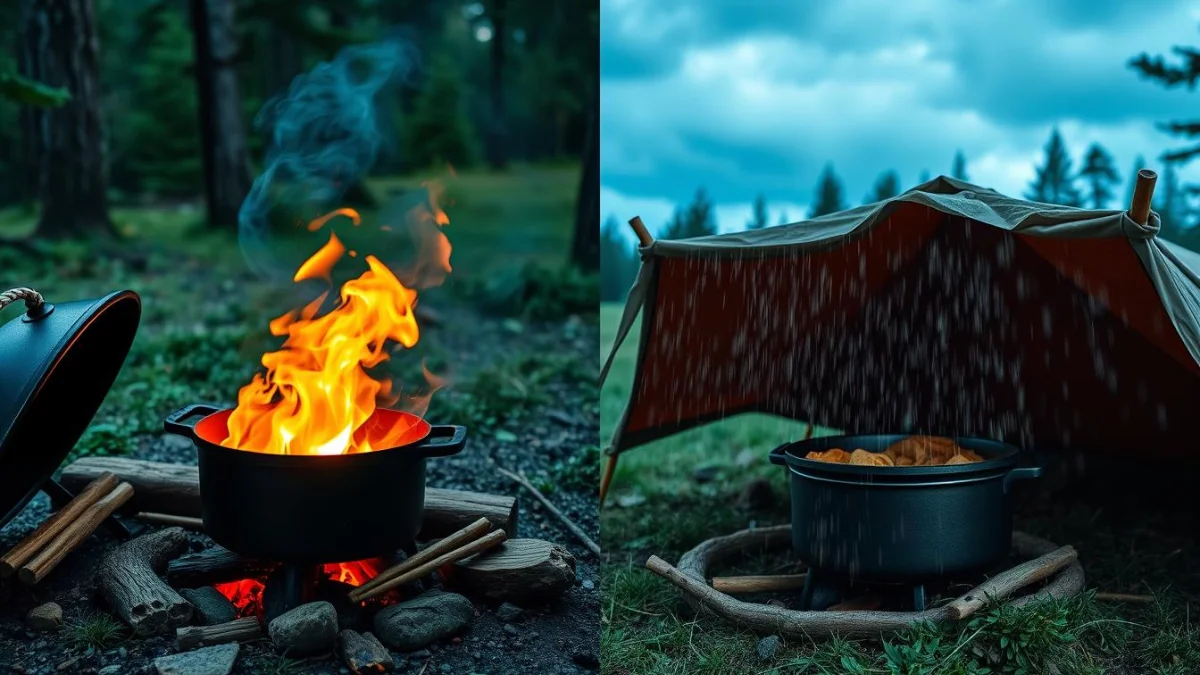
Food Restrictions: What Not to Cook in Different Dutch Ovens
Certain foods can react with different Dutch oven materials, affecting both the flavor of your meal and the longevity of your cookware. Understanding these limitations will help you plan your camping menu appropriately.
Foods to Avoid in Traditional Cast Iron
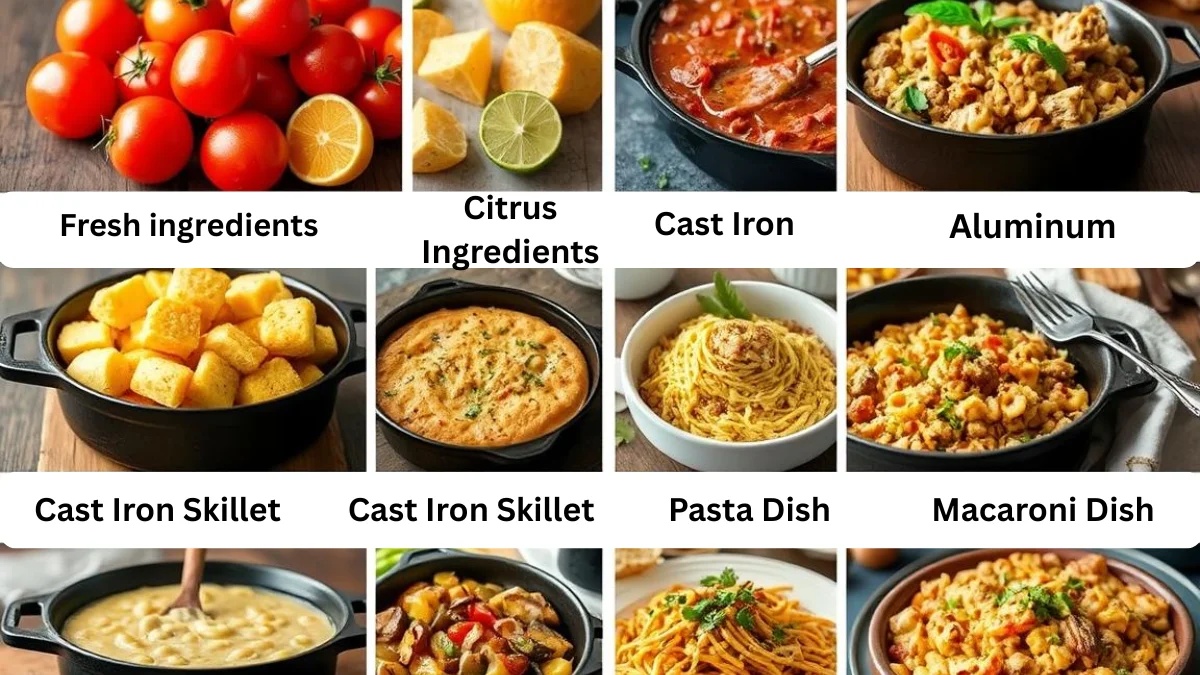
- Acidic Foods: Tomatoes, citrus, vinegar, wine, and other acidic ingredients can strip seasoning and create a metallic taste
- Delicate Fish: Can stick and break apart if the seasoning isn’t perfect
- Strong-Flavored Foods: Garlic, fish, and other intense flavors may linger in the seasoning
- Sticky Desserts: Without perfect seasoning, it can be difficult to remove cleanly
Foods to Avoid in Aluminum Dutch Ovens
- Acidic Foods: Can react with raw aluminum, creating off-flavors and potentially leaching aluminum into food
- Slow-Cooked Dishes: Due to poorer heat retention, long-simmering stews may cook unevenly
- High-Heat Searing: May damage aluminum at very high temperatures
Best Foods for Each Material
Ideal for Cast Iron
- Cornbread and biscuits
- Stews and chilis (if not tomato-based)
- Roasted meats
- Deep-dish pizzas
- Cobblers and crisps
- Breakfast hash
Ideal for Aluminum
- Quick-cooking rice dishes
- Pancakes and eggs
- Soups (non-acidic)
- Stir-fries
- Steamed vegetables
- Simple baked goods
Note on Anodized Aluminum
Anodized aluminum Dutch ovens have a protective oxide layer that makes them non-reactive with acidic foods. If you choose an aluminum Dutch oven, look for anodized versions for greater versatility in what you can cook.
Enameled cast-iron Dutch ovens offer the best of both worlds, as they can handle any food without reactivity concerns. However, they’re typically heavier and more expensive than both traditional cast iron and aluminum options.
Best Dutch Ovens for Camping: Top Picks by Material
After comparing the features and performance of numerous Dutch ovens, we’ve selected the top performers in each material category to help you find the perfect option for your camping needs.

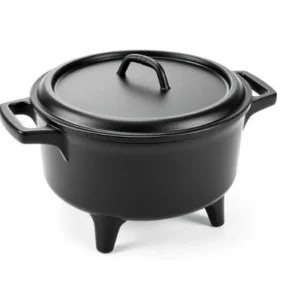
Best Cast Iron: Lodge 12-Inch Deep Camp Dutch Oven
The Lodge Deep Camp Dutch Oven represents the gold standard in traditional cast iron cooking. Made in the USA, this 12-inch model features legs to elevate it over coals, a flanged lid that holds coals for top-heat cooking, and a bail handle for hanging over a fire.
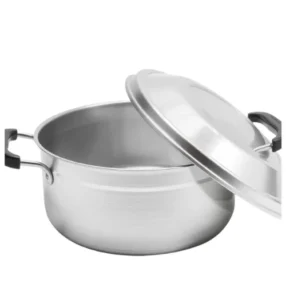
Best Aluminum: GSI Outdoors Hard Anodized Dutch Oven
The GSI Outdoors Hard Anodized Dutch Oven offers exceptional performance in a lightweight package. At just 4.7 pounds (for the 12-inch model), it’s less than one-third the weight of comparable cast iron models, making it ideal for backpacking and situations where weight is a concern.
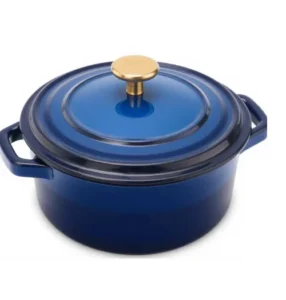
Best Enameled: Staub Cast Iron Round Cocotte
For RV camping or situations where you have access to a stove, the Staub Cast Iron Round Cocotte offers exceptional performance with the convenience of an enameled finish. This premium Dutch oven features a unique black matte enamel interior that’s more resistant to chipping and scratching than lighter-colored alternatives.
Each of these Dutch ovens excels in its category, but your specific camping style and needs should guide your final selection. Consider factors like weight, cooking performance, and maintenance requirements when making your choice.

Key Takeaways: Cast Iron vs Aluminum Dutch Oven Camping
Material Selection Guide
- Choose cast iron when: Car camping, cooking over campfires, preparing foods that benefit from even heat, cooking in windy conditions, and prioritizing durability over weight
- Choose aluminum when: Backpacking or hiking to your campsite, weight is a primary concern, cooking on controlled heat sources, and quick heating/cooling is desired
- Choose enameled cast iron when: RV camping with access to a stove, cooking acidic foods, ease of cleaning is important, and you don’t need to cook directly over a campfire
Temperature Management
Regardless of which material you choose, proper temperature management is crucial for successful Dutch oven cooking while camping:
- Use the Three Up, Three Down rule as a starting point for charcoal placement
- Adjust for environmental conditions (wind, temperature, altitude)
- Respect the temperature limitations of your chosen material
- Preheat gradually to prevent damage
- Allow for natural cooling rather than rapid temperature changes
Maintenance Matters
Proper care extends the life of your Dutch oven and improves cooking performance:
- Clean according to material requirements (no soap for traditional cast iron)
- Dry thoroughly after cleaning to prevent rust (especially important for cast iron)
- Store with proper ventilation to prevent moisture buildup
- Regularly check for damage, especially with aluminum models
- Re-season cast iron as needed to maintain non-stick properties
By understanding the strengths and limitations of each material, you can select the Dutch oven that best aligns with your camping style, cooking preferences, and outdoor conditions.
Conclusion: Making Your Choice
When deciding between cast iron and aluminum Dutch ovens for camping, there’s no one-size-fits-all answer. Your ideal choice depends on your specific camping style, cooking preferences, and practical considerations like transportation and storage.
Cast iron Dutch ovens offer unmatched durability, superior heat retention, and excellent cooking performance, particularly for traditional camping recipes and cooking over open fires. However, their significant weight makes them better suited for car camping or situations where you don’t need to carry your equipment far.
Aluminum Dutch ovens provide a lightweight alternative that still delivers good cooking performance, especially with controlled heat sources. Their quick heating and cooling properties can be advantageous in certain situations, and they’re much easier to transport for backpacking or hiking trips.
Enameled cast iron offers a compromise with excellent cooking performance and easier maintenance, but at a higher price point and with limitations for direct-fire cooking.
Whichever material you choose, proper use and maintenance will ensure your Dutch oven delivers delicious meals on countless camping adventures for years to come.
FAQs About Cast Iron vs Aluminum Dutch Oven Camping
Is cast iron or aluminum better for Dutch oven camping?
The better material depends on your specific needs. Cast iron excels in heat retention, durability, and cooking performance, making it ideal for car camping and traditional campfire cooking. Aluminum is significantly lighter, making it better for backpacking or situations where weight is a primary concern. Consider your camping style, cooking preferences, and transportation requirements when making your choice.
How much lighter is an aluminum Dutch oven compared to a cast-iron one?
An aluminum Dutch oven typically weighs about one-third to one-fourth the weight of a comparable cast iron model. For example, a 12-inch cast iron Dutch oven might weigh 18-20 pounds, while an aluminum version of the same size would weigh approximately 4-7 pounds. This significant weight difference makes aluminum much more portable for backpacking or hiking trips.
Can I use my enameled Dutch oven over a campfire?
It’s generally not recommended to use enameled Dutch ovens directly over campfires. The extreme and uneven heat can cause the enamel coating to crack or chip. Enameled Dutch ovens are better suited for use on camp stoves, RV stoves, or with very carefully managed coals. If you plan to cook directly over a campfire, traditional cast iron is a better choice.
How do I prevent my cast-iron Dutch oven from rusting while camping?
To prevent rust, ensure your cast-iron Dutch oven is properly seasoned before your trip. After each use, clean it without soap, dry it thoroughly (heating it briefly can help), and apply a thin coat of oil. Store it with the lid slightly ajar to allow airflow. In humid camping conditions, placing a paper towel inside can help absorb moisture. Never leave it wet or exposed to rain.
Can I cook acidic foods in an aluminum Dutch oven?
Raw aluminum can react with acidic foods like tomatoes, citrus, or vinegar, potentially causing off-flavors and leaching aluminum into your food. However, anodized aluminum Dutch ovens have a protective oxide layer that makes them non-reactive with acidic ingredients. If you frequently cook acidic foods, choose either anodized aluminum or enameled cast iron for the best results.
How long will each type of Dutch oven last?
With proper care, cast-iron Dutch ovens can last for generations—many families pass them down as heirlooms. Quality cast iron can easily last 50+ years with proper maintenance. Aluminum Dutch ovens typically have a shorter lifespan of 5-10 years with regular use, as they’re more prone to warping and damage. Enameled cast iron can last decades, though the enamel coating may eventually chip or crack with heavy use.