


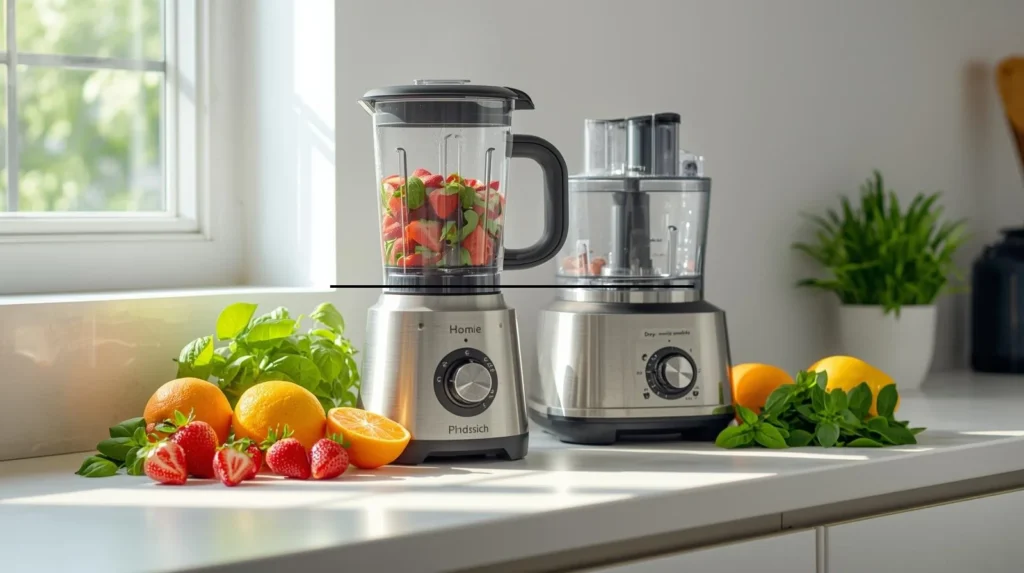
Choosing the right kitchen appliance can completely change the way you cook. If you’ve ever wondered whether a blender or a food processor deserves a spot on your countertop, you’re not alone. Both appliances promise faster prep, better textures, and easier cooking—but they serve very different purposes.
In this complete blender vs food processor guide, we break down the key differences, pros and cons, real-life uses, and smart buying tips to help you pick the perfect appliance for your cooking style, budget, and kitchen space.
Blender vs Food Processor – What’s the Real Difference?

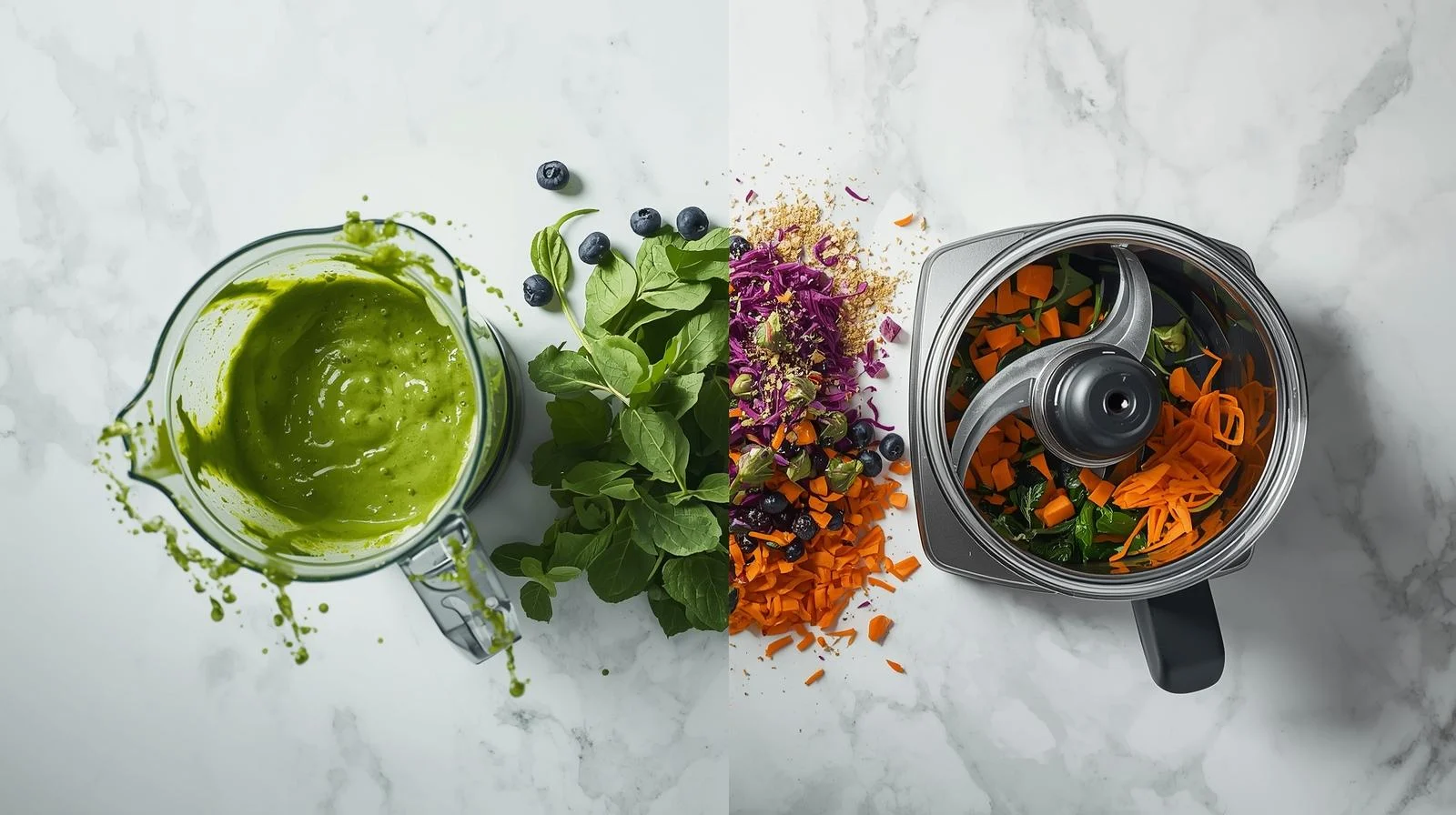
The key difference lies in their design and how they process food.
- Blenders: Designed for liquids. They have a tall, narrow container with blades at the bottom. Blenders excel at creating smooth mixtures like smoothies, soups, and sauces.
- Food Processors: These have a wide, shallow bowl and use interchangeable blades and discs. They’re masters of chopping, slicing, shredding, and dicing solid foods. Think coleslaw, salsa, or even pie crust.
| Blender: A tall and narrow container with blades at the bottom. Ideal for liquids. Creates smooth mixtures | Food Processor Wide and shallow bowl Interchangeable blades and discs Ideal for solids Chops, slices, shreds, and dices |
Blender Pros and Cons: Is It Right for You?
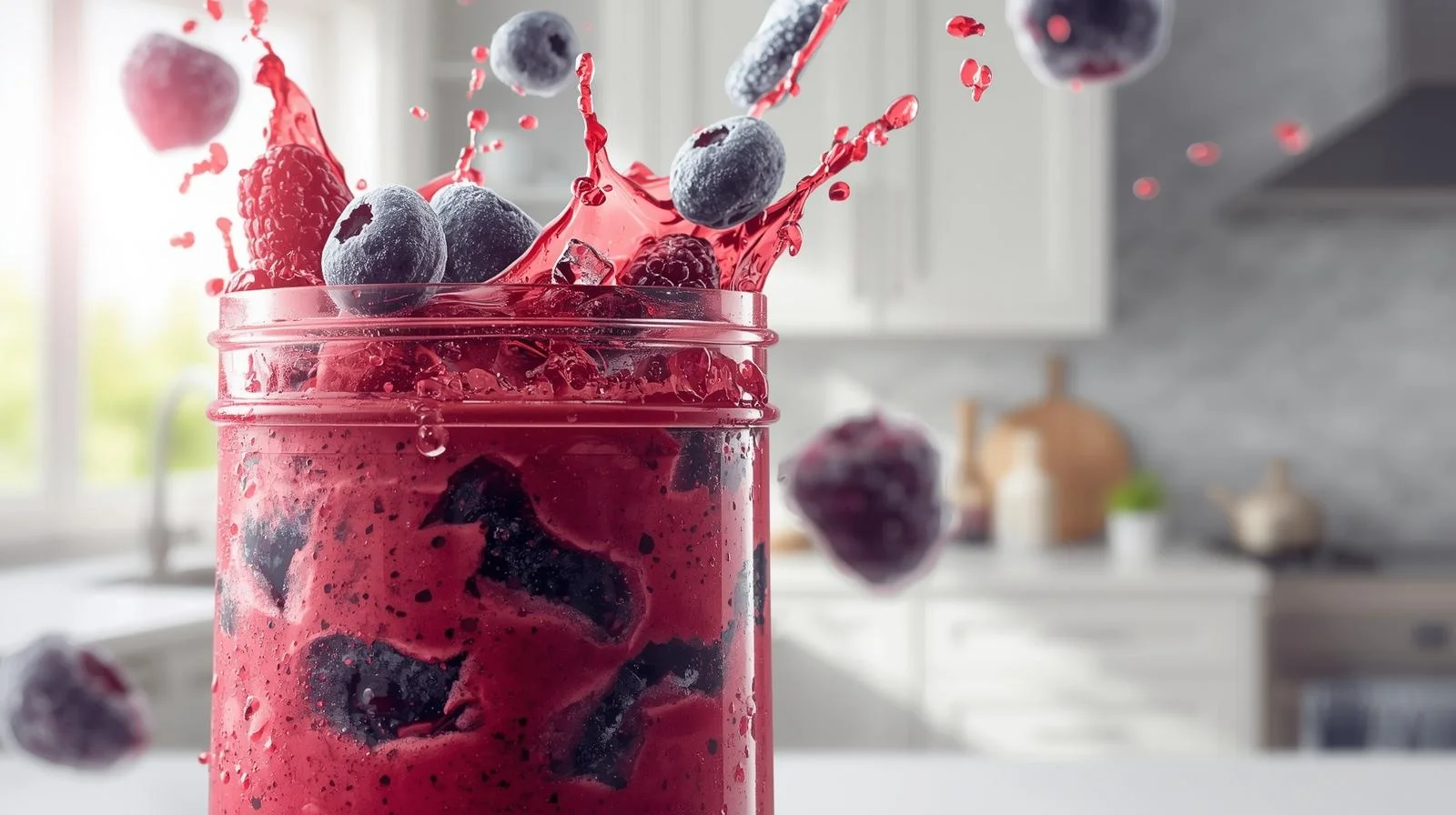
Let’s dive deeper into the blender. What’s it good at, and where does it fall short?
Pros:
- Smooth Operator: Blenders are unbeatable for creating silky-smooth textures. Smoothies, pureed soups, and creamy sauces are their specialty.
- Liquid Masters: Blenders handle liquids like a champ. They can easily crush ice, blend frozen fruit, and mix drinks without much effort.
- Relatively Affordable: Basic blenders can be quite budget-friendly, making them accessible to most home cooks.
- Easy to Clean: Many blenders have self-cleaning functions or are easy to disassemble for quick washing.
Cons:
- Limited Solid Food Processing: Blenders struggle with solid foods. They tend to puree rather than chop or slice, and can easily get bogged down.
- Not Ideal for Dough: While some high-end blenders can handle dough, most are not powerful enough to knead it properly.
- Can be Messy: Splattering is common, especially with less powerful blenders or when blending hot liquids.
Food Processor Pros and Cons: What Makes It Powerful?
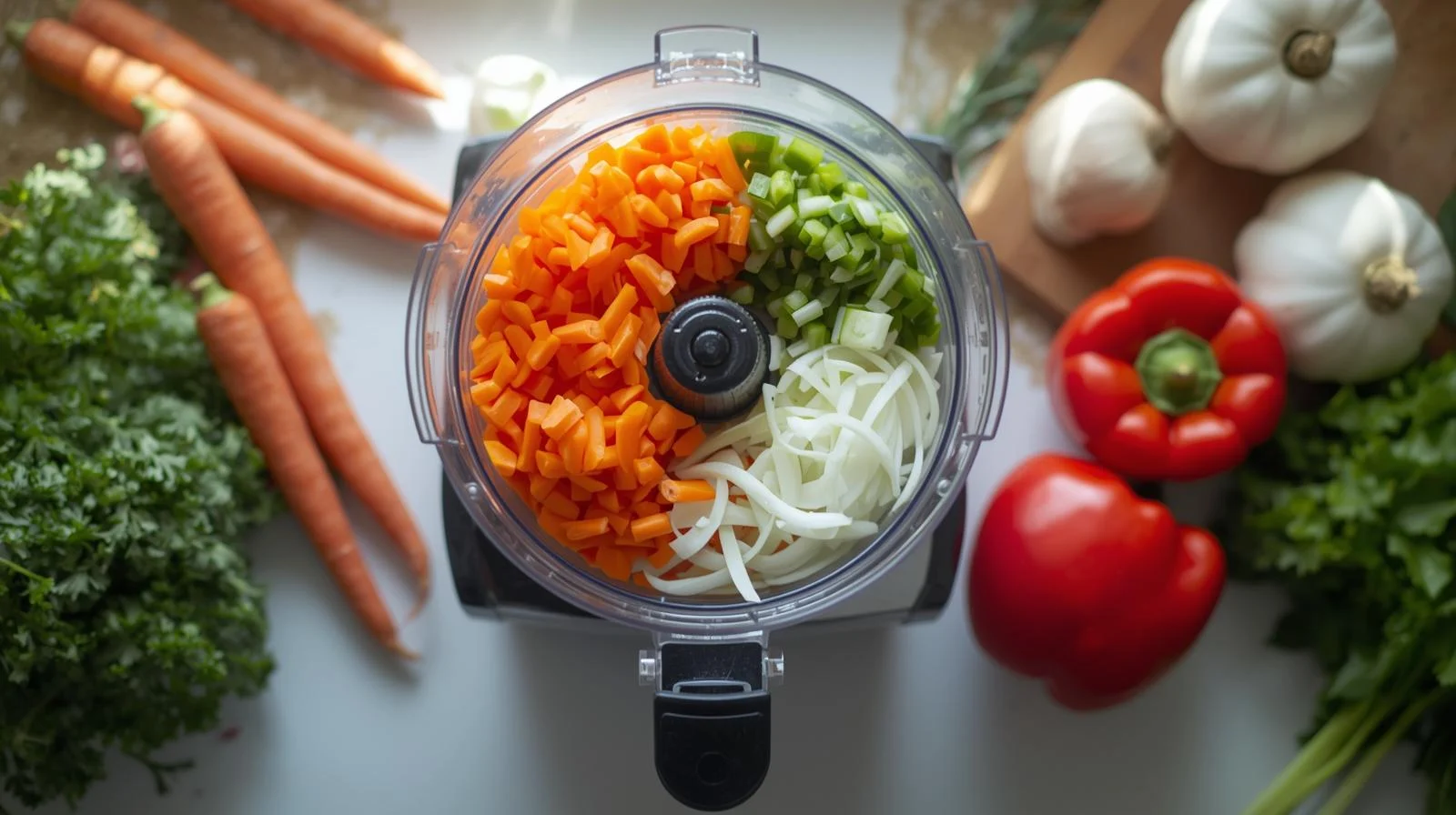
Now, let’s turn our attention to the food processor. What does it bring to the table?
Pros:
- Versatile Chopping: Food processors excel at chopping, slicing, shredding, and dicing a wide range of solid foods. Think vegetables, nuts, cheese, and even meat.
- Dough Dynamo: Food processors can make quick work of pie crusts, cookie doughs, and even some bread doughs.
- Large Capacity: The wide bowl allows you to process larger quantities of food at once, saving you time and effort.
- Multiple Attachments: The interchangeable blades and discs offer a wide range of processing options.
Cons:
- Not for Smoothies: Food processors are not designed for creating smooth textures. They tend to leave food with a coarser consistency.
- Liquid Limitations: While they can handle some liquids, food processors are not ideal for large quantities. They can leak or create uneven mixtures.
- More Expensive: Food processors typically cost more than basic blenders.
- More Difficult to Clean: All those blades and parts can make cleanup a bit of a chore.
When Should You Use a Blender? Best Everyday Uses
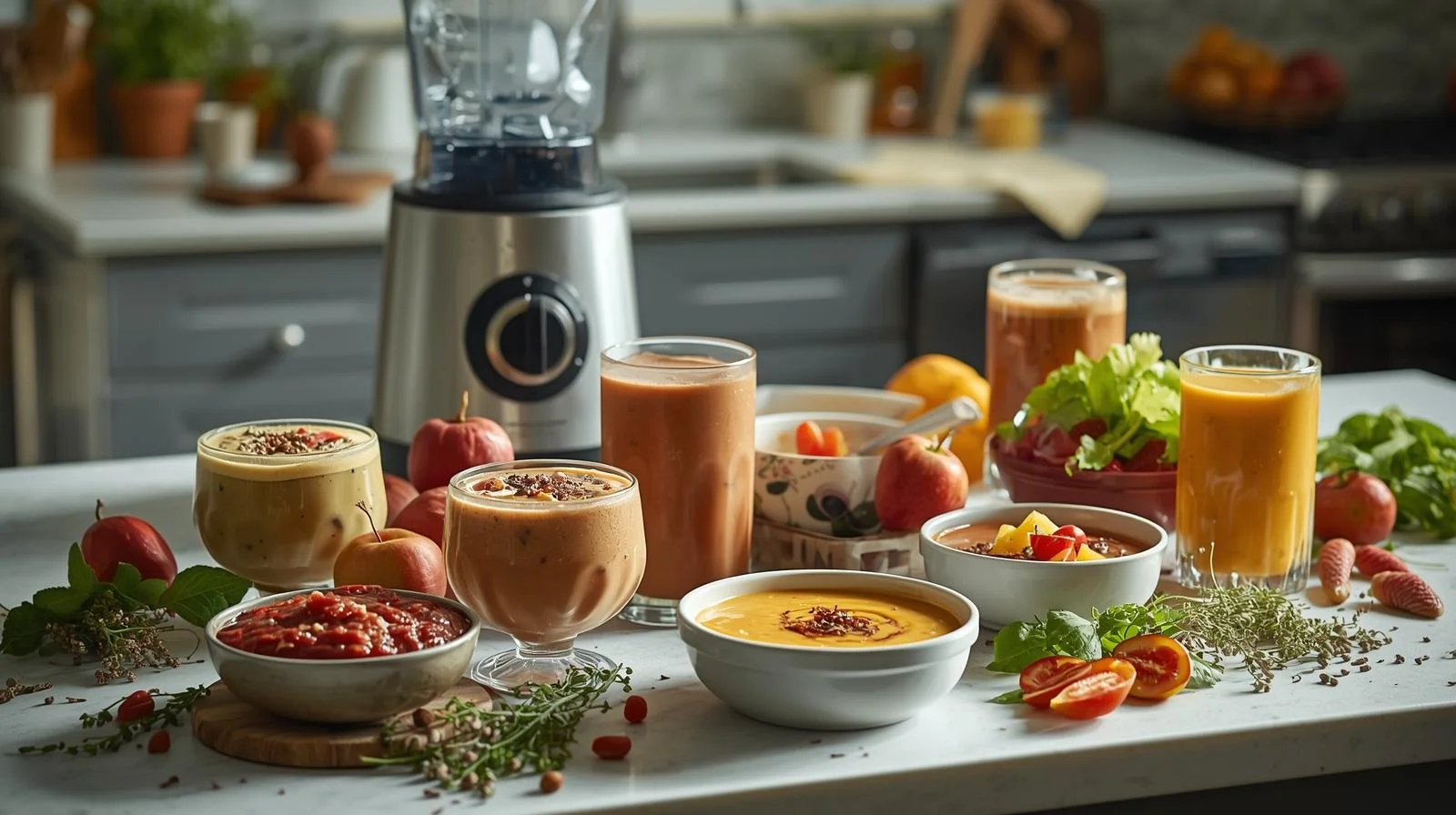
Okay, let’s get practical. When should you reach for the blender?
- Smoothies: This is the blender’s bread and butter (or should I say, banana and spinach?).
- Soups: Creating smooth, creamy soups like tomato, butternut squash, or potato leek.
- Sauces: Blending sauces like pesto, hollandaise, or vinaigrettes.
- Dips: Making smooth dips like hummus or baba ganoush (though a food processor can also work for a chunkier texture).
- Crushing Ice: Cocktails, frozen drinks, or even just to add to your water.
- Nut Butters (with a high-powered blender): Making your own almond, peanut, or cashew butter (requires a robust motor!).
When Should You Use a Food Processor? Top Kitchen Tasks
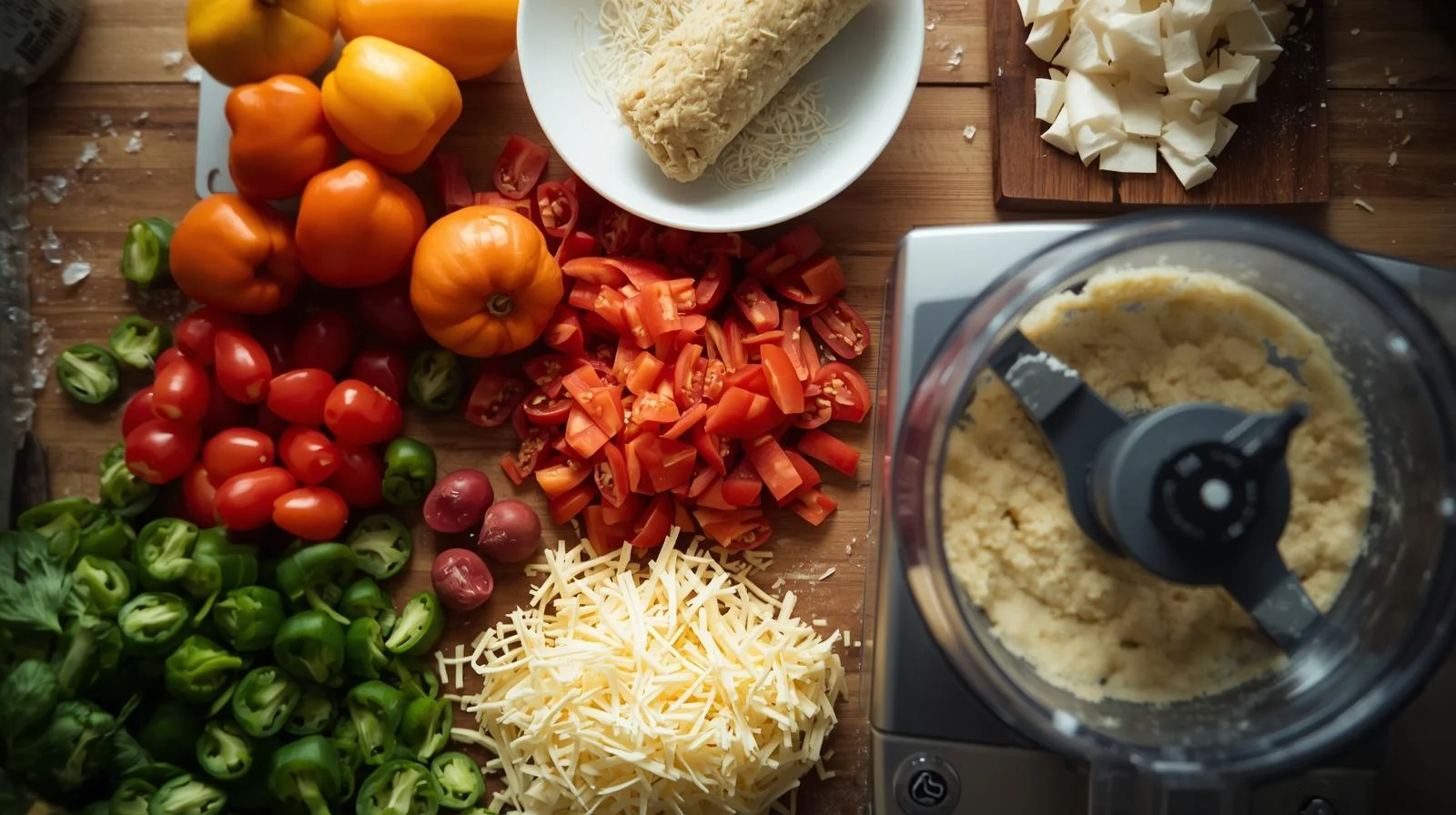
And when does the food processor shine?
- Chopping Vegetables: Dicing onions, carrots, celery, or peppers for soups, stews, or stir-fries.
- Slicing and Shredding: Making coleslaw, shredded cheese, or thinly sliced potatoes for gratins.
- Making Dips: Hummus, salsa, or guacamole (for a chunkier texture).
- Making Dough: Pie crusts, cookie doughs, or pizza dough.
- Grinding Nuts and Seeds: Making almond flour, grinding flax seeds, or creating nut-based coatings.
- Making Pesto (chunky style): Achieving a coarser, more rustic pesto texture.
Blender or Food Processor: Which One Should You Buy?

Alright, the million-dollar question. Here’s a simple guide to help you decide:
- If you primarily make smoothies, soups, and sauces: A blender is your best bet. It’s designed to create smooth textures and handle liquids.
- If you primarily chop, slice, and shred vegetables, make doughs, and grind nuts, A food processor is the way to go. It’s more versatile for preparing solid food.
- If you want both, consider getting both! They complement each other well and can expand your culinary horizons. If space is limited, start with the option that best fits your most frequent cooking needs. Or look into hybrid models.
- If you’re on a tight budget, A basic blender is a more affordable option. You can always upgrade to a food processor later.
- If you’re a serious cook/baker, you will probably want both. They allow you to make various dishes faster and with greater control over texture.
| Ask Yourself These Questions: What do I cook most often? Do I prefer smooth or chunky textures? What’s my budget? How much counter space do I have? | Things to Consider When Buying: Power: Higher wattage means more power for tougher tasks. Capacity: Choose a size that fits your needs. Features: Look for features like pre-programmed settings, pulse function, and dishwasher-safe parts. Reviews: Read reviews to see what other users are saying. |
Hybrid Blender Food Processor Combos – Are They Worth It?
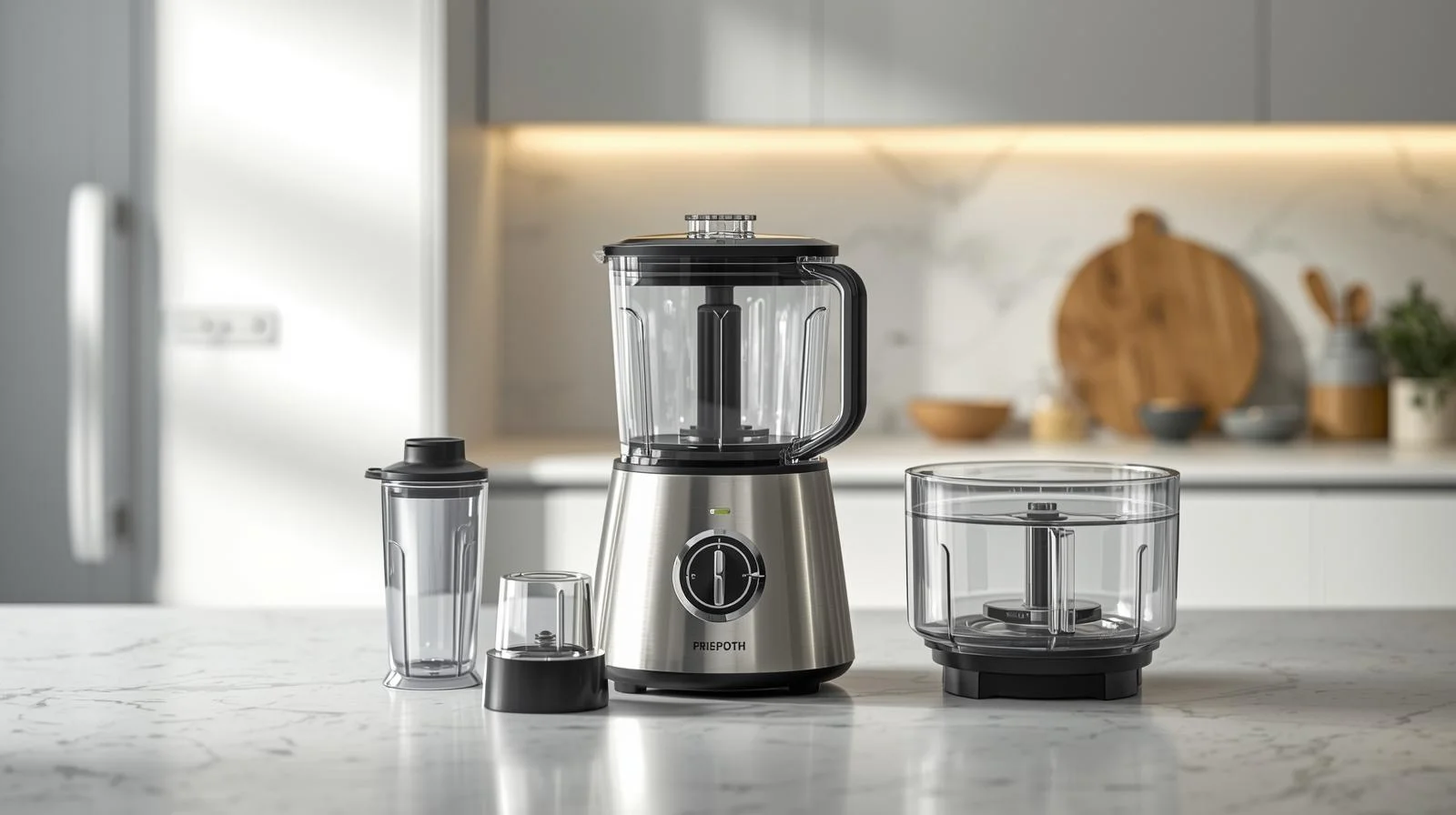
In recent years, manufacturers have begun creating hybrid appliances that combine the functionality of blenders and food processors. These often feature a blender jar and a food processor bowl that can be attached to the same motor base.
Pros:
- Space-Saving: Combines two appliances into one, saving valuable counter space.
- Cost-Effective: Can be cheaper than buying separate high-quality blenders and food processors.
Cons:
- Compromises: Hybrid models often don’t perform as well as dedicated appliances. They may lack the power or specialized features of a high-end blender or food processor.
- Cleanup: Switching between attachments can be a hassle.
Ultimately, whether a hybrid appliance is right for you depends on your individual needs and priorities. If you’re looking for a space-saving and budget-friendly option and don’t need the absolute best performance, a hybrid model might be a good choice.
Key Things to Consider Before Buying Any Kitchen Appliance
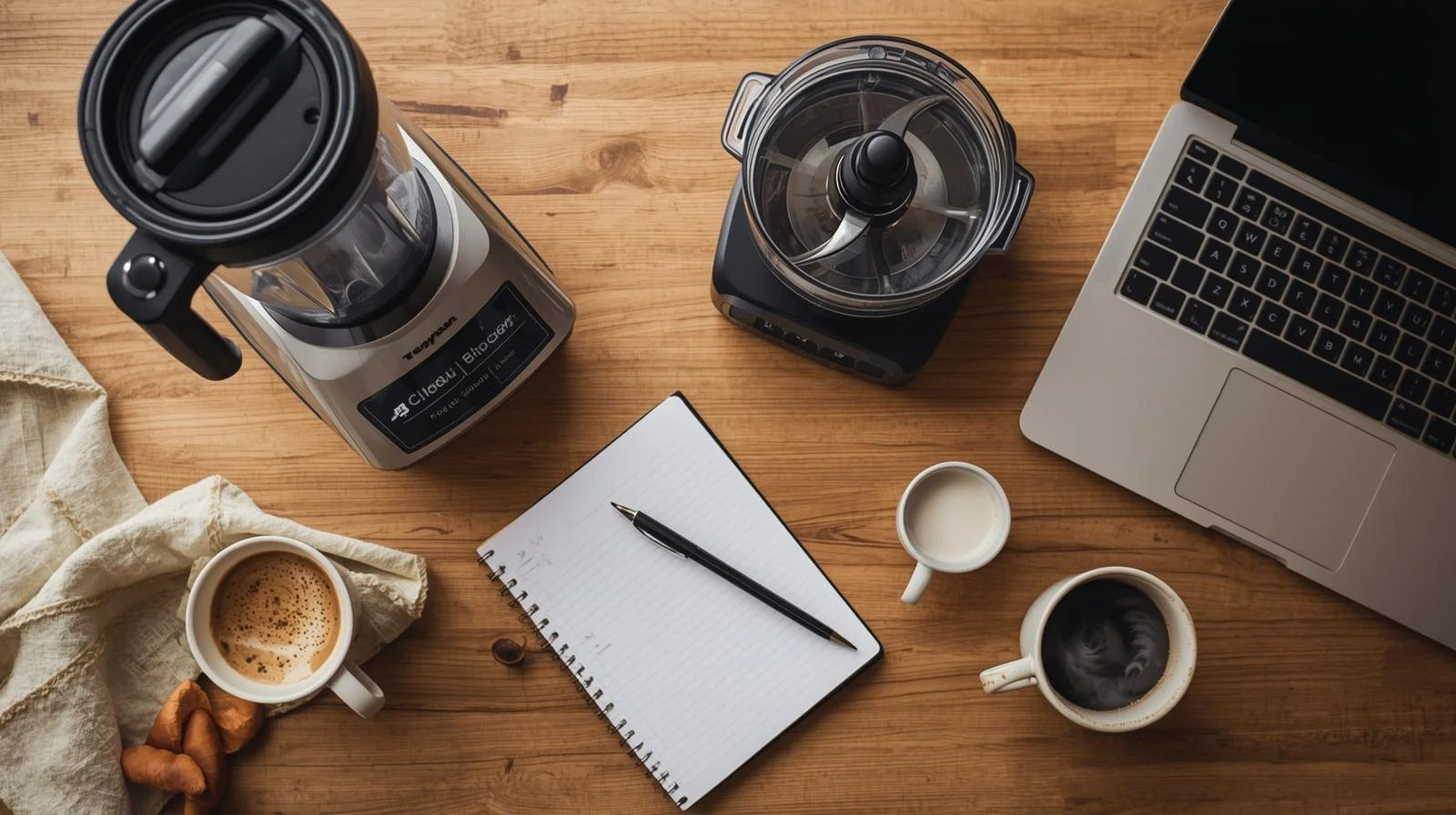
Before choosing a blender or food processor, it’s important to look beyond the brand name and focus on the features that actually impact everyday use. The right appliance should fit your cooking habits, kitchen space, and budget while making food prep easier—not more complicated.
1. Power (Wattage & Motor Strength)
Power determines how efficiently your appliance handles tough ingredients.
- Blenders: Look for 500–700W for basic smoothies, and 1000W+ for ice crushing, frozen fruits, and nut butters.
- Food Processors: 600–1000W is ideal for chopping, shredding, and dough making.
Higher wattage usually means smoother blending, faster chopping, and less strain on the motor.
2. Capacity & Bowl Size
Think about how much food you typically prepare.
- Small households may only need a 1–1.5L blender jar or a 7–9 cup processor.
- Families or meal preppers should consider using larger jars and 10–14-cup processors to save time and avoid multiple batches.
3. Features & Attachments
Modern appliances come with helpful features that improve convenience and versatility:
- Pulse function for better control
- Pre-programmed settings (smoothies, ice crush, dough)
- Multiple blades and discs for slicing, shredding, and kneading
- Dishwasher-safe parts for easy cleaning
Choose features you’ll actually use—more isn’t always better.
4. Budget & Long-Term Value
Prices vary widely, from budget-friendly models to premium appliances.
- If you’re just starting out, a basic blender can be a cost-effective choice.
- Frequent cooks and bakers may benefit from investing in a high-quality appliance that lasts longer and performs better.
5. Reviews & Reliability
Always check user reviews before buying. Real customer feedback can reveal:
- Noise levels
- Durability and lifespan
- Ease of cleaning
- Real-world performance
A well-reviewed appliance often saves money and frustration in the long run.
Pro Tip: The best kitchen appliance isn’t the most expensive—it’s the one you’ll actually use regularly.
Can a blender replace a food processor?
A blender can handle some food processor tasks, such as making dips or nut butter, but it struggles with slicing, shredding, and dough-making. They are designed for different purposes.
Which is better for smoothies — a blender or a food processor?
A blender is the best choice for smoothies because it is designed to blend liquids and create smooth, creamy textures.
Is a food processor worth buying for everyday cooking?
Yes. A food processor saves time on chopping vegetables, shredding cheese, slicing ingredients, and preparing dough, making it ideal for frequent home cooking.
Do I need both a blender and a food processor?
If you cook often and prepare a variety of recipes, owning both appliances can significantly improve speed, efficiency, and versatility in the kitchen.
Are blender–food processor combo appliances good?
Hybrid appliances are great for saving space and money, but they may not perform as well as dedicated high-quality machines.
Final Verdict: Do You Need a Blender, Food Processor, or Both?
At the end of the day, the blender vs food processor debate isn’t about which appliance is better—it’s about which one fits your cooking habits. If you love smoothies, soups, and sauces, a blender is a must-have. If meal prep, chopping vegetables, and baking are part of your routine, a food processor will save you hours in the kitchen.
Many home cooks eventually choose to own both because they complement each other perfectly. Think about what you cook most often, how much space you have, and your budget—and you’ll confidently choose the appliance that makes everyday cooking faster, easier, and more enjoyable.
Choosing between a blender and a food processor really boils down to what you cook and how you like to cook. Consider your typical recipes, your budget, and your counter space, and you’ll be well on your way to making the right decision. Happy cooking!