Last updated inMarch 2026
Chopping onions and vegetables is one of the most common — and time-consuming — tasks in the kitchen. Whether you’re preparing a quick weekday dinner or cooking for a large family, manually dicing vegetables can slow down the entire cooking process.
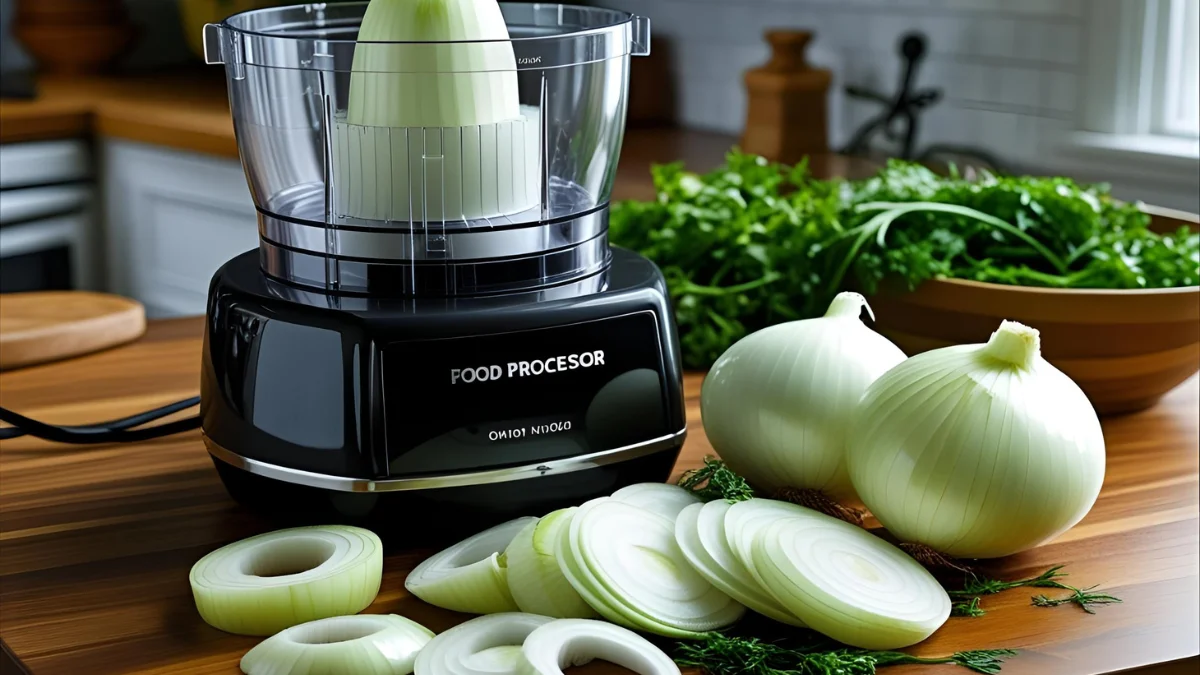
The best food processor for dicing onions and vegetables can reduce prep time from several minutes to just a few seconds while delivering uniform, professional-quality cuts. With a powerful motor, sharp stainless-steel blades, and the right bowl capacity, a food processor can handle onions, carrots, peppers, tomatoes, and other vegetables with ease.
In this guide, we compare the best food processors for vegetable dicing, evaluating motor strength, blade quality, bowl capacity, and ease of use. Whether you want a compact processor for everyday cooking or a high-power model for batch meal prep, this guide will help you choose the right appliance for your kitchen.
If you prepare vegetables frequently, a powerful processor can dramatically speed up meal prep. Our guide to food prep appliances explains other tools that help streamline kitchen work.
Quick Answer: Best Food Processor for Dicing Onions and Vegetables
If you want a food processor specifically for chopping onions and vegetables, these three models consistently perform best:
| Model | Best For | Key Strength |
|---|---|---|
| Cuisinart DFP-14BCNY Custom 14 | Best overall | Powerful motor and large capacity |
| Breville BFP800XL Sous Chef | Best premium | Precision slicing and powerful 1200W motor |
| KitchenAid KFP0711CU | Best compact | Easy operation and space-saving design |
For most households, the Cuisinart Custom 14 offers the best balance of power, capacity, and value for everyday vegetable preparation.
Who Should Buy a Food Processor for Dicing Vegetables?
A food processor is particularly useful if you:
- Cook frequently with onions, carrots, peppers, or leafy vegetables
- Prepare meals for families or large gatherings
- Want consistent vegetable cuts for soups, salads, and sauces
- Prefer faster meal prep with minimal knife work
It’s also helpful for people who experience hand fatigue from repetitive chopping.
Why Use a Food Processor for Dicing Onions and Vegetables?
Using a food processor significantly improves efficiency and consistency when preparing vegetables.
Key advantages include:
Faster Food Preparation
A food processor can dice multiple onions in seconds, saving valuable time during meal preparation.
Consistent Vegetable Cuts
Uniform dicing improves cooking results, especially in recipes like soups, stir-fries, and sauces.
Reduced Eye Irritation
Chopping onions manually often causes tearing. A food processor minimizes exposure to onion vapors.
Less Physical Effort
Using a processor reduces the strain of repetitive knife work.
Types of Food Processors for Vegetable Dicing
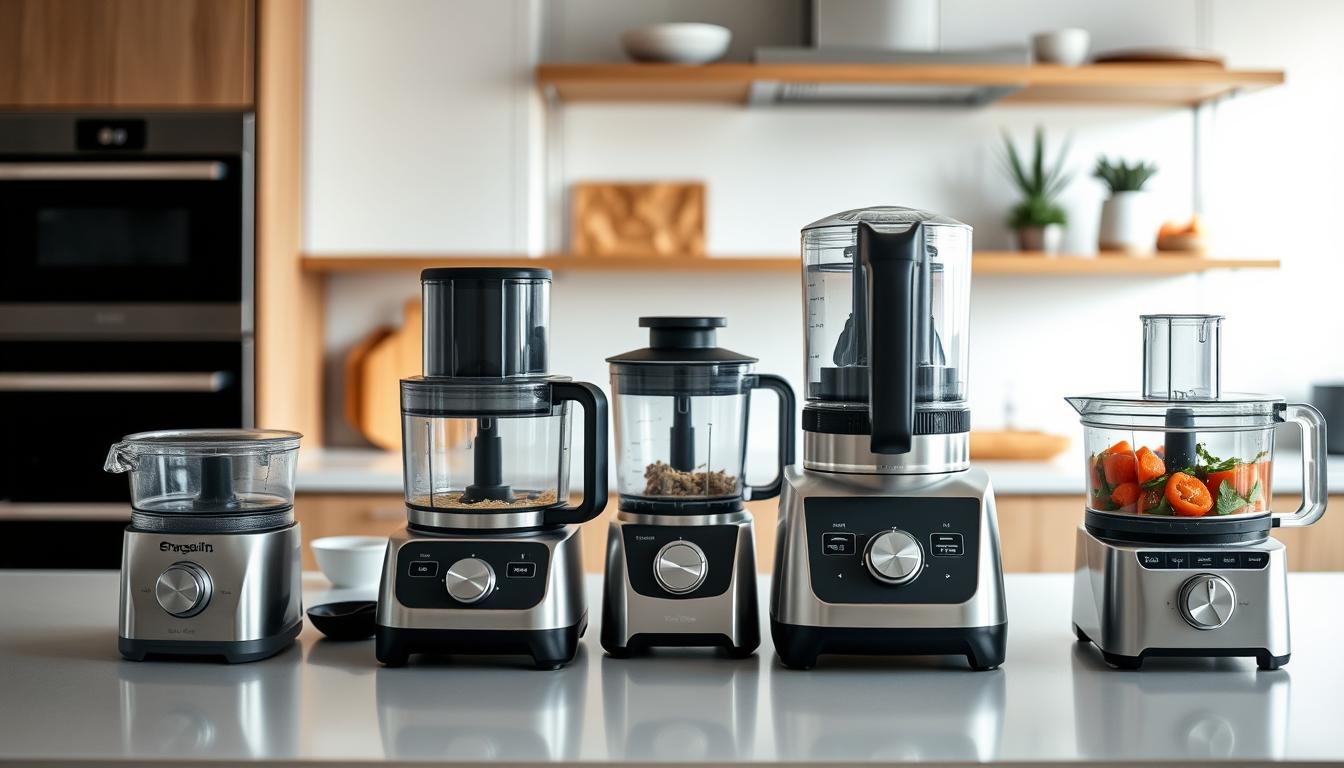
Not all food processors are designed for the same tasks. Understanding the different types helps you choose the right model.
Mini Food Choppers
Mini processors (1–3 cups) are ideal for small batches, such as chopping one or two onions.
Best for:
- Small kitchens
- Quick vegetable prep
- Sauces and dips
Standard Food Processors
Mid-size processors (7–10 cups) are the most versatile option for everyday cooking.
Best for:
- Regular meal prep
- Chopping vegetables
- Slicing and shredding ingredients
Large Food Processors
Large processors (12–16 cups) are ideal for bulk cooking.
Best for:
- Large families
- Batch cooking
- Meal prep sessions
Many home cooks pair a food processor with a high-speed blender for soups and sauces. See our comparison of the best blenders for smoothies.
What to Look for in Choosing a Food Processor
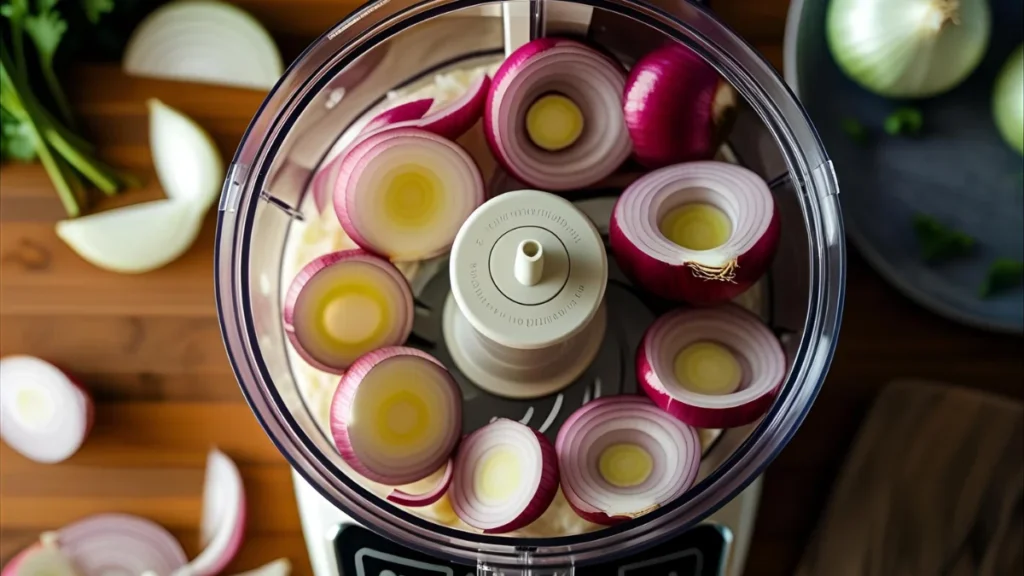
Choosing the right food processor depends on motor power, blade quality, build durability, and bowl capacity. A good model should include a strong motor, high-grade stainless steel blades, and a stable anti-slip base for safe and efficient food preparation. For most households, a 500–700W motor handles everyday tasks like chopping and slicing, while 700W+ motors are better for heavy-duty processing such as dough kneading or large batches.
Key Features to Consider
| Feature | Ideal Choice | Why It Matters |
|---|---|---|
| Motor Power | 500–700W (daily use); 700W+ (heavy tasks) | Handles tough ingredients and prevents motor strain |
| Blade Material | 304 or 420/440 stainless steel | Rust-resistant, durable, and stays sharp longer |
| Build Quality | High-quality plastic, stainless steel, or die-cast body | Improves durability and longevity |
| Stability | Anti-slip feet and sturdy base | Prevents movement during processing |
| Safety | Locking lid and overload protection | Ensures safe operation and protects the motor |
| Controls | Multiple speeds with pulse function | Allows precise chopping, mixing, or blending |
Recommended Capacity by Household Size
| Household Size | Bowl Capacity | Motor Power |
|---|---|---|
| 1–2 people | 1–5 cups | 300–500W |
| 3–4 people | 7–9 cups | 500–700W |
| 5+ people | 10–14 cups | 700W+ |
Quick tip: For most families, a 9–14 cup food processor with a 600–900W motor offers the best balance of capacity, power, and versatility.
Best Food Processor Comparison (Quick Overview)
| Model | Capacity | Motor Power | Best For | Key Advantage |
|---|---|---|---|---|
| Cuisinart DFP-14BCNY Custom 14 | 14 cups | 720 W | Large batch meal prep | Reliable power and large bowl |
| Breville BFP800XL Sous Chef | 16 cups + 2.5 cup mini | 1200 W | Professional-level food prep | Exceptional power and precision |
| KitchenAid KFP0711CU | 7 cups | ~300–400 W | Everyday kitchen tasks | Compact and easy to u |
Quick Recommendation
- Best overall for most households: Cuisinart Custom 14
- Best premium food processor: Breville Sous Chef
- Best compact option: KitchenAid KFP0711CU
Buying tip: For most kitchens, a 9–14 cup food processor with 600–900W power provides the best balance of performance, capacity, and value.
Best Food Processors for Dicing Onions and Vegetables
Cuisinart DFP-14BCNY Custom 14 Food Processor — Best Overall


The Cuisinart Custom 14 is widely considered one of the best food processors for dicing onions and vegetables thanks to its 720-watt motor and large 14-cup bowl. It handles bulk vegetable prep effortlessly, making it a popular choice for home cooks who frequently prepare soups, sauces, and salads.
Best for: Families and home cooks who prepare large quantities of food.
Pros
- Powerful 720-watt motor for consistent performance
- Large 14-cup bowl ideal for batch cooking
- Durable stainless steel slicing and shredding blades
- Wide feed tube reduces pre-cutting time
Cons
- Takes up more counter space
- Some parts require hand washing
User takeaway:
A dependable, mid-priced food processor that offers strong performance and large capacity for everyday meal prep.
2. Breville BFP800XL Sous Chef Food Processor

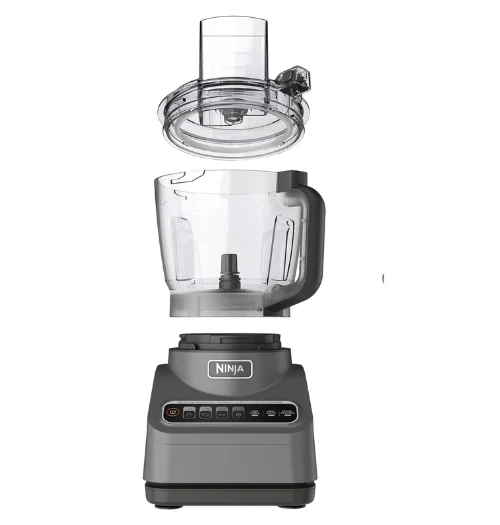

The Breville BFP800XL Sous Chef Food Processor is a premium kitchen appliance designed for precision, power, and versatility. Equipped with a powerful 1200-watt motor, it handles everything from chopping and slicing to kneading and pureeing with ease. Its extra-wide feed chute minimizes prep time by accommodating whole fruits and vegetables.
Best for: Serious home cooks or professionals needing maximum power and versatility.
Pros
- Powerful 1200-watt induction motor for heavy-duty processing
- Large 16-cup bowl plus 2.5-cup mini bowl
- 24 adjustable slicing thickness settings for precision
- Extra-wide 5.5-inch feed chute saves prep time
- Dishwasher-safe parts
Cons
- Higher price than most food processors
- Large and heavy for smaller kitchens
User takeaway:
One of the most powerful and versatile food processors available for advanced food preparation.
3. KitchenAid KFP0711CU Food Processor


The KitchenAid KFP0711CU Food Processor offers reliable performance in a compact, user-friendly design. With a 7-cup capacity, it’s perfect for everyday meal prep tasks like slicing, shredding, and mixing. Its ExactSlice System allows easy adjustment of slicing thickness with a simple lever. Designed for convenience and style, it fits seamlessly into any modern kitchen setup.
Best for: Small households and everyday cooking tasks.
Pros
- Compact 7-cup capacity for routine prep
- ExactSlice system for adjustable slicing thickness
- Easy twist-free bowl assembly
- Lightweight and easy to store
- Stylish design with multiple color options
Cons
- Smaller capacity for bulk cooking
- Less powerful than premium models
- Fewer accessories included
User takeaway:
A compact and affordable food processor ideal for quick chopping, slicing, and mixing.
How to Dice Onions and Vegetables with a Food Processor
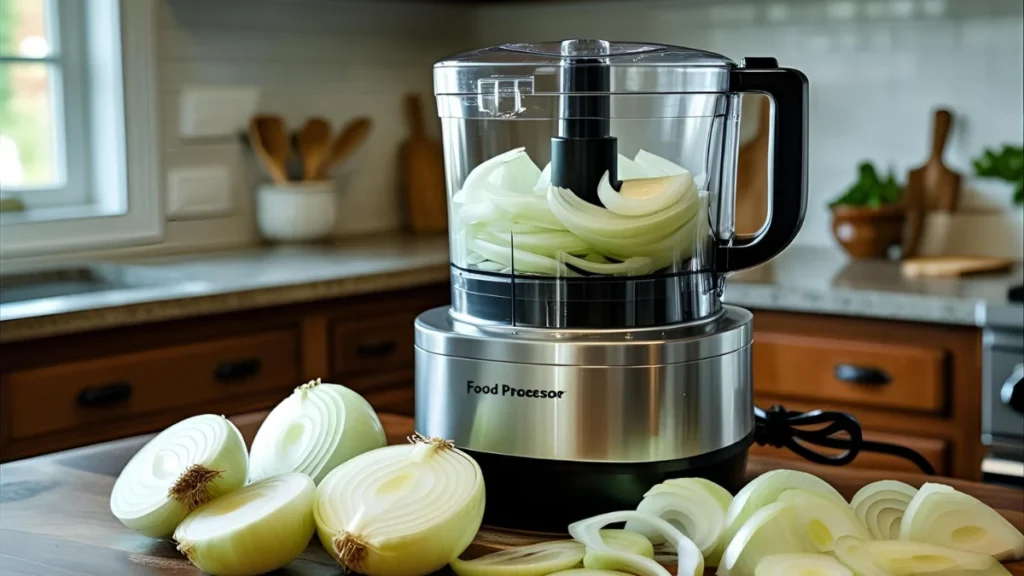
- Peel and cut vegetables into large chunks.
- Install the chopping blade or dicing attachment.
- Fill the bowl without overloading it.
- Pulse the processor briefly to control dice size.
- Stop when the desired texture is reached.
Food Processor Maintenance Tips for Long-Term Performance
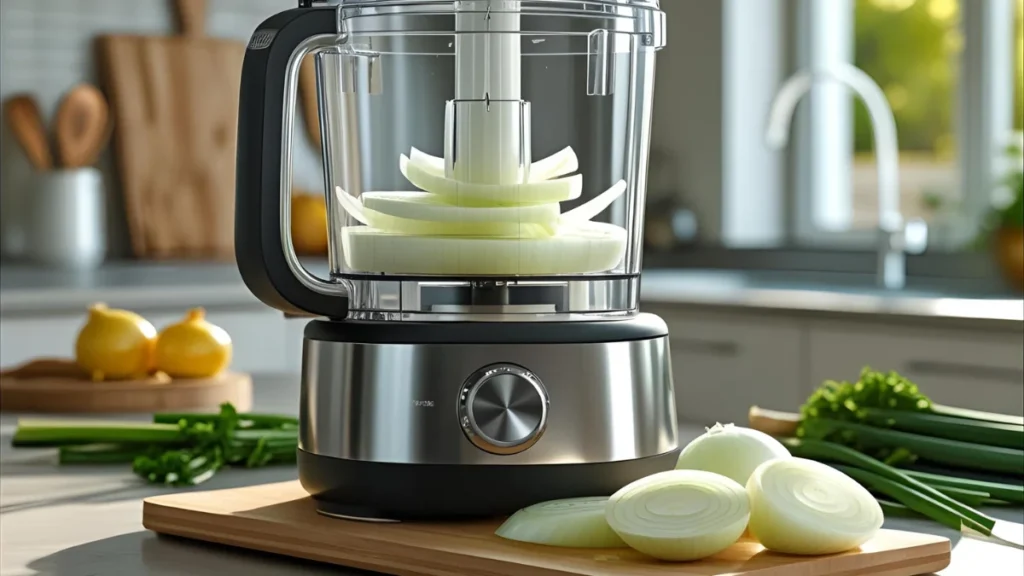
Proper maintenance keeps a food processor safe, efficient, and long-lasting. With regular cleaning, correct usage, and proper storage, most quality food processors can perform reliably for many years of daily kitchen use. The tips below help prevent common problems such as dull blades, motor strain, and food buildup.
1. Clean the Processor Immediately After Use
Cleaning your food processor right after use prevents food residue from drying and becoming difficult to remove.
Best practices
- Disassemble the bowl, lid, blades, and discs before washing.
- Rinse parts immediately to remove sticky food residues.
- Wash removable components with warm water and mild dish soap.
- Use a soft brush or sponge to clean blades and tight areas.
Tip: Avoid leaving acidic foods (tomatoes, citrus, vinegar) on blades for long periods, as they can contribute to corrosion over time.
2. Handle Blades With Care
Food processor blades are extremely sharp and require careful handling during cleaning and storage.
Maintenance tips
- Always hold blades by the plastic hub or dull edges.
- Avoid loosely stacking blades in drawers, where they may become dull.
- Store them in a blade case, protective sleeve, or dedicated storage compartment if available.
- Inspect blades periodically for dullness or nicks.
When to replace:
If blades struggle to chop evenly or require repeated pulsing, they may need sharpening or replacement.
3. Avoid Overloading the Bowl
Overfilling the work bowl can strain the motor and reduce processing efficiency.
Recommended practice
- Follow the maximum fill line indicated on the bowl.
- Process large batches in multiple smaller loads rather than a single oversized batch.
- Cut large ingredients into smaller chunks before processing.
This helps maintain motor efficiency and prevents unnecessary wear on internal components.
4. Use the Pulse Function for Better Control
Continuous operation can overwork the motor, especially with tough ingredients.
Use pulse mode when processing:
- Hard vegetables such as carrots or beets
- Nuts and seeds
- Dense doughs or thick mixtures
Short bursts of power reduce motor stress and provide more consistent chopping results.
5. Keep the Motor Base Dry
The motor base houses electrical components and should never be submerged in water.
Proper cleaning method
- Unplug the appliance before cleaning.
- Wipe the base with a damp cloth to remove food splashes or dust.
- Dry immediately with a soft towel.
Keeping the base clean also prevents grease buildup that can affect ventilation and cooling.
6. Check the Lid Lock and Safety Mechanism
Most modern food processors have safety interlock systems that prevent the machine from operating unless the lid and bowl are properly locked.
Maintenance steps
- Ensure the lid clicks firmly into place before use.
- Remove any food debris around the locking tabs and grooves.
- Avoid forcing the lid if it doesn’t align correctly.
Properly functioning safety locks protect both the user and the motor.
7. Store Attachments Properly
Many food processors include multiple discs and accessories for slicing, shredding, or kneading.
Storage tips
- Keep attachments in the manufacturer’s storage case if included.
- Store blades separately to avoid dulling edges.
- Keep parts dry to prevent rust or odor buildup.
Organized storage makes the appliance easier to use and protects components from damage.
8. Avoid Processing Extremely Hard Foods
Even powerful food processors can suffer damage if used improperly.
Foods to avoid processing
- Ice cubes (unless the manufacturer specifies ice-crushing capability)
- Hard bones
- Very dense frozen foods without partial thawing
Processing such ingredients can damage blades or overload the motor.
9. Inspect Parts Regularly
Routine checks help identify problems before they affect performance.
Look for:
- Cracks in the bowl or lid
- Loose blade hubs or worn discs
- Unusual motor noise or vibration
Replacing worn components early can prevent larger mechanical issues.
10. Follow Manufacturer Guidelines
Each food processor model may have unique maintenance requirements.
Always:
- Read the user manual carefully.
- Follow recommended cleaning methods and part compatibility.
- Use only approved replacement parts.
Manufacturer guidelines ensure safe operation and help maintain warranty coverage.
Quick Maintenance Checklist
- Clean all removable parts after every use
- Handle blades carefully to maintain sharpness
- Avoid overloading the bowl
- Use pulse mode for tough ingredients
- Wipe the motor base with a damp cloth only
- Store attachments safely and dry
- Inspect components regularly for wear
Pro tip: With proper cleaning, careful blade handling, and responsible motor use, a high-quality food processor can last 7–10 years or more in a typical home kitchen.
If you’re building a complete kitchen appliance setup, our must-have kitchen appliances guide highlights essential tools for modern kitchens.
How to Dice Onions and Vegetables with a Food Processor
Using a food processor for vegetable dicing is straightforward:
- Peel onions and wash vegetables.
- Cut ingredients into large chunks that fit the feed tube.
- Attach the chopping blade or dicing disc.
- Add vegetables to the work bowl without exceeding the fill line.
- Use the pulse function in short bursts.
- Stop when the desired dice size is achieved.
Tip: Pulsing rather than continuous processing helps prevent vegetables from turning into puree.
Food Processor Maintenance FAQs
How often should you clean a food processor?
You should clean your food processor after every use to prevent the buildup of food residue and bacterial growth. Removable parts like the bowl, lid, and blades should be washed with warm, soapy water or placed in the dishwasher if dishwasher-safe. The motor base should only be wiped with a damp cloth.
Can food processor blades go in the dishwasher?
Many food processor blades are top-rack dishwasher-safe, but handwashing is often recommended to preserve sharpness. Using mild soap and warm water helps maintain the blade edge and prevents long-term dulling.
How do you keep food processor blades sharp?
To keep blades sharp, avoid processing extremely hard ingredients, wash them gently after use, and store them in a protective case or sleeve. If blades become dull over time, they may need professional sharpening or replacement.
Why does my food processor smell like burning?
A burning smell usually indicates motor strain or overheating, often caused by overloading the bowl or running the processor continuously for too long. Turn off the appliance, allow it to cool, and process ingredients in smaller batches.
How long should a food processor last?
A high-quality food processor typically lasts 7–10 years or more with proper maintenance. Regular cleaning, correct blade handling, and avoiding motor overload can significantly extend the appliance’s lifespan.
Can you store a food processor assembled?
Yes, you can store a food processor assembled to save space, but it’s best to store the blades separately to prevent accidental cuts and protect their edges.
Final Verdict: Choosing the Best Food Processor for Dicing Onions and Vegetables
A high-quality food processor can dramatically simplify everyday cooking by reducing the time and effort required for vegetable preparation. Instead of manually chopping onions and vegetables, you can achieve consistent, evenly diced results in just a few seconds.
Among the models reviewed, the Cuisinart Custom 14 stands out as the best overall food processor for dicing onions and vegetables due to its powerful motor, durable stainless-steel blades, and large bowl capacity. For users seeking premium precision and advanced features, the Breville Sous Chef offers exceptional performance, while the KitchenAid KFP0711CU remains a reliable compact option for smaller kitchens.
Ultimately, the best choice depends on your cooking habits, kitchen space, and budget. Investing in a dependable food processor not only saves time but also makes meal preparation faster, easier, and more enjoyable.
Looking for a Smoothie Blender Too?
If you prep ingredients often, a food processor can save even more time in the kitchen.
👉 See the best blenders for smoothies.