Air fryers are one of the most popular kitchen appliances—but many people still wonder:
Are air fryers actually safe to use?
Concerns about toxic coatings, plastic components, and high cooking temperatures have made this a common question.
The good news:
When used correctly, most modern air fryers are safe.
But understanding which materials are used, how they behave at high temperatures, and how to use your appliance properly makes a big difference.
In this guide, we break down the facts about air fryer safety, common myths, and what to look for before buying or using one.
If you’re comparing models, start with our air fryer buying guide.
Are Air Fryers Toxic?

No, air fryers are not inherently toxic. Most modern air fryers are designed with food-safe materials and coatings. However, safety depends on build quality, proper usage, and avoiding overheating or damaged non-stick surfaces.
1. What Are Air Fryers Made Of?
The following materials are used for making air fyers:
- Non-stick coating (PTFE / Teflon) – Provides a smooth surface that prevents food from sticking and makes cleaning easier. It also helps ensure even cooking and crisping.
- Plastic exterior – Lightweight and heat-resistant, the plastic casing keeps the appliance cool to the touch while maintaining durability.
- Metal heating elements – These generate and circulate hot air efficiently, ensuring quick and consistent cooking performance.
Important: Materials are safe within normal temperature ranges
2. Are Non-Stick Coatings Safe?
PTFE coatings are considered safe when used below approximately 260°C (500°F). Most air fryers operate well under this temperature range, so normal use poses no risk.
Problems only arise if the coating is overheated or damaged, which can release fumes. Proper use and care keep it safe for everyday cooking.
3. Do Air Fryers Release Harmful Chemicals?
Short answer: No, under normal use.
- No significant toxins released – Air fryers are designed to operate safely within temperature limits.
- Avoid damaged coatings – Replace baskets if the non-stick layer is scratched or peeling to prevent potential exposure.
The following table compares air fryer fumes with those from other common kitchen appliances:
| Appliance | Fume Emission | Ventilation Need |
|---|---|---|
| Air Fryer | Moderate | Recommended |
| Deep Fryer | High | Highly Recommended |
| Oven | Low | Optional |
4. What About Plastic Smell or Odor?
- Common in first use – A slight odor may occur when the air fryer is new.
- Comes from heating elements + packaging residues – It usually fades after initial use.
Run an empty cycle before first use – This helps burn off any manufacturing residues and removes the initial smell.
5. Are Air Fryers Healthier Than Frying?
Yes, it is healthier for the following reasons:
- Less oil – Air fryers use less oil than deep frying.
- Lower fat intake – Meals contain fewer calories and less saturated fat.
- Reduced harmful compounds vs deep frying – Cooking at lower temperatures minimizes the formation of unhealthy byproducts.
6. Common Safety Mistakes
Safety Tips:
Following basic safety habits keeps your air fryer efficient and hazard-free. Regular maintenance and mindful use prevent damage and ensure consistent results.
- Use within the recommended temperature range
- Clean regularly
- Avoid metal utensils
- Replace damaged baskets
Read the common air fryer mistakes guide
7. How to Use an Air Fryer Safely
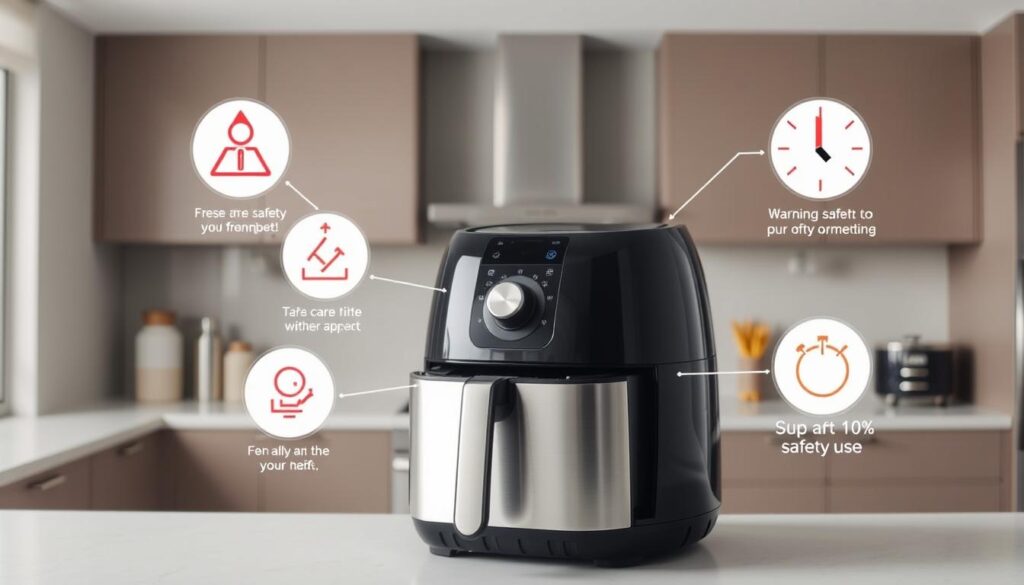
Safety Tips
- Lower build quality – Budget models may use thinner coatings or weaker materials that wear out faster.
- Faster coating wear – This can lead to peeling or uneven heating over time.
- Choose trusted brands – Reputable manufacturers follow safety standards and use tested materials.
- Check certifications – Look for safety marks like CE, UL, or ETL to ensure compliance with quality regulations.
Are Cheap Air Fryers Safe?
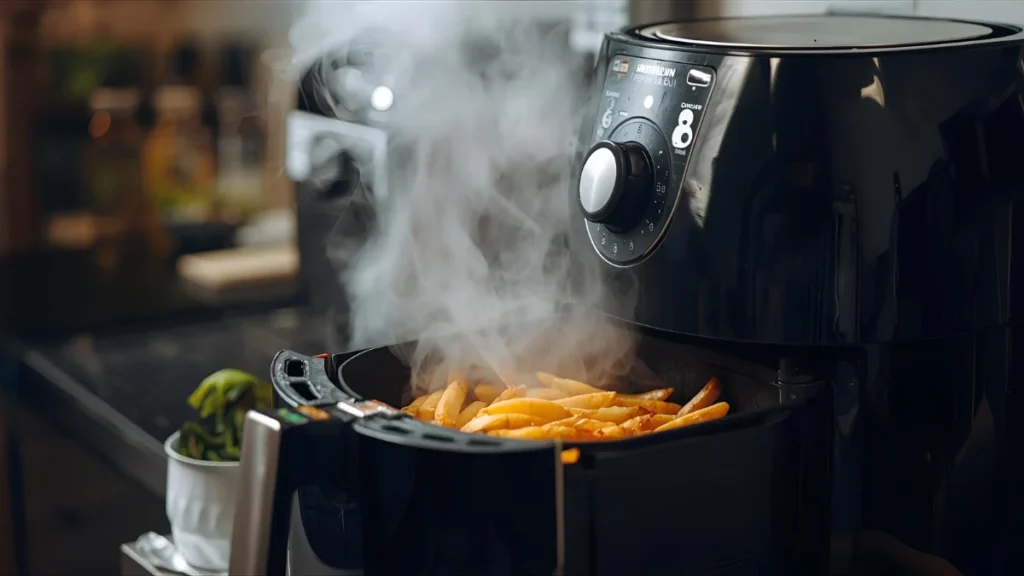
- No – cheaper models often have lower build quality and faster coating wear, which can affect safety and durability.
- Advice: Choose trusted brands and check certifications to ensure quality and long-term safety.
FAQs
Do air fryers cause cancer?
No scientific evidence shows that air fryers cause cancer when used properly.
Is Teflon dangerous in air fryers?
No, unless overheated beyond safe limits.
Why does my air fryer smell like plastic?
Usually normal during first use—run a few empty cycles.
Can air fryers cause acrylamide formation?
Yes. Cooking starchy foods at high heat can form acrylamide. Use lower temps and avoid overcooking.
How can I ensure safe air fryer usage?
Follow instructions, clean regularly, and avoid overcrowding or overheating.
What materials should I look for when choosing a safe air fryer?
Choose stainless steel or ceramic over non-stick coatings.
Are there any safety certifications I should look for?
Yes. Look for UL or ETL certifications.
What are some common misconceptions about air fryer safety?
That they’re risk-free or toxic. Safety depends on use, care, and materials.
Final Verdict: Are Air Fryers Safe?
Air fryers are safe for everyday use when used properly.
Most concerns about toxicity come from misuse, overheating, or low-quality materials—not the appliance itself.
Air fryers use a heating element and a fan to circulate hot air around the food.