For home bakers, mixers are essential, but the choices can be overwhelming. This article provides a detailed stand mixer vs. hand mixer comparison to help you determine which mixer best suits your needs.
Why Choosing the Right Mixer Matters
Selecting the appropriate mixer impacts everything from the texture of your baked goods to the time you spend in the kitchen. The right mixer can:
- Improve Consistency: Ensure ingredients are properly combined for uniform results.
- Save Time and Effort: Reduce manual labor and speed up the baking process.
- Expand Baking Capabilities: Allow you to tackle more complex recipes.
- Enhance Baking Enjoyment: Make the process more pleasurable and less of a chore
Overview: Stand Mixers vs. Hand Mixers
Both stand mixers and hand mixers are designed to automate the mixing process, but they differ significantly in their design, functionality, and intended use. Let’s dive into a detailed look at each type.
What is a Stand Mixer?
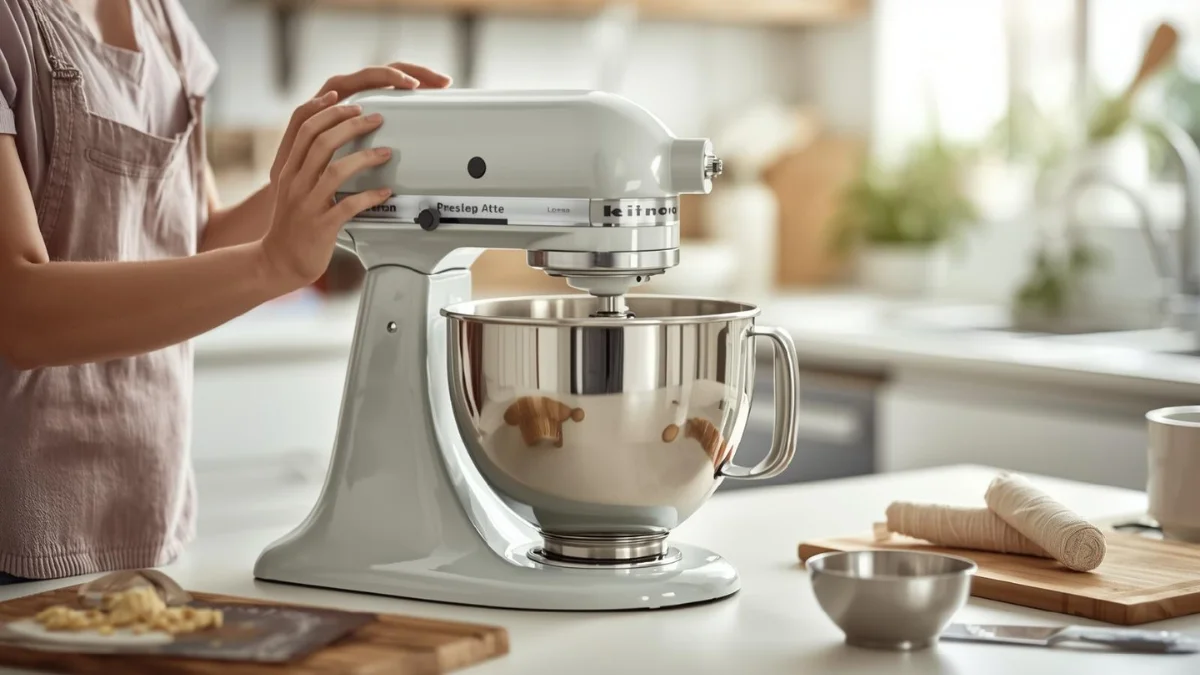
A stand mixer is a stationary appliance that uses a rotating mechanism to mix ingredients in a bowl attached to the mixer. It is a powerful and versatile tool ideal for a wide range of baking tasks.
How it Works
Stand mixers feature a motor that drives interchangeable attachments, such as:
- Dough Hook: For kneading bread dough.
- Flat Beater: For mixing cakes, cookies, and batters.
- Wire Whip: For whipping cream, egg whites, and frosting.
The bowl attaches securely to the base, allowing for hands-free mixing. Speeds are adjustable to suit different recipes.
Attachments & Use Cases
Beyond the basic attachments, many stand mixers offer optional accessories like:
- Meat Grinders: For grinding meat.
- Pasta Makers: For creating fresh pasta.
- Food Processors: For chopping and slicing vegetables.
Common use cases for stand mixers include:
- Kneading bread dough
- Mixing large batches of cake batter
- Whipping cream or meringue
- Making cookies and other desserts
- Processing food with additional attachments
What is a Hand Mixer?
A hand mixer is a lightweight, handheld appliance that uses beaters to mix ingredients directly in a bowl. It’s a convenient and affordable option for simpler baking tasks.
How it Works
Hand mixers require manual operation. You hold the mixer and move it around the bowl to ensure even mixing. They typically have multiple speed settings.
Power & Accessories
Hand mixers generally have lower power compared to stand mixers. They come with basic attachments like:
- Beaters: For general mixing.
- Whisks: For whipping cream or egg whites.
Use Cases
Common use cases for hand mixers include:
- Mixing cake batter
- Whipping cream
- Making frosting
- Mixing cookie dough (smaller batches)
- Mashing potatoes
Key Differences: Stand Mixer vs. Hand Mixer
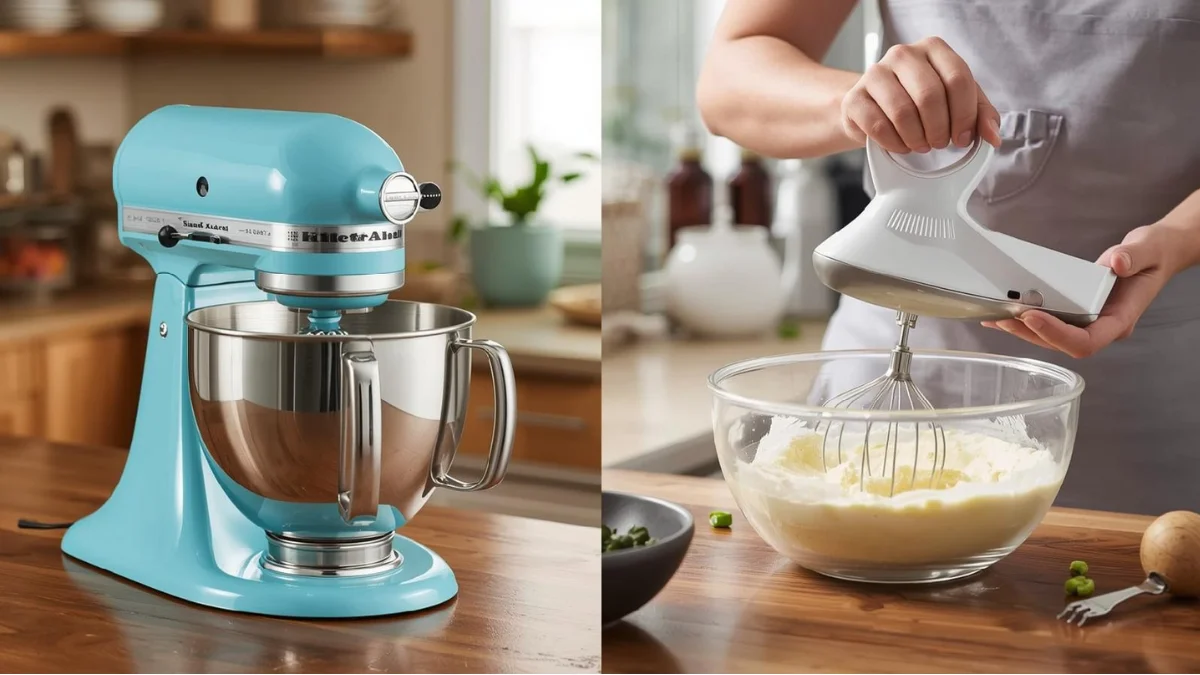
| Particulars | Stand Mixer | Hand Mixer |
| Power | More powerful | Less Powerful |
| Capacity | Handle larger batches | Best for smaller batches. |
| Storage | Require more storage | Compact & easy to store |
| Hands-free Vs manual | Hands-free operation | Manual operation |
| Price | More expensive | More affordable |
Performance Comparison for Baking
| Cakes | Cookies | Bread | Whipping | |
| Stand mixers | Provide consistent mixing for smooth batters.. | Easily handle stiff cookie dough. | Ideal for kneading bread dough efficiently. | Produce stable whipped cream and meringues. |
| Customer Star Rating | ⭐⭐⭐⭐⭐ | ⭐⭐⭐⭐⭐ | ⭐⭐⭐⭐⭐ | ⭐⭐⭐⭐⭐ |
| Hand mixers | Work well for lighter cake batters. | Struggle with very thick cookie dough. | Not suitable for kneading bread dough. | Can whip cream, but it may take longe |
| Customer Star Rating | ⭐⭐⭐ | ⭐⭐⭐ | ⭐ | ⭐⭐⭐ |
Ease of Use and Cleanup
Stand mixers offer hands-free operation, making them convenient for multitasking. Cleanup involves washing the bowl and attachments. Hand mixers require manual operation but are easier to clean due to their smaller size.
Cost vs. Value
Hand mixers are generally more affordable and offer good value for occasional bakers. While stand mixers are traditionally seen as a significant investment for dedicated bakers, the market now includes several affordable stand mixer models, for instance, under $100, offering practical features for everyday use.
Who Should Choose a Stand Mixer?
- Frequent bakers who make bread, cakes, and cookies regularly.
- Those who need to mix large batches.
- Bakers who value hands-free operation.
- Individuals who want a versatile appliance with additional attachments.
Who Should Choose a Hand Mixer?
- Occasional bakers who only need to mix small batches.
- Those with limited kitchen space.
- Bakers on a budget.
- Individuals who prefer a lightweight and easy-to-store appliance.
Final Verdict
The choice between a stand mixer and a hand mixer depends on your individual baking needs and preferences. Stand mixers excel in power, capacity, and versatility, making them ideal for serious bakers. Hand mixers offer affordability and convenience for simpler tasks. Consider your baking frequency, budget, and kitchen space to make the best decision.
FAQ
Can a hand mixer knead bread dough?
No, a hand mixer is not powerful enough to knead bread dough effectively.
What is the best stand mixer attachment for making cookies?
The flat beater is the best attachment for making cookies.
Are stand mixers worth the investment?
If you bake frequently and make large batches, a stand mixer is a worthwhile investment.
Can I use a hand mixer to whip cream?
Yes, you can use a hand mixer to whip cream, but it may take longer than with a stand mixer.
What size stand mixer is best for home baking?
A 4.5- to 5-quart stand mixer is generally sufficient for most home baking needs.